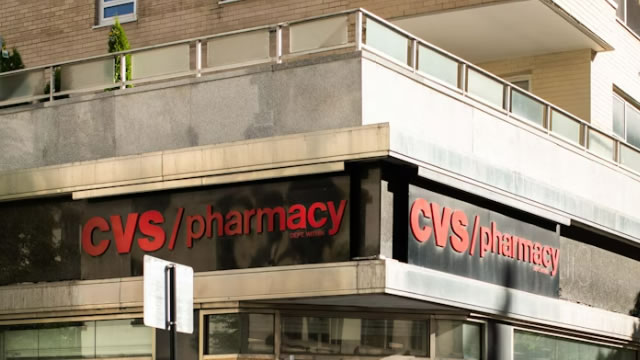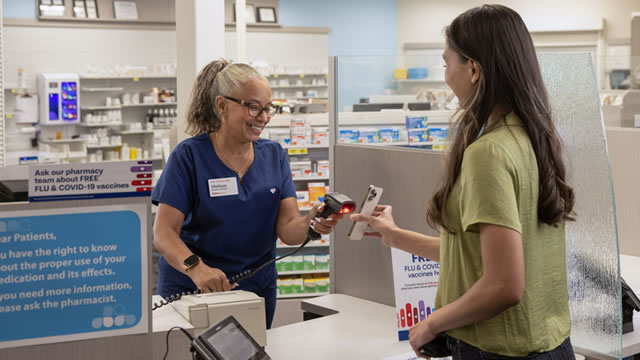
CVS Health Corporation

CVS Health Corporation (CVS) Market Cap

CVS Health Corporation has a market capitalization of $125.07B.

Price: $98.02

0.96 (0.99%)

Market Cap: 125.07B

NYSE · time unavailable

CEO: J. David Joyner

Sector: Healthcare

Industry: Medical - Healthcare Plans

IPO Date: 1996-11-20

Website: https://www.cvshealth.com

CVS Health Corporation (CVS) - Company Information

Market Cap: 125.07B|Sector: Healthcare

Company Profile

CVS Health Corporation provides health services in the United States. The company's Health Care Benefits segment offers traditional, voluntary, and consumer-directed health insurance products and related services. It serves employer groups, individuals, college students, part-time and hourly workers, health plans, health care providers, governmental units, government-sponsored plans, labor groups, and expatriates. Its Pharmacy Services segment offers pharmacy benefit management solutions, including plan design and administration, formulary management, retail pharmacy network management, mail order pharmacy, specialty pharmacy and infusion, clinical, and disease and medical spend management services. It serves employers, insurance companies, unions, government employee groups, health plans, prescription drug plans, Medicaid managed care plans, plans offered on public health insurance and private health insurance exchanges, other sponsors of health benefit plans, and individuals. This segment operates retail specialty pharmacy stores; and specialty mail-order, mail-order dispensing, and compounding pharmacies, as well as branches for infusion and enteral nutrition services. The company's Retail/LTC segment sells prescription and over-the-counter drugs, consumer health and beauty products, and personal care products; and provides health care services through its MinuteClinic walk-in medical clinics. This segment also distributes prescription drugs; and provides related pharmacy consulting and other ancillary services to care facilities and other care settings. As of December 31, 2021, it operated approximately 9,900 retail locations and 1,200 MinuteClinic locations, as well as online retail pharmacy websites, LTC pharmacies, and onsite pharmacies. The company was formerly known as CVS Caremark Corporation and changed its name to CVS Health Corporation in September 2014. CVS Health Corporation was founded in 1963 and is headquartered in Woonsocket, Rhode Island.

Analyst Sentiment

79%
Strong Buy

From 41 Active Polls

1Y Forecast: $103.64

▲ +5.7% Potential Upside

Consensus Target Metrics

Low Bound

$90

Median

$106

High Bound

$115

Average

$104

Price & Moving Averages

Loading chart...

🎯 Wall Street Analyst Intelligence Report

1-Year structural target targets, chart projections, and sentiment maps.

Average 1Y Target
$103.64
▲ +5.73% Upside
Low Target
$90.00
-8% Risk
Median Target
$106.00
8% Mid
High Target
$115.00
17% Max
Consensus
Buy
35 / 41 Buys

Consensus Trend Projection

Trailing closures vs. 12-month metrics map.

Analyst Vote Distribution

Aggregate institutional coverage sentiment weights.

📊 Historical Valuation Multiples

Real-time Trailing Twelve Month (TTM) momentum side-by-side with discrete quarterly metrics.

Fiscal QuarterTTMQ1 2026Q4 2025Q3 2025Q2 2025Q1 2025Q4 2024Q3 2024Q2 2024
Period EndingTrailing 12MMar 31, 2026Dec 31, 2025Sep 30, 2025Jun 30, 2025Mar 31, 2025Dec 31, 2024Sep 30, 2024Jun 30, 2024
Market Cap ($M)125,06691,427100,78795,67087,32985,43356,51779,16673,036
Enterprise Value ($M)193,869160,230185,868168,267158,266156,570130,851154,995144,351
Price to Earnings Ratio (P/E)42.567.778.56-6.0221.3812.018.59227.4910.32
Price/Earnings-to-Growth Ratio (PEG)3.12-1.504.673.5949.493.26
Price to Sales Ratio (P/S)0.310.910.950.930.880.900.580.830.80
Price to Book Ratio (P/B)1.611.181.341.311.131.110.751.060.97
Price to Free Cash Flow Ratio (P/FCF)16.9126.8938.68976.2267.7022.4151.76-55.9529.80
Enterprise Value to Sales (EV/Sales)1.601.761.641.601.661.341.621.58
Enterprise Value to EBITDA (EV/EBITDA)17.4227.5056.53-107.5944.2034.3732.4976.8134.21
Debt to Equity Ratio6.181.011.241.121.071.061.101.101.12

CVS Growth Runway Model

Standard long term linear growth fade

Multi-Stage Discounted Cash Flow Sandbox

Market Price$98.02
Intrinsic Value$230.19
Market Alignment
Undervalued by 134.8%relative to calculated intrinsic value
9.00%
Exp: 4%4%
i

Growth runway slowdown

This value provides a time window for the growth rate to decline beyond Stage 1 toward the terminal rate. Longer windows are most useful for companies with high growth starting conditions or strong competitive advantages. This option stretches out the growth rate slowdown across 5, 10, or 15-year steps. A high-growth starting condition (exceeding a 25% initial growth rate) automatically applies a curve decay to simulate realistic, rapid market saturation.
i

Terminal growth rate

With long-term inflation between 3-5%, revenue must grow by that baseline to maintain flat real-world market share. This value sets the permanent terminal growth rate to factor into the valuation beyond the growth slowdown runway toward maturity.

3-Stage Financial Runway Horizon

🧠 Perpetuity Horizon Engine (Stage 3: Post-2035)

Terminal FCF Base$24.89B
Perpetuity TV Value$468.42B
Discounted TV (PV)$197.87B
TV Weighting %60.2%
⚠️
Financial Model Disclaimer & Risk Disclosure: This interactive scenario simulator is an educational sandbox provided strictly for informational and analytical research purposes. Core historical financial statements and consensus estimates are sourced directly via Financial Modeling Prep (FMP). All downstream outputs are entirely deterministic, hypothetical projections generated by combining automated mathematical formulas (including linear interpolation and Gaussian bell-curve decay models) with user-selected variables and third-party financial data inputs. Users assume all liability for trading decisions executed based on these sandbox calculations.

📘 Full Research Report

ℹ️

AI-Generated Research: This report is for informational purposes only.

📘 CVS HEALTH CORP (CVS) — Investment Overview

🧩 Business Model Overview

CVS Health operates a vertically integrated healthcare services platform spanning pharmacy distribution and fulfillment, pharmacy benefit management (PBM), and health insurance through its insurance/benefits businesses. The model links consumer and provider touchpoints (retail pharmacies and clinics) with payer-grade tools (formularies, utilization management, contracting, and claims data) to influence drug selection and care pathways.

In practical terms: employers, health plans, and government programs contract with the PBM/insurance ecosystem. CVS then manages access to medications through its retail network and fulfillment capabilities, applies clinical and utilization management protocols, and coordinates with care delivery services. This integration creates feedback loops between pricing/contracting, utilization, and clinical outcomes, supporting repeatable revenue generation tied to insured membership and medication consumption.

💰 Revenue Streams & Monetisation Model

CVS monetises through a blend of recurring, contract-based revenues and transaction-driven pharmacy flows:

  • PBM and insurance premiums / administrative revenue: driven by covered lives, benefit design, and administrative services—generally more recurring in nature.
  • Retail and mail-order pharmacy dispensing: tied to script volumes and mix (generic vs. brand vs. specialty), with gross margin influenced by reimbursement rates and contracting dynamics.
  • Clinical services and care delivery: clinic visits, chronic care services, and supplemental programs—typically incremental and supported by footfall and referral pathways.

Margin drivers are primarily (1) the economics of medication pricing and reimbursement, including the ability to negotiate favorable contracts; (2) utilization management effectiveness; and (3) insurance medical cost management relative to premium pricing. Operating leverage can emerge when high-fixed components (systems, claims, care management) scale with membership and prescription volumes while maintaining disciplined pharmacy and benefit operations.

🧠 Competitive Advantages & Market Positioning

CVS’s moat is best characterized as an integrated ecosystem with switching costs rather than a single product advantage. The hard part for competitors is not dispensing drugs; it is managing the end-to-end economics across contracts, formularies, utilization, and care delivery at scale.

  • High switching costs (PBM/benefits “embeddedness”): formularies, prior authorization workflows, network contracting, claims systems, and care management protocols create operational and data gravity. Changing PBM/benefits partners typically requires renegotiation of contracts, reconfiguration of utilization management, and workflow rebuild—raising friction for payers and plan sponsors.
  • Integrated ecosystem (data + execution across pharmacy and care): CVS combines payer influence (benefit design, utilization management) with execution (pharmacy network, specialty fulfillment, and clinical touchpoints). This alignment can improve drug adherence, shift appropriate utilization, and manage high-cost therapies through coordinated programs.
  • Scale and cost advantages in contracting and operations: large prescription volumes and national fulfillment footprint support bargaining power with manufacturers, wholesalers, and pharmacies, and enable cost-efficient claims processing and care management.

Competitive benchmarking:

  • Optum / UnitedHealth Group (PBM and care services): also vertically integrated with PBM capabilities and strong analytics-driven care management. CVS competes by leveraging retail fulfillment and insurance/benefits integration to influence utilization and drug access.
  • Express Scripts / Cigna (PBM): a major PBM competitor with strong payer relationships. CVS’s differentiator is the broader retail/clinic execution layer combined with benefits management, which can strengthen end-to-end coordination.
  • Walgreens Boots Alliance (retail pharmacy): a scaled retail pharmacy competitor focused primarily on dispensing and store-based care. CVS’s advantage is not store count alone; it is the payer-to-pharmacy integration that can affect how medications are selected and accessed for insured populations.

🚀 Multi-Year Growth Drivers

  • Demographic demand for chronic care and medication: aging populations increase prescription intensity and care management needs, supporting structurally higher utilization of pharmacy services and benefits administration.
  • Specialty and high-cost therapy management: growth in specialty drugs increases the value of sophisticated dispensing, patient support, prior authorization coordination, and pharmacy program design—areas where scale and integrated operations matter.
  • Shift toward value-based and outcomes-driven care: payers seek vendors that can reduce avoidable utilization and improve adherence. CVS’s integrated platform is positioned to support clinical programs and utilization management tied to outcomes.
  • Care delivery expansion and site-of-care optimization: clinic-based services and pharmacy-adjacent care can expand addressable services per patient by capturing care needs that are frequently adjacent to medication management.
  • Market consolidation in PBM and healthcare services: regulatory and economic pressures can accelerate consolidation among plan sponsors and intermediaries, supporting scale economics for incumbents with strong infrastructure.

⚠ Risk Factors to Monitor

  • Regulatory and reimbursement pressure on PBM economics: changes to drug reimbursement frameworks, rebate treatment, and pricing transparency rules can compress margins and alter contract profitability.
  • Medical cost volatility in insurance: adverse utilization, risk mix changes, or pricing inadequacy can pressure underwriting results and shift the balance between premiums and costs.
  • Brand-to-generic and mix headwinds: changes in drug mix (generic penetration, specialty intensity) can impact dispensing economics and gross margin.
  • Cybersecurity and operational integrity: claims processing, benefits administration, and clinical workflows rely on robust systems; disruptions can be costly and reputationally damaging.
  • Execution and integration risks: maintaining efficiency across segments (PBM, insurance, retail, clinical) while navigating changing regulatory conditions requires disciplined cost control and stable operational processes.

📊 Valuation & Market View

Markets typically value CVS Health using a blend of earnings and cash-flow frameworks, commonly emphasizing EV/EBITDA and earnings power for healthcare services, with sensitivity to segment margins and insurance underwriting performance. Key valuation drivers include:

  • PBM/dispensing margin resilience: the durability of contract economics under pricing and regulatory changes.
  • Medical cost discipline: underwriting results and the ability to manage utilization relative to premium assumptions.
  • Operating leverage: whether fixed-cost infrastructure scales with membership and prescription volumes without disproportionate expense growth.
  • Capital allocation and reinvestment effectiveness: investments in pharmacy fulfillment, specialty capabilities, and clinical infrastructure.

In this sector, the market often rewards companies that can demonstrate stability in both administrative/operating margins and insurance profitability, while maintaining flexibility to adapt to reimbursement and regulatory shifts.

🔍 Investment Takeaway

CVS Health is positioned as a scaled, integrated healthcare platform where value creation stems from switching costs in PBM/benefits, data-enabled utilization management, and execution advantages across pharmacy fulfillment and care delivery. The long-term thesis relies on CVS maintaining disciplined economics amid regulatory change while leveraging demographic demand, specialty growth, and care-management needs to sustain earnings power across a full care continuum.


⚠ AI-generated — informational only. Validate using filings before investing.

📰 Market News & Coverage

15 Stories Available

Real-time institutional reporting and market updates for CVS.

247wallst.com2026-06-10

Trump's Economy Hired Nearly 1 Million Healthcare Workers While Every Other Sector Lost Jobs. Here's Where to Put Your Money

Economist Justin Wolfers dropped a number on the Prof G Markets podcast that should reorganize how you think about the 2026 economy.

seekingalpha.com2026-06-09

CVS Offers A Compelling Turnaround Opportunity Not Seen In Years

CVS Health faced intense investor scrutiny in 2024 and 2025 amid efforts to recover from a downturn but has since turned things around. Q1 2026 results showed that the insurance business is exploding for CVS. CVS also posted other positive signs of growth, such as improved retail pharmacy market share.

zacks.com2026-06-08

Has CVS Health (CVS) Outpaced Other Medical Stocks This Year?

Here is how CVS Health (CVS) and Align Technology (ALGN) have performed compared to their sector so far this year.

247wallst.com2026-06-08

These 3 ‘Old Economy' Dow Stocks Are Quietly Crushing the Market, and Here's What They All Share

The Dow's industrial-era anchors are quietly outpacing the broader market. Over the past year, the SPDR S&P 500 ETF Trust (NYSEARCA: SPY) returned 24.37%, and the Dow tracker returned 20.22%.

forbes.com2026-06-07

Medicare Advantage Continues To Grow Despite Health Insurer Exits

Despite some high-profile retreats by health insurers from Medicare Advantage, the privatized medical coverage for older adults continues to add health plan members and is now the choice of 55% of eligible beneficiaries, a new report shows.

zacks.com2026-06-05

CVS Health (CVS) Advances While Market Declines: Some Information for Investors

The latest trading day saw CVS Health (CVS) settling at $95.93, representing a +1.17% change from its previous close.

zacks.com2026-06-05

CVS Health (CVS) Up 8.5% Since Last Earnings Report: Can It Continue?

CVS Health (CVS) reported earnings 30 days ago. What's next for the stock?

feeds.benzinga.com2026-06-05

UnitedHealth Positioned As AI Leader: Analyst

Morgan Stanley names UnitedHealth its top managed care pick, citing AI-driven growth, efficiency gains and improving operations.

fool.com2026-06-05

CVS Health Just Announced Fantastic News to Eli Lilly Stock Investors

It's another step in Eli Lilly's quest to cement its lead in the chronic weight management market.

247wallst.com2026-06-04

Humana Jumps 6%, UnitedHealth Climbs 5%, Cigna Rises 4% as Analysts Cheer Softer Medical Cost Trends

Health insurers are running higher in Thursday afternoon trading after a wave of bullish Wall Street analyst notes on the managed-care sector, centered on UnitedHealth, citing softer medical cost and utilization trends plus potential AI efficiency upside.

zacks.com2026-06-04

CVS Health (CVS) Upgraded to Buy: What Does It Mean for the Stock?

CVS Health (CVS) might move higher on growing optimism about its earnings prospects, which is reflected by its upgrade to a Zacks Rank #2 (Buy).

zacks.com2026-06-04

Brokers Suggest Investing in CVS Health (CVS): Read This Before Placing a Bet

Investors often turn to recommendations made by Wall Street analysts before making a Buy, Sell, or Hold decision about a stock. While media reports about rating changes by these brokerage-firm employed (or sell-side) analysts often affect a stock's price, do they really matter?

zacks.com2026-06-03

Why CVS Health (CVS) is a Top Growth Stock for the Long-Term

Wondering how to pick strong, market-beating stocks for your investment portfolio? Look no further than the Zacks Style Scores.

marketbeat.com2026-06-02

Eli Lilly Wins Back CVS Health, Reverting Novo's Advantage

After its blockbuster Q1 2026 earnings report that caused shares to gain 9.8%, pharmaceutical behemoth Eli Lilly and Company NYSE: LLY continues to rack up wins. These include a Food and Drug Administration (FDA) proposal that would pressure compounders, as well as strong clinical results for its oral GLP-1, Foundayo.

zacks.com2026-06-02

Here's Why CVS Health (CVS) is a Strong Value Stock

Wondering how to pick strong, market-beating stocks for your investment portfolio? Look no further than the Zacks Style Scores.

📊 AI Financial Analysis

Powered by StockMarketInfo
Earnings Data: Q Ending 2026-03-31

"CVS reported Q1 2026 revenue of $100.4B and net income of $2.94B (EPS $2.31). YoY, revenue grew +6.15% (from $94.6B in Q1 2025) and net income increased +65.3% (from $1.78B). QoQ, revenue declined -4.93% (from $105.7B in Q4 2025) while net income was flat at $2.94B vs. Q4’s $2.94B, indicating margin recovery/normalization after prior volatility. Profitability improved materially versus last year: net margin rose to 2.93% from 1.88% YoY, and operating margin improved to 4.66% from 3.57% YoY. Over the last 4 quarters, margins swung sharply (Q3 2025 was deeply loss-making with net margin -3.86%), then rebounded strongly in Q4 2025 and held in Q1 2026. Cash flow quality remains supportive: operating cash flow was $4.25B and free cash flow was $3.40B in Q1 2026, up QoQ from $2.61B FCF in Q4. The company continued returning capital—dividends paid were $0.85B in Q1—while maintaining balance sheet scale with total assets of $253.0B and stable equity at ~$77.6B. Total shareholder returns are modest based on provided price momentum (1y_change +12.76%), below the >20% threshold. Analyst consensus targets ($95.2) imply downside vs. the current price (~$77.3) with a wide range ($90–$101), suggesting valuation support but not strong upside."

Revenue Growth

Positive

YoY revenue rose +6.15% to $100.4B, but QoQ revenue fell -4.93% from Q4 2025, indicating softer sequential demand/seasonality.

Profitability

Good

Net margin improved to 2.93% (from 1.88% YoY). QoQ net income was flat ($2.94B vs $2.94B) while operating margin moved up vs Q4 (4.66% vs ~2.00%).

Cash Flow Quality

Positive

Q1 operating cash flow was $4.25B and free cash flow $3.40B, up QoQ (FCF $2.61B in Q4). Dividends paid were $0.85B; no buybacks reported in the dataset.

Leverage & Balance Sheet

Neutral

Total assets were $253.0B with equity stable at ~$77.6B. Net debt was elevated (~$68.8B) and leverage remains meaningful, though not deteriorating sharply QoQ.

Shareholder Returns

Neutral

Provided 1y price momentum is +12.76% (below >20% boost). Dividend yield is ~0.93%, so total return is likely modest.

Analyst Sentiment & Valuation

Fair

Consensus target of $95.2 vs. price ~$77.3 implies upside, but without explicit confirmation from market-performance/return metrics. Valuation multiples appear relatively low-to-moderate on the dataset.

Disclaimer:This analysis is AI-generated for informational purposes only. Accuracy is not guaranteed and this does not constitute financial advice.

Fundamentals Overview

Loading fundamentals overview...

CVS’s Q1 2026 shows operating leverage and improving Aetna performance, with adjusted EPS of $2.57 and AOI of ~$5.2B. Management raised FY2026 adjusted EPS guidance to $7.30–$7.50 and maintained a conservative posture on medical cost trends via a 90.5% MBR target with ±50 bps tolerance. The key financial story is selective outperformance: Health Care Benefits benefited from favorable prior-year development and core medical cost management, while Health Services timing effects helped Q1 but normalized results modestly exceeded expectations. Operationally, CVS is attacking friction with prior authorization speed (95% within 24 hours; 80% real time) and industry standardization through AHIP. The company also outlined major formulary action (STELARA biosimilar substitution July 1, 2026) and is building an AI platform strategy via Health100. Biggest risks remain policy-driven medical trend pressure in MA and rebate guarantee/regulatory evolution in PBM—execution discipline is the gating factor.

AI IconGrowth Catalysts

  • Aetna margin recovery execution, including favorable prior-year development and pockets of core medical cost outperformance
  • Health Services outperformance driven by pharmacy drug mix/brand inflation plus early recognition of value previously expected in Q2
  • CVS Pharmacy retail growth: over 29% retail pharmacy script share and ~7% increase in same-store prescription volumes
  • Prior authorization speed gains at Aetna: >95% of eligible PAs approved within 24 hours; >80% approved in real time
  • Operational friction reduction via bundled PA solutions and integrated medical+pharmacy decisions

Business Development

  • CMS partnership dialogue around Medicare Advantage rate notice process (Advance Notice to Final Notice); CMS goal referenced as MA sustainability
  • Work with Federal Trade Commission to reach a settlement
  • Industry standardization effort through AHIP for common prior authorizations (>50% of PA volume by end of 2026)
  • Press Ganey award: inaugural Health Plan of the Year for Aetna
  • Health100 platform planned launch later in 2026 to connect any payer/PBM/pharmacy/provider to a single consumer engagement layer

AI IconFinancial Highlights

  • Reported adjusted operating income of ~$5.2B (up >12% YoY) and adjusted EPS of $2.57 (up >14% YoY)
  • Guidance raised: FY2026 adjusted EPS to $7.30–$7.50 from $7.00–$7.20 (increase of $0.30+ and >4%)
  • FY2026 total revenues expected to be at least $405B; FY2026 CFO expected at least $9.5B
  • Health Care Benefits: FY adjusted operating income $4.0B–$4.34B (increase of ~$420M vs prior guidance); FY medical benefit ratio 90.5% ±50 bps
  • Pharmacy & Consumer Wellness: FY adjusted operating income at least $6.18B (increase of ~$90M vs prior guidance)
  • Enterprise FY adjusted operating income $15.53B–$15.87B; roughly 60-40 earnings split H1/H2
  • Quarterly retail metric: same-store front store sales increased 120 bps YoY
  • MBR driver cited: favorable prior-year development and core outperformance; HSS AOI also reflected Q1 timing benefit (with pull-forward adjustment modestly exceeding expectations)

AI IconCapital Funding

  • Shareholder return: returned nearly $850M to shareholders through the quarterly dividend in Q1
  • Cash at parent/unrestricted subs: ~$2.2B at quarter-end
  • Leverage ratio improved to 3.84x at end of Q1
  • No specific buyback dollar amount disclosed in the provided transcript; management stated share repurchase timing depends on leverage evaluation throughout 2026

AI IconStrategy & Ops

  • CVS Pharmacy formulary action: effective July 1, 2026, branded STELARA will be excluded from commercial template formularies and replaced with low-cost biosimilars; guidance implied conversion playbook similar to HUMIRA where >90% of eligible patients converted
  • Expected economics: for the majority of customers, $0 out-of-pocket targeted for the STELARA replacement therapy (as described)
  • Prior authorization simplification: embedding tech to approve >95% eligible PAs within 24 hours; standardizing prior authorization submissions for common services (>50% of PA volume) with 88% standardized today
  • Health care delivery access: improvement progress in Health Care Delivery noted as broadly in line with expectations (driven by Oak Street Health)
  • AI investment operating model: AI academy launched/rolling out; leaders trained; additional rollout across enterprise planned

AI IconMarket Outlook

  • Medicare Advantage: 2027 rates discussed as supportive of ongoing momentum; management reaffirms disciplined approach and confidence in hitting target margins in 2028
  • Aetna trajectory: confidence to return to target margins as quickly as possible and 'back to target margins' by 2028 (via multiyear journey)
  • Guidance ranges/dates: FY2026 adjusted EPS $7.30–$7.50; FY revenues at least $405B; FY CFO at least $9.5B; FY AOI and MBR targets as specified; STELARA exclusion effective July 1, 2026

AI IconRisks & Headwinds

  • Medical cost trends remain above historical levels; MA Final Rate Notice insufficient to offset underlying medical cost trends, and MA has continued to generate an adjusted operating loss (improved in 2025 but still loss-making)
  • Rebate guarantee pressure in Health Services/PBM and evolving regulation: move from rebate guarantees to drug-level rebates/pricing guarantees; requires disciplined execution to avoid surprises
  • Pharmacy segment headwinds: regulatory-related price reductions on select drugs, generic drug introductions, and pharmacy reimbursement pressure
  • Member/procedure friction and administrative burden risk: success depends on broader stakeholder system openness to adopt standardized prior auth submissions at scale
  • Macro/policy uncertainty risk: DC headlines and future PBM value prominence were referenced as a key watch item

Q&A: Analyst Interest

  • Medicare Advantage 2027 rates and margin trajectory: Management linked the 2027 rate environment to the need for disciplined margin-over-growth execution, citing two-year evidence of prioritizing margin recovery despite elevated medical trends; reaffirmed confidence in hitting target margins by 2028 while carrying strong Star scores forward into 2027.
  • HSS rebate guarantee timing and manufacturer/client dynamics: Management attributed Q1 AOI strength to timing pull-forward but said normalized results modestly exceeded expectations; rebate guarantee pressure tracked in line with expectations. For industry/macro, they emphasized 10% of branded drugs driving >90% of costs, ongoing client asks for competition/affordability, and transparency via TrueCost amid evolving regulation.
  • Health Care Benefits guidance conservatism and booking of cost trend: Management confirmed Q1 benefited from favorable prior-year development (primarily government business) and core medical cost management outperformance plus nonmedical items (NII and fees). Despite early outperformance, they maintained a 'respectful and prudent' full-year view and did not indicate changing current-year cost-trend booking.

Sentiment: POSITIVE

Note: This summary was synthesized by AI from the CVS Q1 2026 earnings transcript. Financial data is complex; please verify all metrics against official SEC filings before making investment decisions.

📋 Official Regulatory 10-K / 10-Q SEC Filings

Direct authenticated documentation links to audited SEC database reports for CVS.

SEC EDGAR Live Feed
Loading financial data and tables...
📁

SEC Filings (CVS)

© 2026 Stock Market Info — CVS Health Corporation (CVS) Financial Profile