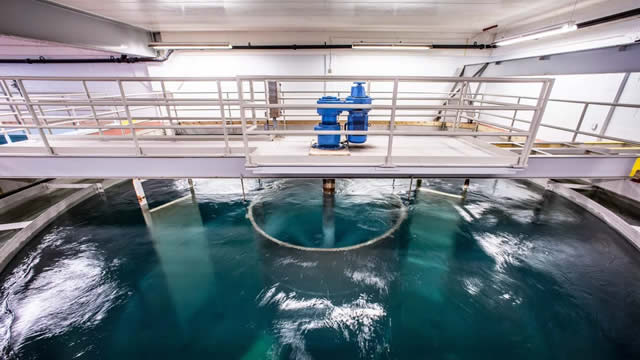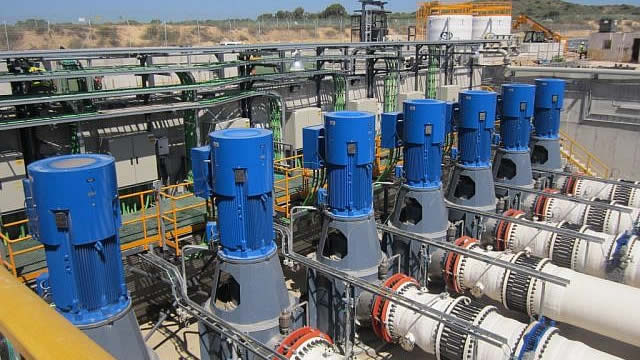
California Water Service Group

California Water Service Group (CWT) Market Cap

California Water Service Group has a market capitalization of $2.74B.

Price: $45.82

0.58 (1.28%)

Market Cap: 2.74B

NYSE · time unavailable

CEO: Martin A. Kropelnicki

Sector: Utilities

Industry: Regulated Water

IPO Date: 1990-03-26

Website: https://www.calwatergroup.com

California Water Service Group (CWT) - Company Information

Market Cap: 2.74B|Sector: Utilities

Company Profile

California Water Service Group, through its subsidiaries, provides water utility and other related services in California, Washington, New Mexico, Hawaii, and Texas. The company is involved in the production, purchase, storage, treatment, testing, distribution, and sale of water for domestic, industrial, public, and irrigation uses, as well as for fire protection. It offers its services to approximately 494,500 customer connections in 100 California communities; approximately 6,200 water and wastewater customer connections on the islands of Maui and Hawaii; approximately 36,400 customer connections in the Tacoma, Olympia, Graham, Spanaway, Puyallup, and Gig Harbor areas; and approximately 8,600 water and wastewater customer connections in the Belen, Los Lunas, Indian Hills, and Elephant Butte areas in New Mexico. The company also engages in the provision of non-regulated water-related services, including operating of municipally owned water systems, privately owned water, and recycled water distribution systems; water system operation, meter reading, and billing services to private companies and municipalities; leasing of communication antenna sites on its properties to telecommunication companies; and billing of optional third-party insurance programs to its residential customers, as well as provides lab services. In addition, it offers wastewater collection and treatment services. The company was founded in 1926 and is headquartered in San Jose, California.

Analyst Sentiment

83%
Strong Buy

From 3 Active Polls

1Y Forecast: $54.00

▲ +17.9% Potential Upside

Consensus Target Metrics

Low Bound

$54

Median

$54

High Bound

$54

Average

$54

Price & Moving Averages

Loading chart...

🎯 Wall Street Analyst Intelligence Report

1-Year structural target targets, chart projections, and sentiment maps.

Average 1Y Target
$54.00
▲ +17.85% Upside
Low Target
$54.00
18% Risk
Median Target
$54.00
18% Mid
High Target
$54.00
18% Max
Consensus
Buy
5 / 10 Buys

Consensus Trend Projection

Trailing closures vs. 12-month metrics map.

Analyst Vote Distribution

Aggregate institutional coverage sentiment weights.

📊 Historical Valuation Multiples

Real-time Trailing Twelve Month (TTM) momentum side-by-side with discrete quarterly metrics.

Fiscal QuarterTTMQ1 2026Q4 2025Q3 2025Q2 2025Q1 2025Q4 2024Q3 2024Q2 2024
Period EndingTrailing 12MMar 31, 2026Dec 31, 2025Sep 30, 2025Jun 30, 2025Mar 31, 2025Dec 31, 2024Sep 30, 2024Jun 30, 2024
Market Cap ($M)2,7422,7072,5832,7342,7082,8842,6573,1952,820
Enterprise Value ($M)4,3424,3064,1484,1804,1944,3014,0024,4484,080
Price to Earnings Ratio (P/E)23.00167.6256.2411.1616.0554.0833.7913.1617.38
Price/Earnings-to-Growth Ratio (PEG)0.640.540.58
Price to Sales Ratio (P/S)2.7112.6111.748.7910.2214.1411.9610.6711.54
Price to Book Ratio (P/B)1.531.511.531.611.631.771.621.961.83
Price to Free Cash Flow Ratio (P/FCF)-12.31-33.80-24.7485.16-38.43-40.23-37.66-200.87-276.86
Enterprise Value to Sales (EV/Sales)20.0718.8613.4315.8321.0918.0114.8516.70
Enterprise Value to EBITDA (EV/EBITDA)13.4073.9868.8741.0740.3965.8260.4935.5341.67
Debt to Equity Ratio4.940.950.960.890.930.900.850.810.84
⚠️

Valuation Model Suspended

API Payload Error: Inverted or negative baseline Free Cash Flow margin detected (-7.2%).

Troubleshooting Notice: The upstream financial data supplier has uploaded corrupted or inverted baseline metrics for CWT. The server sandbox cannot calculate an intrinsic value path from negative cash generation baselines.

📘 Full Research Report

ℹ️

AI-Generated Research: This report is for informational purposes only.

📘 CALIFORNIA WATER SERVICE GROUP (CWT) — Investment Overview

🧩 Business Model Overview

California Water Service Group operates as an investor-owned water and wastewater utility, owning and operating long-lived infrastructure (pipelines, treatment facilities, distribution systems, storage, and related assets) within granted service territories. The operating value chain is straightforward: raw water is sourced and treated (where applicable), delivered through regulated distribution networks, and—where sewer services exist—wastewater is collected and treated before discharge.

Revenue is driven primarily by tariff-based service rates approved by regulators. Customers typically cannot practically switch providers due to the physical nature of the network and the presence of a single certified utility per territory. As a result, the economic engine centers on expanding and maintaining the “rate base” (the regulated asset base) and recovering prudent costs through regulated mechanisms.

💰 Revenue Streams & Monetisation Model

CWT’s monetisation is predominantly recurring and tariff-based, with the utility earning returns on infrastructure and recovering operating expenses. Key components include:

  • Regulated water and wastewater revenues: billed to customers through approved rates (volumetric and/or fixed components depending on the tariff design).
  • Cost pass-through and true-ups: certain operating costs (such as purchased water or other eligible expenses) can be partially or fully recovered through regulatory mechanisms, reducing earnings volatility relative to unregulated businesses.
  • Capacity and growth-related charges: connection/extension fees and related charges support monetisation of system expansion and can help fund growth capital.
  • Regulatory asset recovery: where timing differences exist between incurred costs and allowed recovery, regulatory accounting can smooth earnings impact subject to regulatory approval.

Margin structure is typically influenced by: (1) the pace and prudence of capital spending, (2) the regulator’s treatment of operating and financing costs, and (3) efficiency in operating expenses (labor, energy/power for pumping and treatment, chemicals, and maintenance).

🧠 Competitive Advantages & Market Positioning

CWT’s moat is rooted less in branded differentiation and more in structural barriers tied to regulated natural-monopoly characteristics.

  • Switching costs (hard): households and businesses cannot feasibly “switch” water service without new infrastructure and franchising/certification outcomes. The distribution network’s geography makes the customer relationship effectively sticky.
  • Territorial franchise and regulatory licensing (hard): service areas are governed by state and local frameworks that limit direct duplication of service networks.
  • Scale and operational know-how (moderate): operating complexity across treatment and distribution requires specialized systems, field capabilities, and compliance processes.
  • Regulatory moat (moderate-to-hard): earnings power is tied to an allowed return framework and cost recovery pathways for prudent investments and eligible expenses—when regulators acknowledge capital needs for reliability and water quality.

Competitive benchmarking (primary peers):

  • Aqua America (WTRG): broader footprint across multiple states; competes for growth and acquisitions but not for the same single-territory franchise.
  • American States Water Company (AWR): also a U.S. regulated utility with service-territory dynamics shaped by regulators.
  • Essential Utilities (WTRG): more diversified across water and wastewater services and has a different geographic mix and capital allocation approach.

CWT’s positioning is defined by its geographic and regulatory focus on California service areas, where water reliability, quality compliance, and climate/water-supply constraints drive continued infrastructure needs. Rival utilities’ opportunities exist primarily where regulators permit growth, acquisitions, or expansions—rather than through direct “market share” competition for individual customer territories.

🚀 Multi-Year Growth Drivers

Growth in investor-owned water utilities is largely a function of regulated capital deployment and service-territory fundamentals. Over a 5–10 year horizon, major drivers typically include:

  • Rate base expansion through capex: replacement and modernization of aging pipes, pumps, and treatment assets; system upgrades for reliability; and capacity additions tied to demand and permitted service levels.
  • Water quality and environmental compliance: evolving requirements for contaminants, treatment performance, and monitoring increase the “capital needed to stay compliant,” supporting constructive regulatory investment plans.
  • Reliability under climate and water-supply variability: drought cycles and variability in water availability elevate the importance of storage, diversification of supply sources, and resilient infrastructure.
  • Demand stability and demographic support: long-lived service territories benefit from population growth and household formation, subject to local land use and service-connection policies.
  • Targeted acquisitions/expansions (selective): regulators and utility economics can support growth through acquisition of smaller systems or extensions when the investment case is transparent and the costs are recoverable.

In this sector, the market’s willingness to underwrite growth depends on whether regulators approve reasonable capital programs, allow timely cost recovery, and maintain confidence in utility operational execution and financial discipline.

⚠ Risk Factors to Monitor

  • Regulatory outcomes: timing and magnitude of rate relief, the treatment of specific costs, and the allowed return on equity can materially affect earnings power. Regulatory delays can slow the reflection of costs in customer rates.
  • Capital intensity and execution risk: water infrastructure is complex and long-duration; cost overruns, project delays, and permitting challenges can pressure returns.
  • Water supply and drought risk: dependence on specific sources and variability in supply can increase operating costs (purchased water, treatment intensity) and spur additional capital needs.
  • Compliance and emerging contaminant risk: new monitoring or treatment requirements (including PFAS and other emerging contaminants) can require unplanned upgrades.
  • Financing and interest-rate sensitivity: utilities rely on access to capital markets; adverse credit conditions and higher debt service costs can compress regulatory-spread economics unless captured in rate mechanisms.
  • Operational and cybersecurity risks: as utilities modernize operations, cybersecurity and critical infrastructure resilience become more consequential.

📊 Valuation & Market View

The market typically values regulated water utilities using a blend of valuation frameworks:

  • Cash-flow and earnings power: EV/EBITDA and EV/operating cash flow are common lenses, especially when investors focus on sustainable regulated returns.
  • Equity earnings yield and rate-base growth: P/E-like measures can be informative, but investors often emphasize sustainable growth in rate base and the regulatory-approved return profile.
  • Dividend and credit quality: utilities are frequently valued with attention to balance-sheet strength, credit metrics, and the durability of regulated cost recovery.

Valuation typically moves with expectations around: (1) approved capital programs, (2) the timing of rate case relief, (3) regulatory confidence in cost prudence, and (4) financing conditions that affect the cost of capital.

🔍 Investment Takeaway

CWT offers an evergreen utility investment profile characterized by structurally high customer stickiness from network constraints, territorial/regulatory licensing that limits direct competition, and a regulated framework that ties long-run earnings power to infrastructure maintenance and modernization. The long-term thesis centers on whether CWT sustains prudent capex execution and earns timely recovery through regulators while meeting tightening water quality and reliability requirements in California.


⚠ AI-generated — informational only. Validate using filings before investing.
📰 Market News & Coverage

15 Stories Available

Real-time institutional reporting and market updates for CWT.

zacks.com2026-06-02

AWK Concludes the Acquisition of Nexus Utility Assets for $315 Million

American Water Works closes a $315M Nexus deal across eight states, adding 47,000 customers as it pushes acquisitions and a $3.7B 2026 capex plan.

globenewswire.com2026-06-01

California Water Service Earns G480 Platinum Certification for Water-Use Efficiency, Conservation Program

SAN JOSE, Calif., June 01, 2026 (GLOBE NEWSWIRE) -- In a recognition that reinforces its leadership in sustainability and water-use efficiency, California Water Service (Cal Water) has earned Platinum Certification with the G480 standard from the Alliance for Water Efficiency (AWE) for water conservation and efficiency program operation and management. The platinum certification is the highest status a water utility can achieve for compliance with the G480 standard, established by the American Water Works Association.

zacks.com2026-05-29

Why Is California Water Service Group (CWT) Up 3.7% Since Last Earnings Report?

California Water Service Group (CWT) reported earnings 30 days ago. What's next for the stock?

globenewswire.com2026-05-20

California Water Service Group Promotes Tamara S. Johnson to Vice President, California Operations and Gregory D.

SAN JOSE, Calif., May 20, 2026 (GLOBE NEWSWIRE) -- At its meeting today, the California Water Service Group (CWT: NYSE) Board of Directors unanimously approved the promotions of Tamara S. Johnson to Vice President, California Operations, and Gregory D. Shimansky to Vice President, Rates and Regulatory Affairs, effective July 1, 2026.

globenewswire.com2026-05-18

California Water Service Group Highlights Leadership in Environmental Stewardship and Corporate Citizenship in 2025 Sustainability Report

SAN JOSE, Calif., May 18, 2026 (GLOBE NEWSWIRE) -- California Water Service Group (Group) (NYSE: CWT) published its 2025 Sustainability Report today, showcasing efforts and progress made in its four key focus areas: protecting the planet, serving customers, engaging the workforce, and governing with integrity.

globenewswire.com2026-05-13

TIME Names California Water Service Group One of the World's Most Impactful Companies

SAN JOSE, Calif., May 13, 2026 (GLOBE NEWSWIRE) -- TIME magazine has named California Water Service Group (Group) (NYSE: CWT) as one of the top 35 companies in its inaugural list of the “World's Most Impactful Companies.

zacks.com2026-05-12

4 Stocks to Watch From the Challenging Water Supply Industry

Water utilities like SBS, AWR, AWK and CWT are supported by strategic capital investment plans and strong customer bases, positioning them to outperform peers despite persistent challenges facing the water industry.

seekingalpha.com2026-05-04

California Water: Dividend King Selling At A Discount

California Water Service Group is rated a Buy for patient investors seeking reliable, inflation-beating income and double-digit total return potential. CWT's recent rate case approval and acquisitions in Nevada, Oregon, and Texas support an 8–10% revenue CAGR and diversify regulatory risk. The dividend yield is nearly 3.2% with a 59-year growth streak, and expected annual increases above inflation reinforce CWT's Dividend King status.

zacks.com2026-05-01

CWT or AWK: Which Is the Better Value Stock Right Now?

Investors looking for stocks in the Utility - Water Supply sector might want to consider either California Water Service Group (CWT) or American Water Works (AWK). But which of these two stocks presents investors with the better value opportunity right now?

zacks.com2026-05-01

California Water Service Q1 Earnings Miss Estimates on Higher Costs

CWT's Q1 EPS is down to 7 cents and misses estimates as expenses and interest climbed; revenue rise 5.2% and a $218 million Nexus deal broadens reach.

seekingalpha.com2026-05-01

California Water Service Group (CWT) Q1 2026 Earnings Call Transcript

California Water Service Group (CWT) Q1 2026 Earnings Call Transcript

globenewswire.com2026-04-30

California Public Utilities Commission Issues Decision in California Water Service's 2024 General Rate Case, Infrastructure Improvement Plan

SAN JOSE, Calif., April 30, 2026 (GLOBE NEWSWIRE) -- California Water Service (Cal Water), the largest subsidiary of California Water Service Group (Group) (NYSE: CWT), received a final decision on its 2024 General Rate Case and Infrastructure Improvement Plan from the California Public Utilities Commission (CPUC) on April 30, 2026. The Company believes the decision enables Cal Water to invest responsibly in water system infrastructure through 2027 to support its communities and sets Cal Water's revenue and rates to help sustain safe, clean, reliable water service through 2028.

zacks.com2026-04-30

Saia (SAIA) Q1 Earnings: Taking a Look at Key Metrics Versus Estimates

While the top- and bottom-line numbers for Saia (SAIA) give a sense of how the business performed in the quarter ended March 2026, it could be worth looking at how some of its key metrics compare to Wall Street estimates and year-ago values.

globenewswire.com2026-04-29

California Water Service Group Reports First Quarter 2026 Financial Results & Provides Update on 2024 California General Rate Case

SAN JOSE, Calif. , April 29, 2026 (GLOBE NEWSWIRE) -- California Water Service Group (Group or Company, NYSE: CWT), a leading publicly traded water utility serving California, Hawaii, New Mexico, Washington, and Texas, today reported first quarter 2026 results and provided an update on the revised proposed decision issued by the California Public Utilities Commission (CPUC) on April 29, 2026 (revised PD) on California Water Service Company's (Cal Water's) 2024 California General Rate Case (2024 CA GRC).

globenewswire.com2026-04-29

California Water Service Group Reports First Quarter 2026 Financial Results & Provides Update on 2024 California General Rate Case

SAN JOSE, Calif., April 29, 2026 (GLOBE NEWSWIRE) -- California Water Service Group (Group or Company, NYSE: CWT), a leading publicly traded water utility serving California, Hawaii, New Mexico, Washington, and Texas, today reported first quarter 2026 results and provided an update on the revised proposed decision issued by the California Public Utilities Commission (CPUC) on April 29, 2026 (revised PD) on California Water Service Company's (Cal Water's) 2024 California General Rate Case (2024 CA GRC).

📊 AI Financial Analysis

Powered by StockMarketInfo
Earnings Data: Q Ending 2026-03-31

"CWT reported Q1’26 revenue of $214.6M and net income of $4.0M (EPS $0.07). On a YoY basis, revenue decreased from $204.0M in Q1’25 to $214.6M in Q1’26 (+5.2%), while net income fell from $13.3M to $4.0M (-69.7%), indicating significant profitability pressure. Sequentially (QoQ), revenue edged down from $220.0M in Q4’25 to $214.6M (-2.5%), and net income declined from $11.5M to $4.0M (-64.8%). Profitability contracted sharply. Operating margin slipped to 8.5% from 8.3% in Q4’25 and far below the outsized levels seen earlier in 2025 (e.g., ~22.7% in Q3’25), while net margin compressed to 1.9% in Q1’26 versus 5.2% in Q4’25 and 6.5% in Q1’25. Operating cash flow remained positive at $49.4M, but Q1’s free cash flow ($49.4M) was supported by lower/zero investing activity versus the prior quarter. Balance-sheet risk is more about leverage/working-capital cyclicality than bank-style asset stability: total assets rose to $5.78B and equity grew to $1.79B, while net debt remains high at ~$1.60B. Shareholder returns look muted: the stock is up modestly YTD (+4.7%) but down over 1 year (-10.5%), with no strong price-momentum tailwind. Dividend yield is low (~0.7%) and payout appears heavy relative to recent earnings, so total-return depends mainly on future earnings recovery."

Revenue Growth

Neutral

YoY revenue in Q1’26 was +5.2% ($214.6M vs. $204.0M). QoQ revenue was -2.5% ($220.0M in Q4’25 to $214.6M).

Profitability

Neutral

Net income fell -69.7% YoY and -64.8% QoQ. Net margin compressed to 1.9% in Q1’26 from 5.2% in Q4’25 and 6.5% in Q1’25; margins are notably weaker versus mid-2025 peaks.

Cash Flow Quality

Fair

Operating cash flow was solid at $49.4M in Q1’26. Free cash flow was also +$49.4M, but Q4’25 saw large investing outflows, so QoQ comparability is limited. Dividend outflow continued ($19.98M).

Leverage & Balance Sheet

Caution

Total assets increased to $5.78B and equity rose to ~$1.79B, supporting balance-sheet resilience. However, net debt remains elevated at ~$1.60B, keeping leverage a material risk.

Shareholder Returns

Caution

1-year price performance is negative (-10.5%), so no momentum boost. Dividend yield is low (~0.7%) and recent earnings coverage looks stretched, limiting near-term total return quality.

Analyst Sentiment & Valuation

Caution

Consensus price target is $55 vs. a current price around $44.96, implying modest upside (~22%). Without evidence of earnings recovery, sentiment/valuation support appears limited.

Disclaimer:This analysis is AI-generated for informational purposes only. Accuracy is not guaranteed and this does not constitute financial advice.

Fundamentals Overview

Loading fundamentals overview...

CWT reported Q1 2026 results broadly aligned with internal expectations given the delayed 2024 California GRC, but profitability weakened sharply: EPS fell to $0.07 from $0.22, driven by a ~$0.32/share reduction from lower tax credits, partially offset by rate increases (+$0.11) and accrued/unbilled revenue (+$0.06). Operating cash/throughput implications are mixed, as consumption decreased despite warm/dry weather boosting unbilled amounts. The key positive is the revised proposed decision for the California rate case, providing clearer revenue growth visibility for 2026–2028 and stabilizing mechanisms (RAM plus cost-balancing accounts), supporting a constructive infrastructure-and-PFAS investment outlook. Capital intensity remains high ($129.5 million in Q1; $627 million planned for 2026). Near-term execution risk centers on regulator approval timing and funding strategy to minimize dilution for BVRT and NEXUS closes, while emerging regulatory uncertainty—microplastics—introduces potential incremental treatment requirements beyond current PFAS plans.

AI IconGrowth Catalysts

  • Infrastructure investment up 17.6% in Q1 2026 to $129.5 million
  • Continued PFAS treatment progress and regulatory cost recovery efforts
  • Regulatory visibility from revised 2024 California GRC revenue requirement (expected mechanisms: Monterrey-style RAM and multiple cost-balancing accounts)

Business Development

  • NEXUS acquisition: Nevada and Oregon operations (change of control applications filed in both states)
  • BVRT Texas partnership: filed Texas change of control application; advancing to purchase remaining minority interest to become a wholly owned Texas Water Service Company subsidiary
  • Polluter recovery framework: polluter’s trust distributions (referenced as $6.5 million gross received last week) to offset PFAS costs

AI IconFinancial Highlights

  • Revenue $214.6 million vs $204.0 million in Q1 2025
  • Net income $4.0 million ($0.07 diluted EPS) vs $13.3 million ($0.22 diluted EPS) in Q1 2025
  • EPS bridge: rate increases added $0.11/share; accrued and unbilled revenue added $0.06/share (warm/dry weather in last month); partially offset by decreased consumption, higher depreciation/interest tied to new capital, and reduced effective tax credits reducing EPS by about $0.32/share
  • Capital plan impact: if approved, combined rate case + infrastructure + PFAS/capital would drive compounded annual rate base growth of over 11%

AI IconCapital Funding

  • Liquidity as of March 31, 2026: $58.1 million unrestricted cash and $45.6 million restricted cash
  • Bank liquidity: ~$470 million available on bank lines of credit; credit facilities $600 million expandable to $800 million with maturities extending into March 2028
  • ATM program: $340+ million remaining on shelf registration; only ~$6.1 million of program sales in Q1
  • Management expects to close BVRT and NEXUS toward end of year; equity issuance timing to be right-sized around close to minimize dilution; otherwise uses ATM and normal lines of credit plus longer-term debt

AI IconStrategy & Ops

  • Q1 rate case accounting: results exclude the revenue requirement and other provisions from the revised proposed decision; retroactive memorandum account expected to apply benefits once finalized
  • Second quarter operational work: implement new tariffs with thousands of billing table changes; testing with customer service/accounting/IT to ensure accurate tariff builds
  • Centennial operations: ongoing regional employee/customer celebrations; over 41,000 people visited the centennial website

AI IconMarket Outlook

  • California revised proposed decision expected to be approved later today (or shortly thereafter)
  • Tariff billing timing: management anticipates starting billing new tariffs on July 1, 2026
  • NEXUS close timing: Nevada has 6-month statutory decision timeline; Oregon timeline shorter; management hopes for synchronized approvals and close as early as end of year
  • PFAS treatment schedule: treatment objective by end of 2028; well replacements take longer

AI IconRisks & Headwinds

  • Microplastics regulatory risk: EPA discussion of establishing MCLs; uncertain whether current PFAS treatment will be effective for microplastics (depends largely on EPA standards/methods)
  • PFAS capital pressure: additional regulatory application pending before the commission expected to add pressure on capital needs
  • Near-term EPS volatility: consumption variability offsets rate recovery; Q1 EPS down largely driven by reduced tax credits
  • Execution/dilution risk: equity issuance timing must align with deal close; right-sizing instruments is necessary to minimize dilution

Q&A: Analyst Interest

  • PFAS vs potential microplastics regulation: Management discussed tracking the EPA UCMR list, expecting microplastics to eventually receive regulatory standards (MCLs). They emphasized treatment effectiveness is unclear today and largely depends on EPA science, resulting state implementation, and the approved treatment methods.
  • Capital markets / equity issuance timing: Management said they expect successful closing of BVRT and NEXUS and will right-size funding timing to minimize dilution. They referenced using instruments such as forwards to bridge the gap between raising equity and transaction close, likely toward year-end.
  • PFAS balance sheet and recovery progress: Management highlighted ongoing litigation and polluter recovery, including receiving $6.5 million gross last week and total gross receipts around $66.5 million. They estimated ~$50 million direct offset to PFAS costs and described recovery coverage at ~20–25% of estimated PFAS costs.

Sentiment: MIXED

Note: This summary was synthesized by AI from the CWT Q1 2026 earnings transcript. Financial data is complex; please verify all metrics against official SEC filings before making investment decisions.

📋 Official Regulatory 10-K / 10-Q SEC Filings

Direct authenticated documentation links to audited SEC database reports for CWT.

SEC EDGAR Live Feed
Loading financial data and tables...
📁

SEC Filings (CWT)

© 2026 Stock Market Info — California Water Service Group (CWT) Financial Profile