General Motors Company

General Motors Company (GM) Market Cap

General Motors Company has a market capitalization of $73.49B.

Price: $81.50

0.65 (0.80%)

Market Cap: 73.49B

NYSE · time unavailable

CEO: Mary T. Barra

Sector: Consumer Cyclical

Industry: Auto - Manufacturers

IPO Date: 2010-11-18

Website: https://www.gm.com

General Motors Company (GM) - Company Information

Market Cap: 73.49B|Sector: Consumer Cyclical

Company Profile

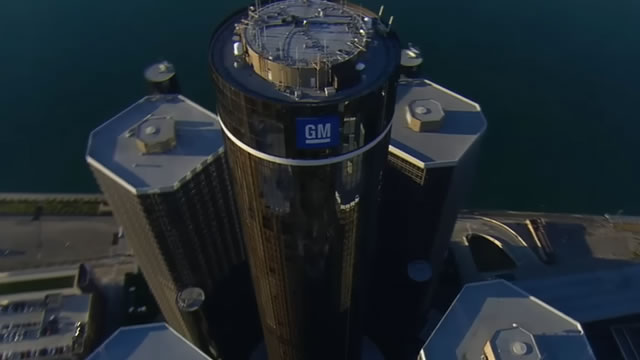
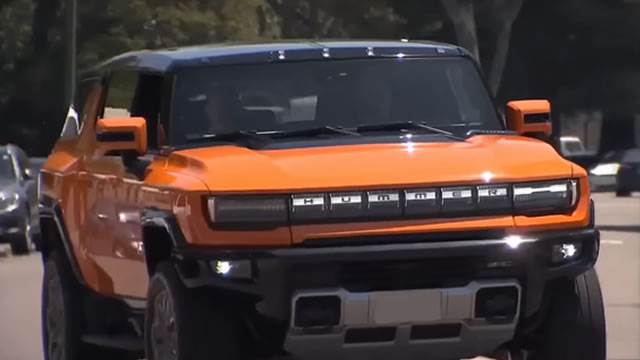
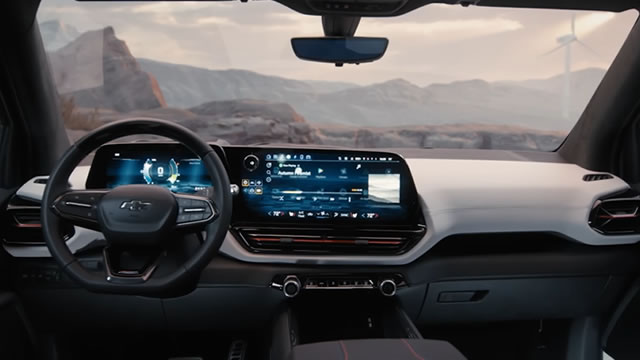
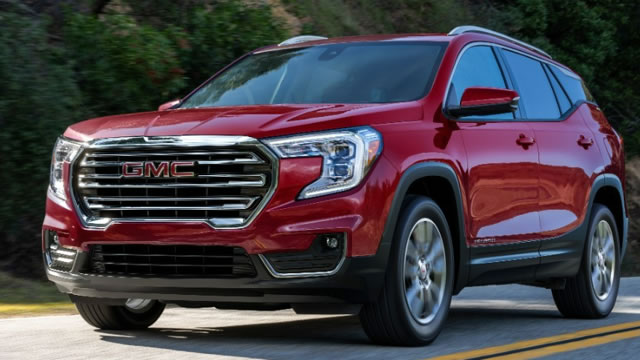
General Motors Company, a prominent global automotive enterprise, is engaged in the design, manufacturing, and distribution of a wide array of vehicles—including trucks, crossovers (SUVs), and passenger cars—along with related parts and accessories. Its expansive reach covers numerous regions such as North America, the Asia Pacific, the Middle East, Africa, South America, with significant operations in the United States and China. The company organizes its business into distinct segments: GM North America, GM International, Cruise, and GM Financial. It markets its diverse vehicle lineup under well-known brand names like Buick, Cadillac, Chevrolet, GMC, Holden, Baojun, and Wuling. Beyond selling to individual consumers through dealerships, GM also supplies its vehicles—including specialized models—to a variety of fleet clients, such as daily rental companies, commercial businesses, leasing firms, and government agencies. GM further extends its offerings with a comprehensive suite of advanced services for both retail and fleet customers. These include vital safety and security features like automated crash response, emergency support, roadside assistance, crisis intervention, stolen vehicle recovery, and turn-by-turn navigation. Additionally, it provides a robust set of connected services, encompassing mobile applications for remote vehicle control and locating electric vehicle charging stations, on-demand diagnostics, smart driver insights, integrated in-vehicle commerce, voice assistants, a navigation and app ecosystem, connected navigation, SiriusXM with 360L, and 4G LTE wireless connectivity. The company is also actively involved in pioneering and commercializing autonomous vehicle technology. Furthermore, GM offers automotive financing and insurance solutions, alongside various software-enabled services and subscription models. Established in 1908, General Motors Company maintains its corporate headquarters in Detroit, Michigan.

Analyst Sentiment

76%
Strong Buy

From 27 Active Polls

1Y Forecast: $93.92

▲ +15.2% Potential Upside

Consensus Target Metrics

Low Bound

$59

Median

$98

High Bound

$110

Average

$94

Price & Moving Averages

Loading chart...

🎯 Wall Street Analyst Intelligence Report

1-Year structural target targets, chart projections, and sentiment maps.

Average 1Y Target
$93.92
▲ +15.24% Upside
Low Target
$59.00
-28% Risk
Median Target
$97.50
20% Mid
High Target
$110.00
35% Max
Consensus
Buy
33 / 51 Buys

Consensus Trend Projection

Trailing closures vs. 12-month metrics map.

Analyst Vote Distribution

Aggregate institutional coverage sentiment weights.

📊 Historical Valuation Multiples

Real-time Trailing Twelve Month (TTM) momentum side-by-side with discrete quarterly metrics.

Fiscal QuarterTTMQ1 2026Q4 2025Q3 2025Q2 2025Q1 2025Q4 2024Q3 2024Q2 2024
Period EndingTrailing 12MMar 31, 2026Dec 31, 2025Sep 30, 2025Jun 30, 2025Mar 31, 2025Dec 31, 2024Sep 30, 2024Jun 30, 2024
Market Cap ($M)73,48668,49974,76958,71447,38946,46659,42350,04153,028
Enterprise Value ($M)181,442176,455184,101168,307160,739158,574170,244154,148156,948
Price to Earnings Ratio (P/E)29.506.52-5.6511.056.254.17-5.024.094.52
Price/Earnings-to-Growth Ratio (PEG)3.550.892.500.39
Price to Sales Ratio (P/S)0.401.571.651.211.011.061.251.031.11
Price to Book Ratio (P/B)1.201.091.220.880.710.720.940.710.77
Price to Free Cash Flow Ratio (P/FCF)5.8947.6313.1711.81120.891408.05-18.9958.05-82.09
Enterprise Value to Sales (EV/Sales)4.044.073.463.413.603.573.163.27
Enterprise Value to EBITDA (EV/EBITDA)11.7447.98439.3829.3228.6323.82191.0722.6921.40
Debt to Equity Ratio6.992.042.132.002.052.062.071.801.84
⚠️

Valuation Model Suspended

API Payload Error: Inverted or negative baseline Free Cash Flow margin detected (-2.9%).

Troubleshooting Notice: The upstream financial data supplier has uploaded corrupted or inverted baseline metrics for GM. The server sandbox cannot calculate an intrinsic value path from negative cash generation baselines.

📘 Full Research Report

ℹ️

AI-Generated Research: This report is for informational purposes only.

📘 GENERAL MOTORS (GM) — Investment Overview

🧩 Business Model Overview

GM designs, manufactures, and sells vehicles through a largely dealer-based distribution model, then monetizes ownership through financing, service, parts, and connected/ancillary offerings. The value chain is split between (1) industrial operations—engineering, sourcing, manufacturing, and logistics to deliver vehicles at competitive cost and quality—and (2) customer/ownership monetization—vehicle financing and leasing (GM Financial), maintenance and repair through dealer/service networks, and a growing set of software-enabled features. Customer stickiness is driven by the breadth of the dealer and service footprint, brand-driven repurchase behavior, and the operational convenience of warranty service and parts availability.

💰 Revenue Streams & Monetisation Model

GM’s monetization is primarily transactional from vehicle sales (new and used distribution channels) supported by ownership economics. Key revenue/margin sources include:

  • Vehicle sales: Revenue varies with volume, model mix (truck/SUV versus passenger platforms), and pricing/incentive intensity. Margin is highly sensitive to manufacturing utilization, material costs, and warranty/quality performance.
  • Financing and leasing (through GM Financial): Margin is driven by net interest spread, lease penetration, credit performance, and residual value management. This segment can smooth some cyclicality relative to pure manufacturing, though it introduces credit and market risk.
  • Parts, service, and GM-branded service revenue: More recurring in nature than vehicle sales, supported by the installed base and dealer/service network reach. Profitability depends on parts pricing discipline and service mix.
  • Connected and software-enabled features: Smaller in absolute scale than vehicles historically, but important for margin expansion and reducing hardware-only dependence. Monetization typically follows usage, subscriptions, and feature enablement.

🧠 Competitive Advantages & Market Positioning

GM competes in mass-market vehicles where scale, cost competitiveness, and distribution efficiency matter. The durable elements of GM’s advantage are more cost and infrastructure than classic “high switching cost” software moats. The most relevant moats are:

  • Cost Advantages (Scale + Manufacturing Engineering + Procurement): Large-volume platforms and purchasing scale support per-unit cost leverage. Competitiveness is reinforced by ongoing manufacturing optimization, platform reuse, and supply-chain management.
  • Intangible Assets (Brand + Product Architecture): GM’s established product portfolio, dealer relationships, and long-lived model ecosystems support repeat consideration and service demand—important in a category where customers typically remain within familiar brands.
  • Network Effects (Dealer/Service Coverage): While not a software network effect, vehicle ownership creates a practical network effect—widespread dealer/service access increases customer convenience and supports parts/service revenue over the vehicle life.
  • Switching Costs (Low-to-Moderate, But Real in Practice): Switching is not technologically locked, yet customers face friction tied to brand familiarity, resale value expectations, and service/warranty convenience. This reduces churn at the ownership stage.

Competitive benchmarking:

  • Toyota Motor: Often emphasizes operational discipline and hybrid/efficiency strategy, competing strongly on manufacturing consistency and product breadth. GM’s positioning relies more on platform scale, dealer/service coverage, and balancing internal-combustion and electrified portfolios.
  • Ford Motor: Direct peer in North American mass-market trucks/SUVs and U.S. distribution. GM’s differentiation centers on manufacturing footprint execution, model mix, and financing/ownership economics.
  • Tesla: Competes with an EV-first approach, emphasizing vertical integration and direct sales. Tesla’s moat is largely technology and software/OTA capability rather than dealer/service density. GM’s defense is scale manufacturing, broader product segmentation, and a widespread service and financing ecosystem.

Overall, GM’s hard-to-replicate strengths are rooted in industrial execution and ownership infrastructure, which remain valuable even as powertrains shift.

🚀 Multi-Year Growth Drivers

Over a 5–10 year horizon, GM’s growth opportunity is less about one discrete “product cycle” and more about aligning industrial capacity with evolving regulation and consumer preferences:

  • Powertrain transition with disciplined capex: Electrification and hybridization expand the addressable market for compliant, consumer-acceptable vehicles. The investment case improves when GM matches battery supply, platform strategy, and charging ecosystem realities to regional demand.
  • Model mix and profitable segments: Trucks/SUVs and commercial-adjacent use cases can support better margin structures when production planning matches demand and incentive cycles.
  • Installed-base monetization: As the vehicle population grows, parts/service and financing spread economics benefit from scale. Connected features can add incremental, higher-margin revenue over time.
  • Financing penetration with credit discipline: In downturns, disciplined underwriting and loss-rate control can protect profitability and preserve market share in retail financing.
  • Software-enabled efficiency and feature differentiation: While not a pure software company, GM can expand revenue per vehicle through feature enablement, telematics, and fleet management add-ons where customer demand and regulatory requirements support usage.

⚠ Risk Factors to Monitor

  • Capital intensity and execution risk: Vehicle programs require sustained investment in platforms, battery supply, tooling, and manufacturing changes. Underutilization or misalignment between product launches and demand can depress margins.
  • Competitive pricing pressure: Industry-wide incentives and pricing wars can compress returns, particularly when capacity growth outpaces demand.
  • Battery and material supply chain volatility: Electrification exposes GM to commodity and supply constraints, including battery cell supply, sourcing terms, and logistics impacts.
  • Regulatory and compliance costs: Emissions rules, safety requirements, and evolving software/regulatory frameworks can increase costs and affect product planning.
  • Dealer network economics: Changes in incentives, dealer profitability, or OEM-to-dealer policy can alter distribution effectiveness and customer purchase experience.
  • Credit and residual value risk: Through GM Financial, underwriting standards and residual value assumptions can drive earnings volatility, especially when used vehicle prices move unfavorably.
  • Quality, warranty, and recall exposure: In a manufacturing-heavy business, warranty costs and reputational impacts can materially affect profitability.

📊 Valuation & Market View

Equity markets typically value automakers through a blend of EV/EBITDA and forward cash flow expectations, with meaningful adjustments for cyclicality and balance-sheet risks. The market’s underwriting often hinges on:

  • Industrial margin durability: Evidence that manufacturing and mix can sustain returns through incentive cycles.
  • Free cash flow conversion: Whether earnings translate into dependable cash generation after capex needs.
  • Capital allocation quality: Investments that protect future product competitiveness without impairing near-term liquidity.
  • Financing segment stability: Credit performance, loss rates, and residual valuation discipline can influence valuation multiples.
  • Balance-sheet considerations: Pension, labor obligations, and other structural liabilities can affect perceived downside protection.

A favorable valuation typically emerges when GM demonstrates both (1) consistent cost and quality execution and (2) credible earnings/cash flow resilience through the powertrain transition.

🔍 Investment Takeaway

GM’s long-term investment case rests on cost and execution advantages in vehicle manufacturing, reinforced by ownership economics through financing, parts/service, and a dense dealer/service network. While the auto category remains cyclical and competitive, GM’s ability to defend margins through disciplined industrial planning and maintain financial credit quality can sustain earnings power through the electrification transition. The central question for investors is whether industrial investment translates into durable profitability and cash generation without excessive dilution of returns.


⚠ AI-generated — informational only. Validate using filings before investing.

📰 Market News & Coverage

15 Stories Available

Real-time institutional reporting and market updates for GM.

nytimes.com2026-06-13

State Attorneys General Are Investigating OpenAI

OpenAI said that a coalition of states had opened an investigation over a wide range of its practices, including its handing of user data, safety of minors and advertising activities.

wsj.com2026-06-12

OpenAI Investigated by Coalition of State Attorneys General

Company subpoenaed for documents covering wide range of its activities and impact on users.

businesswire.com2026-06-11

General Atomics to Design First Full-Scale Fusion Blanket Test Facility

SAN DIEGO--(BUSINESS WIRE)-- #BCTF--General Atomics (GA) announced today that the company is collaborating with the U.S. Department of Energy (DOE) to develop design concepts for a facility dedicated to testing full-scale fusion power-plant “blankets,” a critical system that has never been tested at this scale. A new Fusion Blanket Component Test Facility (BCTF) would enable scientists and engineers to evaluate integrated fusion blanket systems. These systems use specialized lithium-based materials—sol.

investors.com2026-06-11

GM Diversifies Its Battery Technology

General Motors is considering using an unproven, but possibly more powerful, battery technology for its electric vehicles. The stock is up on Thursday.

zacks.com2026-06-11

Why General Motors (GM) is a Top Momentum Stock for the Long-Term

Whether you're a value, growth, or momentum investor, finding strong stocks becomes easier with the Zacks Style Scores, a top feature of the Zacks Premium research service.

gurufocus.com2026-06-11

GM Makes a Different EV Battery Bet

General Motors (GM) appears to be rethinking its EV battery roadmap, with the automaker putting lithium manganese rich, or LMR, technology ahead of the more wid

foxbusiness.com2026-06-11

GM letting some EV owners sell electricity back to the US power grid

General Motors announces a software update enabling EV owners to sell power back to the electric grid, with over 250,000 bidirectional EVs on U.S. roads.

businesswire.com2026-06-11

Worthington Steel Named a 2025 Supplier of the Year by General Motors

COLUMBUS, Ohio--(BUSINESS WIRE)--Worthington Steel, Inc. (NYSE: WS) today announced that it was named a GM Supplier of the Year winner in General Motor's 34th annual Supplier of the Year awards. This marks the fifth time Worthington Steel has earned the distinction since 2020, including the last three years. “Our employees are dedicated to helping our customers achieve their business goals, and this award is a direct reflection of those efforts,” said Worthington Steel President and CEO Geoff G.

reuters.com2026-06-10

UAW President: Deal reached with axle supplier Dauch Corp after 10-day strike

The United ​Auto Workers ‌has reached a deal ​with ​axle supplier Dauch ⁠Corp after ​a 10-day ​strike against the company at ​its ​Three Rivers, Michigan, plant, ‌union ⁠President Shawn Fain said on ​Wednesday.

wsj.com2026-06-10

UAW Reaches Tentative Deal to End Strike at Supplier to GM Trucks

Unionized workers at a Michigan plant producing a key component for General Motors GM -5.21%decrease; down pointing triangle trucks have reached a tentative agreement for a new labor contract following a 10-day strike.

zacks.com2026-06-10

General Motors (GM) Registers a Bigger Fall Than the Market: Important Facts to Note

General Motors (GM) reached $79.43 at the closing of the latest trading day, reflecting a -5.17% change compared to its last close.

reuters.com2026-06-10

Exclusive: GM may ditch LFP batteries for future EVs

General Motors may scrap plans to use a lower-cost, iron-based battery chemistry that many automakers are using to cut electric-vehicle costs, GM's head of battery technology ​said.

gurufocus.com2026-06-10

GM's AI Power Pivot Targets 100-Gigawatt-Hour Battery Opportunity

General Motors (GM) is pushing into stationary electricity storage through a partnership with Peak Energy Technologies, a young battery startup focused on sodiu

247wallst.com2026-06-10

Expert Warning: America's Grid Is So Far Behind, Blackouts Are Coming Even Without AI

Dan Dreyfus, founder of Borneite Capital, warned on the All-In Podcast that America's grid is in such poor shape that blackouts, when power is completely lost, and brownouts, when voltage is reduced, and electricity becomes less reliable, are coming from ordinary electrification alone.

barrons.com2026-06-10

GM Wants a Piece of the AI Power Boom. The Stock Isn't Getting a Lift.

General Motors unveiled new grid-storage, bidirectional charging, and sodium-ion battery initiatives as it looks to benefit from growing electricity demand tied to AI and data centers.

📊 AI Financial Analysis

Powered by StockMarketInfo
Earnings Data: Q Ending 2026-03-31

"GM reported Q1’26 revenue of $43.6B, up 0.8% QoQ (from $45.3B in Q4’25) but down 0.9% YoY (from $44.0B in Q1’25). Net income was $2.63B, improving sharply QoQ from a net loss of $3.31B in Q4’25, and slightly down YoY versus $2.78B in Q1’25 (about -5.5%). EPS was $2.84, up meaningfully from -$3.60 in Q4’25, but down versus $3.40 in Q1’25. Profitability improved dramatically on a QoQ basis: net margin rebounded to 6.0% from -7.3% in Q4’25, while remaining slightly below the 6.3% YoY level. Operating income of $2.93B reflected this turn, supported by improved gross profit ($5.0B; 11.5% margin vs -2.5% in Q4’25). Cash flow quality was weaker in the quarter: operating cash flow was $2.95B, but free cash flow was about -$0.32B due to higher capex ($3.27B). Balance sheet resilience remains solid with total assets of $281.0B and equity of $64.7B (up QoQ from $63.2B). Cash was $24.4B; however, leverage is still substantial historically (debt not provided as the primary metric in this dataset’s balance snapshots). Shareholder returns look strongly positive: GM is up 83.9% over 1 year (price appreciation), with a low dividend yield (~0.33%). Total return profile is momentum-led rather than income-led. Analyst consensus price target ($92.83) is below the current price (~$81.32 shown), implying limited upside/near-term valuation risk."

Revenue Growth

Fair

Q1’26 revenue was $43.6B (+0.8% QoQ, -0.9% YoY). Trend shows stability vs last year, with a mild sequential decline from Q4’25.

Profitability

Good

Net income improved QoQ from -$3.31B to +$2.63B and net margin rebounded to 6.0% (vs -7.3% in Q4’25). YoY net income fell ~5.5% and margin eased slightly from ~6.3% to ~6.0%.

Cash Flow Quality

Caution

Operating cash flow was positive at $2.95B, but free cash flow turned negative (~-$0.32B) due to capex of -$3.27B. Dividend paid was small (-$0.22B), but buyback activity appears meaningful.

Leverage & Balance Sheet

Positive

Total assets were steady at ~$281.0B with equity improving QoQ to ~$64.7B. While leverage remains a consideration (auto manufacturers typically carry debt), the quarter shows balance-sheet resilience.

Shareholder Returns

Strong

Strong capital appreciation: 1-year price change of +83.9%. Dividend yield is low (~0.33%), so total return is momentum-driven rather than income-driven.

Analyst Sentiment & Valuation

Fair

Consensus target ($92.83) vs current price (~$81.32) suggests upside but the margin of safety is not large given the high recent run-up; valuation could be sensitive to execution and auto cycle swings.

Disclaimer:This analysis is AI-generated for informational purposes only. Accuracy is not guaranteed and this does not constitute financial advice.

Fundamentals Overview

Loading fundamentals overview...

GM delivered a strong Q1 with EBIT-adjusted of $4.3B and North America margin at 10.1% (tariff benefit included), while maintaining incentive discipline (>2 points below industry average) and lean inventory (47 days supply at Q2 start; 516k units end-Q1). Guidance was raised: 2026 EBIT-adjusted to $13.5B–$15.5B and EPS diluted adjusted to $11.50–$13.50, supported by tariff flow-through, lower warranty drag, regulatory tailwinds, and improved EV profitability despite lower EV wholesale volumes. The offset framework emphasized “self-help” and careful cost timing rather than broad overreaction. The key risk is Iran-conflict duration, which drives oil/logistics and commodity uncertainty; management kept FCF guidance unchanged due to tariff refund timing uncertainty. Strategic momentum is anchored in OnStar/Super Cruise subscriber growth (13M target, $3.1B recognized revenue) and AI-enabled autonomy progress (Super Cruise at 1B hands-free miles; testing in CA and MI), supporting durable recurring digital revenue by 2028 and beyond.

AI IconGrowth Catalysts

  • North America EBIT-adjusted margin delivery of 10.1% in Q1 (including ~1.5 pts tariff benefit) supporting full-year 8%–10% return
  • EV market share improvement to 13% in the U.S. vs ~10% in Dec 2025 despite lower EV wholesale volumes
  • Crossovers mix growth from just over 40% of sales (2023) to >46% after lineup refresh
  • On pace for >1 million OnStar subscribers added in 2026; Super Cruise scaling to 1 billion hands-free miles
  • Cadillac Escalade IQ 2028 eyes-off/technology launch pathway supported by AI-enabled autonomy buildout (nearly 90% of autonomy code AI-generated)

Business Development

  • OnStar/Super Cruise ecosystem expansion (30% to 40% renewal trends; plans to add premium subscribers)
  • Autonomy commercialization plan: deploy personal-vehicle system across ICE and EVs and multiple brands/price points (SDV 2.0 timeline referenced)

AI IconFinancial Highlights

  • Q1 2026 EBIT-adjusted of $4.3 billion, surpassing expectations even excluding the $0.5 billion tariff adjustment
  • North America Q1 EBIT-adjusted margin: 10.1% including ~1.5 pts tariff benefit; netted to ~8.6%
  • U.S. incentive spend per vehicle: remained >2 points below industry average
  • Revenue down YoY by ~$400 million driven primarily by lower EV wholesale volumes; ICE wholesales flat YoY
  • EV losses down several hundred million YoY in Q1 due to lower volumes, manufacturing efficiencies, and lower fixed costs
  • Tariff cost guidance reset: gross tariff costs expected $2.5B–$3.5B for 2026 vs prior $3B–$4B due to Q1 tariff adjustment; Supreme Court tariff decision credited a receivable (timing uncertainty kept FCF guidance unchanged)
  • Commodity/freight and higher DRAM costs increase: full-year year-over-year commodity inflation guide raised to $1.5B–$2.0B (from earlier; incremental $0.5B expected to be evenly weighted across remaining 3 quarters)
  • Warranty: FY expected YoY tailwind of $1B; Q1 included $400M of lower warranty reserve adjustments (partially offset by higher warranty accruals)
  • Regulatory costs: FY expected $500M–$750M tailwind year-over-year; endangerment finding repeal already assumed
  • Recognized OnStar digital revenue: >$750M in Q1 (+20% YoY); deferred revenue $5.8B (+$2B, +50% YoY)

AI IconCapital Funding

  • Q1 capital return: $164M dividends
  • Q1 open market repurchase: $800M; retired ~11M shares at avg price $75.02
  • Remaining share repurchase authorization: $5.5B after ending Q1 with $19B cash
  • GM Financial: Q1 EBT-adjusted $700M; maintained adjusted auto free cash flow guide $9B–$11B (excluding EPA tariff refund timing uncertainty)

AI IconStrategy & Ops

  • North America lean inventory: planned downtime in Q1 for next-gen full-size pickup tooling; end-Q1 dealer inventory 516,000 units (down 6% YoY; down 9% for full-size pickups)
  • Constrained retail sales due to lean inventory; intention to increase inventory levels of key products over next several quarters
  • EV footprint transition: transitioning Orion assembly from EV to ICE and resolving associated supplier contracts; no impairments except BrightDrop EV van
  • EV rightsizing: cancelations/supplier commercial claims driving Q1 EV charges; 90% of expected supplier commercial claim costs recorded by Q&A
  • Onshoring/supply chain execution approach acknowledged as back-half weighted as plants ramp in early 2027

AI IconMarket Outlook

  • Raised full-year 2026 EBIT-adjusted guidance to $13.5B–$15.5B (from $13B–$15B)
  • Raised full-year 2026 EPS diluted adjusted guidance to $11.50–$13.50 (from $11–$13)
  • Assumptions: SAAR in low-16 million unit range; inventory/incentive discipline maintained with second-quarter start at ~47 days of supply
  • U.S. price: expected flat, up ~0.5% benefiting from 2026 model year price increases; ICE volumes flat to modestly up with production constrained by full-size pickup refresh and Cadillac XT6 end of production
  • EV volumes: expected lower; market stabilizing around ~6% of U.S. industry sales; FY EV benefit $1.0B–$1.5B from rightsize/lower EV wholesale volumes
  • 2026 gross tariff costs expected $2.5B–$3.5B after Q1 tariff adjustment (previously $3B–$4B)
  • OnStar subscriber target: reach ~13M by end of 2026 (+$1M YoY) with ~30% renewal trends for premium plans; calendar-year recognized revenue $3.1B (+15% YoY); deferred revenue expected to approach $7.5B (+35% YoY)

AI IconRisks & Headwinds

  • Iran conflict: primary variable; uncertainty on duration drives oil, logistics, and broader commodity cost volatility and potential demand/mix shifts
  • Tariff/receivable timing uncertainty from Supreme Court decision: management kept FCF guidance unchanged due to refund payment timing uncertainty
  • EV profitability and cash restructuring execution risk: additional EV charges $1.1B in Q1 (supplier claims/contract cancellations); remaining cash impacts expected primarily in 2026
  • Production/inventory balancing risk: Q2 dealer inventory and retail constraints; downtime effects and logistics challenges affecting near-term volume cadence
  • Competition/discounting risk: management expects tactical, disciplined playbook to avoid broad discounting even if competitors chase cost pressures

Q&A: Analyst Interest

  • Topic: Offsets behind higher commodity inflation guidance (net of AEPA/tariff) - Management's detailed response: Paul described offsets coming from Q1 timing/outperformance plus core improvements in warranty, EV profitability, and regulatory costs. He cited a proven “playbook” from tariffs/chip/COVID to create degrees of freedom (e.g., deferring hiring). He emphasized not overreacting and holding numbers net of AEPA as prudent given uncertainty, leaving upside potential if conditions abate.
  • Topic: ARPU/software monetization pathway for SDV 2.0 and autonomy attach economics - Management's detailed response: Paul said focus is on attachment rates and delivering customer value as SDV 2.0 expands digital opportunity magnitude. He argued GM’s advantage is higher deferred and realized revenue scale versus EV-only models, implying potentially lower unit ARPU but stronger portfolio-level monetization. Management promised additional disclosure over coming months.
  • Topic: Primary “move-the-needle” uncertainty and commodity curve assumptions - Management's detailed response: Mary and Paul identified the Iranian conflict as #1 watch item affecting oil and logistics, with the key question being duration and how high oil prices may rise before demand impacts emerge. Paul said guidance assumes the current net-of-hedges commodity curve persists, with steel contract structures cushioning swings. He stated that if conflict resolves and prices return to pre-conflict levels, upside is possible.

Sentiment: POSITIVE

Note: This summary was synthesized by AI from the GM Q1 2026 earnings transcript. Financial data is complex; please verify all metrics against official SEC filings before making investment decisions.

📋 Official Regulatory 10-K / 10-Q SEC Filings

Direct authenticated documentation links to audited SEC database reports for GM.

SEC EDGAR Live Feed
Loading financial data and tables...
📁

SEC Filings (GM)

© 2026 Stock Market Info — General Motors Company (GM) Financial Profile