
📘 INTUITIVE SURGICAL INC (ISRG) — Investment Overview
🧩 Business Model Overview
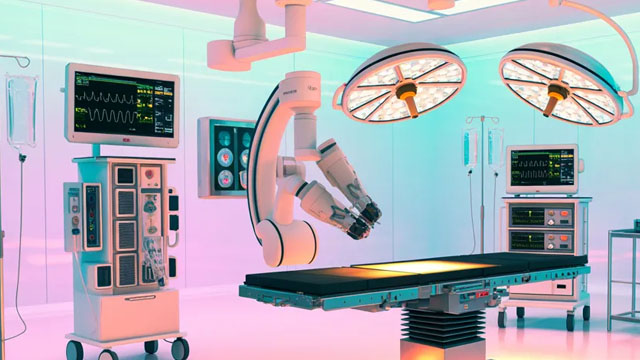
Intuitive Surgical operates a platform-based model in surgical robotics. The company sells a capital equipment system (the robotic surgical platform) that enables surgeons to perform minimally invasive procedures with instrumented precision. Revenue is then reinforced by a tightly coupled ecosystem of consumable instruments (instruments, staplers, and related surgical accessories) plus installation, training, and ongoing service support. This structure creates an “installed base” dynamic: hospitals justify the initial platform purchase because the platform’s instruments and workflow become operationally embedded, and the provider continues to generate value as patient volumes and procedure mix expand.
💰 Revenue Streams & Monetisation Model
Monetisation is dominated by recurring and high-frequency consumables tied to each procedure. The main revenue components typically include:
- System sales (capital platform): less frequent, driven by new installations, replacement cycles, and facility expansion.
- Instrument and accessory sales (procedure-linked consumables): the primary volume driver; these products are used repeatedly across surgeries, supporting a recurring revenue profile.
- Service and support: multi-year service contracts and service-related revenue that stabilizes cash flows.
- Training and other ancillary services: supportive, but typically smaller relative to instruments/service.
Margin profile tends to reflect (1) the degree of install-base penetration and utilization, (2) mix shift toward higher-value instruments and accessories, and (3) service attachment rates. The installed base also enables better predictability than a pure capital equipment model because a significant portion of demand correlates with procedure volumes rather than new system placements alone.
🧠 Competitive Advantages & Market Positioning
Core moat: High switching costs and an integrated clinical workflow ecosystem. Once a hospital standardizes on a robotic platform, adoption of a different system can require retraining, workflow changes, different instrument sets, and operational adjustments across the surgical team. This creates practical friction that reduces near-term switching likelihood. Intuitive’s installed base, long-running procedure experience, and breadth of instrument compatibility reinforce this stickiness.
Industry focus vs. competitors: Intuitive Surgical is primarily focused on maximizing platform utilization through a mature ecosystem of instruments, services, and clinical adoption programs. Competitors generally attempt to differentiate through platform design, instrument architecture, and cost structure. Key competitor benchmarks include:
- Medtronic (Hugo system): a credible robotics entrant using a different platform approach; competition centers on ease of adoption and clinical workflow considerations.
- CMR Surgical (Versius system): targets scalability and potentially lower total costs of ownership; competition emphasizes platform deployment and modularity.
- Surgical robotics startups and emerging entrants (varied approaches across instrument design and clinical focus): often focus on select procedures and incremental adoption.
Despite these efforts, Intuitive’s competitive positioning benefits from a larger installed base and a deeply established instrument/service ecosystem that ties physician training, operating room workflows, and procurement cycles to the platform. This is the primary reason competitors face difficulty displacing share quickly—even when alternative systems demonstrate technical capabilities.
🚀 Multi-Year Growth Drivers
- Secular shift toward minimally invasive surgery: robotics supports surgeon ergonomics and procedural precision, enabling continued substitution of open and some laparoscopic approaches where clinically appropriate.
- Procedure expansion within the installed base: continued adoption across new specialties and indications can increase instrument consumption per patient and improve platform utilization.
- International and facility penetration: growth opportunities exist as more hospitals add robotics capability and as training and service capacity scale to support broader geographic adoption.
- Demand durability driven by outcomes and operating efficiency: where payer and provider incentives align with shorter recovery profiles and resource efficiency, procedure volumes can expand sustainably.
- Service and consumables attach depth: once installed, instrument and service attachment become key levers; utilization improvements tend to compound over time.
⚠ Risk Factors to Monitor
- Regulatory and clinical acceptance risk: new indications require clinical evidence and regulatory clearance; safety events or slower-than-expected adoption can affect utilization.
- Reimbursement and payer pressure: procedure reimbursement dynamics can influence hospital economics and the pace of adoption or utilization.
- Competitive platform displacement: emerging robotics platforms may offer differentiated cost structures, broader instrument compatibility, or improved workflow, potentially pressuring share and pricing.
- Pricing and instrument mix scrutiny: dependence on consumable demand exposes margins to changes in instrument pricing, hospital contracting leverage, and policy scrutiny.
- Concentration of technology and supply chain: platform-dependent instruments and service components create execution risk; manufacturing quality and supply stability are critical.
- Cybersecurity and operational continuity: connected and software-dependent systems raise cybersecurity and reliability considerations for hospitals and regulators.
📊 Valuation & Market View
Market valuation for surgical robotics generally reflects a blend of platform adoption and the durability of recurring consumables/service revenue. Investors often anchor on metrics such as EV/Revenue or EV/EBITDA for growth visibility, but the key drivers that typically move expectations include:
- Installed base growth and new-system conversion strength.
- Instrument and service attachment translating into recurring revenue quality.
- Utilization trends driven by procedure volumes and breadth of indications.
- Gross margin durability, particularly through instrument mix and service economics.
In this sector, the market tends to reward consistent evidence that consumables demand scales with the installed base while limiting competitive erosion in pricing and share.
🔍 Investment Takeaway
Intuitive Surgical’s long-term thesis rests on a structural advantage: a robotics platform embedded in hospital surgical workflows, reinforced by high switching costs and a mature, procedure-linked ecosystem of instruments and service. While competition from other robotics vendors can influence adoption pace and pricing dynamics, Intuitive’s installed base economics and integrated ecosystem create meaningful barriers to rapid displacement. The investment case improves when procedure volumes expand within the installed base and when service/consumables remain durable relative to platform churn.
⚠ AI-generated — informational only. Validate using filings before investing.

















 Growth Catalysts