
📘 LAMAR ADVERTISING COMPANY CLAS (LAMR) — Investment Overview
🧩 Business Model Overview
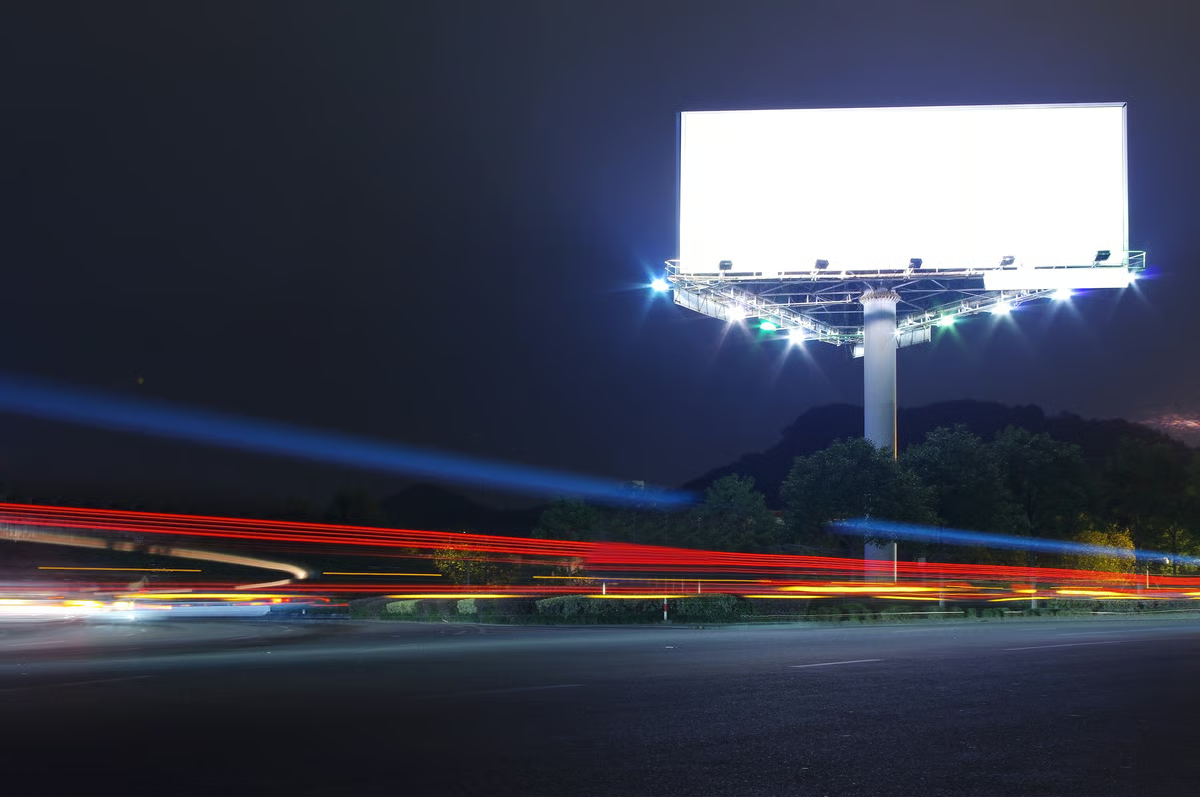
Lamar Advertising monetizes high-impact out-of-home (“OOH”) advertising inventory—primarily billboards and other roadside media—by leasing customer access to scarce, high-visibility locations. The value chain centers on (1) acquiring and developing sign sites through zoning/permitting and property control, (2) converting strategically chosen locations into revenue-generating assets (increasingly digital), and (3) selling advertising time through long-standing relationships with local, regional, and national advertisers and agencies.
A key characteristic of the model is site permanence: once a sign is permitted and installed at a premium location, the asset tends to retain value through repeat campaigns and multi-period customer planning, creating durability in cash flows relative to purely transactional media.
💰 Revenue Streams & Monetisation Model
Revenue is primarily driven by the sale of advertising impressions/placements on its media inventory. Monetisation is a function of:
- Advertiser demand and contract structure: a mix of recurring placements (repeat local and regional campaigns) and shorter-duration bookings (often reflecting seasonal marketing schedules).
- Monetisation per placement: pricing depends on route/traffic characteristics, visibility, and competitive saturation within the same geography.
- Digital mix and operating leverage: digital out-of-home generally improves utilization and enables more flexible scheduling, supporting higher throughput per sign.
- Usage and occupancy: utilization across the portfolio impacts margin conversion, especially when overhead is largely fixed.
Margin drivers typically include (i) portfolio occupancy and pricing, (ii) the incremental contribution from digital conversions, and (iii) cost discipline in sales and site operations. Capital intensity is material because maintaining and upgrading sign structures and digital technology require ongoing reinvestment.
🧠 Competitive Advantages & Market Positioning
Lamar’s moat is rooted in controlling scarce, high-visibility outdoor advertising locations and maintaining the density of placements in growth markets. The competitive edge is less about creative differentiation and more about access to “where advertising works” in a regulatory and land-constrained industry.
- Switching/contract stickiness: advertisers and agencies build media plans around specific routes and customer geographies. Changing to an alternative supplier can require re-planning, re-negotiation, and replacement of campaign reach.
- Location scarcity (site-level barriers): billboards face zoning, permitting, and community/regulatory constraints that limit how quickly competitors can replicate comparable inventories.
- Scale and sales coverage: a dense network of sites supports broader campaign reach and more efficient selling to multi-market advertisers.
- Digital operating advantages (execution cost and flexibility): the shift to digital can increase scheduling flexibility and improve utilization, supporting a higher revenue yield on existing locations.
Competitive benchmarking (primary peers):
- Outfront Media (OUTF): a large, focused operator with substantial urban exposure, competing on site quality and market presence.
- Clear Channel Outdoor (various ownership structures historically; commonly cited peer in OOH): competes across major U.S. markets with differing site portfolios and development pipelines.
- Intersection Media (private/various structures in the category): competes with a distinct emphasis on smaller-format and urban street-level placements rather than Lamar’s billboard-heavy footprint.
Industry focus contrast: Lamar’s positioning is most strongly expressed through a billboard/digital roadside network with significant site control in key U.S. markets, whereas peers may emphasize different urban form factors, different market footprints, or different development mixes. This matters because billboard reach and regulatory barriers operate at the site/route level rather than at the brand level.
🚀 Multi-Year Growth Drivers
Over a 5–10 year horizon, growth is supported by a set of secular and execution drivers that do not rely on cyclical outperformance:
- OOH share gains from fragmented media: advertisers continue reallocating from less measurable or less accessible channels toward formats that reach consumers at dwell points (commutes, retail corridors, and entertainment venues).
- Digital conversion: expanding digital capacity improves scheduling flexibility, utilization, and yield per sign, with ongoing incremental benefits as more inventory becomes addressable for dynamic campaign planning.
- Advertiser demand for broader, multi-market reach: national advertisers value consistent execution across geographies, which favors operators with scale and density.
- Measurement and programmatic enablement: improvements in audience estimation and ad-tech integration can raise adoption by agencies that require planning discipline and reporting.
- Industry consolidation and site acquisition efficiency: fragmented local markets and constrained permitting can reward operators with strong development and permitting capabilities, supporting portfolio upgrades and selective site growth.
⚠ Risk Factors to Monitor
- Regulatory and permitting risk: local zoning rules, sign ordinances, or moratoria can constrain the pipeline for new sites and digital upgrades.
- Technological and measurement risk: slower-than-expected adoption of improved measurement standards can reduce conversion of budgets to OOH.
- Competitive bidding for premium locations: competitors seeking densification can bid for similar sites, pressuring yield on new inventory.
- Advertising cyclicality: OOH demand is tied to broader marketing spend, which can weaken during economic downturns.
- Capital intensity and execution risk: digital conversions and site maintenance require steady reinvestment; execution delays or cost overruns can impair returns.
- Leverage and fixed-cost pressure: because OOH has meaningful fixed operating costs, margin compression can occur if utilization declines.
📊 Valuation & Market View
The market typically values OOH operators on cash-flow and asset economics using EV/EBITDA and related enterprise-value metrics rather than pure revenue multiples, reflecting:
- Operating margin durability: the ability to convert demand into cash flow.
- Digital conversion progress: evidence that digital mix increases yield and supports utilization.
- Site portfolio quality: density, renewability of contracts, and geographic concentration.
- Capital return capacity: free cash flow generation relative to reinvestment needs and leverage.
Multiple expansion/retreat usually tracks investors’ expectations for OOH share gains, digital monetisation, and the stability of cash conversion through the operating cycle.
🔍 Investment Takeaway
Lamar’s investment case is built on durable economics from controlling scarce, high-visibility outdoor advertising locations, supported by switching/contract stickiness and scale advantages in selling and operating a dense media network. The primary long-run value driver is the continued expansion and monetisation of digital inventory, paired with disciplined reinvestment in permitted site growth. Risks center on permitting/regulatory constraints, competitive pressure for premium locations, and OOH advertising cyclicality that can influence utilization and pricing.
⚠ AI-generated — informational only. Validate using filings before investing.













 Growth Catalysts