
📘 MONDELEZ INTERNATIONAL INC CLASS A (MDLZ) — Investment Overview
🧩 Business Model Overview
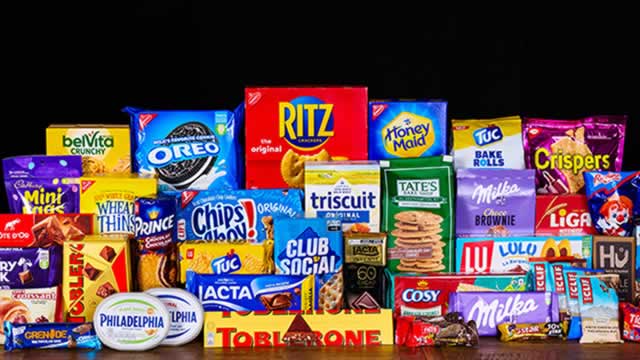
Mondelez International is a global branded snacks and confectionery company that monetizes consumer demand through a scaled end-to-end value chain: upstream sourcing of key ingredients, manufacturing and packaging across a portfolio of plants, and a sales/distribution system that places products with retailers, wholesalers, and foodservice partners. The business model is characterized by high frequency of purchase at the household level, while at the trade level the company relies on strong category relationships—price/mix management, promotional planning, and channel execution—to maintain shelf presence and secure distribution.
Value creation is driven by (i) brand and format choices that support pricing and mix, (ii) operational excellence in procurement and manufacturing, and (iii) commercial discipline in trade terms and promotional effectiveness. These elements work together to sustain cash generation across consumer cycles.
💰 Revenue Streams & Monetisation Model
Revenue is primarily transactional and tied to unit demand and pricing/mix, with monetisation coming from selling packaged goods into retail and out-of-home channels. While the stream is not contractually recurring like software, Mondelez exhibits “repeat purchase” dynamics typical of staples: consumers buy snacks regularly, and the company renews demand through assortment, pack sizes, and marketing support.
Key margin drivers include:
- Net pricing and mix: product composition across chocolate, biscuits/cookies, gum, candy, and grocery formats influences gross margin through manufacturing complexity and pricing elasticity.
- Commodity pass-through and cost discipline: ingredient costs (e.g., cocoa, sugar, vegetable oils) create volatility; margin resilience improves where the company can partially offset input inflation via pricing, package engineering, and procurement scale.
- Operating leverage: fixed-cost absorption across manufacturing and network utilization can improve profitability when volume holds up.
🧠 Competitive Advantages & Market Positioning
Mondelez’s moat is primarily a combination of scale/distribution leverage and intangible assets embedded in long-established brands and product franchises. In branded snacks, switching costs are not “contractual,” but consumers develop habitual preference and retailers depend on proven demand velocity, which makes dislodging successful items operationally and commercially difficult for competitors.
Why it is hard to take share:
- Retail execution and shelf inertia: brands with consistent trade terms, merchandising support, and predictable demand earn repeat shelf placement, limiting competitor disruption.
- Procurement and manufacturing scale: scale supports input sourcing, formulation optimization, and production efficiency, which is difficult for smaller regional brands to replicate.
- Brand-led consumer preference: competitors can introduce new products, but building equivalent distribution and consumer pull typically requires sustained investment and long learning cycles.
Competitive benchmarking (primary peers):
- Nestlé (global diversified food): Mondelez competes in confectionery and biscuits/snacks but differentiates with a concentrated focus on snacks and confectionery categories.
- Ferrero (premium confectionery): Ferrero emphasizes premium chocolate and gifting formats; Mondelez competes across broader price tiers and offers scale in mass channels.
- Danone (nutrition focus) and/or Mars (confectionery): these peers compete for consumer occasions; Mondelez’s positioning is centered on branded snacks/confectionery breadth and scale-driven distribution.
Compared with these rivals, Mondelez’s strategic emphasis lies in scaling branded snack franchises globally while managing a large portfolio that can flex across price tiers and channel demand patterns.
🚀 Multi-Year Growth Drivers
Over a 5–10 year horizon, Mondelez’s growth outlook is supported by durable category demand and the ability to drive mix improvements and value realization within staples. Primary structural drivers include:
- Emerging market and urbanization tailwinds: expanding consumer spending and shifting diets sustain incremental volume in snacks and confectionery.
- Premiumization and “better-for-you” within snacks: category growth often comes from higher-quality ingredients, differentiated textures/flavors, and more functional or reduced-sugar/fat variants where demand exists.
- Package and format innovation: smaller “on-the-go” packs, variety packs, and single-serve formats can improve accessibility and affordability trade-offs.
- Retail channel complexity and route-to-market optimization: improved execution with modern trade, e-commerce grocery, and convenience formats can lift share where distribution and merchandising matter.
- Capacity and footprint rationalization: disciplined capital allocation and plant/network optimization support cost efficiency and resilience through input cycles.
⚠ Risk Factors to Monitor
- Commodity and input cost volatility: cocoa, sugar, and vegetable oil price swings can compress margins if pricing power and pass-through are insufficient.
- Regulatory and labeling changes: shifts in sugar content regulations, health claims, import/export rules, and ingredient restrictions can alter product economics.
- Promotional intensity and trade terms: retailer negotiating leverage can increase promotion and discounting, pressuring net pricing.
- Execution risk in portfolio transformation: rebalancing assortments, reformulating products, and integrating acquisitions/divestitures can create temporary complexity.
- Brand substitution and private label pressure: while private label exists in many staples categories, the structural impact depends on retailer strategies, consumer price sensitivity, and product differentiation.
📊 Valuation & Market View
Market valuation for large global consumer staples branded food companies typically reflects a mix of quality and stability rather than pure growth. Investors often anchor on:
- Cash flow durability: recurring-like demand supports discounted cash flow frameworks and enterprise value to operating earnings.
- Margin trajectory: the market re-rates companies based on gross margin resilience and operating leverage potential as commodity cycles normalize.
- Price/mix and volume balance: investors focus on the ability to protect net pricing without excessive volume destruction.
- Capital allocation discipline: sustained reinvestment, debt management, and shareholder returns influence equity risk premium and valuation multiples.
Sector multiples can compress when input cost inflation coincides with weaker pricing power, and expand when management demonstrates credible margin recovery through procurement scale and mix improvements.
🔍 Investment Takeaway
Mondelez’s long-term investment case rests on branded differentiation supported by scale-driven distribution leverage, enabling durable market participation in branded snacks and confectionery. The company’s ability to navigate commodity cycles through procurement strength, operational efficiency, and disciplined commercial execution underpins cash generation. Key investor focus should remain on margin resilience, net pricing discipline, and successful portfolio and channel execution across premium and mass price tiers.
⚠ AI-generated — informational only. Validate using filings before investing.


















 Growth Catalysts