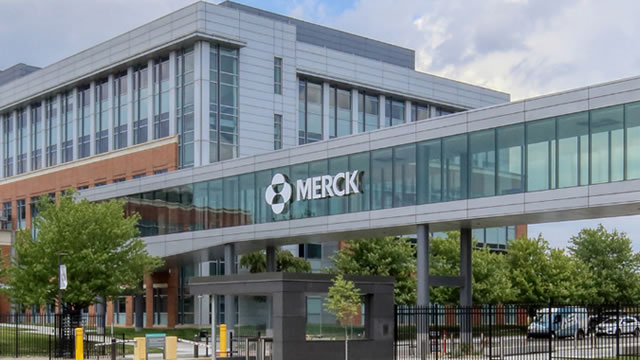
Merck & Co., Inc.

Merck & Co., Inc. (MRK) Market Cap

Merck & Co., Inc. has a market capitalization of .

No quote data available.

CEO: Robert Davis

Sector: Healthcare

Industry: Drug Manufacturers - General

IPO Date: 1978-01-13

Website: https://www.merck.com

Merck & Co., Inc. (MRK) - Company Information

Market Cap: -|Sector: Healthcare

Company Profile

Merck & Co., Inc. operates as a healthcare company worldwide. It operates through two segments, Pharmaceutical and Animal Health. The Pharmaceutical segment offers human health pharmaceutical products in the areas of oncology, hospital acute care, immunology, neuroscience, virology, cardiovascular, and diabetes, as well as vaccine products, such as preventive pediatric, adolescent, and adult vaccines. The Animal Health segment discovers, develops, manufactures, and markets veterinary pharmaceuticals, vaccines, and health management solutions and services, as well as digitally connected identification, traceability, and monitoring products. It serves drug wholesalers and retailers, hospitals, and government agencies; managed health care providers, such as health maintenance organizations, pharmacy benefit managers, and other institutions; and physicians and physician distributors, veterinarians, and animal producers. The company has collaborations with AstraZeneca PLC; Bayer AG; Eisai Co., Ltd.; Ridgeback Biotherapeutics; and Gilead Sciences, Inc. to jointly develop and commercialize long-acting treatments in HIV. Merck & Co., Inc. was founded in 1891 and is headquartered in Kenilworth, New Jersey.

Analyst Sentiment

74%
Strong Buy

From 29 Active Polls

1Y Forecast: $130.69

▲ +0.0% Potential Upside

Consensus Target Metrics

Low Bound

$100

Median

$135

High Bound

$150

Average

$131

Price & Moving Averages

Loading chart...

🎯 Wall Street Analyst Intelligence Report

1-Year structural target targets, chart projections, and sentiment maps.

Average 1Y Target
$130.69
▲ +8.20% Upside
Low Target
$100.00
-17% Risk
Median Target
$135.00
12% Mid
High Target
$150.00
24% Max

Consensus Trend Projection

Trailing closures vs. 12-month metrics map.

Analyst Vote Distribution

Aggregate institutional coverage sentiment weights.

Sentiment volume allocation data unavailable.

Historical valuation matrix unavailable.

📘 Full Research Report

ℹ️

AI-Generated Research: This report is for informational purposes only.

📘 MERCK & CO INC (MRK) — Investment Overview

🧩 Business Model Overview

Merck & Co. monetizes patented medicines and vaccines by translating internal R&D into clinically validated therapies, then commercializing through global physician and payer channels. The value chain includes (1) discovery and late-stage clinical development, (2) regulatory approval through stringent safety/efficacy requirements, (3) manufacturing and quality systems required for biologics and complex vaccines, and (4) lifecycle management via new indications, formulations, and portfolio replenishment. In oncology and immunology, Merck’s therapies become embedded in treatment pathways, which sustains customer engagement across payers and clinicians and supports long-duration revenue streams until patent or clinical displacement risk materializes.

💰 Revenue Streams & Monetisation Model

Revenue is primarily driven by branded pharmaceuticals and vaccines, with additional diversification from animal health. Monetisation is largely license-protected and prescription-driven rather than transactional. Margin structure reflects (1) high gross margin associated with successful branded biologics/vaccines, (2) substantial R&D investment required for pipeline conversion, and (3) ongoing commercial and manufacturing spend. The key margin drivers are:

  • Patent-protected pricing power supported by differentiation (especially in oncology immunotherapy).
  • Lifecycle expansion through additional indications and dosing optimization.
  • Manufacturing scale and asset utilization for biologics and vaccine platforms, which helps absorb fixed-cost intensity.
  • Mix shift risk when products approach exclusivity end and face biosimilar/generic substitution.

The model is not purely recurring in the software sense, but it can exhibit durable revenue visibility due to prescription dependence, guideline adoption, and multi-year treatment regimens, until exclusivity dynamics change.

🧠 Competitive Advantages & Market Positioning

Merck’s moat is primarily built on Patent Protection and High Barriers to Entry (FDA/regulatory and clinical evidence), reinforced by Integrated Ecosystems spanning translational science, clinical development, manufacturing readiness, and commercialization scale. While competitors can discover and develop therapies, replicating Merck’s position requires years of platform building, large clinical datasets, and regulatory execution—costly and uncertain.

  • Hard-to-replicate intellectual property: exclusivity reduces direct price competition and sustains premium margins.
  • Regulatory and evidence barriers: approval requirements for safety/efficacy create a high bar that substitutes cannot bypass quickly.
  • Clinical standard-of-care positioning: for differentiated oncology/immunology assets, treatment guidelines and physician familiarity can create practical “stickiness,” reducing rapid switching even when alternative options emerge.

Competitive benchmarking:

  • Pfizer and Bristol Myers Squibb compete in oncology and immunology with large-scale R&D engines and broad global commercial operations; their portfolios can target similar mechanisms and indications, creating head-to-head displacement risk.
  • Johnson & Johnson and GSK are major peers with meaningful franchises in immunology and vaccines (and substantial pipeline depth). Their advantage often comes from different therapeutic mixes and vaccine/immune platform assets.

Merck’s industry focus concentrates strength in oncology/immunology and vaccines, pairing high-quality clinical evidence with manufacturing and global commercial reach. Compared with peers that may lean more heavily toward specific franchises or diversified specialty areas, Merck’s positioning emphasizes durable franchise economics supported by a consistent pipeline cadence and lifecycle management.

🚀 Multi-Year Growth Drivers

  • Oncology immunotherapy expansion: growth is supported by ongoing development across combination regimens and broader biomarker-selected populations, expanding total addressable patients per mechanism.
  • Vaccines and preventive healthcare demand: sustained underlying need for population-level protection drives addressable markets, particularly where vaccine schedules and public/private health procurement cycles maintain visibility.
  • Pipeline replenishment and indication broadening: the long-term model relies on converting R&D into approved assets and extending revenue through additional clinical uses rather than relying on single-launch outcomes.
  • Emerging opportunities in next-generation biologics: platform science and translational capabilities can support higher-value therapies that are harder to substitute.

Over a 5–10 year horizon, TAM expansion hinges less on market growth alone and more on share of successful indications and the ability to replace patent-expiring revenue with new high-evidence launches.

⚠ Risk Factors to Monitor

  • Patent cliffs and exclusivity erosion: loss of protection can compress pricing and margins as biosimilars/generics enter.
  • Pipeline execution risk: clinical trial failures or slower-than-expected regulatory timelines can impair revenue durability.
  • Competitive displacement: peers with differentiated mechanisms or better efficacy/safety profiles can reduce share in contested indications.
  • Reimbursement and pricing pressure: payer formularies, negotiation dynamics, and health technology assessments can influence net pricing and utilization.
  • Regulatory and safety scrutiny: biologics and vaccines face stringent oversight; post-approval findings can affect usage.
  • Manufacturing and supply continuity: biologics scale-up, quality systems, and complex supply chains can create operational and cost risks.

📊 Valuation & Market View

Equity markets typically value large-cap biopharma using a blend of earnings power and pipeline quality, with common framing around forward earnings and EV/EBITDA rather than purely sales. Key valuation sensitivities include:

  • Durability of branded revenue (how defensible the franchise economics remain through exclusivity periods).
  • Pipeline credibility (probability-weighted conversion of late-stage assets into approvals and scalable launches).
  • Margin trajectory driven by mix, manufacturing efficiency, and R&D productivity.
  • Capital allocation (balanced investment in R&D while managing net cash needs and portfolio transition).

When sentiment strengthens, the market typically assigns higher value to evidence that future launches can offset patent-expiration risk without materially worsening risk-adjusted returns.

🔍 Investment Takeaway

Merck’s long-term investment case rests on a defensible pharmaceutical franchise anchored by patent protection, regulatory and clinical evidence barriers, and an integrated development-to-commercialization ecosystem. The core question for multiyear compounding is the balance between (1) sustained premium economics of differentiated therapies and vaccines and (2) consistent pipeline conversion that mitigates exclusivity erosion. For institutional portfolios seeking exposure to high-evidence healthcare franchises, Merck offers a structurally moaty model—subject to monitoring pipeline execution and exclusivity dynamics.


⚠ AI-generated — informational only. Validate using filings before investing.

📊 AI Financial Analysis

Powered by StockMarketInfo
Earnings Data: Q Ending 2026-03-31

"MRK reported Q1 2026 revenue of $16.29B and net income of -$4.24B (EPS -$1.72). Compared with Q4 2025, revenue fell slightly (-0.2% QoQ), while profitability deteriorated sharply (net income swung from +$2.96B in Q4 to -$4.24B in Q1). On a year-over-year basis, revenue rose +4.2% (vs. $15.62B in Q1 2025), but net income collapsed from +$5.08B to -$4.24B (a -183% YoY decline). Margins contracted dramatically. Gross margin remained high at ~81.9% (up vs. 75.1% in Q1 2025), but operating margin turned negative (-11.6%) versus strongly positive in prior quarters (Q4 2025: +37.7%). EBITDA also flipped to -$1.88B. Operating cash flow stayed positive at $3.92B, but free cash flow was only $2.93B, while the company continued to return capital: dividends paid were -$2.11B and buybacks were -$0.87B. Balance sheet resilience looks mixed: total assets declined to $108.9B from $136.9B in Q4 2025, and net debt increased to $43.8B from $36.0B. From a shareholder return perspective, the stock’s 1-year performance is strongly positive (+55.7%), supporting total-return momentum alongside a modest dividend yield (~0.7%)."

Revenue Growth

Positive

Revenue was $16.29B in Q1 2026 (+4.2% YoY) but slightly down QoQ (-0.2% vs. Q4 2025), indicating modest top-line resilience despite a profitability shock.

Profitability

Neutral

Net income swung from +$2.96B (Q4 2025) to -$4.24B (Q1 2026). Operating margin collapsed to -11.6% from +37.7% QoQ, and EBITDA turned negative (-$1.88B), signaling major margin contraction.

Cash Flow Quality

Caution

Operating cash flow remained positive at $3.92B, supporting the dividend, but free cash flow eased to $2.93B. With net income deeply negative, cash earnings quality deteriorated in the latest quarter.

Leverage & Balance Sheet

Fair

Total assets fell materially QoQ (from $136.9B to $108.9B), while net debt rose to $43.8B (from $36.0B). Equity remains sizable at ~$45.9B, but leverage pressure increased.

Shareholder Returns

Good

Strong capital appreciation (+55.7% over 1Y) meaningfully boosts total return. Dividend yield is modest (~0.7%), but the company continued repurchasing and paying dividends in Q1 2026.

Analyst Sentiment & Valuation

Neutral

Consensus target (~$129.31) is below the current price context (~$119.07) implying limited upside versus recent momentum. Valuation metrics based on earnings are unreliable due to the current loss.

Disclaimer:This analysis is AI-generated for informational purposes only. Accuracy is not guaranteed and this does not constitute financial advice.

Fundamentals Overview

Loading fundamentals overview...

Merck delivered solid top-line growth in Q1 2026 (revenue $16.3B, +5% YoY; +3% ex-FX), driven by KEYTRUDA strength and accelerating contributions from new products like WELIREG and Animal Health. However, profitability was heavily distorted by acquisition-related items: a $9.0B Cidara one-time charge drove a GAAP loss of $1.28/share and a negative 43.5% tax rate. Margin also softened (gross margin 81.9%, down 0.3pp). Management narrowed and raised 2026 non-GAAP guidance, with revenue of $65.8B–$67.0B and EPS of $5.04–$5.16, but explicitly excluded the pending Terns acquisition impact, which could add ~$5.8B R&D expense and about $2.35/share one-time charge. Operationally, Merck is restructuring commercial leadership around therapeutic areas and scaling AI/data execution via Google Cloud, Tempus, and Mayo—supporting a pipeline-led growth narrative. Key near-term headwinds include KEYTRUDA Q3 timing and ENFLONSIA Q2 seasonality/inventory.

AI IconGrowth Catalysts

  • KEYTRUDA family revenue +8% YoY to $8.0B, supported by metastatic demand and uptake in earlier-stage cancers; KEYTRUDA QLEX launched with $128M sales and permanent J-code received April 1
  • WELIREG revenue +43% to $199M driven by international launches and increased U.S. use in previously treated advanced RCC; additional upside tied to LITESPARK-011 and -022 readouts
  • CAPVAXIVE revenue +31% to $142M in pneumococcal, plus WINREVAIR global sales $525M reflecting continued strong demand
  • Animal Health: NUMELVI U.S. launch (first/only second-gen JAK inhibitor for allergic dermatitis in dogs); Livestock +8% and Companion Animal +4% (partially offset by reduced vet visits)
  • Pipeline/regulatory milestones: FDA approval of IDVYNSO for virologically suppressed HIV-1 adults; FDA priority review for Daiichi Sankyo collaboration I-DXd in extensive-stage small cell lung cancer; Phase IIb/III initiation for MK-8748 (MALBEC, TORRONTES)

Business Development

  • Proposed acquisition of Terns Pharmaceuticals (TERN-701 in CML); management cites multibillion-dollar potential and expected value creation over the next decade
  • Daiichi Sankyo collaboration: I-DXd (ifinatamab, deruxtecan) granted FDA priority review; PDUFA date October 10 mentioned
  • Eisai partnership: LITESPARK-012 combination regimens did not meet dual primary endpoints in first-line RCC; management notes learnings for the broader program
  • Google Cloud multiyear partnership to scale advanced AI, data, and agentic capabilities
  • Expanded Tempus AI collaboration for precision oncology
  • Mayo Clinic agreement to leverage clinical insights and genomic datasets at scale; referenced as productivity and pipeline execution enabler

AI IconFinancial Highlights

  • Revenue $16.3B, +5% YoY (3% ex-FX); raised/narrowed 2026 guidance midpoint for both revenue and EPS
  • Gross margin 81.9%, down 0.3 percentage points (pp) YoY
  • Operating expenses $15.2B included a $9.0B one-time charge related to Cidara Therapeutics acquisition; excluding this, OpEx grew 2%
  • Loss of $1.28/share on a GAAP basis, including negative $3.62/share impact from Cidara one-time charge
  • Tax provision $957M; due to nontax deductible Cidara charge, tax rate negative 43.5% and pretax loss this quarter
  • Guidance assumes gross margin ~82% for 2026
  • OHTUVAYRE sales $131M were adversely impacted by CMS reimbursement change and Medicare deductible resets; prescription trends began recovering in March with acceleration expected in H2

AI IconCapital Funding

  • Share repurchases: on pace for approximately $3.0B in 2026 (previously communicated)
  • No explicit net debt/cash runway disclosed in the provided transcript; other expense higher ($318M) attributed primarily to financing related to recent business development transactions

AI IconStrategy & Ops

  • Commercial operating structure evolution: new business unit model organized by products/therapeutic areas to increase accountability, focus, and agility
  • New executive unit leadership: Brian Ford (specialty pharma and infectious diseases); Yani Ushausen (global oncology and MSD International); Corp Guindo (strategic access policy and communications)
  • AI transformation steps: Google Cloud partnership, expanded Tempus AI collaboration, and Mayo Clinic data/insights agreement to improve productivity
  • 2026 expense posture: SG&A expected to increase over the remainder of the year to maximize recent and upcoming launches

AI IconMarket Outlook

  • 2026 revenue guidance: $65.8B to $67.0B (+1% to +3% growth), including ~+1 percentage point positive FX impact (mid-April rates); guidance excludes Terns acquisition impact
  • 2026 EPS (non-GAAP): $5.04 to $5.16, including ~+$0.10 FX impact (mid-April rates); guidance excludes Terns acquisition impact
  • Proposed Terns acquisition close soon: expected one-time charge increasing R&D by ~$5.8B (~$2.35/share) plus additional ~-$0.12 EPS from TERN-701 investment and assumed financing costs
  • Full-year gross margin assumption ~82%; OpEx assumed $36.0B to $36.8B; other expense ~ $1.3B; tax rate 23.5% to 24.5%; ~2.48B shares outstanding
  • Near-term product timing: KEYTRUDA growth benefited from Q1 timing of wholesaler purchases; corresponding headwind expected in Q3
  • RSV: ENFLONSIA expected minimal sales in Q2 due to seasonal nature and high RSV monoclonal inventory; shipments expected to increase in H2

AI IconRisks & Headwinds

  • Gross margin compression: down 0.3pp to 81.9%
  • GAAP earnings distorted by Cidara acquisition one-time charge: $9.0B operating expense and -$3.62/share EPS impact; tax rate negative 43.5%
  • KEYTRUDA: timing headwind expected in Q3 to offset Q1 wholesaler purchase timing benefit
  • ENFLONSIA: Q2 minimal sales expected due to seasonal pattern and elevated RSV monoclonal antibody inventory
  • OHTUVAYRE: adverse impact from CMS reimbursement change and Medicare deductible resets; reliance on March prescription trend recovery and further investments for H2 growth
  • WELIREG: while outlook is bullish, LITESPARK-012 (Eisai-partnered) did not meet dual primary endpoints—suggesting combination-regimen execution risk

Q&A: Analyst Interest

  • Topic: MK-3000 dosing conviction vs VEGF suboptimal response; management response: Dean Li framed MK-3000 as a Wnt-pathway, potentially first-in-class retinal vascular mechanism versus VEGF-centered approaches. He said trial dosing starts at every 24 weeks then moves outward, with initial Q4-week focus to support labeling. He confirmed they are considering alternative frequencies beyond 4-week dosing based on program needs.
  • Topic: WELIREG LITESPARK-012 negative read-through and OS implications for ongoing LITESPARK trials; management response: Management said they are “very bullish” on LITESPARK-022 and LITESPARK-011 outcomes, despite LITESPARK-012 not meeting dual primary endpoints. They added caution against extrapolating negative implications across trials, emphasizing differences among PD-1/VEGF TKI/HIF-2-alpha combinations versus VEGF TKI + WELIREG or PD-1 + WELIREG designs.
  • Topic: sac-TMT (optotroplung-05) vs PD-1/VEGF dynamics, and whether to combine with KEYTRUDA and PD-1/VEGF; management response: Dean Li said they are interested in the PD-1/VEGF space and referenced encouraging early data, but continue evaluating the broader field. For sac-TMT, he pointed to ASCO partner Kelen providing optotroplung-05 first-line NSCLC data. He said combinations of PD-1/VEGF with other portfolio agents are “absolutely” possible, with ongoing scanning on best timing and fit.

Sentiment: MIXED

Note: This summary was synthesized by AI from the MRK Q1 2026 earnings transcript. Financial data is complex; please verify all metrics against official SEC filings before making investment decisions.

Loading financial data and tables...
© 2026 Stock Market Info — Merck & Co., Inc. (MRK) Financial Profile