
📘 MICRON TECHNOLOGY INC (MU) — Investment Overview
🧩 Business Model Overview
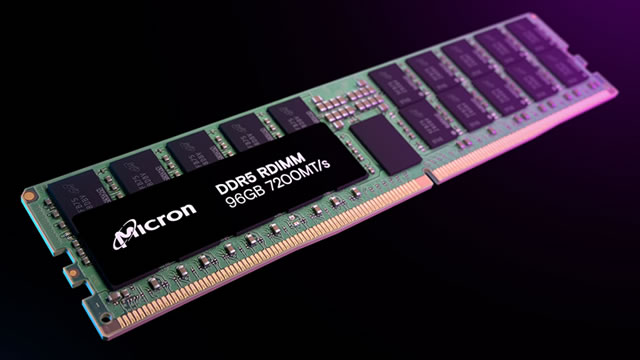
Micron designs and manufactures semiconductor memory—primarily DRAM (used in computing and networking systems) and NAND flash (used for solid-state storage in servers, PCs, mobile devices, and embedded applications). The business converts wafer processing capacity into sellable memory devices by moving through a demanding value chain: advanced process technology and manufacturing yield → device fabrication → packaging → validation/qualification with large OEM and module/board partners → sales into memory ecosystems dominated by standard interfaces and tight performance requirements.
Customer stickiness is less about software-style “lock-in” and more about qualification, supply continuity, and performance constraints. Once systems and platforms qualify a vendor’s memory for production, switching suppliers involves re-validation, supply risk management, and time-to-qualification—creating meaningful procurement friction.
💰 Revenue Streams & Monetisation Model
Micron monetizes through two core product families:
- DRAM: Sold into servers, data-center infrastructure, PCs, and mobile platforms. Monetization is driven by average selling prices, capacity utilization, and the cost-per-bit structure (factory efficiency and yields).
- NAND: Sold as flash components and products (including SSD-related channels). Monetization depends on industry demand for storage, competitive supply levels, and the mix between lower-density and higher-density architectures.
Margin drivers are dominated by manufacturing economics:
- Cost advantages (leading-edge process execution, yield, and throughput) determine cost-per-bit.
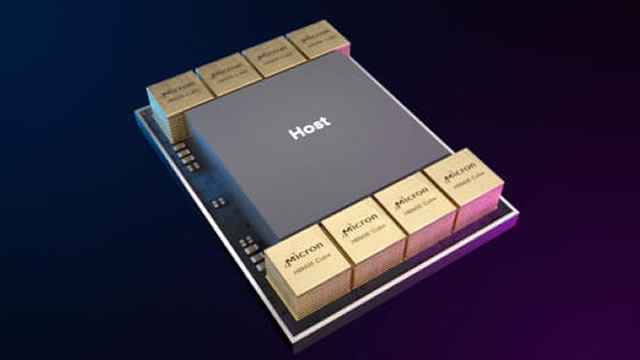
- Product mix affects ASP and margin (e.g., higher-performance DRAM segments used in data centers and HBM ecosystems).
- Supply discipline vs. oversupply shapes pricing power in a cyclical industry; when capacity aligns with demand, earnings leverage improves materially.
🧠 Competitive Advantages & Market Positioning
Micron’s moat is best described as a manufacturing technology and qualification barrier rather than classic network effects.
- Cost Advantage (Scale + Process Technology): Memory is capital intensive and yield-sensitive. Competitors must match leading-edge process technology and ramp execution to compete effectively. Micron’s ability to drive cost-per-bit through manufacturing know-how is a durable advantage when industry conditions are favorable.
- Qualification & Procurement Inertia (Switching Friction): Major OEMs, server platform vendors, and module makers generally standardize on suppliers that meet performance, reliability, and supply reliability requirements. Switching suppliers for production platforms can require qualification effort and introduces supply continuity risk.
- Intangible Assets (Process Engineering Know-How): The operational expertise across lithography/process control, reliability validation, and ramp management acts as a barrier to new entrants and limits the speed at which peers can close technology gaps.
Competitive benchmarking:
- Samsung Electronics: Broad memory portfolio across DRAM and NAND; also benefits from integrated ecosystem scale.
- SK hynix: Strong positioning in high-performance DRAM and data-center-oriented memory solutions; competitive intensity is high in advanced segments.
- Kioxia/Western Digital: More concentrated in NAND-centric ecosystems, competing directly in flash supply and density progression.
Industry focus contrast: Samsung and SK hynix compete broadly across both DRAM and NAND. Kioxia/Western Digital place heavier emphasis on NAND, while Micron participates meaningfully across both DRAM and NAND—giving it exposure to multiple end-market demand cycles and enabling mix optimization when performance segments expand.
🚀 Multi-Year Growth Drivers
Across a 5–10 year horizon, demand growth is supported by data creation and compute intensity trends that mechanically increase memory content per unit of computing and storage:
- Artificial intelligence and high-performance compute: Training and inference workloads increase DRAM requirements (working memory footprint) and elevate demand for advanced DRAM form factors used in AI-accelerated systems, alongside NAND-backed storage for model and dataset workflows.
- Cloud and enterprise data-center buildout: Persistent expansion in server capacity and memory per server supports DRAM and NAND demand beyond cyclical replacement cycles.
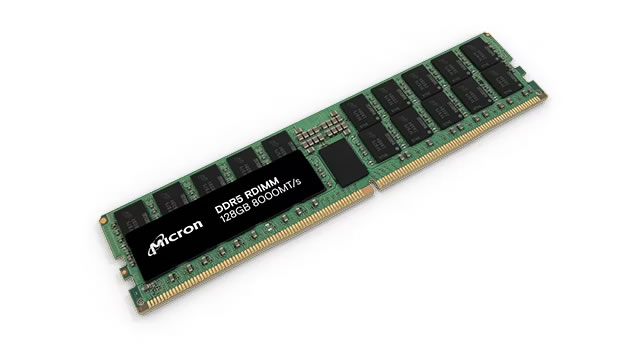
- Bandwidth and memory-density upgrades: Successive generations of DRAM interfaces and NAND density progression enable more capacity and higher throughput, supporting unit content growth and improved system performance.
- Edge computing and automotive compute: Growth in embedded compute and storage expands addressable opportunities for NAND and DRAM in industrial and automotive use cases.
Because memory markets are capacity constrained by fab build cycles and yield ramp complexity, technical execution and supply alignment can translate structural demand into earnings power when industry inventories normalize.
⚠ Risk Factors to Monitor
- Industry cyclicality and pricing volatility: DRAM and NAND pricing can swing sharply due to oversupply/undersupply dynamics. Earnings sensitivity to utilization and spot pricing is a structural characteristic of the sector.
- Capital intensity and execution risk: Fabs require sustained investment, and technology transitions demand strong yield, ramp execution, and cost control. Underperformance can quickly erode cost advantage.
- Technological displacement and competitive escalation: Rapid evolution in performance requirements (including high-bandwidth DRAM ecosystems) can pressure product mix and require substantial engineering focus.
- Geopolitical and export control constraints: Semiconductor supply chains are exposed to policy and regulation that can affect shipments, equipment sourcing, and end-market access.
- Customer concentration and platform qualification timing: Large buyers and system integrators can influence demand timing and qualification schedules, affecting revenue realization and inventory positioning.
📊 Valuation & Market View
Memory producers are typically valued with an emphasis on cycle-adjusted profitability rather than steady-state earnings power:
- EV/EBITDA and gross margin sensitivity: Market estimates often follow gross margin expansion/contraction tied to utilization, yield, and supply-demand balance.
- Price-per-bit and utilization indicators: Equity narratives frequently track the industry’s ability to keep effective supply aligned with demand for DRAM and NAND.
- P/S can matter in downturns: When earnings are depressed, the market may look to balance-sheet strength and expected normalization rather than near-term profitability.
The key valuation drivers are manufacturing cost trajectory, advanced product mix penetration, and the durability of supply discipline through multiple technology nodes.
🔍 Investment Takeaway
Micron offers an investment case built on manufacturing cost advantage, qualification-based switching friction, and process engineering know-how in a market supported by structurally rising memory content in compute and storage workloads. The principal trade-off is exposure to memory-sector cyclicality and high capital intensity—factors that can overshadow fundamentals without attention to supply discipline, yield execution, and product mix.
⚠ AI-generated — informational only. Validate using filings before investing.












 Growth Catalysts