Nucor Corporation

Nucor Corporation (NUE) Market Cap

Nucor Corporation has a market capitalization of .

No quote data available.

CEO: Leon J. Topalian

Sector: Basic Materials

Industry: Steel

IPO Date: 1980-03-17

Website: https://www.nucor.com

Nucor Corporation (NUE) - Company Information

Market Cap: -|Sector: Basic Materials

Company Profile

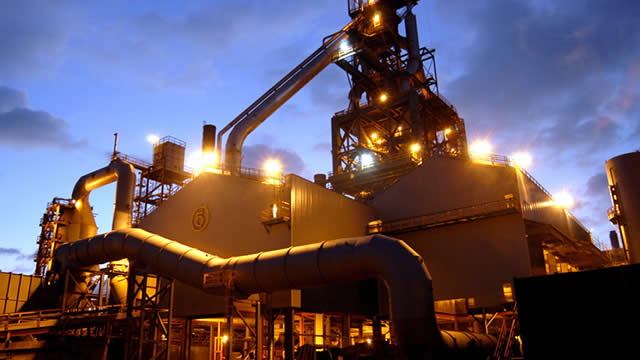
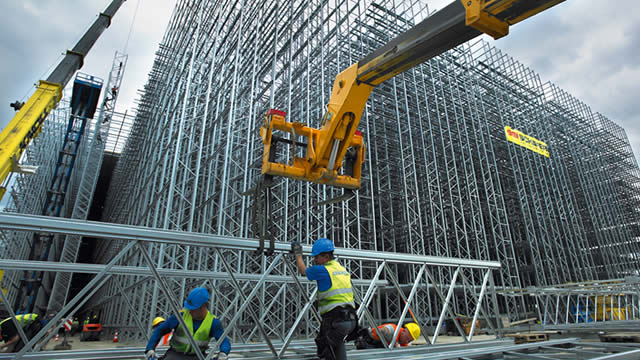
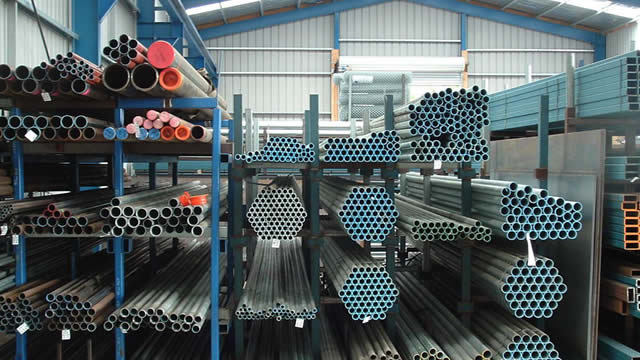
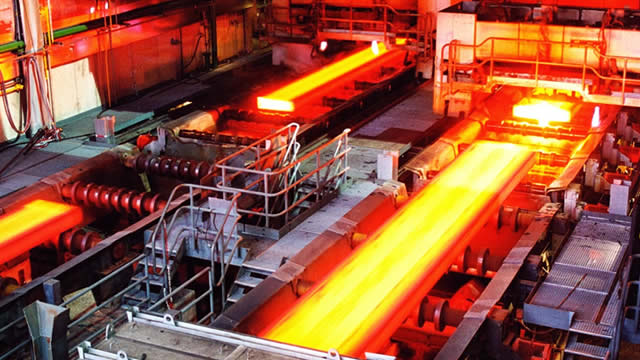
Nucor Corporation manufactures and sells steel and steel products. The company's Steel Mills segment produces hot-rolled, cold-rolled, and galvanized sheet steel products; plate steel products; wide-flange beams, beam blanks, and H-piling and sheet piling products; and bar steel products, such as blooms, billets, concrete reinforcing and merchant bars, and special bar quality products. It also engages in the steel trading and rebar distribution businesses. This segment sells its products to steel service centers, fabricators, and manufacturers in the United States, Canada, and Mexico. Its Steel Products segment offers hollow structural section steel tubing products, electrical conduits, steel racking, steel joists and joist girders, steel decks, fabricated concrete reinforcing steel products, cold finished steel products, steel fasteners, metal building systems, insulated metal panels, steel grating and expanded metal products, and wire and wire mesh products primarily for use in nonresidential construction applications. This segment also engages in the piling distribution business. The company's Raw Materials segment produces direct reduced iron (DRI); brokers ferrous and nonferrous metals, pig iron, hot briquetted iron, and DRI; supplies ferro-alloys; and processes ferrous and nonferrous scrap metal, as well as engages in the natural gas drilling operations. This segment sells its ferrous scrap to electric arc furnace steel mills and foundries for manufacturing process; and nonferrous scrap metal to aluminum can producers, secondary aluminum smelters, steel mills and other processors, and consumers of various nonferrous metals. It serves agriculture, automotive, construction, energy and transmission, oil and gas, heavy equipment, infrastructure, and transportation industries through its in-house sales force; and internal distribution and trading companies. Nucor Corporation was incorporated in 1958 and is based in Charlotte, North Carolina.

Analyst Sentiment

76%
Strong Buy

From 17 Active Polls

1Y Forecast: $240.86

▲ +0.0% Potential Upside

Consensus Target Metrics

Low Bound

$180

Median

$240

High Bound

$292

Average

$241

Price & Moving Averages

Loading chart...

🎯 Wall Street Analyst Intelligence Report

1-Year structural target targets, chart projections, and sentiment maps.

Average 1Y Target
$240.86
▼ -5.32% Upside
Low Target
$180.00
-29% Risk
Median Target
$240.00
-6% Mid
High Target
$292.00
15% Max

Consensus Trend Projection

Trailing closures vs. 12-month metrics map.

Analyst Vote Distribution

Aggregate institutional coverage sentiment weights.

Sentiment volume allocation data unavailable.

Historical valuation matrix unavailable.

📘 Full Research Report

ℹ️

AI-Generated Research: This report is for informational purposes only.

📘 NUCOR CORP (NUE) — Investment Overview

🧩 Business Model Overview

Nucor is a major U.S.-based steel producer with a business model centered on domestic, lower-cost steelmaking and fabrication. The value chain typically starts with steel inputs (primarily scrap and other raw materials), converted into molten steel via electric arc furnace (EAF) technology, followed by casting and further processing into flat-rolled products (e.g., sheet, plate, and related steel forms) and downstream steel products. Nucor sells into a broad set of end markets—construction, automotive, industrial manufacturing, and energy-related applications—where delivery reliability, product qualification, and spec compliance matter.

A key feature of the model is operational flexibility: minimill-based production can respond to market conditions through changes in product mix and operating rates, supported by a network of plants located to reduce logistics costs and to maintain access to supply chains.

💰 Revenue Streams & Monetisation Model

Revenue is predominantly transactional, generated by selling steel and steel products at market-reflective pricing. The main economic lever is the steel margin (steel spread), defined by the difference between selling prices for specific grades and the cost of steel inputs plus conversion and logistics costs.

Because steel demand and pricing are cyclical, Nucor’s monetisation model relies on earning margins during favorable market windows and preserving cost competitiveness during downturns. The primary margin drivers include:

  • Input economics: scrap-derived costs and the ability to source inputs at competitive prices relative to the realized price of finished steel.
  • Energy and conversion efficiency: EAF efficiency and plant-level operating discipline that affect variable costs per ton.
  • Product mix and yield: higher value-added grades and improved processing yield support margin resilience.
  • Logistics: proximity to customers and efficient distribution reduce per-unit freight and handling costs.

🧠 Competitive Advantages & Market Positioning

Nucor’s structural advantage is best characterized as a cost and operational moat, supported by minimill economics, logistics, and disciplined execution—rather than product branding or patent protection.

  • Cost advantage (Minimills / EAF efficiency): EAF-based steelmaking can be cost-competitive versus traditional blast furnace routes, especially when managed with scale, modern equipment, and robust operating practices.
  • Low-cost feedstock access (scrap sourcing): The company’s ability to procure scrap competitively and manage procurement logistics is a fundamental cost pillar. Scrap availability and pricing dynamics influence margins, but producers with more dependable supply and better procurement execution generally perform better across the cycle.
  • Geographic cost advantage & logistical infrastructure: Nucor’s manufacturing footprint in the U.S. reduces freight exposure versus more remote suppliers for key customer clusters. Shorter hauls and established distribution channels support delivered pricing competitiveness.
  • Practical switching constraints: While customers are not locked in by contracts like software platforms, steel supply relationships typically involve specification qualification, certifications, and ongoing production alignment. Requalifying suppliers is non-trivial, creating a degree of stickiness once a plant and product grade are established.

Competitive benchmarking: key competitors include:

  • Steel Dynamics (SDI): also operates U.S. minimill capacity, competing heavily on cost position and product breadth within similar end markets.
  • Commercial Metals (CMC): another EAF-based producer with emphasis on scrap-driven cost competitiveness, competing in many of the same regional and product segments.
  • Cleveland-Cliffs (CLF): a more integrated/asset-heavy participant with different cost drivers, competing through scale, feedstock exposure, and capacity structure.

Compared with these peers, Nucor’s positioning emphasizes operating discipline, a broad portfolio of steel products, and a U.S.-centric logistical footprint that supports delivered-cost advantages. Rivalry remains intense, but the differentiator for Nucor is sustained cost competitiveness across operating environments.

🚀 Multi-Year Growth Drivers

Steel demand in North America is influenced by long-cycle infrastructure activity, industrial maintenance, and durable investment cycles. Over a 5–10 year horizon, growth is driven less by “new” demand creation and more by how capacity and production share allocate across producers:

  • Domestic capacity and reshoring dynamics: Favorable industrial policy and supply-chain localization tend to support demand for domestically produced steel.
  • Increased use of steel in infrastructure and equipment renewal: The replacement cycle for roads, bridges, buildings, and industrial assets supports steady structural demand.
  • Minimill share gains and operational excellence: Continued evolution toward lower-cost, EAF-based production can shift market share toward producers with strong cost control and feedstock procurement.
  • End-market diversification within steel products: A diversified product set can moderate cyclicality by balancing exposure across building, industrial, and energy-related applications.
  • Decarbonisation pressure (execution-dependent): Environmental constraints increasingly favor producers that can adapt their technology roadmap and supply chain practices, creating an advantage for firms with credible capital planning and operational systems.

⚠ Risk Factors to Monitor

  • Cyclical commodity exposure: Steel prices and spreads fluctuate with global supply/demand, import pressure, and inventory behavior.
  • Input cost volatility: Scrap price movements, electricity costs, and availability of key inputs can compress margins unexpectedly.
  • Environmental and permitting costs: Emissions regulations, permitting timelines, and compliance capital needs can raise fixed and variable costs.
  • Trade policy and regulatory risk: Tariffs, antidumping/countervailing duties, and trade enforcement can materially impact import levels and pricing power.
  • Capital intensity and execution risk: Maintaining and upgrading capacity requires ongoing investment; execution quality determines cost competitiveness.
  • Execution and safety/quality: Steel manufacturing is operationally unforgiving; downtime, quality deviations, or disruptions can affect customer retention and delivered costs.

📊 Valuation & Market View

The market typically values steel producers on cash-flow and earnings power through the cycle, often using multiples such as EV/EBITDA and enterprise-value frameworks that normalize cyclicality. In practice, valuation sensitivity is driven by:

  • Steel spread and utilization: margins and operating rates that determine normalized free cash flow.
  • Cost position: the durability of low unit costs (energy efficiency, yield, labor productivity, and logistics).
  • Balance-sheet strength and capital allocation discipline: access to liquidity and the ability to fund maintenance capex and cycle-responsive spending.
  • Policy and trade environment: impacts on effective domestic supply and pricing dynamics.

Because steel is inherently cyclical, valuation tends to re-rate when expectations shift toward sustained cost leadership, improved spread durability, or a more favorable policy and demand backdrop.

🔍 Investment Takeaway

Nucor’s long-term investment case is anchored in a structural cost advantage—minimill/EAF operating economics, disciplined procurement of scrap inputs, and U.S. geographic/logistical efficiency—rather than durable pricing power from intangibles. The company’s performance profile is closely linked to steel spreads, but the moat is the ability to protect unit economics across cycles through execution and cost leadership. The primary debate for investors centers on how reliably Nucor can sustain cost competitiveness amid cyclical pressures, environmental requirements, and trade-related market structure.


⚠ AI-generated — informational only. Validate using filings before investing.

📊 AI Financial Analysis

Powered by StockMarketInfo
Earnings Data: Q Ending 2026-04-04

"Nucor (NUE) reported Q1 2026 revenue of $9.50B, up 23.6% YoY (vs. $7.69B in Q1 2025 proxy) and up 23.6% QoQ (vs. $8.46B in Q4 2025). Net income was $743M, up 96.7% YoY (vs. $378M) and up 96.7% QoQ (vs. $378M), with EPS of $3.23. Profitability improved markedly: gross margin rose to 15.8% from 11.2% in Q4 2025 and from 14.5% in Q2 2025, while net margin expanded to 7.8% from 4.9% in Q4 2025. Cash generation remained strong. Operating cash flow was $886M and free cash flow was positive at ~$225M despite capex of $661M. Shareholder returns are supported by capital returns: dividends paid were ~$129M and the company repurchased no shares in Q1 (while Q4 included a small repurchase). On the market side, total return momentum appears very strong given the 1-year price change of +79.8%, which should materially lift the total shareholder return component. Balance sheet resilience is generally stable: total assets were $35.6B and equity $22.5B, with net debt at ~$4.9B (roughly flat sequentially)."

Revenue Growth

Strong

Q1 2026 revenue was $9.50B, up ~23.6% QoQ and ~23.6% YoY versus the prior-year and sequential quarter figures provided (Q4 2025: $7.69B; Q2/Q3: $8.46B–$8.52B).

Profitability

Strong

Margins expanded strongly: gross margin improved to 15.8% (from 11.2% in Q4 2025). Net margin rose to 7.8% (from 4.9% in Q4 2025). Net income increased to $743M (up ~96.7% YoY and QoQ) and EPS to $3.23.

Cash Flow Quality

Positive

Operating cash flow was $886M and free cash flow was positive (~$225M) in Q1 2026, contrasting with near-zero/slightly negative free cash flow in Q4 2025 (-$3M). Dividends were steady (~$129M) and there were no repurchases in the quarter.

Leverage & Balance Sheet

Positive

Balance sheet appears stable: total assets were $35.6B and equity $22.5B. Net debt was ~$4.9B, roughly unchanged QoQ vs. ~$4.86B in Q4 2025. Debt/capital remains moderate (debt ratio ~0.20; debt-to-equity ~0.33).

Shareholder Returns

Strong

Market momentum is very strong with +79.8% 1-year price change, which should materially increase total shareholder returns. Dividends remain a modest yield (~0.33%) and Q1 included ~$129M of dividend payments.

Analyst Sentiment & Valuation

Neutral

Current price (per provided market data) is $195.87 versus consensus target $192 (near-term not strongly upside). Despite positive performance, valuation support is mixed given the targets are not clearly above the current price.

Disclaimer:This analysis is AI-generated for informational purposes only. Accuracy is not guaranteed and this does not constitute financial advice.

Fundamentals Overview

Loading fundamentals overview...

Nucor delivered a strong Q1 2026 with $3.23 EPS and EBITDA of ~$1.5B, beating the midpoint guidance range by nearly $0.50. Results were driven by higher volumes and favorable product mix, with record shipments of 7.0M tons and steel mills backlog rising 20% to 4.7M tons. Segment performance showed operating leverage: steel mills pretax earnings more than doubled to $1.1B, while Steel Products pretax earnings rose 24% to $285M on +13% volumes and stable pricing; raw materials also improved due to higher DRI production after planned outages. Management reiterated disciplined capital allocation ($661M CapEx in Q1; $2.5B full-year target) while returning $254M to shareholders. Guidance expects improving Q2 earnings and 2026 shipment growth of >5% (potentially closer to/above 10%) supported by ~87% operating rates and contract discipline. The key watch-outs are derivative tariff enforcement staying effective and competitive risk from Canadian subsidies/“back door” channels.

AI IconGrowth Catalysts

  • Nucor West Virginia new sheet mill: commissioning sequencing begins Q2 2026 (pickle line), end-of-2026 commissioning complete, ramping toward commercial shipments in early 2027
  • Sheet growth ramp: Berkeley County (SC) second galvanizing line commissioning mid-year with production start in fall
  • Towers and Structures: Indiana utility tower facility operational in Q3 2026; Utah facility full production by mid-2027
  • Completed/EBITDA-positive projects: micro mill Lexington, NC and melt shop Kingman, AZ EBITDA positive in March; galvanizing line Crawfordsville, IN EBITDA positive in March; Alabama towers/structures facility targeting EBITDA-positive run rates by end of summer
  • Steel Products demand pull, especially border fence contributing through next several years

Business Development

  • Border fence-related demand: Tubular group cited as strong and expected to continue for the next several years
  • Automotive/consumer durable expansion: West Virginia sheet mill positioned to target automotive and consumer durable markets (customer qualifications referenced in commissioning/ramp discussion)
  • Data center and energy/infrastructure end-market targeting: management stated Nucor can supply 95% of steel needed to build a data center
  • HSF structural tubing: identified as primary building material for large sections of border fence

AI IconFinancial Highlights

  • Net earnings $743M / $3.23 EPS in Q1 2026, exceeding midpoint guidance by nearly $0.50
  • EBITDA approximately $1.5B; improvement from Q4 attributed to strong performance across all 3 segments
  • Steel mills segment pretax earnings $1.1B, more than double the prior quarter; volumes and ASP increased across all 4 product groups; sheet and structural were largest drivers
  • Steel Products pretax earnings $285M, up 24% vs Q4; volumes +13% with stable pricing; Tubular group set new quarterly shipment record
  • Raw materials pretax earnings ~$45M vs ~$24M in Q4; higher DRI production after 2 planned outages in the fall
  • Pre-operating and start-up costs totaled $108M for the quarter; expected to trend higher as West Virginia sheet mill nears completion
  • Operating metrics: record shipments 7.0M tons (highest quarterly volume in Nucor history); steel mills backlog 4.7M tons, +20% vs year-end (highest since Q2 2021); Steel Products backlog +9% vs year-end
  • Second-quarter outlook: higher consolidated earnings; steel mills expected stable volumes and increasing metal margins; offset by higher corporate/intercompany profit eliminations
  • Trade policy impact: U.S. finished steel import share declined from >22% (Q1 2025) to ~15% (Q1 2026); administration reaffirmed 50% Section 232 tariff and expanded derivative product tariff application to full value

AI IconCapital Funding

  • Capital returned to shareholders: $254M in Q1 2026 via dividends and share buybacks
  • Share repurchase/dividend activity: “over $250M” returned; described as ~34% of quarterly net earnings
  • CapEx: $661M in Q1 2026; full-year CapEx estimate $2.5B on track
  • Balance sheet liquidity: ~$2.5B cash and $3.2B cash and liquidity stated
  • Total debt as % of capital: 24%; “investment-grade” credit profile emphasized
  • Free cash flow: described as meaningfully higher in Q1 due to elevated capex moderating and cash from operations rising

AI IconStrategy & Ops

  • West Virginia commissioning: sequencing throughout 2026 starting with pickle line in Q2; cold mill and galv line steps followed; melt shop and hot mill commissioning later in the year; end-of-2026 commissioning complete; production ramp in 2027
  • Utilization: operating rate ~87% at the time of Q&A; management indicates room for volume growth
  • Sheet pricing discipline: “slow and steady” approach to pricing increases to align order book with underlying demand and avoid speculative overbooking
  • Energy cost management: management stated they hedge ~40%–50% of the year’s natural gas; energy is ~10% of steelmaking cost and power is ~80% of energy cost exposure
  • Operational execution: March characterized as strong with sheet/plate/rebar shipment records and structural shipments at highest since 2021

AI IconMarket Outlook

  • Full-year shipment growth target: more than 5% shipment growth expected in 2026 (vs ~6% growth in 2025); management later suggested could push toward/above ~10% based on demand
  • Domestic steel consumption outlook: stable with overall demand flat to up 2% for 2026
  • Q2 outlook (qualitative/segment): improvement across all 3 segments; steel mills stable volumes, increasing metal margins; Steel Products higher volumes stable pricing; Raw materials higher earnings driven primarily by improved realized pricing for DRI

AI IconRisks & Headwinds

  • USMCA-related challenges: Canadian steel subsidies and use of North American channels as “back doors” to U.S. markets create competitive disadvantage for U.S. producers
  • Trade policy vigilance: despite import-share improvement and derivative tariff change, management said there is still “work to be done” and they remain vigilant
  • Margin pressure risk: Q1 Steel Products margin compression due to higher steel input costs flowing through; management expects easing later as realized pricing catches up
  • Project ramp cost risk: pre-operating and start-up costs ($108M in Q1) expected to trend higher as West Virginia nears completion

Q&A: Analyst Interest

  • West Virginia sheet mill commissioning and ramp plan: Management described being ~85% through construction, beginning commissioning immediately with pickle line sequencing in 2026, progressing through cold mill and galvanizing lines, with melt shop/hot mill later. They expect all commissioning complete by year-end, production/ramp in 2027, and utilization “somewhere near 50%” by end of next year, depending on markets.
  • Sheet pricing “slow and steady” rationale and import suppression: Management emphasized not chasing the market at the prior trough (Q4), instead matching orders to underlying demand. They attributed lower imports to managed order books and healthier supply chain/inventory, stating the domestic serviceable window expanded (~5 million-ton reduction vs ~9 million-ish imports in 2024).
  • Volume vs pricing drivers for the 2026 outlook and lag effects: Management linked 5%+ volume growth to operating rate ~87% (room to add) and customer demand outpacing history. They explained pricing “catch-up” lags due to contract structure (sheet >70–80% contract) and downstream intercompany timing; they expected volumes to pick up relative to pricing in some areas and vice versa in steel-related components.

Sentiment: POSITIVE

Note: This summary was synthesized by AI from the NUE Q1 2026 earnings transcript. Financial data is complex; please verify all metrics against official SEC filings before making investment decisions.

Loading financial data and tables...
© 2026 Stock Market Info — Nucor Corporation (NUE) Financial Profile