PACCAR Inc

PACCAR Inc (PCAR) Market Cap

PACCAR Inc has a market capitalization of $61.41B.

Price: $116.68

-1.39 (-1.17%)

Market Cap: 61.41B

NASDAQ · time unavailable

CEO: R. Preston Feight

Sector: Industrials

Industry: Industrial - Machinery

IPO Date: 1980-03-17

Website: https://www.paccar.com

PACCAR Inc (PCAR) - Company Information

Market Cap: 61.41B|Sector: Industrials

Company Profile

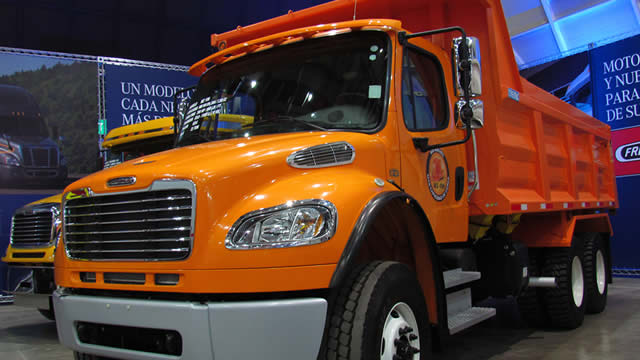
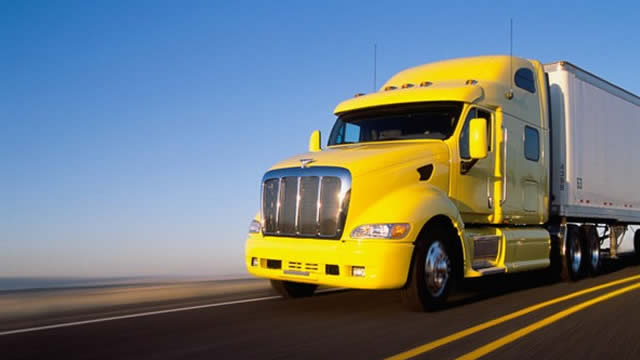
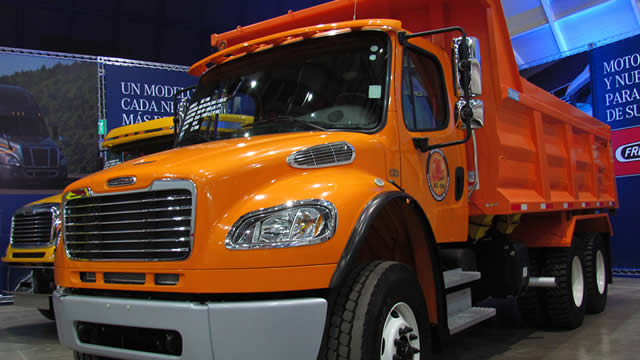
PACCAR Inc designs, manufactures, and distributes light, medium, and heavy-duty commercial trucks in the United States, Europe, Mexico, South America, Australia, and internationally. It operates through three segments: Truck, Parts, and Financial Services. The Truck segment designs, manufactures, and distributes trucks for the over-the-road and off-highway hauling of commercial and consumer goods. It sells its trucks through a network of independent dealers under the Kenworth, Peterbilt, and DAF nameplates. The Parts segment distributes aftermarket parts for trucks and related commercial vehicles. The Financial Services segment conducts full-service leasing operations under the PacLease trade name, as well as provides finance and leasing products and services to customers and dealers. This segment also offers equipment financing and administrative support services for its franchisees; retail loan and leasing services for small, medium, and large commercial trucking companies, as well as independent owners/operators and other businesses; and truck inventory financing services to independent dealers. In addition, this segment offers loans and leases directly to customers for the acquisition of trucks and related equipment. The company also manufactures and markets industrial winches under the Braden, Carco, and Gearmatic nameplates. PACCAR Inc was founded in 1905 and is headquartered in Bellevue, Washington.

Analyst Sentiment

61%
Buy

From 19 Active Polls

1Y Forecast: $127.40

▲ +9.2% Potential Upside

Consensus Target Metrics

Low Bound

$109

Median

$126

High Bound

$139

Average

$127

Price & Moving Averages

Loading chart...

🎯 Wall Street Analyst Intelligence Report

1-Year structural target targets, chart projections, and sentiment maps.

Average 1Y Target
$127.40
▲ +9.19% Upside
Low Target
$109.00
-7% Risk
Median Target
$126.00
8% Mid
High Target
$139.00
19% Max
Consensus
Hold
14 / 45 Buys

Consensus Trend Projection

Trailing closures vs. 12-month metrics map.

Analyst Vote Distribution

Aggregate institutional coverage sentiment weights.

📊 Historical Valuation Multiples

Real-time Trailing Twelve Month (TTM) momentum side-by-side with discrete quarterly metrics.

Fiscal QuarterTTMQ1 2026Q4 2025Q3 2025Q2 2025Q1 2025Q4 2024Q3 2024Q2 2024
Period EndingTrailing 12MMar 31, 2026Dec 31, 2025Sep 30, 2025Jun 30, 2025Mar 31, 2025Dec 31, 2024Sep 30, 2024Jun 30, 2024
Market Cap ($M)61,40760,83457,60251,70649,99251,20754,64251,84653,497
Enterprise Value ($M)70,70870,13548,34961,25460,38161,34463,47660,51762,030
Price to Earnings Ratio (P/E)24.8225.1325.8621.9117.2725.3415.6713.3311.91
Price/Earnings-to-Growth Ratio (PEG)11.5818.6837.47
Price to Sales Ratio (P/S)2.259.768.457.756.666.886.916.296.10
Price to Book Ratio (P/B)3.113.082.992.672.642.843.122.783.02
Price to Free Cash Flow Ratio (P/FCF)18.7873.7774.0442.31112.4787.6157.9657.09-734.84
Enterprise Value to Sales (EV/Sales)11.257.099.188.048.248.037.347.07
Enterprise Value to EBITDA (EV/EBITDA)20.94125.4452.0372.7757.7456.2751.6544.8239.43
Debt to Equity Ratio2.750.760.820.840.870.910.830.81
⚠️

Valuation Model Suspended

API Payload Error: Inverted or negative baseline Free Cash Flow margin detected (-3.6%).

Troubleshooting Notice: The upstream financial data supplier has uploaded corrupted or inverted baseline metrics for PCAR. The server sandbox cannot calculate an intrinsic value path from negative cash generation baselines.

📘 Full Research Report

ℹ️

AI-Generated Research: This report is for informational purposes only.

📘 PACCAR INC (PCAR) — Investment Overview

🧩 Business Model Overview

PACCAR designs and manufactures commercial trucks through leading brands (notably Kenworth and Peterbilt), supported by a global dealer and service ecosystem. The value chain has three reinforcing pillars: (1) truck manufacturing sold through dealer networks, (2) an aftermarket business that monetizes the installed fleet through parts and service, and (3) a captive financing/financial services arm that enables fleet purchases and supports customer retention by aligning vehicle, parts, and service with financing terms.

The customer relationship is “sticky” because fleet operators prioritize uptime and predictable total cost of ownership. Once a fleet standardizes on specific truck platforms and dealer partners, switching to another OEM typically involves driver training, parts stocking/ordering changes, and disruption to service routines—creating practical friction even when pure sticker-price comparisons are available.

💰 Revenue Streams & Monetisation Model

Revenue is primarily driven by (a) truck sales (transactional and cyclical with freight demand and fleet replacement cycles), (b) aftermarket parts and service (structural and tied to the size and age of the installed base), and (c) financial services income (linked to customer financing volumes and credit performance).

Margin drivers follow a clear hierarchy:

  • Mix and installed-base monetisation: Aftermarket parts and service tends to be less cyclical than new truck manufacturing, smoothing earnings through the cycle.
  • Operating leverage in manufacturing: Scale benefits and supply chain execution influence gross margin during demand swings.
  • Financial services credit discipline: Loss rates and funding economics influence profitability, with underwriting quality acting as a structural differentiator.

Overall, the monetisation model works best when the company maintains truck-market share and supports the installed fleet with consistent parts availability and service capacity.

🧠 Competitive Advantages & Market Positioning

PACCAR’s moat is best described as a combination of switching costs (fleet standardization and service routines), network effects (dealer/service coverage and installed-base responsiveness), and cost advantages from manufacturing scale and supplier leverage.

  • Switching costs (fleet operational friction): Fleet procurement typically optimizes for uptime, service response time, parts availability, and driver familiarity. Dealer networks and OEM-specific parts ecosystems make platform changes operationally expensive.
  • Installed-base network effect: A growing installed base increases aftermarket demand and strengthens dealer and logistics investments, improving the speed and availability of parts—feeding back into customer loyalty for future purchases.
  • Cost advantages: Scale in purchasing, production engineering, and standardized platforms support more resilient unit economics versus smaller peers, especially when raw input costs and demand conditions fluctuate.

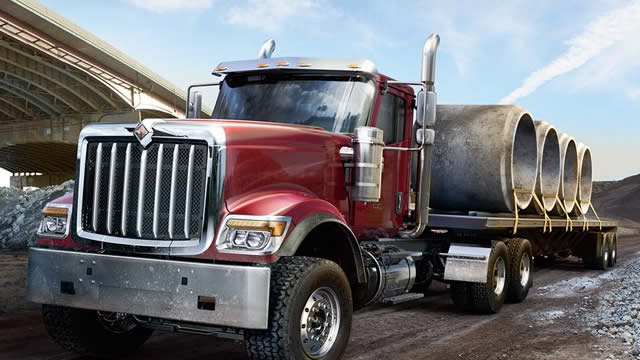
Competitive benchmarking: Key rivals include Volvo Group (Volvo Trucks), Daimler Truck, and Navistar International (International Trucks). These competitors similarly pursue fleet customers, but PACCAR’s positioning emphasizes strong brand presence in its target geographic and end-market niches, an extensive dealer and service network, and aftermarket depth tied to a large installed base. Compared with these OEMs, PACCAR’s differentiation tends to be expressed through aftermarket monetisation and dealer-supported customer lifecycle management alongside manufacturing execution.

🚀 Multi-Year Growth Drivers

Over a 5–10 year horizon, growth is supported by secular freight needs and by structural improvements in vehicle efficiency, logistics productivity, and service intensity:

  • Fleet replacement cycles and vehicle longevity: Durable demand for truck capacity persists as fleets refresh equipment to meet payload, emissions compliance, and productivity targets.
  • Aftermarket “lifecycle” expansion: As installed fleets age, parts and maintenance intensity rises. Growth in fleet count and average replacement horizons supports steadier aftermarket cash flows.
  • Efficiency and powertrain transitions: Electrification and alternative fuels are a multi-year transition rather than an immediate replacement of all use cases. Interim demand for optimization (aerodynamics, driveline efficiency, and alternative-fuel readiness) supports broader truck and service activity.
  • Dealer network density and service capability: Investments in parts distribution and service capacity expand the effective “coverage radius,” improving customer experience and enabling share gains when freight conditions normalize.

⚠ Risk Factors to Monitor

  • Cyclicality in new truck demand: Truck manufacturing is sensitive to freight volumes, credit availability for fleets, and the timing of replacement cycles.
  • Competitive pricing and product parity: OEMs can pressure margins during downcycles through incentives, extended warranties, or aggressive pricing.
  • Regulatory and emissions compliance costs: Compliance requirements can increase system complexity, bill of materials, and engineering/program costs, and can change demand mix across duty cycles and regions.
  • Supply chain and component availability: Operational disruptions or cost spikes in critical components can affect production schedules and profitability.
  • Financial services credit risk: Underwriting discipline is essential; deterioration in fleet credit quality can impact losses and curtail sales volumes financed through the captive platform.

📊 Valuation & Market View

Market valuation for commercial truck OEMs typically reflects (1) cyclical manufacturing earnings power and (2) the perceived durability of aftermarket and financial services contributions. Investors commonly focus on:

  • Through-cycle profitability: Evidence of disciplined cost structure and the ability to preserve margins across freight cycles.
  • Operating leverage and mix: How much aftermarket/service growth offsets manufacturing volatility.
  • Share and backlog quality: Sustainable order intake and mix shifts toward higher-value configurations.
  • Financial services performance: Credit outcomes and funding economics as drivers of stability.

Given the cyclicality of truck manufacturing, valuation multiples often compress or expand with expectations for the industry cycle, but aftermarket depth and credit discipline can moderate earnings volatility—supporting a higher quality premium when execution remains consistent.

🔍 Investment Takeaway

PACCAR’s long-term investment case rests on a structural advantage in the vehicle lifecycle: strong installed-base monetisation through parts and service, practical fleet switching friction supported by an extensive dealer/service network, and cost resilience from manufacturing scale. While new truck demand remains cyclical, the company’s aftermarket and financial services linkage to fleet operations provides a stabilizing earnings profile and supports share durability against OEM competitors such as Volvo Trucks, Daimler Truck, and Navistar.


⚠ AI-generated — informational only. Validate using filings before investing.
📰 Market News & Coverage

15 Stories Available

Real-time institutional reporting and market updates for PCAR.

zacks.com2026-06-03

Paccar (PCAR) Rises As Market Takes a Dip: Key Facts

In the closing of the recent trading day, Paccar (PCAR) stood at $114.38, denoting a +1.32% move from the preceding trading day.

reuters.com2026-06-03

Automakers urge EPA to move quickly to rewrite vehicle pollution rules, back two-year delay

Major automakers backed the Environmental ​Protection Agency proposal to ‌delay enforcement of a regulation requiring significant ​cuts in air ​pollution from vehicles for ⁠two years but want ​the agency to ​move quickly to rewrite the rules.

zacks.com2026-05-28

Why Is Paccar (PCAR) Down 5% Since Last Earnings Report?

Paccar (PCAR) reported earnings 30 days ago. What's next for the stock?

forbes.com2026-05-13

Spirit's Big Fail: Oversized Planes Are Breaking Low-Cost Airlines

After Spirit Airlines vanished from the skies, its not-quite-sudden collapse raised questions about why the successful low-cost model, born in the U.S. airline industry, is failing.

marketbeat.com2026-05-08

The USMCA Review Is Coming: 3 Border-Sensitive Stocks to Watch

Investors are understandably tired of hearing about tariffs. But the United States is approaching a deadline that, despite not getting much coverage, could have a significant impact on stocks in the second half of the year.

zacks.com2026-05-07

Here's Why Paccar (PCAR) is a Strong Value Stock

The Zacks Style Scores offers investors a way to easily find top-rated stocks based on their investing style. Here's why you should take advantage.

zacks.com2026-05-07

Is Trending Stock PACCAR Inc. (PCAR) a Buy Now?

Paccar (PCAR) has received quite a bit of attention from Zacks.com users lately. Therefore, it is wise to be aware of the facts that can impact the stock's prospects.

fool.com2026-05-02

April Was the Best Month for the Market Since 2020. Here's What's Driving It.

Massive AI infrastructure spending is driving revenues and profits higher across multiple industries.

zacks.com2026-05-01

Group 1 Q1 Earnings Estimates Miss on Lower Volumes and Softer F&I

GPI Q1 earnings miss as lower vehicle volumes and softer F&I weigh, while strong parts and service margins help cushion declining revenues.

zacks.com2026-04-30

LKQ Q1 Earnings Match Estimates, Revenues Beat on Stronger Sales Mix

LKQ Q1 revenues top estimates as pricing and mix offset softer volumes, but margins face pressure from tariffs, costs and weaker claims demand.

defenseworld.net2026-04-29

Comerica Bank Sells 14,250 Shares of PACCAR Inc. $PCAR

Comerica Bank cut its holdings in PACCAR Inc. (NASDAQ: PCAR) by 10.1% in the undefined quarter, according to the company in its most recent Form 13F filing with the Securities and Exchange Commission. The institutional investor owned 126,293 shares of the company's stock after selling 14,250 shares during the period. Comerica Bank's holdings

gurufocus.com2026-04-29

PACCAR Inc (PCAR) Q1 2026 Earnings Call Highlights: Strong Financial Performance Amid Market Challenges

Revenue: $6.8 billion in the first quarter.Net Income: $605 million in the first quarter.PACCAR Parts Revenue: $1.7 billion in the first quarter.PACCAR Parts P

businesswire.com2026-04-28

PACCAR Increases Regular Quarterly Dividend

BELLEVUE, Wash.--(BUSINESS WIRE)--PACCAR Inc's Board of Directors today approved an increase in the regular quarterly cash dividend from thirty-three cents ($.33) per share to thirty-five cents ($.35) per share. The dividend will be payable on June 3, 2026, to stockholders of record at the close of business on May 13, 2026. Mark Pigott, executive chairman, shared, “PACCAR has generated excellent shareholder returns and profitability for decades. PACCAR has delivered annual dividends, including.

seekingalpha.com2026-04-28

PACCAR Inc (PCAR) Shareholder/Analyst Call Prepared Remarks Transcript

PACCAR Inc (PCAR) Shareholder/Analyst Call Prepared Remarks Transcript

seekingalpha.com2026-04-28

PACCAR Inc (PCAR) Q1 2026 Earnings Call Transcript

PACCAR Inc (PCAR) Q1 2026 Earnings Call Transcript

📊 AI Financial Analysis

Powered by StockMarketInfo
Earnings Data: Q Ending 2026-03-31

"PCAR reported Q1 2026 results with Revenue of $6.23B and Net Income of $605.3M (EPS $1.15). On a YoY basis, revenue declined from $7.44B (Q1 2025) to $6.23B, a -16.3% drop, while net income increased from $505.1M to $605.3M (+19.9% YoY). QoQ, revenue decreased from $6.82B (Q4 2025) to $6.23B (-8.7%), and net income rose from $556.9M to $605.3M (+8.7%). Profitability improved despite weaker top-line demand: gross margin was 13.1% in Q1 2026 versus 13.8% in Q4 2025 and 17.7% in Q1 2025 (margin contracting over the 4-quarter span), but operating income and net margin were resilient (net margin 9.7% vs 8.2% in Q4 2025 and 6.8% in Q1 2025). Operating cash flow was $971.8M, and free cash flow was also $971.8M, providing strong liquidity. The company paid $909.4M of dividends in the quarter and had minimal buybacks (repurchased $4.8M), indicating shareholder returns are dividend-led. Shareholder returns are strong: PCAR is up 45.4% over the last year, supporting a favorable total-return profile alongside a ~1.5% dividend yield. Balance sheet leverage appears low in this dataset (net cash position), with substantial liquidity (cash + short-term investments)."

Revenue Growth

Neutral

Revenue fell -16.3% YoY (Q1 2025 $7.44B to Q1 2026 $6.23B) and -8.7% QoQ (Q4 2025 $6.82B to Q1 2026 $6.23B), showing a clear top-line downtrend.

Profitability

Good

Net income rose +19.9% YoY and +8.7% QoQ, with net margin expanding vs Q1 2025 (6.8% to 9.7%) and vs Q4 2025 (8.2% to 9.7%). Margins are mixed over the 4-quarter span (gross margin down vs Q1 2025), but earnings durability improved.

Cash Flow Quality

Good

Q1 2026 generated $971.8M operating cash flow and $971.8M free cash flow (both strong vs net income). Dividends were substantial ($909.4M) but appear supported by FCF in the quarter; buybacks were minimal.

Leverage & Balance Sheet

Positive

Liquidity is strong with $5.38B cash and $8.60B short-term investments. The dataset indicates net cash (net debt -$5.38B) and no reported debt in Q1 2026, suggesting resilience, though assets and working-capital dynamics appear volatile across quarters.

Shareholder Returns

Strong

Total value creation is strong: price is up +45.4% over 1 year, well above the 20% momentum threshold. Dividend yield is ~1.5%; dividends are a key component of capital return.

Analyst Sentiment & Valuation

Neutral

Consensus price target is $124.5 vs current price $126.25 (slightly below/at current), implying limited upside from Street targets. Valuation multiples remain elevated (P/E ~25.1 per provided ratios), tempering the score.

Disclaimer:This analysis is AI-generated for informational purposes only. Accuracy is not guaranteed and this does not constitute financial advice.

Fundamentals Overview

Loading fundamentals overview...

PCAR’s Q1 2026 results show improving profitability despite a still-competitive pricing backdrop. Company truck/segment gross margin rose from 12.0% to 13.1% (+110 bps), helped by volume leverage from local-for-local manufacturing and sequential price/cost advantages. For Q2, management guided gross margin to ~13.5% (~+40 bps sequential), expecting further sequential progress through 2H as build rates rise and customers accelerate after freight-rate improvement, while still facing raw-material and energy volatility. PACCAR Parts delivered $1.7B revenue with 29.6% gross margin and guided +~3% parts growth in Q2 and +3% to +6% full year, with parts acceleration tied to trucks on the road and customers shifting from optional part deferrals. Capacity appears manageable: the company is full through Q2 and majority full in Q3/Q4. Tariff-related headwinds were characterized as limited this quarter, with the 3.75% NSRP credit expected “in the not distant future.”

AI IconGrowth Catalysts

  • Kenworth C 580 multi-axle heavy-duty vocational truck launched at CONEXPO (severe service applications)
  • DAF electric leadership extended with new flagship XG and XG+; XF Electric won 2026 Eco-Friendly Truck of the Year in Spain
  • Local-for-local manufacturing ramp driving higher build rates in America (supporting sequential margin expansion)
  • Parts demand acceleration expected in 2H as fleets buy more trucks and customers’ end markets improve
  • Purchase trucks ahead of 2027 emissions change supporting demand timing

Business Development

  • Expanded reliance on dealer network for PACCAR Parts growth; plans to expand TRP stores and global distribution centers (21 centers worldwide)
  • Partnership with Cummins on engine development programs and 2027 35 milligram standard planning
  • DAF recognition tied to International Truck of the Year 2026 for DAF XF and XD Electric (brand/technology demand support)

AI IconFinancial Highlights

  • Reported revenues $6.8B and net income $605M for Q1 2026
  • Truck/segments gross margin increased from 12.0% to 13.1% in Q1 (+110 bps); Q2 forecast to around 13.5% (~+40 bps vs 13.1%)
  • Truck gross margin for Q1 described as somewhere above 7% (back-solved by analyst) with Q2 midpoint 13.5% company-level guidance
  • PACCAR Parts Q1 revenues $1.7B; gross margins 29.6%; parts guidance: ~+3% in Q2 and +3% to +6% for full year
  • PACCAR Financial Services pretax income $116M driven by asset growth, improving margins, and strengthening used truck market
  • Price/cost and mix: management cited Q1 price/cost advantage sequentially; tariff impacts not significant in current quarter; no IEPA/AIPA charge recorded
  • Profit per truck: analyst referenced ~$5.3k vs ~$2.9k last quarter (management confirmed sequential price/cost advantage, cost down, and favorable mix/volume leverage rather than tariff reversals)

AI IconCapital Funding

  • Planned capital investments: $725M to $775M (full year 2026)
  • Planned R&D expenses: $450M to $500M (full year 2026)
  • No explicit buyback/debt/cash runway amounts stated in the transcript

AI IconStrategy & Ops

  • Local-for-local manufacturing capability in America used to increase build rates; teams already built capacity ahead of Q2
  • Second-quarter delivery build: guidance for 37k–38k vehicles (Q1 delivered 33.1k trucks)
  • Inventory position: just under 3.0 months (2.8 months) vs 2.2 months back in December; management called channel inventory healthier than industry (>4 months)

AI IconMarket Outlook

  • U.S./Canadian truck market estimate: 230k–270k units for 2026
  • European above-16-ton market estimate (2026): 280k–320k
  • South American above-16-ton market estimate (2026): 100k–110k
  • Q2 deliveries: 37k–38k vehicles total
  • Q2 gross margin: around 13.5% midpoint guidance
  • Orders/market cadence unchanged outlook; management noted Q1 ran “something around or a little under 200k” and acceleration is required to reach 250k midpoint

AI IconRisks & Headwinds

  • Competitive pricing environment persists; customers have not yet fully absorbed tariffs, limiting pricing pass-through
  • Raw material and energy volatility (energy, steel, aluminum) partially offsets margin expansion; diesel/fuel cost impacts customer behavior
  • Tariff timing/absorption uncertainty: customers may not see full tariff effects yet; price/mix dampens total margin %
  • Potential supply-chain constraints discussed indirectly (no specific second-half constraints identified), but risk flags included hiring cadence and supplier ramp readiness
  • Geopolitical uncertainty (Middle East war) impacts confidence via fuel pricing discussions in Europe, though management cited limited demand impact

Q&A: Analyst Interest

  • Parts acceleration drivers: Management said acceleration comes from multiple levers—higher truck orders translating into more trucks on the road and improved fleet end-market conditions—while also noting fuel/operating-cost volatility shifts customers toward required maintenance and optional-part deferrals, affecting mix. Net result is volume and mix improving through the year.
  • Tariffs/credits and timing clarity: Management stated simplified metal tariffs have limited impact because PCAR’s truck-specific 232 has material offsets, applying mostly to those materials. For the previously announced 3.75% NSRP credit, management said the definition is clear and they expect application timing “in the not distant future,” subject to administrative steps.
  • Gross margin bridge and build-slot constraints: Management emphasized Q1 truck margin strength came from volume leverage, best-in-class product sell-through, price/cost advantages, and favorable product mix tied to holiday shutdown and fleet inventory dynamics. For capacity risk, they reported being full through Q2 and “majority full” in Q3/Q4, rejecting claims of absent build slots.

Sentiment: POSITIVE

Note: This summary was synthesized by AI from the PCAR Q1 2026 earnings transcript. Financial data is complex; please verify all metrics against official SEC filings before making investment decisions.

📋 Official Regulatory 10-K / 10-Q SEC Filings

Direct authenticated documentation links to audited SEC database reports for PCAR.

SEC EDGAR Live Feed
Loading financial data and tables...
📁

SEC Filings (PCAR)

© 2026 Stock Market Info — PACCAR Inc (PCAR) Financial Profile