The Procter & Gamble Company

The Procter & Gamble Company (PG) Market Cap

The Procter & Gamble Company has a market capitalization of .

No quote data available.

CEO: Shailesh G. Jejurikar

Sector: Consumer Defensive

Industry: Household & Personal Products

IPO Date: 1978-01-13

Website: http://us.pg.com

The Procter & Gamble Company (PG) - Company Information

Market Cap: -|Sector: Consumer Defensive

Company Profile

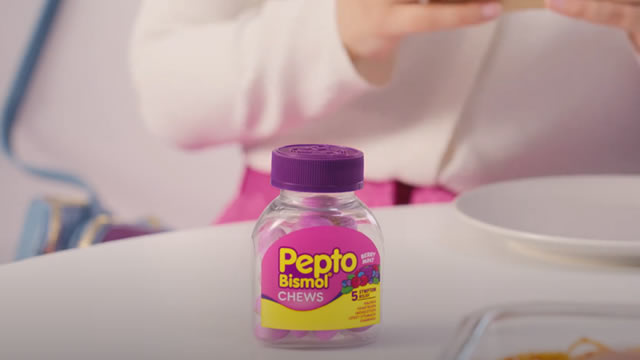
The Procter & Gamble Company provides branded consumer packaged goods worldwide. It operates through five segments: Beauty; Grooming; Health Care; Fabric & Home Care; and Baby, Feminine & Family Care. The Beauty segment offers conditioners, shampoos, styling aids, and treatments under the Head & Shoulders, Herbal Essences, Pantene, and Rejoice brands; and antiperspirants and deodorants, personal cleansing, and skin care products under the Olay, Old Spice, Safeguard, Secret, and SK-II brands. The Grooming segment provides shave care products and appliances under the Braun, Gillette, and Venus brand names. The Health Care segment offers toothbrushes, toothpastes, and other oral care products under the Crest and Oral-B brand names; and gastrointestinal, rapid diagnostics, respiratory, vitamins/minerals/supplements, pain relief, and other personal health care products under the Metamucil, Neurobion, Pepto-Bismol, and Vicks brands. The Fabric & Home Care segment provides fabric enhancers, laundry additives, and laundry detergents under the Ariel, Downy, Gain, and Tide brands; and air care, dish care, P&G professional, and surface care products under the Cascade, Dawn, Fairy, Febreze, Mr. Clean, and Swiffer brands. The Baby, Feminine & Family Care segment offers baby wipes, taped diapers, and pants under the Luvs and Pampers brands; adult incontinence and feminine care products under the Always, Always Discreet, and Tampax brands; and paper towels, tissues, and toilet papers under the Bounty, Charmin, and Puffs brands. The company sells its products primarily through mass merchandisers, e-commerce, grocery stores, membership club stores, drug stores, department stores, distributors, wholesalers, specialty beauty stores, high-frequency stores, pharmacies, electronics stores, and professional channels, as well as directly to consumers. The Procter & Gamble Company was founded in 1837 and is headquartered in Cincinnati, Ohio.

Analyst Sentiment

73%
Strong Buy

From 24 Active Polls

1Y Forecast: $161.88

▲ +0.0% Potential Upside

Consensus Target Metrics

Low Bound

$142

Median

$164

High Bound

$179

Average

$162

Price & Moving Averages

Loading chart...

🎯 Wall Street Analyst Intelligence Report

1-Year structural target targets, chart projections, and sentiment maps.

Average 1Y Target
$161.88
▲ +10.47% Upside
Low Target
$142.00
-3% Risk
Median Target
$163.50
12% Mid
High Target
$179.00
22% Max

Consensus Trend Projection

Trailing closures vs. 12-month metrics map.

Analyst Vote Distribution

Aggregate institutional coverage sentiment weights.

Sentiment volume allocation data unavailable.

Historical valuation matrix unavailable.

📘 Full Research Report

ℹ️

AI-Generated Research: This report is for informational purposes only.

📘 PROCTER & GAMBLE (PG) — Investment Overview

🧩 Business Model Overview

Procter & Gamble (PG) operates in fast-moving consumer goods (FMCG), selling branded, differentiated products into a large global retail distribution network. The business converts raw materials, manufacturing capacity, and marketing/sales execution into consumer-packaged goods distributed through grocery, mass, club, and e-commerce channels.

The value chain is characterized by (1) brand demand creation at the shelf, (2) efficient global manufacturing and supply planning, (3) category-level trade execution with retailers, and (4) sustained reinvestment to maintain product performance and consumer relevance. Customer “stickiness” is less about direct consumer contracts and more about habitual consumption patterns, retailer shelf strategy, and the practical difficulty of displacing established products once embedded in household routines.

💰 Revenue Streams & Monetisation Model

PG’s monetisation is primarily driven by product sales across stable categories, with pricing and mix managed through a combination of brand-led value positioning, promotional cadence, and cost pass-through discipline. Revenue is predominantly transactional—no contractual subscription component—but exhibits repeat purchase behavior and relatively resilient demand due to everyday household needs.

Margin drivers are structurally important:

  • Gross margin supported by scale manufacturing, procurement leverage, and brand premiumization (mix and pricing power versus commodity-like private label).
  • Operating margin influenced by fixed-cost absorption in production, marketing efficiency, and a relatively disciplined cost structure.
  • Working capital affected by inventory and trade terms; efficient supply chain planning can reduce cash conversion volatility.

🧠 Competitive Advantages & Market Positioning

PG’s moat is best described as a combination of Scale/Distribution leverage and Private label resistance, reinforced by Intangible assets (brands and formulation know-how). While competitors can introduce substitutes, maintaining shelf presence and achieving sustained volume share typically requires significant spend, time, and retailer cooperation—especially in mature categories where consumers already have established preferences.

  • Scale/Distribution leverage: Large global purchasing and manufacturing footprint improves unit economics and enables consistent retailer service, ranging from in-stock execution to category planning. Competitors with smaller scale face higher unit costs and more limited bargaining leverage.
  • Private label resistance: PG’s portfolio is constructed around product performance, trust, and consistent consumer outcomes. Retailers can offer private label alternatives, but widespread displacement is limited when brand-linked performance and household familiarity anchor demand.
  • Intangible assets: Brand equity and formulation/process capabilities support premium mix, repeat purchase, and the ability to defend against promotional cycles.

Competitive benchmarking:

  • Unilever (UL): Similar scale FMCG exposure with substantial brands; competes through comparable distribution reach and brand investment, but portfolio mix and regional execution can differ.
  • Colgate-Palmolive (CL): Strong position in personal care and oral care, with higher category concentration versus PG’s broader household exposure.
  • Kimberly-Clark (KMB): Competes more directly in select health/personal care categories; scale exists, but PG’s diversification and shelf breadth often strengthen cross-category bargaining and demand stability.

Relative positioning: PG spans a wide set of household categories, which tends to support more resilient volume and greater leverage in retailer negotiations. Rivals often compete effectively in their stronger categories, but the difficulty for any single competitor is sustaining share gains across multiple household routines without incurring elevated marketing and trade costs.

🚀 Multi-Year Growth Drivers

Over a 5–10 year horizon, PG’s growth is typically driven less by disruptive innovation and more by steady category demand plus the ability to manage through inflationary cycles and consumer mix shifts. Key structural drivers include:

  • Premiumization within mature categories: Even when overall category volume is stable, product performance upgrades and value propositions can lift net pricing and favorable mix.
  • Share stability through brand and innovation cadence: Sustained reinvestment in product quality and form factor improvements supports retention of household routines and shelf position.
  • Distribution expansion and share capture in under-penetrated markets: Emerging market penetration and incremental retail coverage can expand volumes over time, though with region-specific execution risk.
  • Cost and productivity initiatives: Manufacturing optimization, procurement savings, and packaging efficiency can structurally support margin resilience even as input costs fluctuate.
  • E-commerce and omnichannel shelf extension: While promotion dynamics differ, retailer assortment and brand content can improve visibility and reorder rates when executed well.

⚠ Risk Factors to Monitor

  • Input cost and margin volatility: Commodity-linked materials, energy logistics, and packaging costs can pressure gross margins if pricing actions lag cost inflation.
  • Retailer power and trade dynamics: Increased promotional intensity or tighter retailer inventory controls can compress net pricing and reduce margin durability.
  • Consumer preference shifts: Changes in usage patterns, sustainability expectations, or category re-segmentation can require continuous brand and formulation adaptation.
  • Regulatory and compliance burden: Labeling, product claims, and evolving environmental regulations (including packaging) may increase cost or restrict marketing language.
  • Competitive substitution and private label pressure: If consumer switching accelerates due to economic stress or retailer strategies, private label can increase share and lower premiumization.

📊 Valuation & Market View

Markets often value high-quality consumer staples businesses through cash flow durability and defensive earnings characteristics. Typical valuation frameworks include:

  • P/E for earnings durability expectations (moved by growth outlook, margin trajectory, and buyback assumptions).
  • EV/EBITDA for operational stability (driven by margin profile and capital intensity).
  • P/S less so for fast-moving staples where margins are central (sensitive to pricing/mix and gross margin stability).

Drivers that generally move valuation multiples for PG-type businesses include the credibility of sustained pricing discipline, stable volume trends, margin resilience across input cycles, and confidence in capital allocation (including reinvestment and shareholder returns).

🔍 Investment Takeaway

PG’s long-term attractiveness is anchored in durable scale-enabled economics, brand/intangible assets that limit private label displacement, and resilient repeat-purchase behavior across essential household categories. The primary debate for investors is not whether competition exists, but whether PG can sustain pricing/mix discipline and operational productivity while navigating retailer power and cost cycles. For a patient, long-horizon allocator, the structural moat supports a consistent cash generation profile and a defensible ability to compound through both inflationary and disinflationary periods.


⚠ AI-generated — informational only. Validate using filings before investing.
📊 AI Financial Analysis

Powered by StockMarketInfo
Earnings Data: Q Ending 2026-03-31

"Procter & Gamble (PG) reported Q3 FY2026 results (ended 2026-03-31) with Revenue of $21.235B and Net Income of $3.968B, translating to EPS of $1.66. YoY, revenue rose to $21.235B from $19.776B in Q3 FY2025 (+7.4%), while net income increased from $3.769B (+5.2%). QoQ, revenue declined from $22.208B in Q2 FY2026 (-4.4%), and net income also fell from $4.331B (-8.4%), indicating a softer sequential quarter. Profitability remains strong but mixed sequentially: gross margin was 49.5% (vs 51.2% in the prior quarter and 50.98% YoY). Net margin was 18.7%, down from 19.5% QoQ and slightly down YoY (18.7% vs 19.1%). Operating income and EBITDA also contracted QoQ (operating income -14.7% QoQ; EBITDA -7.0% QoQ), though they were solid year-over-year. Cash flow quality is steady: operating cash flow was $4.045B and free cash flow $3.026B. The company continued shareholder returns via dividends ($2.53B) and buybacks ($0.625B repurchased in the quarter). Balance sheet resilience is good with total assets at $128.4B and equity at ~$54.5B. Total shareholder returns are moderated by price: the stock is down ~11.7% over the past 1 year, offset only slightly by a dividend yield near ~0.7%."

Revenue Growth

Positive

QoQ revenue declined from $22.208B to $21.235B (-4.4%) while YoY revenue increased from $19.776B to $21.235B (+7.4%), showing positive underlying demand but softer sequential momentum.

Profitability

Neutral

Margins contracted over QoQ: gross margin fell to 49.5% (from 51.2%) and net margin to 18.7% (from 19.5%). YoY net income grew (+5.2%), but profitability was not expanding sequentially.

Cash Flow Quality

Good

Operating cash flow was $4.045B and free cash flow $3.026B. Dividends remained a consistent use of cash ($2.53B) and buybacks continued (-$0.625B), supporting shareholder returns alongside strong earnings conversion.

Leverage & Balance Sheet

Good

Balance sheet strength is stable: total assets rose to $128.4B from $127.3B QoQ, and stockholders’ equity remained steady at ~$54.5B. Debt levels are manageable with interest coverage ~20x.

Shareholder Returns

Fair

Capital appreciation is negative: 1-year price change is -11.7%, which weighs on total return. Dividend yield is modest (~0.7%), partially offsetting buybacks and dividends.

Analyst Sentiment & Valuation

Positive

Current price ($146.93) vs consensus target ($161.88) implies upside of ~10%. Valuation multiples are elevated (e.g., P/E ~22), but near-term risk appears more sentiment/expectations-driven than balance-sheet constrained.

Disclaimer:This analysis is AI-generated for informational purposes only. Accuracy is not guaranteed and this does not constitute financial advice.

Fundamentals Overview

Loading fundamentals overview...

P&G delivered an acceleration in Q3 fiscal '26 organic sales (+3%+ YoY) driven by volume (+2 pts) and pricing (+1 pt) with flat mix, and broad-based category/region growth. However, profitability deteriorated: core gross margin fell 100 bps and core operating margin fell 80 bps versus prior year, with a 330 bps productivity gain offset by reinvestment in innovation and demand creation. Cash returns were strong ($3.2B in the quarter; $15B planned for fiscal '26 with ~$5B buybacks). The core earnings story now hinges on geopolitics: management guided fiscal '26 EPS toward the lower end of the range despite maintaining organic sales growth of ~4%. The company expects a ~$150M after-tax earnings headwind in fiscal '26 (largely Q4) plus ~$500M before-tax tariffs/costs, offset by a ~$200M after-tax FX tailwind. Management’s confidence rests on brand interventions (Fairy, Mr. Clean, Pantene Germany, SK-II) and Supply Chain 3.0 mitigating supply continuity risk, while using productivity and selective innovation-led pricing to manage costs without cutting growth investment.

AI IconGrowth Catalysts

  • Dawn Powerwash (U.S.) supporting tight intervention/innovation model
  • Fairy Skip the Soak (U.K.) product/package/communication tied to consumer insight (71% soak dishes); household penetration 61%, +5 pts in first year
  • Mr. Clean Magic Eraser platform extensions (denser form/wider micro scrubbing structure lasting 2x longer) plus Shower & Tub scrubber; 18x fair share of bath cleaning category growth since launch
  • Pantene Germany social/influencer-led innovation; earned influencer posts 4x and total reach 3x despite 20% lower media spend; value share +60 bps vs prior year
  • SK-II (Greater China) up 18% total; China up 13% in quarter; travel retail up significantly
  • Pampers and broader Greater China resilience; Baby Care up 19% in the quarter
  • Tide Evo in Fabric Care (U.S.) early-week performance on track vs high expectations

Business Development

  • Channel/retailer execution reliance: retail partners described as leaning on P&G as a reliable partner during supply disruptions
  • Supplier and contract manufacturer contingency planning to mitigate Middle East-related logistics/cost disruptions (no named suppliers stated)
  • Germany beauty influencer and brand-event partnerships (named as “top German beauty opinion leaders, hair experts and brand events” without individual names)

AI IconFinancial Highlights

  • Organic sales +3%+ YoY; volume +2 pts, pricing +1 pt, mix flat
  • Region momentum: North America +4% (volume +3 pts), Europe +2% (enterprise +6%; focus markets led by U.K./Italy/Spain), Greater China +3%, Latin America +5% (Mexico & Brazil high single digits), Asia Pacific/Middle East/Africa enterprise region +4%
  • Core EPS: $1.59 in quarter, +3% YoY on currency-neutral basis; core EPS in line with prior year on reported basis
  • Core gross margin -100 bps YoY; core operating margin -80 bps YoY; productivity improvement +330 bps offset by reinvestment in innovation/demand creation
  • Adjusted free cash flow productivity: 82%
  • Cash returned to shareholders: $3.2B in quarter ($2.5B dividends; >$600M share repurchases); dividend increased 3% (7th consecutive annual increase; 136 consecutive years paid)

AI IconCapital Funding

  • Quarterly shareholder returns: $2.5B dividends and over $600M share repurchases (total $3.2B)
  • Full fiscal '26 plan: pay ~ $10B dividends and repurchase ~ $5B common stock; total cash returned ~ $15B
  • No explicit debt level disclosed in this excerpt; cash runway implied via continued ACF productivity guidance and ongoing buyback/dividend program

AI IconStrategy & Ops

  • Scaling “Supply Chain 3.0”: tighter connection from purchase signal to production planning/material ordering; expanded automation/digitization
  • Integrated data platforms scaled to enhance insight mining for product innovations, brand ideas, performance claims, and marketing campaigns
  • Constructive disruption interventions driving near-term investments while protecting supply continuity (rapid product reformulation and supply diversification)
  • U.K. Fairy Skip the Soak designed around pre-wash behavior insight (integration across product name, packaging, in-store execution, communication)

AI IconMarket Outlook

  • Fiscal '26 organic sales growth expected in line with ~4%
  • Q4 organic sales expected somewhat lower than Q3 due to trade inventory timing (Easter-driven March increase) and Middle East uncertainty
  • Underlying global market growth ~2% on a value basis (trend positive over last 2 months)
  • Core EPS growth guidance: in line to +4% YoY; implies $6.83 to $7.09 per share
  • Fiscal '26 bottom line: expect full-year EPS toward the lower end of the guidance range
  • No fiscal '27 guidance provided; planned next call in July

AI IconRisks & Headwinds

  • Middle East conflict: increased energy/commodity-linked cost inflation and logistics disruptions; expected $150M after-tax headwind to fiscal '26 earnings growth (almost all in Q4)
  • Tariffs: ~$500M before-tax and higher costs from tariffs expected for fiscal '26
  • FX: foreign exchange tailwind ~$200M after tax (unchanged)
  • Restructuring: guidance includes roughly 30–50 bps headwind from product/market exits
  • Trade inventory dynamics: March trade inventory increase partly Easter-timed; could reverse into Q4
  • Supply continuity risk: force majeure declarations by direct and upstream suppliers noted; P&G says contingency plans are working

Q&A: Analyst Interest

  • Organic growth confidence across Q4/'27 despite Middle East $1B after-tax headwind: Management emphasized breadth across regions/categories and brand country interventions, citing tight liquid intervention formula upgrade and SK-II growth. They said productivity levers will be pulled first, and selective pricing with innovation will help, while protecting investment and sustained organic sales momentum.
  • China beauty channel drivers and SK-II acceleration: Management described China at +3% for the quarter and improving reinvention of the China model (go-to-market, portfolio, communication, innovation). They highlighted SK-II +18% total, China +13%, travel retail strength, and Baby Care +19%, attributing upside to consumer responsiveness to true superiority amid low confidence.
  • Pricing power vs inflation and whether competition eases: Management stated pricing power is earned through combining pricing with truly better performance/experience, not blanket rate hikes. They referenced potential retailer awareness of incremental pricing and “choice” via vertical/price tiering. On competition, they said it’s too early; Europe/U.S. promotion data is slightly higher vs pre-COVID baseline and remains stable.

Sentiment: MIXED

Note: This summary was synthesized by AI from the PG Q3 2026 earnings transcript. Financial data is complex; please verify all metrics against official SEC filings before making investment decisions.

Loading financial data and tables...
© 2026 Stock Market Info — The Procter & Gamble Company (PG) Financial Profile