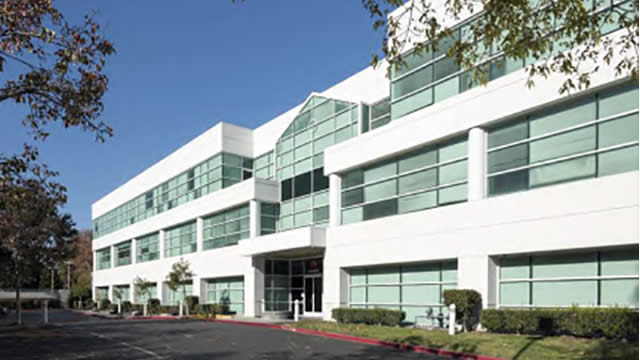
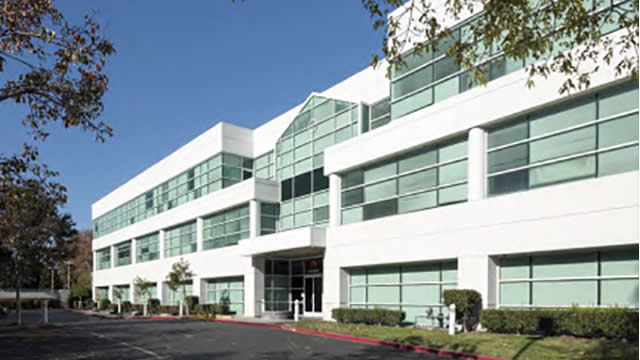
Alpine Income Property Trust, Inc.

Alpine Income Property Trust, Inc. (PINE) Market Cap

Alpine Income Property Trust, Inc. has a market capitalization of .

No quote data available.

CEO: John Albright

Sector: Real Estate

Industry: REIT - Retail

IPO Date: 2019-11-22

Website: https://www.alpinereit.com

Alpine Income Property Trust, Inc. (PINE) - Company Information

Market Cap: -|Sector: Real Estate

Company Profile

Alpine Income Property Trust, Inc. (NYSE: PINE) is a publicly traded real estate investment trust that acquires, owns and operates a portfolio of high-quality single-tenant net leased commercial income properties.

Analyst Sentiment

79%
Strong Buy

From 11 Active Polls

1Y Forecast: $20.60

▲ +0.0% Potential Upside

Consensus Target Metrics

Low Bound

$20

Median

$20

High Bound

$22

Average

$21

Price & Moving Averages

Loading chart...

🎯 Wall Street Analyst Intelligence Report

1-Year structural target targets, chart projections, and sentiment maps.

Average 1Y Target
$20.60
▲ +4.78% Upside
Low Target
$19.50
-1% Risk
Median Target
$20.00
2% Mid
High Target
$22.00
12% Max

Consensus Trend Projection

Trailing closures vs. 12-month metrics map.

Analyst Vote Distribution

Aggregate institutional coverage sentiment weights.

Sentiment volume allocation data unavailable.

Historical valuation matrix unavailable.

📘 Full Research Report

ℹ️

AI-Generated Research: This report is for informational purposes only.

📘 ALPINE INCOME PROPERTY TRUST INC (PINE) — Investment Overview

🧩 Business Model Overview

ALPINE INCOME PROPERTY TRUST INC (“PINE”) operates as a REIT that acquires and owns income-producing commercial real estate, earning its primary cash flow through rent collected under long-term lease structures. The value chain is straightforward: (1) source properties from deal-flow networks (brokers, intermediaries, and owner sellers), (2) underwrite lease and tenant credit fundamentals to estimate long-run cash generation, (3) finance acquisitions using a mix of equity and debt, and (4) manage the portfolio to sustain occupancy, control property-level expenses, and realize returns through either stabilized rent cash flows, lease contractual features (where present), or asset dispositions at spreads versus acquisition costs.

💰 Revenue Streams & Monetisation Model

PINE’s monetisation is dominated by recurring rental income, with the economic performance driven by (i) lease duration and rent durability, (ii) tenant credit quality and default risk, (iii) expense pass-through characteristics (common in net-lease models), and (iv) the ability to maintain or re-lease properties upon renewal/turnover. Any non-recurring component generally comes from gains on property sales and other portfolio-level adjustments, but the investment case typically rests on recurring cash yield converted into distributions.

Margin drivers for this model are less about operating cost leverage and more about: acquisition discipline (buying assets at yields above the cost of capital), interest-rate and refinancing terms, property-level expense control, and the stability of tenant rent payments relative to operating and capital costs.

🧠 Competitive Advantages & Market Positioning

PINE’s moat is best described as an underwriting/sourcing and credit-selection capability—an intangible asset that compounds through experience with lease structures, property operations, and tenant performance. In property portfolios, this can function similarly to switching-cost advantages: tenants and operators typically do not “switch” providers easily because leasehold terms are contractual, and PINE’s ability to originate and price deals with acceptable credit risk depends on established relationships and repeatable diligence.

Intangible assets / credit culture: Net-leased and income-focused strategies require disciplined assessment of tenant credit, lease enforceability, and downside scenarios. Over time, a consistent investment team and process can reduce tail risk and improve risk-adjusted entry pricing.

Cost of capital and execution: As with other REITs, access to equity and debt markets at reasonable spreads can enable PINE to acquire assets with durable cash yield. This is not a “network effect,” but it is a structural cost advantage that affects long-run compounding.

  • Realty Income (O): A larger, more diversified net-lease REIT with broader tenant and property type diversification. PINE’s positioning is more concentrated and thus more sensitive to underwriting quality and tenant-level outcomes.
  • Agree Realty (ADC): Focused on retail and service-oriented net-leased assets with a scale advantage in sourcing and financing. Against ADC, PINE’s competitive edge depends more on selectivity and deal-specific judgment than on sheer portfolio scale.
  • National Retail Properties (NNN): Emphasizes long-term net leases and tenant diversification. PINE generally competes on the ability to identify mispriced risk and secure attractive cash yields, rather than matching NNN’s scale and tenant breadth.

Overall, the industry is competitive, but PINE’s sustainable advantage is most plausibly tied to repeatable acquisition discipline and credit underwriting that preserves distribution coverage through cycles.

🚀 Multi-Year Growth Drivers

Over a 5–10 year horizon, the primary growth levers for a net/income-focused REIT like PINE tend to be:

  • Accretive acquisition opportunities: Continued ability to purchase properties at attractive risk-adjusted yields relative to the cost of capital, supported by differentiated diligence on tenant credit and lease economics.
  • Rent durability and contract features: Where leases include escalators, renewal options, or structured rent adjustments, cash flow can compound even without frequent leasing turnover.
  • Turnaround and stabilization: For assets requiring operational improvement or re-leasing, disciplined capital allocation can convert underperforming cash flows into stabilized earnings.
  • Refinancing and balance-sheet management: Over time, refinancing at favorable terms (or lengthening maturity profiles) can support distribution sustainability and reinvestment capacity.
  • Secular demand for leased real estate: Operators increasingly prefer capital-light models, supporting ongoing demand for institutional owners of leased properties.

Because PINE’s growth is ultimately constrained by its ability to deploy equity and refinance debt without impairing distribution coverage, the quality of underwriting and the discipline of leverage are central to long-run outcomes.

⚠ Risk Factors to Monitor

  • Tenant concentration and credit risk: Even with net-lease structures, lease collectability depends on tenant solvency and operational resilience. Concentrations can amplify downside.
  • Financing and interest-rate risk: REIT cash flows are sensitive to the cost of debt and refinancing availability; adverse credit spreads or higher rates can compress acquisition spreads.
  • Asset liquidity and cap-rate volatility: Real estate valuation can swing with macro conditions, affecting disposition proceeds and the ability to recycle capital.
  • Leasing/occupancy risk: Renewal outcomes and re-leasing terms can diverge from underwriting assumptions, especially for properties with limited tenant alternatives.
  • Regulatory and tax considerations: REIT compliance requirements constrain distribution and capital-structure flexibility.
  • External management alignment risk (if applicable in fee structure): The economics of management fees versus performance outcomes can affect total shareholder returns if incentives are not well aligned with distribution durability and per-share value creation.

📊 Valuation & Market View

Market participants typically value income-focused REITs like PINE using cash flow and distribution metrics rather than pure growth multiples. The sector’s valuation is commonly anchored to:

  • Dividend/distribution sustainability (often assessed through coverage by operating cash flow proxies such as AFFO-style measures).
  • Credit quality and leverage: Debt maturity ladders, interest coverage, and the stability of rental revenue influence risk premia demanded by investors.
  • Net asset value directionally: Changes in real estate market pricing and property-level fundamentals drive NAV trends and expected recovery on liquidation/disposition scenarios.
  • EV/EBITDA and related multiples: These can move with rate expectations, property cap rate spreads, and credit market liquidity—often more than with short-term earnings volatility.

Key drivers that typically move the needle include underwriting discipline (risk-adjusted entry yields), the trajectory of distribution coverage, and the balance between acquisition growth and leverage management.

🔍 Investment Takeaway

PINE’s long-term investment case rests on the ability to convert real estate ownership into durable, recurring cash distributions through disciplined acquisition underwriting and tenant-credit management, supported by access to cost-effective capital. The primary determinant of shareholder outcomes is whether PINE can sustain distribution coverage through property cycles—without allowing refinancing, concentration risk, or leasing downturns to overwhelm cash flow stability.


⚠ AI-generated — informational only. Validate using filings before investing.
📊 AI Financial Analysis

Powered by StockMarketInfo
Earnings Data: Q Ending 2026-03-31

"PINE reported $18.41M in revenue for the latest quarter, up from $16.9M in the previous quarter (8.58% QoQ growth) and $14.21M in the same quarter last year (29.7% YoY growth). Net income for the quarter was $1.063M, reversing from a loss in the prior quarters, with a notable improvement from a loss of $1.179M in the same quarter last year. The company saw EPS growth to 0.07 from -0.0806 YoY. PINE's gross margins are expanding, with profitability turning positive. Total assets grew to $745.13M, indicating strength in asset management. Liabilities remained stable, while equity increased from $263.79M a year ago to $354.86M this quarter, showcasing strengthening financial health. The dividend yield slightly decreased to 1.67% despite increasing dividend payouts. Market performance is strong with a 20.78% increase over the last year. With high price momentum and expanded equity, PINE demonstrates solid shareholder returns, bolstered by both capital appreciation and dividends."

Revenue Growth

Strong

29.7% YoY growth and 8.58% QoQ growth represent a strong upward trajectory.

Profitability

Good

Margins are expanding with a significant turnaround from losses to positive net income and EPS.

Cash Flow Quality

Positive

The move from net loss to positive net income highlights improving cash flow position, with increasing dividends.

Leverage & Balance Sheet

Good

Growing assets and equity suggest strong balance sheet management and financial resilience.

Shareholder Returns

Strong

A 20.78% price increase coupled with rising dividends delivers robust shareholder value.

Analyst Sentiment & Valuation

Positive

Current price near target consensus, indicating a moderate valuation with room for growth.

Disclaimer:This analysis is AI-generated for informational purposes only. Accuracy is not guaranteed and this does not constitute financial advice.

Fundamentals Overview

Loading fundamentals overview...

PINE reported Q1 2026 strength driven by commercial loan growth alongside selective net-lease activity. FFO/AFFO were $0.53 per diluted share (+20% YoY) on $18.4 million revenue, with lease income of $12.6 million and $5.8 million interest income. The portfolio remains high quality (99.5% occupancy, 9.3-year WALT) while exposure to investment-grade tenants is emphasized through Lowe’s, Dick’s, Walmart, and Best Buy. Management raised 2026 FFO to $2.09–$2.13 and AFFO to $2.11–$2.15, and lifted investment volume to $170–$200 million. Operationally, the firm is targeting an ~80/20 property/loan blend and expects loan payoffs to recycle into higher-yielding credits. Key near-term focus points in Q&A were renewal mechanics for below-market leases, the conservatism of loan reserves/PIK collection, and the absence of incentive fees in guidance assumptions.

AI IconGrowth Catalysts

  • Acquired an Aspen, Colorado retail property for $10 million via a 50-year absolute triple-net master lease at 8.5% initial cap rate and 1.25% annual rent escalators
  • Originated a $32 million first mortgage loan (with $8.6 million funded at close) at a 13% initial interest rate inclusive of 1.5% PIK, stepping down to 11.5% current pay rate after conditions are met
  • Closed and funded Phase 2 of a first mortgage loan investment in Austin, Texas for $31.8 million; A-1 participation added $10.8 million; combined Phase 1 + Phase 2 investment reached $40 million at quarter end

Business Development

  • Tenant exposure mix: Lowe's, Dick's Sporting Goods, Walmart, and Best Buy (4 of top 5 tenants); 50% of ABR from investment-grade-rated tenants
  • Pipeline/loan development: Target-anchored and Publix-adjacent retail center in Atlanta MSA (shadow anchored by 128,500 sq ft Target in development; national investment-grade tenants plus 3 outparcels)

AI IconFinancial Highlights

  • FFO and AFFO of $0.53 per diluted share for Q1 2026, representing 20% growth year-over-year
  • Revenue $18.4 million total: $12.6 million lease income and $5.8 million commercial loan interest income
  • Property portfolio: 125 properties totaling 4.3 million sq ft across 31 states; 99.5% occupancy; WALT 9.3 years
  • Disposition activity: sold 3 non-investment-grade lease properties for $5.8 million at weighted average exit cap rate of 7.4%
  • Credit/portfolio mix: commercial loan portfolio grew to ~20% of total undepreciated asset value
  • Commercial loan weighted average current yield including PIK interest: 13.5% at quarter end
  • ATM equity raise in Q1 2026: $31.6 million net proceeds from common ATM (1.7M shares at $19.31 WAGP) plus $4.6 million net proceeds from preferred ATM (186K shares at $25.17 WAGP)
  • Dividend increase: quarterly common dividend increased 5.3% from $0.285 to $0.30 per share; stated 57% AFFO payout ratio for the quarter
  • Balance sheet/accounting: sale-leaseback properties are GAAP-financed for accounting; current annual cash payments (~$3.7 million) are classified as interest income rather than lease income
  • Liquidity and leverage: net debt to pro forma adjusted EBITDA of 6.6x; approximately $90 million liquidity at quarter end
  • Debt/refinancing: amended and restated unsecured credit facility includes a $250 million revolver due Feb 2030 (two 6-month extensions) plus two term loans ($100M due 2029 and $100M due 2031); applied SOFR swaps locking term loans ~3.5% and $100M of revolver ~4.8% fixed initially; after closing, no debt maturities for almost 3 years

AI IconCapital Funding

  • Raised total equity via ATMs: common $31.6 million net proceeds and preferred $4.6 million net proceeds (combined $36.2 million)
  • Liquidity: ~$90 million at quarter end
  • Leverage: net debt to pro forma adjusted EBITDA 6.6x
  • Credit facility: $250M revolver plus $200M term loans; management noted existing SOFR swaps and four additional swap agreements tied to maturing stock agreements

AI IconStrategy & Ops

  • Rebalancing emphasis: maintain an ~80/20 blend of properties/loans; expected to recycle lower-yielding loan payoffs into higher-yielding higher-quality loans while continuing traditional net-lease acquisitions
  • Rightsizing focus: referenced prior work shrinking exposure to Walgreens and dollar stores while buying higher credit exposure including Walmart; noted continued pruning/upgrade opportunities
  • Lease renewal stance: emphasized ongoing discussions for below-market lease renewals and expectation of natural renewals with lease bumps; acknowledged renewal options govern step-ups

AI IconMarket Outlook

  • 2026 guidance increase: FFO outlook raised to $2.09–$2.13 per diluted share and AFFO outlook raised to $2.11–$2.15 per diluted share (approximately 12% growth at midpoints)
  • 2026 investment activity guidance raised by $100 million to $170 million–$200 million
  • Pricing/acquisition environment: management expects acquisitions closer to ~7.5% cash cap rates “this coming quarter,” with potential for higher opportunities in subsequent quarters

AI IconRisks & Headwinds

  • Loan portfolio “volatility” risk acknowledged implicitly around timing of funding/repayments; management expects lower-yielding loans to pay off and aims to redeploy but near-term earnings could be affected by timing
  • PIK component: commercial loan yield includes PIK interest (13.5% including PIK); analysts asked about PIK collection and management responded with conservative underwriting and reserve structuring
  • Sale-leaseback GAAP classification: cash payments treated as interest income rather than lease income under GAAP may affect reported composition of earnings
  • Lease rollover concentration: question highlighted ~20% of leases rolling over in 2027–2028; management expects renewals but relies on tenant discussions/option mechanics

Q&A: Analyst Interest

  • Loan portfolio rollout and redeployment: Management said the July 2026 loan expiring is part of a broader rotation, while sponsor familiarity reduces execution risk. They highlighted a strong, high-quality pipeline and expected opportunities to reinvest when lower-yielding loans pay off earlier than planned, limiting volatility.
  • Lease renewals and below-market accounting: Management indicated tenants generally have renewal options, meaning bumps are tied to the option schedule rather than discretionary management marks. They emphasized ongoing discussions over time and expectation that many below-market leases renew naturally, often with lease-rate increases at renewal.
  • Capital raising and guidance assumptions: Management stated 2026 guidance does not assume any incentive fee payout to CTO. They attributed guidance impacts to a higher management fee run rate driven by equity issued, and clarified the quarter’s management fee was about $1.25 million, projecting ~$100k/quarter higher go-forward absent further equity.

Sentiment: POSITIVE

Note: This summary was synthesized by AI from the PINE Q1 2026 earnings transcript. Financial data is complex; please verify all metrics against official SEC filings before making investment decisions.

Loading financial data and tables...
© 2026 Stock Market Info — Alpine Income Property Trust, Inc. (PINE) Financial Profile