
📘 PERMIAN RESOURCES CORP CLASS A (PR) — Investment Overview
🧩 Business Model Overview
Permian Resources is an upstream-focused oil and natural gas producer with meaningful midstream integration. The core value creation mechanism is the conversion of hydrocarbons produced from Permian Basin acreage into sales through gathering, processing, and transportation systems. Integration with midstream assets helps reduce the “last mile” cost from wellhead to market, improve reliability of throughput, and manage produced-water handling and gas processing more efficiently than a standalone operator dependent on third-party systems.
💰 Revenue Streams & Monetisation Model
Revenue is primarily monetized through:
- Oil sales (largest revenue driver in most operating environments), typically net of transportation and marketing costs.
- Natural gas sales and NGL sales, which can provide meaningful supplementary cash flow when basis and fractionation/processing economics are favorable.
- Midstream and related service revenues (where applicable through owned or integrated infrastructure), which tend to be more volume- and throughput-linked than pure commodity exposure.
Margin is driven by three structural levers: (1) realized commodity prices and differentials (oil quality and gas basis), (2) operating and gathering/transport costs per unit of production, and (3) processing efficiency (gas capture and minimization of flaring/curtailment) supported by infrastructure availability.
🧠 Competitive Advantages & Market Positioning
The durability of PR’s economics is most defensible on geographic cost advantage and logistical infrastructure, anchored in the Permian Basin’s high resource quality and dense development footprint. While commodity cycles remain a major driver of near-term results industry-wide, competitors can underperform if their cost structure and midstream access force higher gathering, processing, and takeaway costs or lead to uptime constraints.
Key moat thesis:
- Geographic cost advantage (Permian Delaware Basin focus): Concentrated acreage can support scale efficiencies in field development, standardized drilling/production practices, and lower per-unit logistics intensity.
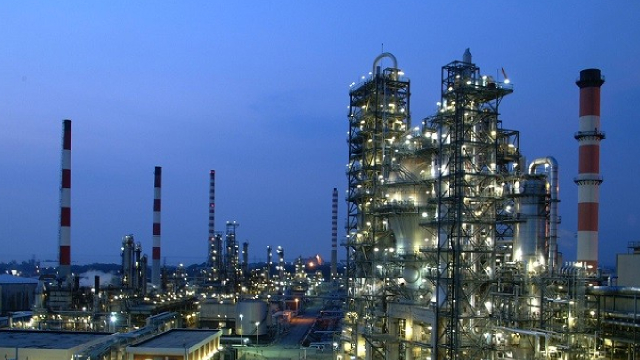
- Logistical infrastructure: Integrated or supported midstream infrastructure (gathering, processing, transportation, and produced-water solutions) can reduce basis risk and unit transportation/processing costs versus operators that rely more heavily on external systems.
- Operational learning curve: Dense development environments generally reward repeatable execution, faster optimization of completions and production operations, and improved well performance over a development campaign.
Competitive benchmarking (industry peers):
- Pioneer Natural Resources — positioned as a large-scale Permian operator with significant acreage and development spend; competitive focus centers on acreage quality and scale economics.
- EOG Resources — broad Permian footprint with strong execution and operational discipline; competitive differentiation often arises from resource quality and development methodology.
- Diamondback Energy — another major Permian participant emphasizing capital allocation discipline and development effectiveness.
Contrast: PR’s differentiating angle is the emphasis on infrastructure-supported economics—the ability to monetize production with reduced unit logistical friction—rather than competing solely on acreage size or pure upstream execution.
🚀 Multi-Year Growth Drivers
Over a 5–10 year horizon, growth prospects are less dependent on commodity-demand “new markets” and more dependent on sustaining a high-return development program and managing midstream constraints. Key drivers include:
- Development inventory depth: Dense Permian reservoirs support multi-year drilling and refracturing/recompletion strategies to sustain production levels through a development cycle.
- Cost reduction through operational optimization: Improvements in drilling/completion efficiency, cycle time, and well productivity can lower the all-in cost per unit.
- Infrastructure-led capture of value: Expansion or debottlenecking of gathering/processing can improve gas capture, reduce flaring/curtailment, and narrow differentials—directly supporting realized economics.
- Produced-water management optimization: Lower disposal intensity and improved handling can reduce environmental and operational friction while supporting continued activity.
- Broader energy feedstock demand: NGL and gas-linked demand for industrial uses and power generation can support utilization of Permian production streams when global energy markets align.
⚠ Risk Factors to Monitor
- Commodity price and basis volatility: Oil, NGL, and natural gas prices and regional differentials drive cash flow and the ability to fund drilling without dilution or elevated leverage.
- Regulatory risk: Methane emissions standards, flaring limits, wastewater/disposal requirements, and permitting timelines can affect operating costs and activity levels.
- Capital intensity and execution risk: Maintaining production and reserve replacement requires sustained capital and reliable execution in drilling, completion, and facility uptime.
- Midstream/takeaway constraints: If infrastructure availability lags production growth, operators can experience higher constraints, shut-ins, or less favorable realized pricing.
- Operational hazards: Water handling, pipeline integrity, and processing uptime create discrete risks that can impact volumes and costs.
📊 Valuation & Market View
Equity valuation in upstream energy typically reflects expectations for sustainable cash generation through the cycle. Common valuation lenses include:
- EV/EBITDA and cash flow-based multiples, which respond to commodity realizations and cost discipline.
- Reserve-based frameworks (e.g., PV-10 style metrics) that capture volume, estimated recoveries, and discount rate assumptions.
- Quality of earnings and infrastructure contribution: Integrated or supported midstream benefits can reduce volatility relative to pure-play upstream exposure, improving perceived earnings quality.
Key valuation drivers are realized differentials, decline-rate profile and well performance sustainability, per-unit operating and logistics costs, and the balance between capital intensity and free-cash-flow potential across commodity cycles.
🔍 Investment Takeaway
Permian Resources’ long-term investment case is rooted in geographically advantaged Permian acreage economics complemented by logistical infrastructure that can improve unit costs and value capture from produced hydrocarbons. The central thesis is that, while commodity prices drive the cycle, PR’s integrated approach aims to preserve competitive margins through drilling efficiency, infrastructure-supported throughput, and disciplined development execution.
⚠ AI-generated — informational only. Validate using filings before investing.

















 Growth Catalysts