QUALCOMM Incorporated

QUALCOMM Incorporated (QCOM) Market Cap

QUALCOMM Incorporated has a market capitalization of $227.60B.

Price: $215.94

-26.63 (-10.98%)

Market Cap: 227.60B

NASDAQ · time unavailable

CEO: Cristiano Renno Amon

Sector: Technology

Industry: Semiconductors

IPO Date: 1991-12-13

Website: https://www.qualcomm.com

QUALCOMM Incorporated (QCOM) - Company Information

Market Cap: 227.60B|Sector: Technology

Company Profile

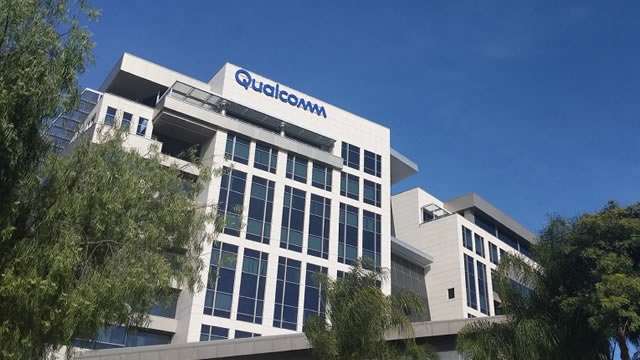
QUALCOMM Incorporated engages in the development and commercialization of foundational technologies for the wireless industry worldwide. The company operates through three segments: Qualcomm CDMA Technologies (QCT); Qualcomm Technology Licensing (QTL); and Qualcomm Strategic Initiatives (QSI). The QCT segment develops and supplies integrated circuits and system software based on 3G/4G/5G and other technologies for use in wireless voice and data communications, networking, application processing, multimedia, and global positioning system products. The QTL segment grants licenses or provides rights to use portions of its intellectual property portfolio, which include various patent rights useful in the manufacture and sale of wireless products comprising products implementing CDMA2000, WCDMA,LTE and/or OFDMA-based 5G standards and their derivatives. The QSI segment invests in early-stage companies in various industries, including 5G, artificial intelligence, automotive, consumer, enterprise, cloud, and IoT, and investment for supporting the design and introduction of new products and services for voice and data communications, new industries, and applications. It also provides development, and other services and related products to the United States government agencies and their contractors. QUALCOMM Incorporated was incorpotared in 1985 and is headquartered in San Diego, California.

Analyst Sentiment

40%
Underperform

From 40 Active Polls

1Y Forecast: $187.37

▼ -13.2% Potential Upside

Consensus Target Metrics

Low Bound

$120

Median

$175

High Bound

$300

Average

$187

Price & Moving Averages

Loading chart...

🎯 Wall Street Analyst Intelligence Report

1-Year structural target targets, chart projections, and sentiment maps.

Average 1Y Target
$187.37
▼ -13.23% Upside
Low Target
$120.00
-44% Risk
Median Target
$175.00
-19% Mid
High Target
$300.00
39% Max
Consensus
Hold
31 / 69 Buys

Consensus Trend Projection

Trailing closures vs. 12-month metrics map.

Analyst Vote Distribution

Aggregate institutional coverage sentiment weights.

📊 Historical Valuation Multiples

Real-time Trailing Twelve Month (TTM) momentum side-by-side with discrete quarterly metrics.

Fiscal QuarterTTMQ1 2026Q4 2025Q3 2025Q2 2025Q1 2025Q4 2024Q3 2024Q2 2024
Period EndingTrailing 12MMar 29, 2026Dec 28, 2025Sep 28, 2025Jun 29, 2025Mar 30, 2025Dec 29, 2024Sep 30, 2024Jun 23, 2024
Market Cap ($M)227,601135,457185,570181,169173,912169,585171,584189,776224,137
Enterprise Value ($M)237,436145,292193,182189,699183,252177,005177,448197,367230,921
Price to Earnings Ratio (P/E)23.204.5915.44-14.5316.3115.0813.4916.2526.32
Price/Earnings-to-Growth Ratio (PEG)1.77-1.660.971.79617.79
Price to Sales Ratio (P/S)5.1212.7815.1516.0716.7815.4514.7018.5323.86
Price to Book Ratio (P/B)8.444.978.048.546.396.126.387.229.09
Price to Free Cash Flow Ratio (P/FCF)18.2170.7042.0250.4867.3872.4739.8179.3784.10
Enterprise Value to Sales (EV/Sales)13.7115.7716.8317.6816.1215.2119.2724.58
Enterprise Value to EBITDA (EV/EBITDA)17.8053.3857.3954.0149.0456.7341.9161.3985.05
Debt to Equity Ratio0.740.560.640.770.540.530.540.590.59

QCOM Growth Runway Model

Standard long term linear growth fade

Multi-Stage Discounted Cash Flow Sandbox

Market Price$215.94
Intrinsic Value$326.64
Market Alignment
Undervalued by 51.3%relative to calculated intrinsic value
9.00%
Exp: 9%9%
i

Growth runway slowdown

This value provides a time window for the growth rate to decline beyond Stage 1 toward the terminal rate. Longer windows are most useful for companies with high growth starting conditions or strong competitive advantages. This option stretches out the growth rate slowdown across 5, 10, or 15-year steps. A high-growth starting condition (exceeding a 25% initial growth rate) automatically applies a curve decay to simulate realistic, rapid market saturation.
i

Terminal growth rate

With long-term inflation between 3-5%, revenue must grow by that baseline to maintain flat real-world market share. This value sets the permanent terminal growth rate to factor into the valuation beyond the growth slowdown runway toward maturity.

3-Stage Financial Runway Horizon

🧠 Perpetuity Horizon Engine (Stage 3: Post-2035)

Terminal FCF Base$20.56B
Perpetuity TV Value$386.99B
Discounted TV (PV)$163.47B
TV Weighting %62.4%
⚠️
Financial Model Disclaimer & Risk Disclosure: This interactive scenario simulator is an educational sandbox provided strictly for informational and analytical research purposes. Core historical financial statements and consensus estimates are sourced directly via Financial Modeling Prep (FMP). All downstream outputs are entirely deterministic, hypothetical projections generated by combining automated mathematical formulas (including linear interpolation and Gaussian bell-curve decay models) with user-selected variables and third-party financial data inputs. Users assume all liability for trading decisions executed based on these sandbox calculations.

📘 Full Research Report

ℹ️

AI-Generated Research: This report is for informational purposes only.

📘 QUALCOMM INC (QCOM) — Investment Overview

🧩 Business Model Overview

Qualcomm operates a dual engine across the mobile and adjacent wireless ecosystem: (1) selling modem and RF-related chipsets used in smartphones and other connected devices, and (2) licensing foundational wireless technologies—most importantly cellular standard-essential patents (SEPs)—to device manufacturers and ecosystem participants. The company’s value chain spans from silicon design and upstream integration (chip customers such as OEMs and ODMs) to downstream royalty monetisation tied to device shipments and protocol adoption.

Operationally, this model creates natural stickiness: modem hardware is integrated into device platforms and validated through long development cycles, while licensing ties usage rights to widely deployed cellular standards. As a result, Qualcomm’s economics are less dependent on any single device generation and more linked to the long-run growth of mobile connectivity and the pace at which new standards roll through the installed base.

💰 Revenue Streams & Monetisation Model

Qualcomm monetises through two principal revenue types:

  • Product revenue: sales of modem and related wireless components. Margins depend on design wins, scale, mix across performance tiers, and competitive intensity in handset chipsets.
  • License & royalty revenue: payments tied to the use of Qualcomm’s patented technologies and licensing programs. This stream is typically more recurring in character because it scales with the long-lived deployment of cellular standards across devices.

The key margin drivers are (a) maintaining royalty coverage over multiple generations of cellular features, (b) sustaining product leadership in power/performance and integration, and (c) managing customer concentration and dispute-driven variability in licensing economics. Over time, the royalty component tends to support resilience versus cyclical hardware demand because it is connected to broader device connectivity adoption rather than a single product cycle.

🧠 Competitive Advantages & Market Positioning

Qualcomm’s moat is primarily anchored in intangible assets (portfolio breadth of SEPs and know-how embedded in cellular implementations) and switching costs (platform integration, validation, and ecosystem momentum). Standard-essential licensing also supports a durable “permission layer” for interoperability—competitors may design around aspects, but the cost and complexity of fully displacing a deep SEP portfolio is high.

Qualcomm’s positioning differs from pure chipset vendors because the company monetises both device performance (through modem silicon) and technology usage rights (through licensing). That structure can reduce reliance on being the single source of modem silicon in every product tier.

Competitive benchmarking

  • Broadcom (mobile connectivity and RF/cellular components): Broadcom competes in components and integration, but it lacks Qualcomm’s scale and breadth in handset-relevant cellular SEP licensing at comparable levels.
  • MediaTek (mobile SoCs and modem solutions): MediaTek competes aggressively on performance-per-dollar and integration for handset OEMs. However, displacing Qualcomm’s licensing economics and established ecosystem validation cycles is difficult when device designs rely on cellular capabilities covered by Qualcomm’s patent portfolio.
  • Samsung Electronics (in-house modem integration): Samsung competes by vertical integration within certain OEM/SoC pathways. Yet Qualcomm’s SEP licensing and multi-vendor handset ecosystem scale make it challenging to reach full displacement without broad coverage gaps.

Compared with these rivals, Qualcomm’s industry focus spans both chip leadership and technology licensing. That dual focus creates a sturdier economic base than a single-point-of-failure hardware model.

🚀 Multi-Year Growth Drivers

Over a 5–10 year horizon, Qualcomm’s growth is supported by structural adoption of wireless connectivity and the evolution of cellular standards:

  • Standards roll-out and feature monetisation: As cellular generations progress, devices require implementation of advanced capabilities (e.g., improved spectral efficiency, latency features, and power optimisations). Patent licensing and modem integration both benefit from deployment of new standards across a large installed base.
  • Expansion of connected devices: Beyond smartphones, cellular connectivity spreads across tablets, laptops with cellular, industrial/IoT-adjacent devices, and broader “always-on” use cases. Even when unit growth is uneven, the number of cellular-capable devices increases the addressable royalty base.
  • OEM and ODM platform complexity: Modern modem integration requires significant engineering and validation. As complexity rises, switching costs strengthen—OEMs tend to prefer proven platforms and supply assurances.
  • Network densification economics: Operators continue to deploy capacity improvements, increasing the value of modems capable of efficiently using advanced network features. This supports premium design wins and strengthens the performance case for integrated modem solutions.

⚠ Risk Factors to Monitor

  • Regulatory and licensing disputes: Patent licensing economics are subject to jurisdictional outcomes, negotiation cycles, and potential changes to licensing frameworks.
  • Technological displacement: Alternative approaches to cellular implementation, emerging non-cellular connectivity mixes, or shifting industry preferences could pressure modem product demand or royalty scope.
  • Customer concentration and procurement cycles: Modem supply and design decisions can be influenced by OEM roadmaps and cost-reduction mandates.
  • Competitive intensity: Aggressive pricing and integration depth from large chipset vendors can compress product margins and increase win-rate volatility.
  • Manufacturing and supply execution: While Qualcomm is primarily fabless, performance and delivery depend on foundry execution, advanced process availability, and supply-chain continuity for component ecosystems.

📊 Valuation & Market View

Equity markets often value Qualcomm using a blend of earnings power and cash generation durability, reflecting the contribution of both hardware cycles and licensing-linked recurrence. In practice, the valuation discussion typically centers on:

  • Multiple sensitivity to licensing durability: Investors generally re-rate the equity when royalty coverage appears stable and less exposed to adverse legal outcomes.
  • Product competitiveness: Chipset design wins and modem integration quality drive confidence in future product revenue and mix.
  • Return of free cash flow: Market focus tends to follow the company’s ability to translate earnings into consistent cash generation across cycles.

Drivers that move the needle most often include the breadth and enforceability of the SEP portfolio across new standards, modem share stability through device cycles, and clarity on licensing frameworks across major jurisdictions.

🔍 Investment Takeaway

Qualcomm’s long-term investment case rests on durable intangible-asset moats (standard-essential patent coverage and embedded technical know-how) and switching costs created by modem integration and platform validation cycles. The company’s dual revenue engine—chip monetisation plus licensing—can smooth hardware cyclicality while capturing value from global cellular adoption. The primary diligence focus should remain on licensing/regulatory trajectory and the sustainability of modem competitiveness versus well-capitalised chipset rivals.


⚠ AI-generated — informational only. Validate using filings before investing.
📰 Market News & Coverage

15 Stories Available

Real-time institutional reporting and market updates for QCOM.

fool.com2026-06-06

The Smartest Dividend ETF to Buy With $1,000 Right Now -- and It's Up 19% in 2026

This ETF's dividend yield was recently a solid 3.25%, about three times that of the S&P 500. Its growth rate has been better than that of many dividend-focused funds.

fool.com2026-06-05

Nvidia Is Moving Into Intel and Qualcomm's Turf. These Are the Losers Investors Should Watch Closely.

Nvidia's RTX Spark targets high-end Windows PCs. That expansion could spell trouble for Intel, AMD, and Qualcomm.

247wallst.com2026-06-05

AI Layoffs Already Have Surpassed Last Year’s Total. Tech Workers Are Being Cut First.

The artificial intelligence boom that's pushing market caps to records is reshaping employment. Challenger, Gray and Christmas data highlighted on CNBC's Closing Bell Overtime on June 4 indicates that more than 87,000 layoffs this year have been tied to AI, already eclipsing all of 2025's full-year total just five months in. Chip leader NVIDIA (NASDAQ: NVDA)... AI Layoffs Already Have Surpassed Last Year's Total. Tech Workers Are Being Cut First.

247wallst.com2026-06-05

1 High-Flying Artificial Intelligence Stock You Might Want to Avoid Buying Right Now

At $242.57, Qualcomm (NASDAQ:QCOM | QCOM Price Prediction) is a Hold.

benzinga.com2026-06-05

Beyond Smartphones: Qualcomm Investor Day Could Unveil Major AI, Data Center Push

Qualcomm Inc (NASDAQ:QCOM) stock slid on Friday as a broader semiconductor sell-off weighed on the stock, following negative reaction to Broadcom Inc (NASDAQ:AVGO) guidance.

fool.com2026-06-05

Dividend ETFs: SCHD Boasts a Larger Dividend Yield, While VIG Has Lower Fees

Explore how sector weightings and stock selection shape risk and return for these two leading dividend ETFs, each with distinct strategies and top holdings.

zacks.com2026-06-04

Qualcomm (QCOM) Stock Slides as Market Rises: Facts to Know Before You Trade

Qualcomm (QCOM) reached $242.57 at the closing of the latest trading day, reflecting a -2.98% change compared to its last close.

prnewswire.com2026-06-04

Primax Advances AI Conference Solutions with Qualcomm-Powered Edge AI Platforms

Combining AI video collaboration, professional audio expertise, MDEP-ready development, and ODM+ integration to enable next-generation intelligent meeting spaces TAIPEI, June 4, 2026 /PRNewswire/ -- Primax Electronics Ltd. (TWSE: 4915), a global leader in AI Sensor Fusion (AISF) technologies, is strengthening its AI conference solution capabilities for the next generation of intelligent meeting spaces.

gurufocus.com2026-06-04

First Look: SpaceX IPO, Quantum Surge, UMG Stake Sale, AI's Environmental Cost

Stock News SpaceX sets record IPO valuation: SpaceX (SPCX) has announced plans for a public debut on June 12, targeting a listing at $135 per share, valuing the

fool.com2026-06-03

Nvidia Wants to Reinvent the PC. Here's What That Means for Intel, AMD, and Qualcomm.

A new laptop chip barely moves the needle for the AI giant -- but it strikes at the heart of what its rivals sell.

zacks.com2026-06-03

Qualcomm Plagued by Margin Woes, Demand Softness: Time to Rethink?

Qualcomm Incorporated QCOM continues to navigate a challenging operating environment, with persistent weakness in the smartphone market and mounting margin pressures clouding its near-term outlook. While the company has made significant strides in diversifying beyond handsets through automotive and Internet of Things (IoT) initiatives, its core smartphone business remains a key earnings driver, leaving it vulnerable to sluggish consumer demand and industry-wide headwinds.

fool.com2026-06-03

3 Top Driverless Vehicle Stocks to Buy Before It's Too Late

With numerous partnerships and widespread autonomous vehicle technology and services, these three stocks are poised to thrive as driverless vehicles and robotaxis take over the roads.

247wallst.com2026-06-03

What a $1K Investment in Qualcomm 15 Years Ago Is Worth Today (Hint: It's More Than You Think)

Fifteen years ago, Qualcomm (NASDAQ:QCOM | QCOM Price Prediction) was a pure mobile play, collecting royalties on every 3G and 4G phone sold while Snapdragon chips powered the Android wave.

benzinga.com2026-06-02

Qualcomm Says 2026 Is 'Year Of The Agent' — And 'Dragonfly' Is Its Answer

Best known for years as a company powering smartphones, Qualcomm Inc (NASDAQ:QCOM) stock has surged over the last year as the technology giant continues to diversify its revenue stream and advance its position in key growth areas like artificial intelligence and data centers.

forbes.com2026-06-02

Qualcomm Aims To Power The AI Inference Boom

This article was written and reviewed by Doug Nathman and his team at Trefis. For questions, email help@trefis.com

📊 AI Financial Analysis

Powered by StockMarketInfo
Earnings Data: Q Ending 2026-03-29

"QCOM reported Q2 (ended 2026-03-29) revenue of $10.60B and net income of $7.37B, resulting in diluted EPS of $6.88. On a QoQ basis, revenue fell from $12.25B in 2025-12-28 (-13.4%) while net income rose sharply from $3.00B (+145.3%), with net margin expanding from ~24.5% to ~69.5%. YoY, revenue is slightly down versus $10.98B in 2025-03-30 (-3.4%), but net income improved materially from $2.81B (+162.1%) and EPS increased from $2.52 to $6.88. Profitability looks highly volatile across the last four quarters: Q4 2025 showed a net loss (-$3.12B; net margin -27.7%), followed by a return to profits in Q3 2025 and Q1 2026, and then an outsized Q2 2026 earnings outcome. Gross margin improved modestly QoQ (53.8% vs 54.6% slightly lower), while operating income remains positive at $2.31B. Cash flow remains supportive. Operating cash flow was $2.45B and free cash flow $1.92B in Q2 2026, despite continued capital allocation: dividends of ~$0.95B and buybacks of ~$2.79B. Balance sheet resilience is solid with total assets at $57.1B and equity at $27.3B; net debt increased to ~$9.8B from ~$7.6B QoQ, but liquidity remains ample (cash & ST investments ~$9.8B). Total shareholder returns are mixed—stock price is ~$136.2 with only +0.34% 1-year momentum, so there’s no strong price tailwind despite ongoing capital returns. Analyst consensus targets ($150–$158) imply limited upside from current levels."

Revenue Growth

Neutral

QoQ revenue declined from $12.25B to $10.60B (-13.4%); YoY revenue slightly lower at -3.4% versus $10.98B.

Profitability

Positive

Net income jumped QoQ (+145.3%) and YoY (+162.1%), with net margin expanding to ~69.5%. However, profitability has been highly volatile (net loss in Q4 2025).

Cash Flow Quality

Positive

Q2 2026 operating cash flow was $2.45B and free cash flow $1.92B. Shareholder cash returns are consistent (dividends ~$0.95B; buybacks ~$2.79B).

Leverage & Balance Sheet

Neutral

Total assets rose to $57.1B; equity increased to $27.3B QoQ. Net debt increased to ~$9.8B QoQ, but liquidity is strong (cash & ST investments ~$9.8B).

Shareholder Returns

Neutral

Dividend yield is modest (~0.7%). Price momentum is low (+0.34% 1y), so total return is supported more by buybacks/dividends than by share price appreciation.

Analyst Sentiment & Valuation

Neutral

Consensus target around $157.5 vs $136.2 current suggests moderate upside, but valuation looks not obviously compelling given low observed 1-year momentum.

Disclaimer:This analysis is AI-generated for informational purposes only. Accuracy is not guaranteed and this does not constitute financial advice.

Fundamentals Overview

Loading fundamentals overview...

QCOM delivered strong Q2 FY26 headline profitability with revenues of $10.6B and non-GAAP EPS of $2.65, at the high end of guidance, while sustaining automotive momentum and modest IoT growth. The key driver of caution is not demand collapse but memory-driven OEM channel behavior: management reiterated that Chinese OEMs slowed bills and drew down inventory, causing under-shipment versus true end-consumer demand, and guided Q3 handset revenues to about $4.9B. Margins were guided lower at the midpoint with QTL EBT margins 67%–71% and QCT EBT margins 25%–27%, reflecting weak low-tier assumptions. Growth catalysts are increasingly concentrated in “agentic” platform relevance—4th/5th-gen Snapdragon Digital Chassis scaling ADAS, edge agent enablement via CPU/NPU, and custom silicon for hyperscalers. Management’s strategic emphasis is timely: Investor Day June 24 is positioned as the forum for CPU performance evidence and custom silicon/roadmap specificity, while competition and memory uncertainty remain the near-term swing factors.

AI IconGrowth Catalysts

  • Automotive: exceeded $5B annualized QCT automotive revenues; expecting exit FY26 run rate >$6B driven by 4th-gen Snapdragon Digital Chassis (connectivity/telematics/infotainment/ADAS/automated driving).
  • ADAS/Autonomy scaling: >1 million cars operating ADAS/autonomy on Snapdragon Ride processors; 5th-gen Digital Chassis shipping commercialization starting by end of fiscal year.
  • 5th-gen Digital Chassis content step-up: 3x higher CPU throughput, 3x GPU capability, 12x higher NPU performance targeted for in-vehicle agents and Level 3/4 autonomy.
  • IoT: agentic workloads and edge AI driving product renewal design cycles; QCT IoT revenue up 9% YoY.
  • Personal AI: increased smart-glasses variety expected starting 2H; Snapdragon X2 PC platforms in production with Orion CPU for always-on agentic experiences.
  • Data center expansion: custom silicon ramp with a leading hyperscaler expected to begin shipments in the December quarter; Alphawave integration gaining traction.

Business Development

  • Automotive wins/stack: BMW performance highlighted for automated driving stack; broad engagement from other automakers.
  • Partnership announcements: Qualcomm referenced recent announcements with Bosch and Wave related to scaling ADAS/self-driving stack.
  • Robotics/physical AI: multiyear agreement with Nora (alongside design win with Figure AI) and Dragonwing IQ10 interest since CES.
  • Data center ecosystem: Alphawave integration; pursuing opportunities with large hyperscalers, cloud service providers, sovereign AI projects, and global partners.
  • Agentic software proof points cited as running on Snapdragon X2: Open Claw, Claude desktop, Claude Code, OpenAI Codex desktop, Perplexity Computer, Crew AI, Armes agent, Landgraf, Humane 1.
  • PC validation cited: PC Mag review of ASUS ZenBook A16 and Qualcomm as a “serious challenger” with X2 generational leap.
  • Handset ecosystem cues: ZTE Nubia agentic AI phone (example of premium tier pull-through) and Xiaomi agent framework announcement plus other Android ecosystem agent systems.
  • Carrier/standards coalition: 60-company coalition at MWC including carriers, cloud infrastructure, AI-native partners, and auto OEMs for 6G roadmap.

AI IconFinancial Highlights

  • Reported Q2 FY26 revenues of $10.6B and non-GAAP EPS of $2.65; EPS came in at the high end of guidance.
  • QTL: $1.4B revenues; EBT margin 72%, also at high end of guidance; margin/seasonality framed as dependent on handset mix/low-tier assumptions.
  • QCT: $9.1B revenues; EBT margin 27% in line with expectations; handset OEM caution tied to memory dynamics.
  • QCT handset revenues: $6.0B as anticipated with OEMs cautious on handset bills due to challenging memory industry dynamics.
  • QCT IoT: $1.7B revenue, up 9% YoY (consumer + industrial growth).
  • QCT Automotive: $1.3B revenue, +38% YoY driven by transition of new digital cockpit and ADAS launches to 4th-generation chipsets.
  • Capital return: $3.7B returned during the quarter ($2.8B share repurchases, $945M dividends) reflecting acceleration of capital return program.
  • Tax/tariff/accounting impact: released a previously recorded tax valuation allowance; $5.7M noncash GAAP tax benefit in Q2, excluded from non-GAAP results; attributed to February Treasury/IRS corporate AMT guidance permitting deduction of previously capitalized domestic R&D.

AI IconCapital Funding

  • Share repurchases: $2.8B during the quarter.
  • Dividends: $945M during the quarter.
  • Total capital returned: $3.7B during the quarter.
  • Debt/cash runway: not specified in provided transcript segment.

AI IconStrategy & Ops

  • Agentic AI framing as roadmap reshaper: described CPU-bound orchestration for agents, NPU importance for local models, and step-function increase in strategic customer engagement.
  • Custom silicon approach: emphasized multi-generation engagement with a leading hyperscaler and integration capabilities accelerated by Alphawave (execution and IP portfolio).
  • Investor communication milestone: detailed that custom silicon specifics and roadmap will be shared at Investor Day on June 24.

AI IconMarket Outlook

  • Q3 FY26 guidance (non-GAAP): revenues $9.2B to $10.0B; EPS $2.10 to $2.30.
  • Q3 QTL: revenues $1.15B to $1.35B; EBT margins 67% to 71% (sequential decline driven by weaker low-tier handset unit assumptions).
  • Q3 QCT: revenues $7.9B to $8.5B; EBT margins 25% to 27%.
  • Q3 QCT handset revenues: approximately $4.9B attributed to continued impact of industry-wide memory dynamics.
  • Q3 QCT IoT: high single-digit YoY growth vs year-ago period.
  • Q3 QCT Automotive: YoY revenue growth accelerates to ~50%.
  • Timing guidance: custom silicon initial shipments expected in the December quarter; Investor Day June 24.

AI IconRisks & Headwinds

  • Memory industry dynamics: handset OEMs (especially China) reduced build plans and drew down channel inventory, leading to under-shipment vs end-consumer demand and uncertainty in sequential recovery.
  • QTL/QCT margins sensitive to handset tier mix: guidance assumes weaker low-tier handset units impacting sequential margin.
  • Competitive data center environment: vertical integration and inference focus by others (e.g., IP-provider moving to chips; NVIDIA targeting inference market) increases competitive pressure.
  • Memory uncertainty into 2027: management indicated it is too early to predict the pace of memory resolution; expects noise in the memory environment and monitoring needed.

Q&A: Analyst Interest

  • Topic: Custom silicon engagement details and product scope: Management said specifics would be shared at June 24 and declined to front-run. They stated the hyperscaler engagement is “custom product,” spanning CPU and accelerator approaches, enabled by multi-generation collaboration after Alphawave and Connectivity capabilities expansion.
  • Topic: Confidence that China Android handsets bottom in Q3: Management framed the issue as two drivers: handset market scale (slight mid/low-tier decline) and OEM decisions to slow bills and draw down channel inventory. They said both factors are reflected in guidance and end soon, making Q3 the bottom.
  • Topic: Data center competitive dynamics (vertical integration, inference focus) vs QCOM positioning: Management argued AI is transitioning from training to inference and now toward agentic experiences, where CPU matters. They highlighted planned dedicated data-center CPU metrics at Investor Day, plus custom silicon, accelerator needs (low TCO, high compute density), and edge inference upgrade cycles.

Sentiment: MIXED

Note: This summary was synthesized by AI from the QCOM Q2 2026 earnings transcript. Financial data is complex; please verify all metrics against official SEC filings before making investment decisions.

📋 Official Regulatory 10-K / 10-Q SEC Filings

Direct authenticated documentation links to audited SEC database reports for QCOM.

SEC EDGAR Live Feed
Loading financial data and tables...
📁

SEC Filings (QCOM)

© 2026 Stock Market Info — QUALCOMM Incorporated (QCOM) Financial Profile