
📘 RYERSON HOLDING CORP (RYI) — Investment Overview
🧩 Business Model Overview
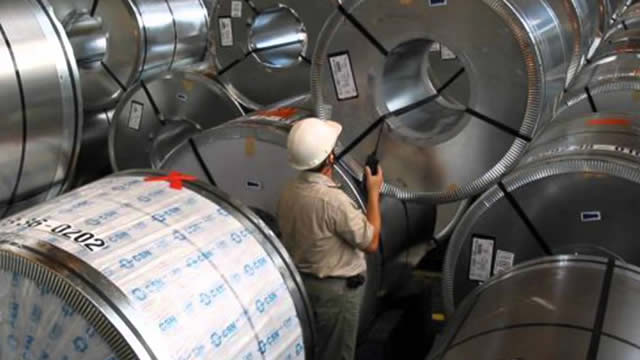
Ryerson is a metals service center and value-added processor. The company buys steel and other metal products, then provides processing and distribution—such as cut-to-length, slitting, forming support, leveling, and other fabrication-adjacent services—to industrial customers that need dependable supply in specific sizes and tolerances.
The operating model emphasizes two linked advantages: (1) inventory and logistics execution to reduce production downtime for customers, and (2) processing and application know-how that converts commodity metal into usable components on demand. Demand is primarily tied to end-market activity (manufacturing, construction, transportation, and energy-related manufacturing), while profitability depends on achieving appropriate spreads after logistics, processing, and working-capital costs.
💰 Revenue Streams & Monetisation Model
Revenue is largely transactional—metal sales tied to customer orders—but Ryerson monetizes through a blend of:
- Commodity pass-through (metal pricing moves with market benchmarks).
- Processing/value-added services (conversion of raw material into customer-ready formats).
- Distribution economics (warehousing, order fulfillment, and logistics execution).
Margin drivers typically include: (a) the installed processing mix (higher-value formats and services versus straightforward distribution), (b) inventory management (turns, shrink, and ability to manage working capital during commodity cycles), and (c) procurement discipline that preserves spreads when input prices and customer demand are volatile.
🧠 Competitive Advantages & Market Positioning
Ryerson’s structural edge is best described as a combination of switching costs and cost advantages derived from operational scale and execution in industrial metals distribution.
- Switching costs (execution + specifications): Many customers source processed metal tied to recurring production needs. Once a service center meets size/spec, tolerance, and delivery performance, qualification cycles and operational friction make switching less attractive.
- Cost advantages (scale + logistics + procurement): Platform capabilities in distribution, processing throughput, and supplier relationships help manage landed costs, reduce unit handling costs, and improve availability.
- Operational moat (service reliability): In metals processing, reliability and responsiveness function as an intangible competitive barrier; service levels can become a competitive differentiator even when commodity prices are similar across distributors.
Competitive benchmarking:
- Reliance Steel & Aluminum: also a leading U.S. metals service center with broad geographic coverage and diversified metals end-markets. Ryerson’s competitive posture is more focused in its service center footprint and value-added processing execution.
- Commercial Metals Company: a major player with integrated recycling and production exposure. Commercial competes more directly on raw material supply dynamics, while Ryerson competes on processing, logistics, and customer-ready delivery.
- Steel producers (e.g., Nucor-like integrated/mini-mill models): producers compete for volume by offering direct supply and pricing leverage when demand aligns. Ryerson’s differentiation centers on short lead times, processing, and breadth of inventory/value-added for downstream users rather than on raw steel production cost alone.
Overall, Ryerson’s “hard-to-replicate” barrier is less about ownership of minerals and more about operational infrastructure, customer qualification, and consistent service delivery for manufactured components.
🚀 Multi-Year Growth Drivers
Over a 5–10 year horizon, growth potential is supported by several secular and structural themes:
- Industrial reshoring and supply-chain localization: More North American production increases the need for reliable, proximate metals processing and distribution.
- Outsourcing of processing and fabrication-adjacent steps: Manufacturers increasingly prefer trusted intermediaries that manage inventory, cut/format products, and deliver with predictable lead times.
- Mix shift toward value-added formats: Service centers can improve earnings quality by selling more processed configurations rather than basic commodity distribution.
- Recycling-linked metal sourcing dynamics: Recycling penetration and sustainability-driven procurement practices can support broader industrial demand for processed metal flows, benefiting players that manage logistics and specifications.
- Customer qualification effects in recurring industrial programs: Long-running production cycles can create durable demand for contracted or repeat orders once customers are “qualified” to a service center’s capabilities.
⚠ Risk Factors to Monitor
- Commodity and spread cyclicality: Steel and metals are inherently cyclical; profitability can compress when input prices, selling prices, or order volumes diverge.
- Working capital and inventory risk: In downturns, inventory valuation, turn rates, and potential obsolescence can pressure cash flow and returns.
- Customer concentration and end-market weakness: Exposure to manufacturing and construction cycles can magnify downside during industrial slowdowns.
- Trade policy and tariffs: Tariffs and import/export restrictions can alter supply patterns and create margin volatility for distributors and processors.
- Execution and capacity utilization: Processing margins rely on maintaining throughput and minimizing inefficiencies; disruptions can raise unit costs.
- Regulatory and ESG compliance: Environmental and operational requirements can raise costs and constrain facilities over time.
📊 Valuation & Market View
Markets often value metals service centers using EV/EBITDA-style frameworks and assess earnings quality through normalized margins, return on invested capital, and cash conversion (inventory and working-capital discipline). Because revenues are tied to commodity volumes, investors typically emphasize:
- Spread resilience (processing and logistics value versus commodity pass-through).
- Balance sheet strength (leverage and liquidity to manage cycles and working capital).
- Operating discipline (inventory turns, shrink management, and throughput economics).
Multiple expansion tends to correlate with evidence of sustained service-level differentiation and steadier spreads; multiple compression tends to occur when spreads narrow and working capital consumes cash.
🔍 Investment Takeaway
Ryerson’s long-term thesis rests on a durable service-center moat: operational execution in processing and distribution creates customer qualification and switching costs, while logistics and scale help preserve cost advantages across commodity cycles. Upside and downside are primarily determined by normalized spreads, inventory/working-capital discipline, and industrial demand levels. As long as Ryerson maintains throughput quality and value-added mix, the business can compound through a structurally important role in industrial metals supply chains.
⚠ AI-generated — informational only. Validate using filings before investing.


















 Growth Catalysts