
📘 STERLING INFRASTRUCTURE INC (STRL) — Investment Overview
🧩 Business Model Overview
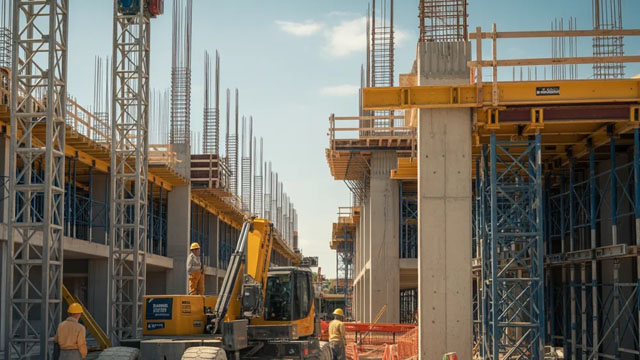
Sterling Infrastructure operates as a heavy civil contractor, earning revenue by building and upgrading transportation and infrastructure assets under awarded contracts with government agencies and other infrastructure owners. The core value chain runs from (1) bid/qualification and project pursuit, to (2) mobilization of labor, equipment, and subcontractors, to (3) execution against schedule and specifications, with performance measured by safety, quality, and timely completion. Revenue is typically tied to contract milestones and progress billing, while profitability depends on execution discipline—especially labor productivity, subcontractor performance, procurement timing, and change-order capture.💰 Revenue Streams & Monetisation Model
Revenue is predominantly contract-based and can be characterized as a mix of:- Project-based construction revenue driven by progress toward contractual milestones.
- Material and scope pass-through elements in contracts that may reduce—but not eliminate—exposure to input cost volatility depending on contract terms.
- Maintenance/renewal and recurring service components where scope repeats with infrastructure owners (often smaller than large lump-sum builds, but helpful for cash-flow smoothing).
- Bid discipline: winning at competitive terms without underpricing risk.
- Cost control: labor productivity, equipment utilization, and subcontractor management.
- Change orders and claims: monetization of scope changes and responsibility allocation when executed properly.
- Working-capital efficiency: timing of billings vs. cash outlays (materials and labor carry until reimbursement).
🧠 Competitive Advantages & Market Positioning
Sterling Infrastructure’s moat is best described as a combination of intangible assets and qualification-driven switching frictions, rather than technology or proprietary products.- Qualification and incumbency: Infrastructure owners and prime contractors typically prefer vendors with demonstrated safety records, bonding capacity, and execution history. Once a contractor is trusted on similar work, selection friction rises for new entrants.
- Execution know-how: Repeated delivery in transportation and public-sector environments builds operational learning (procurement planning, staffing models, and subcontractor ecosystems) that can support more consistent job performance.
- Scale in procurement and staffing: Larger project throughput supports better subcontractor relationships and equipment planning, which can improve bid pricing and reduce execution variance.
- Granite Construction: Similar heavy civil footprint with emphasis on construction markets tied to public spending and transportation/agriculture infrastructure.
- MasTec: More utilities/energy-focused execution and often higher exposure to specialized buildout cycles.
- Tetra Tech (adjacent, via engineering services): More design/consulting oriented rather than pure contracting, with differentiation through professional services rather than construction execution.
🚀 Multi-Year Growth Drivers
Over a 5–10 year horizon, growth is supported by structural spend and asset replacement needs rather than one-off stimulus. Key drivers include:- Aging infrastructure replacement: sustained rehabilitation and expansion of transportation networks and related civil systems.
- Resilience and durability requirements: climate-adaptive designs, storm hardening, and improved materials increase the total value of projects and the complexity of execution.
- Utility and infrastructure system modernization: upgrades that often require coordinated civil works alongside utilities.
- Procurement cycles that reward execution: in public infrastructure, consistent delivery and safety performance can influence future award prospects through qualification processes.
⚠ Risk Factors to Monitor
Key structural and operational risks include:- Fixed-price and schedule risk: contract terms can transfer cost risk to the contractor; weak bid discipline or execution slippage can compress margins.
- Input cost volatility: labor constraints, equipment costs, and subcontract pricing can pressure profitability if not contractually mitigated.
- Working-capital strain: progress billing timing, retainage, and disputes can delay cash conversion even when revenue is recognized.
- Project concentration and counterpart risk: exposure to a limited set of customers or regions can increase downturn sensitivity.
- Regulatory/permitting and legal exposure: schedule delays, change-order disputes, and compliance requirements can raise costs and reduce predictability.
- Capital intensity for mobilization: scaling crews and equipment requires liquidity; downturns can strand resources.
📊 Valuation & Market View
Market valuation for contracting/infrastructure businesses typically emphasizes cash-generating quality and earnings stability more than pure revenue growth. Investors generally anchor on:- EV/EBITDA or EV/Revenue frameworks, with a preference for higher-quality margins and disciplined cash conversion.
- Backlog and award pipeline durability (not as a promise of profit, but as an input to revenue visibility).
- Margin trajectory: underwriting discipline, change-order effectiveness, and reduced dispute frequency.
- Working-capital behavior: consistency of operating cash flow relative to earnings.
🔍 Investment Takeaway
Sterling Infrastructure’s investment case is anchored in qualification-driven stickiness and execution credibility within heavy civil contracting, supported by long-duration infrastructure replacement and modernization needs. The primary value creation lever is consistent job-level underwriting—protecting margins and cash conversion through disciplined bidding, strong subcontractor management, and effective handling of scope changes—while the primary risk is the contractor’s exposure to cost/schedule and working-capital volatility inherent to project-based construction.⚠ AI-generated — informational only. Validate using filings before investing.








 Growth Catalysts