
📘 BLOCK INC CLASS A (XYZ) — Investment Overview
🧩 Business Model Overview
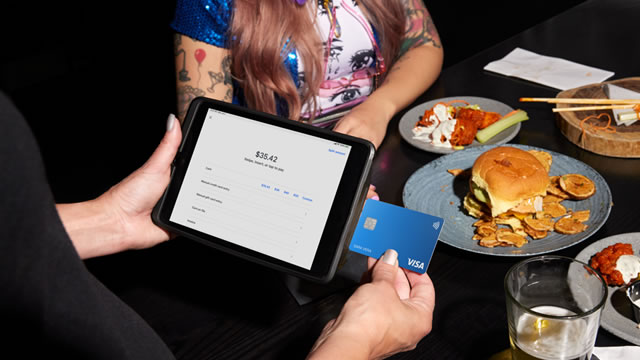
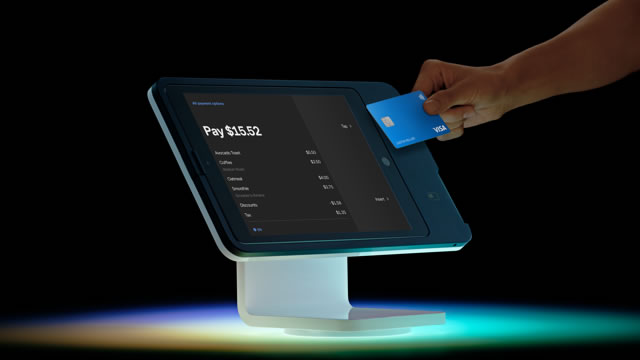
Block operates a vertically integrated payments and commerce stack that connects merchants and consumers through software, financing, and cash movement. On the merchant side, Block provides point-of-sale (POS) hardware and integrated payment processing, software tools, and business services that support everyday transaction workflows. On the consumer side, Cash App enables peer-to-peer transfers and digital payments, with additional financial services embedded into the app experience.
This structure matters because the product is not just a payment pipe; it is an operating layer. Merchant onboarding and ongoing service usage generate data about payment acceptance, customer interactions, and operational performance, while consumer activity feeds engagement and payment volume. The two sides reinforce the ecosystem through shared network participation and the ability to cross-sell additional services.
💰 Revenue Streams & Monetisation Model
Monetisation is driven primarily by (1) payment processing revenue tied to transaction activity, (2) service and subscription-like revenue from merchant and platform offerings, and (3) financial services revenue linked to account activity, spreads/fees, and other monetisation streams. A meaningful portion of the earnings power is tied to payment take rates and the ability to scale transaction volumes without proportionate increases in operating costs.
Margin drivers are typically a function of: payment network economics (volume and mix), operational leverage in compliance and risk operations, and the economics of value-added services (where revenue is less directly tied to raw transaction count). Where Block provides additional financial products, net profitability depends on underwriting discipline, fraud controls, and cost of risk.
🧠 Competitive Advantages & Market Positioning
Core moat: Switching costs and data/operational gravity created by an integrated payments-and-commerce ecosystem.
Block’s advantage is the friction and operational learning embedded in merchant workflows and consumer account usage. Once a merchant integrates Block’s POS and processing stack, migration entails reconfiguring payment acceptance, software tools, and operational routines. For consumers, engagement within Cash App builds behavioral and transactional history that supports continued usage of payments and related services.
Competitive benchmarking: Key competitors include PayPal, Stripe, and Adyen.
- PayPal tends to emphasize consumer-centric reach and checkout/online payment penetration, often relying on broader partnerships rather than a tightly integrated merchant hardware-software operating layer.
- Stripe is frequently positioned around developer tools and scalable online payment infrastructure, with less direct emphasis on a unified in-person POS-to-financial-services workflow for smaller merchants.
- Adyen skews toward larger enterprises and global acceptance, where implementation depth and enterprise procurement cycles can reduce switch velocity.
Block’s positioning centers on delivering a compact, integrated system for smaller merchants and everyday consumer activity. This focus supports customer stickiness through workflow integration and ongoing service utility, rather than relying solely on price competition.
🚀 Multi-Year Growth Drivers
- Digitisation of commerce for small merchants: Continued shift from cash and legacy terminals toward integrated payment acceptance and merchant management tools.
- Engagement growth through embedded financial services: Expansion of consumer utility within Cash App beyond transfers into broader payment and financial features, subject to product-market fit and risk controls.
- Category expansion within payments: Growth in offline-to-online commerce patterns and omnichannel acceptance increases demand for unified payment and software stacks.
- Cross-sell and ecosystem monetisation: Merchant adoption can increase transaction frequency and acceptance breadth, supporting additional services; consumer activity can drive payment throughput and conversion into higher-value use cases.
- Operational leverage as scale increases: Payment and compliance operations tend to benefit from scale efficiencies, which can improve unit economics as volume grows.
⚠ Risk Factors to Monitor
- Regulatory and compliance risk: Money transmission, consumer protection, KYC/AML expectations, and evolving requirements can increase costs and constrain product scope.
- Credit and fraud risk in financial services: Loss rates, chargebacks, underwriting performance, and fraud controls can materially affect profitability if product participation broadens without commensurate risk management.
- Competitive intensity and pricing pressure: Large payments platforms can compress take rates through scale and distribution advantages.
- Technological disruption and security risk: Payments infrastructure and app ecosystems require continuous investment in reliability, latency, cybersecurity, and fraud prevention.
- Concentration in transaction activity: Revenue tied to payment volumes is sensitive to commerce activity and product mix shifts.
- Hardware lifecycle risk (merchant POS): Product refresh cycles and customer device strategy can influence net revenue and margins.
📊 Valuation & Market View
Markets typically value payment and fintech platforms using a blend of revenue multiple approaches (often P/S), cash-flow-based frameworks (EV/EBITDA), and operating metric durability. For Block, valuation sensitivity tends to track indicators such as payment volume growth, net revenue per active user/merchant, mix of higher-margin services, and the trajectory of operating leverage. Where financial services contribute earnings, underwriting performance and loss rates can dominate fundamental reassessment.
The key “needle movers” usually include: (1) sustainable take-rate or fee economics through mix improvement, (2) reduced volatility in risk-adjusted returns, and (3) evidence that ecosystem engagement translates into durable monetisation rather than one-off transaction surges.
🔍 Investment Takeaway
Block’s long-term thesis rests on an integrated payments-and-commerce ecosystem that creates switching costs for merchants and behavioral/data gravity for consumers. With growth anchored in the digitisation of small-business commerce and expansion of embedded financial services, Block can scale transaction throughput while pursuing operating leverage—provided regulatory, credit, and fraud risks remain well-managed in a competitive payments landscape.
⚠ AI-generated — informational only. Validate using filings before investing.
















 Growth Catalysts