Yum! Brands, Inc.

Yum! Brands, Inc. (YUM) Market Cap

Yum! Brands, Inc. has a market capitalization of $42.63B.

Price: $154.67

0.36 (0.23%)

Market Cap: 42.63B

NYSE · time unavailable

CEO: Christopher Lee Turner

Sector: Consumer Cyclical

Industry: Restaurants

IPO Date: 1997-09-17

Website: https://www.yum.com

Yum! Brands, Inc. (YUM) - Company Information

Market Cap: 42.63B|Sector: Consumer Cyclical

Company Profile

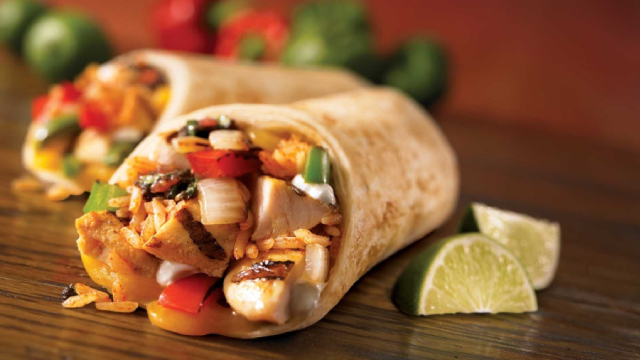
YUM! Brands, Inc. (YUM) is a leading global quick-service restaurant enterprise that focuses on the creation, management, and franchising of its restaurant concepts internationally. Its business is organized into four main divisions: KFC, Taco Bell, Pizza Hut, and The Habit Burger Grill. The company operates establishments under these well-known brands, offering diverse food categories such as chicken, pizza, Mexican-style dishes, and made-to-order chargrilled burgers and sandwiches, among other food products. As of December 31, 2021, YUM! Brands boasted a significant worldwide presence, comprising 26,934 KFC outlets, 18,381 Pizza Hut locations, 7,791 Taco Bell restaurants, and 318 The Habit Burger Grill units, spread across roughly 157 countries and territories. The company, which maintains its headquarters in Louisville, Kentucky, was established in 1997. It was formerly known as TRICON Global Restaurants, Inc., before officially adopting the name YUM! Brands, Inc. in May 2002.

Analyst Sentiment

60%
Buy

From 51 Active Polls

1Y Forecast: $178.00

▲ +15.1% Potential Upside

Consensus Target Metrics

Low Bound

$160

Median

$180

High Bound

$190

Average

$178

Price & Moving Averages

Loading chart...

🎯 Wall Street Analyst Intelligence Report

1-Year structural target targets, chart projections, and sentiment maps.

Average 1Y Target
$178.00
▲ +15.08% Upside
Low Target
$160.00
3% Risk
Median Target
$179.50
16% Mid
High Target
$190.00
23% Max
Consensus
Hold
19 / 51 Buys

Consensus Trend Projection

Trailing closures vs. 12-month metrics map.

Analyst Vote Distribution

Aggregate institutional coverage sentiment weights.

📊 Historical Valuation Multiples

Real-time Trailing Twelve Month (TTM) momentum side-by-side with discrete quarterly metrics.

Fiscal QuarterTTMQ1 2026Q4 2025Q3 2025Q2 2025Q1 2025Q4 2024Q3 2024Q2 2024
Period EndingTrailing 12MMar 31, 2026Dec 31, 2025Sep 30, 2025Jun 30, 2025Mar 31, 2025Dec 31, 2024Sep 30, 2024Jun 30, 2024
Market Cap ($M)42,63043,06842,05642,25641,34244,06137,56539,39836,575
Enterprise Value ($M)53,89554,33353,25752,76552,98054,81149,23550,13447,335
Price to Earnings Ratio (P/E)24.6524.9219.6526.6127.6443.5422.2025.7824.92
Price/Earnings-to-Growth Ratio (PEG)0.7310.713.410.767.222.41
Price to Sales Ratio (P/S)5.0220.9216.7321.3421.4024.6615.9021.5820.75
Price to Book Ratio (P/B)-5.88-5.91-5.74-5.63-5.38-5.65-4.91-5.13-4.79
Price to Free Cash Flow Ratio (P/FCF)25.85126.3087.2594.11109.66132.3192.3094.03125.26
Enterprise Value to Sales (EV/Sales)26.3921.1826.6527.4230.6720.8427.4626.85
Enterprise Value to EBITDA (EV/EBITDA)18.8684.3765.9973.8076.5692.2768.9675.2872.94
Debt to Equity Ratio3.94-1.64-1.63-1.54-1.60-1.46-1.61-1.46-1.46

YUM Growth Runway Model

Standard long term linear growth fade

Multi-Stage Discounted Cash Flow Sandbox

Market Price$154.67
Intrinsic Value$104.21
Market Alignment
Overvalued by 32.6%relative to calculated intrinsic value
9.00%
Exp: 6%6%
i

Growth runway slowdown

This value provides a time window for the growth rate to decline beyond Stage 1 toward the terminal rate. Longer windows are most useful for companies with high growth starting conditions or strong competitive advantages. This option stretches out the growth rate slowdown across 5, 10, or 15-year steps. A high-growth starting condition (exceeding a 25% initial growth rate) automatically applies a curve decay to simulate realistic, rapid market saturation.
i

Terminal growth rate

With long-term inflation between 3-5%, revenue must grow by that baseline to maintain flat real-world market share. This value sets the permanent terminal growth rate to factor into the valuation beyond the growth slowdown runway toward maturity.

3-Stage Financial Runway Horizon

🧠 Perpetuity Horizon Engine (Stage 3: Post-2035)

Terminal FCF Base$3.10B
Perpetuity TV Value$58.41B
Discounted TV (PV)$24.67B
TV Weighting %61.0%
⚠️
Financial Model Disclaimer & Risk Disclosure: This interactive scenario simulator is an educational sandbox provided strictly for informational and analytical research purposes. Core historical financial statements and consensus estimates are sourced directly via Financial Modeling Prep (FMP). All downstream outputs are entirely deterministic, hypothetical projections generated by combining automated mathematical formulas (including linear interpolation and Gaussian bell-curve decay models) with user-selected variables and third-party financial data inputs. Users assume all liability for trading decisions executed based on these sandbox calculations.

📘 Full Research Report

ℹ️

AI-Generated Research: This report is for informational purposes only.

📘 YUM BRANDS INC (YUM) — Investment Overview

🧩 Business Model Overview

YUM operates a multi-brand quick-service restaurant platform built on a franchise-heavy model. The value chain runs from (1) brand and menu development, (2) system standards and supply-chain coordination, (3) franchisor fees (including royalties and advertising contributions) collected from franchisees, and (4) optional ownership of restaurants that provide direct operating cash flows and real-estate leverage through leases/management arrangements.

Consumer ordering is frequent and habit-driven (repeat visits and menu familiarity), while franchise economics create structural alignment: franchisees fund most restaurant capex, and YUM monetizes brand and operating know-how through ongoing fee streams. This structure reduces capital intensity versus a fully company-owned operator and makes growth more scalable through unit expansion rather than balance-sheet growth.

💰 Revenue Streams & Monetisation Model

YUM monetizes primarily through recurring, franchisor-led economics:

  • Franchise royalties and fees: A steady stream tied to franchise unit economics and sales performance, generally supported by long-running franchise agreements.
  • Advertising fund contributions: Centralized brand marketing funding collected from franchisees, with spend governance that can influence demand generation and traffic support.
  • Rental/lease and other income: For company-owned or partially owned units, YUM captures rent/contractual income that tends to be less sensitive to day-to-day unit margins than full operating costs.
  • Company-operated restaurant profit: More cyclical and operationally exposed than fee-based income, but can serve as a platform for system learning and selective economics.

Margin structure is driven by fee-based scalability (incremental revenue with limited incremental corporate cost) and by system-level initiatives that improve unit-level throughput, value perception, and operational efficiency across the franchise network.

🧠 Competitive Advantages & Market Positioning

YUM’s core moat is a combination of scale-driven cost advantages, intangible brand assets, and a franchise operating system that is difficult to replicate quickly at comparable quality and unit economics.

  • Scale and purchasing power: Central sourcing and network purchasing coordination support better unit economics versus smaller peers, especially for frequently used ingredients and packaging. This can offset commodity swings and sustain franchise profitability.
  • Franchise system and operational standards: Competitive advantage stems from standardized training, supply-chain practices, and process discipline. Franchisees face meaningful “system switching” friction because brand standards, vendor relationships, and operating playbooks are integrated across the network.
  • Brand equity across distinct cuisines: KFC (value- and chicken-centric positioning), Taco Bell (Mexican-inspired fast casual QSR), and Pizza Hut (pizza-centric occasions) diversify demand patterns and promotional cadence.

Competitive benchmarking:

  • McDonald’s (MCD): Competes on scale, global system processes, and menu/platform consistency with a different brand mix and operational model emphasis.
  • Restaurant Brands International (QSR): Competes via franchised growth and brand platforms such as Burger King and Tim Hortins; focus overlaps on franchise economics and unit-level execution.
  • Domino’s Pizza (DPZ): Competes strongly in delivery-led pizza convenience; YUM’s competitive set is broader across QSR segments and cuisines rather than single-format delivery specialization.

YUM differs by maintaining a concentrated portfolio of global QSR brands with a franchise-heavy system designed to scale through unit growth while leveraging centralized operational practices. The competitive fight occurs at the unit level (food quality, value, speed of service, and marketing effectiveness), but YUM’s system-level cost and know-how can provide resilience.

🚀 Multi-Year Growth Drivers

  • Unit expansion and network penetration: Long-duration growth potential exists through converting underpenetrated geographies and expanding within existing markets via franchise development pipelines.
  • Digital and delivery enablement: Order digitization, improved throughput, and integration with delivery and loyalty workflows can lift traffic and reduce friction in ordering—translating into more franchise sales over time.
  • Value-led menu and promotional mechanics: Sustained focus on affordability and local menu adaptation supports demand stability during variable consumer spending conditions.
  • International growth with brand localization: A multi-brand platform supports differentiated positioning by cuisine and daypart, improving probability of capturing share as international QSR penetration increases.
  • TAM expansion in global QSR: Global urbanization and continued consumer demand for convenient, standardized meals provide a structural tailwind for restaurant growth that is not purely share-driven.

⚠ Risk Factors to Monitor

  • Franchisee credit and unit stress: Fee revenue depends on franchise unit performance; weak consumer demand or cost inflation can pressure franchise margins and increase default risk.
  • Food, labor, and supply-chain volatility: Input costs (protein, dairy, produce) and wage pressures can compress system margins and require price/value recalibration.
  • Competitive intensity: Aggressive promotions or differentiated formats from large peers can pressure same-store sales and franchise development momentum.
  • Brand execution and menu relevance: Brand performance is sensitive to marketing effectiveness, product quality consistency, and the speed of responding to changing consumer preferences.
  • Regulatory and compliance costs: Labor regulations, food safety requirements, and packaging/environmental rules can raise operating costs and constrain menu or operational practices.
  • Geopolitical and currency effects: International exposure can affect reported results through FX translation and operational constraints in certain markets.

📊 Valuation & Market View

The market typically values QSR franchisors based on cash-flow durability and the credibility of franchise growth and unit-level performance. Common frameworks emphasize EV/EBITDA or DCF-style cash flow models rather than high-growth P/S narratives, reflecting the mix of (1) recurring franchise fees and (2) more cyclical corporate restaurant economics.

Key valuation drivers include: franchise unit growth, royalty/fee revenue resilience, operating leverage from system initiatives, advertising fund effectiveness, and capital allocation decisions that optimize owned-asset exposure versus franchised growth.

🔍 Investment Takeaway

YUM presents a durable QSR franchise investment profile anchored by scale-driven cost advantages, integrated franchise operating standards, and brand intangible assets across multiple cuisine platforms. The long-term thesis rests on sustainable unit expansion, digital and value-led traffic support, and the system’s ability to convert market demand into recurring fee revenue while maintaining franchise profitability through supply-chain and operational discipline.


⚠ AI-generated — informational only. Validate using filings before investing.
📰 Market News & Coverage

15 Stories Available

Real-time institutional reporting and market updates for YUM.

nypost.com2026-06-15

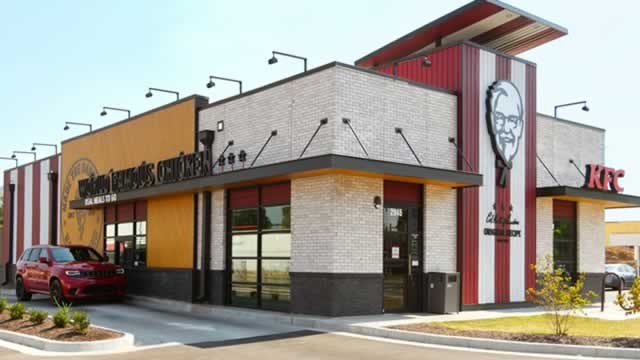
KFC's launches new menu items and updated logo — establishes ‘next chapter' in its global brand refresh

"As the global appetite for chicken grows, KFC is answering the call," KFC Global CEO Scott Mezvinsky said.

foxbusiness.com2026-06-15

KFC adds new menu items, updates logo as part of global brand refresh

The Yum Brands-owned chain is introducing new menu items, sauces, beverages and restaurant concepts as part of a global strategy to strengthen its position in the chicken market.

zacks.com2026-06-15

Yum Brands (YUM) is a Top-Ranked Momentum Stock: Should You Buy?

Whether you're a value, growth, or momentum investor, finding strong stocks becomes easier with the Zacks Style Scores, a top feature of the Zacks Premium research service.

cnbc.com2026-06-15

KFC leans into boneless chicken, new drinks as chain tries to regain market share

KFC unveiled a new strategy that prioritizes boneless chicken options, adds a new drink sub-brand and aims to make the in-person dining experience more immersive. The Yum Brands chain is facing competition from upstart chicken chains and legacy giants like McDonald's that are betting big on the growing popularity of chicken.

businessinsider.com2026-06-15

KFC's Colonel is getting a glow-up

KFC is undergoing a global brand overhaul to modernize while keeping its nostalgic elements. The Colonel faces competition in the chicken market, especially in the US, despite global growth.

businesswire.com2026-06-15

KFC Launches Its Next Chapter Globally, Complete With New Menu Innovation, Modern Restaurant Design and Fresh Branding

PLANO, Texas--(BUSINESS WIRE)--As the global appetite for chicken grows, KFC is answering the call by challenging the sameness across quick-service chicken with a clear focus: delivering the most craveable food and more dynamic restaurant experiences designed around how consumers want to eat today. “In an increasingly crowded category, we have a clear opportunity to set the standard for modern chicken in QSR,” said Scott Mezvinsky, CEO, KFC Global. “This next chapter brings new energy and expre.

businesswire.com2026-06-11

Yum! Brands, Inc. to Participate in the NYSE European Investor Conference in Association With Bank of America

LOUISVILLE, Ky.--(BUSINESS WIRE)--Yum! Brands, Inc. to Participate in the NYSE European Investor Conference in Association With Bank of America.

prnewswire.com2026-06-09

PIZZA HUT ANNOUNCES THE SUMMER OF HUT ORIGINALS - A NEW PLATFORM CELEBRATING THE ICONIC FOOD, EXPERIENCES AND FANS THAT MADE THE BRAND

New Hut Originals Platform Celebrates the Fans Who Grew Up with Pizza Hut and the Return of Iconic Moments All Summer Long IYKYK: Hut Originals Can Bring Back Their Classic BOOK IT! Button on June 10 for a Free Personal Pan Pizza®* Pizza Hut and Box Tops for Education Team Up to Bring Back BOOK IT!

seekingalpha.com2026-06-05

Dividend Champion, Contender, And Challenger Highlights: Week Of June 7

A weekly summary of dividend activity for Dividend Champions, Contenders, and Challengers. Companies which changed their dividends. Companies with upcoming ex-dividend dates.

247wallst.com2026-06-03

Here Are Wednesday’s Top Wall Street Analyst Research Calls: Boyd Gaming, Chipotle Mexican Grill, Conagra, Dollar General, MGM Resorts International, Omnicom Group, Yum! Brands, and More

Mid-Day Stocks: Stocks are trading lower on Wednesday, as oil and yields move higher. Once again, it was "Welcome back, my friends to the show that never ends." On cue, the never-say-die stock market shook off early worries and all the major indices closed higher on Tuesday. Like the proverbial broken record, the S&P 500... Here Are Wednesday's Top Wall Street Analyst Research Calls: Boyd Gaming, Chipotle Mexican Grill, Conagra, Dollar General, MGM Resorts International, Omnicom Group, Yum! Brands, and More

barrons.com2026-06-03

Yum! Brands Keeps Growing. Why the Stock Price Will Follow.

Yum offers some of the strongest growth potential among franchised restaurant companies, yet the stock fails to reflect those advantages., one analyst says.

marketbeat.com2026-06-03

Slice of the Pie: Why Yum's Deal Lifts QSR

A shift is underway in the quick-service restaurant sector (QSR). Yum! Brands NYSE: YUM is in exclusive talks to divest its Pizza Hut division to private equity firm LongRange Capital in a deal valued between $3.6 billion and $4.3 billion.

schaeffersresearch.com2026-06-03

Futures Flat After Record Closes as Investors Eye Iran Headlines

Stock futures are sluggish after yesterday's record rally while unpack jobs data and Iran developments

forbes.com2026-06-03

Here's Where We're Finding Cheap Dividends While Everyone Chases AI

The stock market is roaring, and according to the media, it's all because of AI.

cnbc.com2026-06-02

Jim Cramer says look to buy these 5 stocks outside the AI trade for diversification

CNBC's Jim Cramer said investors should consider adding exposure to out-of-favor sectors if investors begin rotating away from high-flying technology stocks. He highlighted JPMorgan, Johnson & Johnson, Kimberly-Clark, McDonald's, Yum!

📊 AI Financial Analysis

Powered by StockMarketInfo
Earnings Data: Q Ending 2026-03-31

"YUM reported Q1 2026 revenue of $2.059B and net income of $432M (EPS $1.56). On a YoY basis, revenue rose 15.2% ($1.787B in Q1’25 to $2.059B), and net income increased 70.7% ($253M to $432M). On a QoQ basis, revenue declined 18.1% versus Q4’25 ($2.514B to $2.059B), while net income eased 19.3% ($535M to $432M), indicating a seasonally softer quarter but stronger year-over-year profitability. Profitability improved meaningfully over the last year: net margin expanded to 21.0% from 14.2% in Q1’25, while gross margin stayed broadly stable (~44.7% vs. ~46.8% prior-year). Operating margin lifted to 31.3% from 30.7% YoY, supporting the outsized net income growth. Cash generation remained healthy; operating cash flow was $416M, translating to free cash flow of $341M (after modest capex). Shareholder returns appear supported by ongoing capital returns (Q1 dividends of $207M and buybacks of $185M) and positive market momentum, with the stock up 14.2% over the last year (below the >20% momentum threshold). Balance sheet context: total assets were $8.21B, but reported equity is negative (-$7.28B). Debt remains material (total debt $11.95B), though interest coverage of ~5.0x suggests manageable near-term serviceability."

Revenue Growth

Positive

Revenue up 15.2% YoY in Q1’26 ($2.059B vs. $1.787B) but down 18.1% QoQ vs. Q4’25 ($2.514B). Trajectory looks positive year-over-year, with typical seasonality quarter-to-quarter.

Profitability

Good

Net income up 70.7% YoY ($432M vs. $253M). Net margin expanded to 21.0% from 14.2% YoY; operating margin rose to 31.3% from 30.7%, signaling clear profitability improvement.

Cash Flow Quality

Positive

Operating cash flow of $416M and free cash flow of $341M in Q1’26. Continued shareholder distributions (dividends $207M; buybacks $185M) supported by strong earnings-to-cash conversion.

Leverage & Balance Sheet

Neutral

Balance sheet shows negative stockholders’ equity (-$7.28B) and high leverage optics (total debt ~$11.95B; net debt ~$11.27B). Despite this, interest coverage (~5.0x) indicates near-term cash earnings can cover interest.

Shareholder Returns

Neutral

Capital returns continue (dividends and buybacks in Q1’26). Market performance is positive but not high-momentum: 1y_change +14.2% (below 20% threshold).

Analyst Sentiment & Valuation

Positive

Street target consensus is $174.08 vs. current $162.79, implying modest upside. Valuation multiples provided (e.g., P/E ~24.9) suggest not deep value, but sentiment appears mildly constructive.

Disclaimer:This analysis is AI-generated for informational purposes only. Accuracy is not guaranteed and this does not constitute financial advice.

Fundamentals Overview

Loading fundamentals overview...

Q1 2026 showed Yum executing through the “raise-the-bar” framework: KFC delivered 6% system sales growth and KFC restaurant margins of 10.3% (+100 bps YoY, including U.K. +240 bps), while Taco Bell U.S. generated 8% same-store sales growth and 23.9% restaurant level margins despite inflation. Profit support also came from disciplined G&A and continued unit development (130 gross Yum openings; KFC opened 648). Digital remains a core engine: digital mix hit 63% with digital sales approaching $11B. Byte by Yum continued to consolidate digital operations (Taco Bell U.K. first international market to onboard both digital ordering and Smart Ops bundles), and AI is moving from pilot to rollout, including drive-thru A/B testing. Management guided Taco Bell U.S. full-year margins to 24.5%–25.5% and interest expense to $510M–$520M, while maintaining mid-single-digit ex-Pizza Hut ex special G&A growth expectations. Key near-term risks centered on geopolitical permitting delays, but management characterized pipeline exposure as limited.

AI IconGrowth Catalysts

  • KFC: Byte by KFC SaaS platform rollout in 2026 across top markets (8 of KFC’s top 20 markets reactivating/launching SaaS), plus global innovation pantry to replicate proven menu innovation
  • KFC U.K.: Pickle Mania drove 7% Q1 same-store growth (including 4 pickle top items) and strong momentum into Q2
  • Taco Bell U.S.: 8% same-store sales growth; 3 percentage points driven by transaction growth from value (value scores and value mix increased) via revamped Luxe Value menu
  • Taco Bell: Luxe Value and expanded use occasions (light consumers) supporting brand perception gains tied to long-term market share strategy
  • Byte expansion: Taco Bell U.K. first international market to roll out both digital ordering and Smart Ops bundles (unified platform replacing disparate third-party tech)
  • Beverages: Taco Bell Live Mas Cafe pilot in 38 restaurants and differentiated drink lineup; KFC scaling Quench beverage platform to U.K., Australia, and Canada

Business Development

  • KFC/Brazil: Best franchisee expanded in Brazil; opened first prefabricated restaurants in Chile (manufactured over ~45 days, ~15 days on-site; 17-week reduction vs traditional builds)
  • Abbott Burger & Grill: New partnership with the L.A. Dodgers (habit location inside Dodger Stadium and Dodgers-themed restaurant in EchoPark)
  • Taco Bell: Live Mas Live innovation event streamed on Peacock with celebrity guest appearances (Doja Cat, Davante Adams, Ariana Madix, Benson Boone, and others)
  • Taco Bell: Partnership with PepsiCo for the proprietary Baja Blast platform referenced as part of drink expansion

AI IconFinancial Highlights

  • Yum system sales grew 6% in Q1; same-store sales globally grew 3%; new units grew 5%
  • Digital sales approached ~$11B; digital mix increased to 63% (new high)
  • Taco Bell U.S. restaurant level margins: 23.9% (U.S. company-owned margins expanding despite significant inflation)
  • KFC restaurant level margins: 10.3% up 100 bps YoY; U.K. restaurant margins increased 240 bps YoY (driver cited for KFC margin uplift)
  • Ex special G&A: $284M up 4% YoY (per commentary: investment in marketing/innovation testing as part of Hut Forward program)
  • KFC development: Quench beverage platform refit ROI cited with paybacks under 3 years; improved paybacks extended to new restaurant builds (unit economics accelerator)

AI IconCapital Funding

  • Gross capex: $75M in the quarter
  • Share repurchases: ~1.2 million shares for ~$185M (during Q1)
  • Net leverage ended quarter: ~3.8x
  • Operating cash flow run-rate cited: ~$1.8B; broader annual cash generation expectation: >$2.5B with 4x net leverage framework

AI IconStrategy & Ops

  • Taco Bell: Improved order accuracy and consumer satisfaction; consumer satisfaction scores improved in every period since March last year; consumer complaints declined since 2025 operational improvements
  • Taco Bell U.K.: onboarded Byte digital ordering + Smart Ops bundles (first international market) to standardize digital/restaurant experiences and personalization
  • AI deployment: Taco Bell U.S. piloted AI-driven A/B testing in drive-thru; planned nationwide rollout in 2026 (dynamic car-by-car layout/visual testing)
  • Enterprise efficiency: building enhanced Byte Kitchen Display System to reduce team size (stated as 'overall team that is half the size of what it would have been') to accelerate innovation and pipeline
  • Habit: expecting ~ $5M of noncash closure expenses for small number of closures in subscale markets (store network optimization)

AI IconMarket Outlook

  • Yum guidance (excluding Pizza Hut): remains very confident to meet/exceed long-term growth algorithm components; full-year ex special G&A growth excluding Pizza Hut expected to be up mid-single digits
  • Taco Bell U.S. full-year restaurant level margins: 24.5% to 25.5% (reflecting better margins than originally planned from acquired stores)
  • Full-year interest expense guidance: $510M to $520M excluding any potential debt issuances
  • Q2 modeling: high single-digit growth YoY ex special ex Pizza Hut G&A (timing of project spend)
  • Pizza Hut: expect Q2 core operating profit of approximately $70M (includes onetime Hut forward investment)

AI IconRisks & Headwinds

  • Middle East conflict: uncertainty globally; impact cited as relatively minor so far, including short-term delays to obtain government permits and procure equipment in UAE and Turkey
  • Development pipeline sensitivity: management notes current conflict relevance to unit growth is limited (Middle East less than ~150 units in current pipeline) but still a named uncertainty
  • Inflation/bottom-line pressure: Habit and broader references to mitigating inflation, specifically beef prices for value and cost pressures
  • Potential store network drag: Habit closure expenses expected (~$5M noncash) as part of optimization

Q&A: Analyst Interest

  • Global demand trends: Management described KFC International acceleration on a 2-year same-store basis across the prior four quarters, highlighting double-digit system sale growth in multiple markets and pointing to country examples (U.K. innovation, Korea momentum, and Latin America/Brazil development leadership) supporting confidence for the remainder of 2026.
  • Franchisee unit growth and geopolitics: Management asserted high confidence in unit development, citing a new Q1 KFC unit growth record. They argued disruption history didn’t halt growth and added the Middle East pipeline exposure is small (<150 units), with partners expecting no change, while Taco Bell international continues scaling.
  • Organization and AI efficiency post-Pizza Hut: Management emphasized Byte by Yum as a consistent platform across restaurant and above-store systems enabling AI use. They said AI priority is growth first, then productivity—citing Taco Bell drive-thru AB testing and KFC U.K. ‘10 AI agents’ accelerating permitting and training, rather than committing to a specific G&A bend.

Sentiment: POSITIVE

Note: This summary was synthesized by AI from the YUM Q1 2026 earnings transcript. Financial data is complex; please verify all metrics against official SEC filings before making investment decisions.

📋 Official Regulatory 10-K / 10-Q SEC Filings

Direct authenticated documentation links to audited SEC database reports for YUM.

SEC EDGAR Live Feed
Loading financial data and tables...
📁

SEC Filings (YUM)

© 2026 Stock Market Info — Yum! Brands, Inc. (YUM) Financial Profile