
📘 BORGWARNER INC (BWA) — Investment Overview
🧩 Business Model Overview
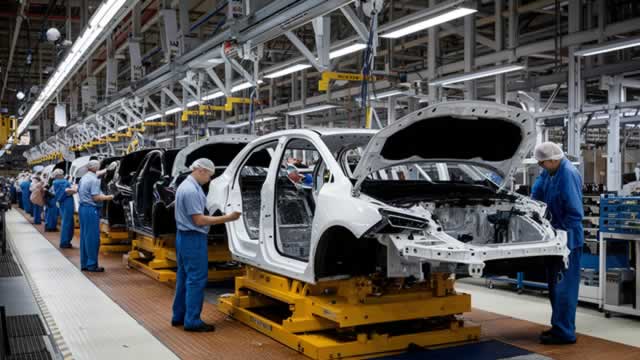
BorgWarner is a diversified automotive supplier focused on engineered powertrain and thermal systems. The value chain centers on design, validation, and qualification with global automakers, followed by high-volume manufacturing and long-duration supply of components used in new vehicle platforms. Products are typically embedded within the customer’s vehicle architecture—meaning the company sells “program content” per platform lifecycle rather than standalone products that can be swapped quickly.
The company’s operating model combines (1) product engineering and process know-how to meet performance and durability requirements, (2) manufacturing scale to achieve unit-cost efficiency, and (3) ongoing engineering support to sustain production across model revisions. Demand is ultimately tied to global vehicle production and the specific mix of powertrain technologies (ICE, hybrid, and battery-electric).
💰 Revenue Streams & Monetisation Model
Revenue is primarily OEM/production sales, which are largely transactional by unit (driven by vehicle build volumes and program content) rather than contractually recurring in the way of software. A smaller portion typically arises from aftermarket and service-related channels, providing some smoothing when installed base exists, though the dominant engine of value creation comes from new-platform content.
Margin drivers are structural:
- Program ramp and scale: profitability improves as production volumes stabilize and fixed costs are leveraged.
- Product mix: thermal systems and electrification-related content can support different margin profiles than pure ICE components.
- Manufacturing efficiency and cost takeout: material input management, yield improvement, and plant utilization influence gross margin.
- Customer pricing discipline: negotiated pricing tied to content, performance, and competitive benchmarks.
🧠 Competitive Advantages & Market Positioning
BorgWarner’s moat is best characterized as high switching costs driven by OEM qualification and long platform lifecycles. Automotive components—especially safety, emissions, durability, and thermal performance systems—require extensive validation, long lead times, and rigorous quality processes. Once a supplier is qualified for a platform, displacement becomes difficult because switching involves re-engineering, re-validation, and production risk.
The company also benefits from intangible assets in engineering, application know-how, and process capabilities that translate into manufacturable designs with competitive cost/performance. These advantages are cumulative and reinforce each other: engineering depth improves manufacturability, while scale supports cost competitiveness.
Competitive benchmarking
Key competitors include:
- ZF (drivetrain systems and mechatronics across multiple powertrain architectures)
- Magna International (thermal, propulsion, and vehicle integration capabilities)
- Continental (powertrain and thermal-related components and systems integration)
BorgWarner’s positioning tends to concentrate on engineered subsystems where thermal performance and powertrain efficiency are critical and where design-in qualification barriers are meaningful. Compared with broad integrated suppliers, BorgWarner’s competitive focus emphasizes technical performance in powertrain/thermal niches and scalable manufacturing execution, rather than end-to-end vehicle integration.
🚀 Multi-Year Growth Drivers
Over a 5–10 year horizon, growth is shaped by two overlapping demand vectors: (1) incremental efficiency and thermal management requirements across electrified and combustion platforms, and (2) new content per vehicle as power electronics and battery systems expand.
- Electrification thermal management: higher thermal loads for batteries and power electronics increase the need for efficient cooling/heating and durable thermal subsystems.
- Hybridization and efficiency regulation: emissions and efficiency standards sustain demand for high-efficiency components that reduce fuel consumption and improve drivability.
- Geographic and production program coverage: global OEM footprint supports continued sourcing opportunities as platforms refresh and local content requirements change.
- Aftermarket installed-base tailwind: as component volumes proliferate over time, service and replacement demand can provide partial stability versus pure OEM production cyclicality.
The practical implication: even when overall vehicle cycles fluctuate, BorgWarner can benefit when its platform wins align with growth in thermal and efficiency content, supported by switching-cost barriers that preserve design-in positions across lifecycle ramps.
⚠ Risk Factors to Monitor
- Technology mix risk: faster-than-anticipated shifts from ICE/hybrids toward battery-electric architectures may pressure turbo-related content, offset only if electrification thermal and adjacent programs scale sufficiently.
- Customer concentration and program timing: OEM production plan changes, platform delays, or vendor substitutions can impact volume and profitability.
- Competitive pricing and win-rate pressure: as suppliers bid for new programs, margin can compress if cost-to-serve targets are not met.
- Capital intensity and execution risk: manufacturing localization, tooling, and capacity expansion require disciplined capex and operational ramp execution.
- Input cost volatility: commodities and logistics costs can pressure margins without effective hedging, pass-through mechanisms, or pricing resets.
📊 Valuation & Market View
The market typically values automotive suppliers using EV/EBITDA and earnings multiples, adjusted for cyclical trough/peak dynamics. Key valuation drivers include:
- Normalization of margins (evidence of sustainable cost structure versus temporary cycle effects)
- Free cash flow quality (working capital discipline and capex effectiveness)
- Program win visibility (growth in electrification/thermal content and duration of design-in)
- Net leverage and balance-sheet resilience (ability to fund ramps through downcycles)
Because demand is cyclical and platform ramps can be uneven, valuation tends to move with expectations for sustained end-market volumes and the durability of segment margins across the cycle.
🔍 Investment Takeaway
BorgWarner offers a defensible long-term position in automotive thermal and efficiency-critical subsystems where OEM qualification-driven switching costs, engineering/intellectual property depth, and manufacturing scale create durability against churn. The investment thesis hinges on the company’s ability to maintain design-in positions while capturing incremental vehicle content from electrification-driven thermal management, offsetting any structural decline in specific ICE-related niches through disciplined execution and cost competitiveness.
⚠ AI-generated — informational only. Validate using filings before investing.













 Growth Catalysts