GCI Liberty, Inc.

GCI Liberty, Inc. (GLIBK) Market Cap

GCI Liberty, Inc. has a market capitalization of $736.7M.

Price: $22.16

-0.51 (-2.23%)

Market Cap: 736.65M

NASDAQ · time unavailable

CEO: Ronald A. Duncan

Sector: Communication Services

Industry: Telecommunications Services

IPO Date: 2025-07-11

Website: https://www.gciliberty.com

GCI Liberty, Inc. (GLIBK) - Company Information

Market Cap: 736.65M|Sector: Communication Services

Company Profile

GCI Liberty, Inc. (GLIBK) primarily comprises GCI, LLC, a prominent telecommunications enterprise headquartered in Alaska. This subsidiary delivers a comprehensive suite of services—including data, wireless, telephony, and specialized managed solutions—across more than 200 distinct communities. Beyond its core asset, GCI Liberty also maintains significant equity stakes in both Charter Communications and Liberty Broadband.

Analyst Sentiment

Analyst ratings pending...

Consensus Target Matrix

Data feed parsing pending...

Price & Moving Averages

Loading chart...

🎯 Wall Street Analyst Intelligence Report

1-Year structural target targets, chart projections, and sentiment maps.

Average 1Y Target
$23.26
▲ +5.00% Upside
Low Target
$16.62
-25% Risk
Median Target
$22.60
2% Mid
High Target
$27.69
25% Max

Consensus Trend Projection

Trailing closures vs. 12-month metrics map.

Analyst Vote Distribution

Aggregate institutional coverage sentiment weights.

Sentiment volume allocation data unavailable.

📊 Historical Valuation Multiples

Real-time Trailing Twelve Month (TTM) momentum side-by-side with discrete quarterly metrics.

Fiscal QuarterTTMQ1 2026Q4 2025Q3 2025Q2 2025Q1 2025
Period EndingTrailing 12MMar 31, 2026Dec 31, 2025Sep 30, 2025Jun 30, 2025Mar 31, 2025
Market Cap ($M)7371,4741,4681,1591,0031,003
Enterprise Value ($M)1,3382,0832,1972,0891,9561,999
Price to Earnings Ratio (P/E)-2.6920.4722.93-0.759.297.17
Price/Earnings-to-Growth Ratio (PEG)11.79
Price to Sales Ratio (P/S)0.705.765.604.513.843.77
Price to Book Ratio (P/B)0.510.860.870.850.680.69
Price to Free Cash Flow Ratio (P/FCF)8.1067.00-244.5955.2118.9318.58
Enterprise Value to Sales (EV/Sales)8.148.388.137.497.52
Enterprise Value to EBITDA (EV/EBITDA)-8.6324.2225.54-4.8418.6317.85
Debt to Equity Ratio-3.930.610.680.770.720.79
⚠️

Valuation Model Suspended

API Payload Error: Inverted or negative baseline Free Cash Flow margin detected (-24.8%).

Troubleshooting Notice: The upstream financial data supplier has uploaded corrupted or inverted baseline metrics for GLIBK. The server sandbox cannot calculate an intrinsic value path from negative cash generation baselines.

📘 Full Research Report

ℹ️

AI-Generated Research: This report is for informational purposes only.

📘 GCI LIBERTY INC SERIES C (GLIBK) — Investment Overview

🧩 Business Model Overview

GCI Liberty, Inc. Series C is best understood as an exposure to GCI’s telecommunications and media infrastructure economics—primarily broadband (wireline), wireless service, and related enterprise connectivity—where the value chain is anchored in owning and operating high-cost network assets in a geographically constrained footprint. Revenue is generated by supplying connectivity “last mile” services to households, small businesses, and larger enterprise customers, typically through bundled offerings and contracted service plans. Operationally, the model relies on (i) continual network maintenance and modernization, (ii) sales-and-retention motion to limit churn, and (iii) monetization of rising usage through higher bandwidth tiers and value-added services.

💰 Revenue Streams & Monetisation Model

Monetisation is dominated by recurring subscription-type revenue: residential and business internet, video-related offerings, and wireless service plans. Incremental revenue also comes from usage components (where applicable), equipment sales/fees, and installation or activation charges. The primary margin drivers are:

  • Revenues per user: upsells into higher bandwidth tiers and add-on services.
  • Cost leverage from the installed base: once last-mile infrastructure is in place, incremental subscribers typically contribute meaningfully to coverage of fixed network costs.
  • Capex efficiency: modernization choices (e.g., upgrades that improve capacity without proportionate cost escalation) influence long-run operating margins and free cash flow conversion.

Overall, the profile tends to resemble a recurring cash-flow business with usage-linked growth potential rather than a purely transactional model.

🧠 Competitive Advantages & Market Positioning

Moat thesis: GCI’s structural defensibility is a combination of (1) high switching costs and (2) network/infrastructure scale in a difficult geography.

  • High switching costs (customer stickiness): Broadband service is deeply embedded in daily life and business operations; households and enterprises face practical friction when changing providers (installation, service continuity, equipment compatibility, and bundled-offer economics). This creates retention-focused economics through churn control.
  • Network infrastructure as an entry barrier: Last-mile deployment in a low-density, geographically constrained market creates scale advantages for an incumbent that already owns distribution and access infrastructure.
  • Bundling and product packaging: Bundled wireline and wireless relationships increase the difficulty of competitor displacement by raising “value at risk” if service is switched.
  • Intangible/logistical positioning: Long-operating local networks and established rights-of-way and operational know-how in extreme weather conditions support continuity of service and execution discipline.

Competitive benchmarking (industry peers):

  • Alaska Communications (ACS): Competes more directly within Alaska’s wireline footprint; the key differentiator for GCI is depth of infrastructure and broader product packaging across connectivity types.
  • AT&T: Provides wireless competition through national-scale spectrum; however, its competitive strength is not a substitute for region-specific last-mile deployment economics.
  • Verizon: Similar to AT&T, offers wireless coverage advantages; the constraint is that wireless alone typically does not replace fixed broadband performance and bundling benefits for many households and enterprises.

GCI’s positioning centers on serving a specific geography with integrated access to wireline and wireless demand, whereas national carriers compete primarily on wireless coverage and spectrum rather than on local last-mile network density.

🚀 Multi-Year Growth Drivers

Over a 5–10 year horizon, growth is supported by durable demand for connectivity and capacity:

  • Broadband demand and bandwidth expansion: Persistent increases in streaming, cloud application usage, remote work/learning, and connected devices lift the value of higher-tier plans.
  • Network modernization and capacity upgrades: Capacity improvements support ARPU growth and reduce unit costs per bit carried.
  • Wireless monetization alongside wireline: Expanding wireless coverage and utilization can improve household “wallet share” when paired with wireline.
  • Enterprise connectivity and resiliency needs: Businesses increasingly require stable, low-latency, and service-backed connectivity, where incumbents with mature operations can benefit.
  • TAM expansion via better coverage and service reliability: Rural and underserved areas (and adjacent enterprise segments) can expand addressable customers when infrastructure becomes economically viable and scalable.

⚠ Risk Factors to Monitor

  • Capital intensity and execution risk: Network upgrades require sustained investment; cost overruns or slower-than-planned deployment can pressure cash flow and returns.
  • Technological substitution: Satellite connectivity, fixed wireless, and new access technologies can change price/performance expectations and affect competitive dynamics for broadband.
  • Regulatory and policy variability: Broadband and telecom regulation, universal service mechanisms, and permitting/right-of-way rules can shift economics.
  • Competition on price and bundling: Rival providers can pursue subscriber growth through promotions or bundled offers, affecting churn and ARPU.
  • Operational resilience risks: Extreme weather and service interruption risk can drive incremental costs and harm retention if reliability deteriorates.
  • Complex capital structure optics (tracking structure): Investors should ensure alignment between the tracked equity economics and underlying cash generation and distributions.

📊 Valuation & Market View

Equity valuation for telecom/communications infrastructure businesses typically reflects a blend of (i) recurring revenue quality, (ii) free cash flow durability after maintenance and growth capex, and (iii) subscriber-level unit economics (churn, net adds, and pricing power). In practice, market valuation often tracks:

  • EV/EBITDA and free-cash-flow yield for cash-generation and capex intensity perceptions.
  • P/S (with caution) when investors emphasize growth and subscription mix, especially if leverage and capex are meaningful.
  • Key narrative drivers: trends in retention, ARPU growth, capex efficiency, and the credibility of modernization plans.

The market tends to reward operators that can sustain retention and expand capacity without proportionate increases in operating cost or capex.

🔍 Investment Takeaway

GCI Liberty Inc Series C offers an investment thesis anchored in telecom infrastructure economics: high switching costs from bundled connectivity, and a durable entry barrier created by last-mile network scale in a geographically constrained market. Multi-year upside is tied to sustained broadband capacity growth, wireless monetization, and enterprise connectivity demand—tempered by the need for disciplined, efficient network investment and resilience to technological substitution and regulatory shifts.


⚠ AI-generated — informational only. Validate using filings before investing.

📰 Market News & Coverage

4 Stories Available

Real-time institutional reporting and market updates for GLIBK.

defenseworld.net2026-03-08

Barclays PLC Makes New Investment in GCI Liberty, Inc. – Series C GCI Group $GLIBK

Barclays PLC bought a new position in GCI Liberty, Inc. - Series C GCI Group (NASDAQ: GLIBK) in the undefined quarter, according to the company in its most recent filing with the Securities and Exchange Commission (SEC). The firm bought 3,218,317 shares of the company's stock, valued at approximately $119,947,000. Barclays PLC owned

defenseworld.net2026-01-20

SG Americas Securities LLC Makes New $872,000 Investment in GCI Liberty, Inc. – Series C GCI Group $GLIBK

SG Americas Securities LLC purchased a new stake in GCI Liberty, Inc. - Series C GCI Group (NASDAQ: GLIBK) during the undefined quarter, according to the company in its most recent Form 13F filing with the Securities and Exchange Commission. The fund purchased 23,387 shares of the company's stock, valued at approximately $872,000.

gurufocus.com2025-11-14

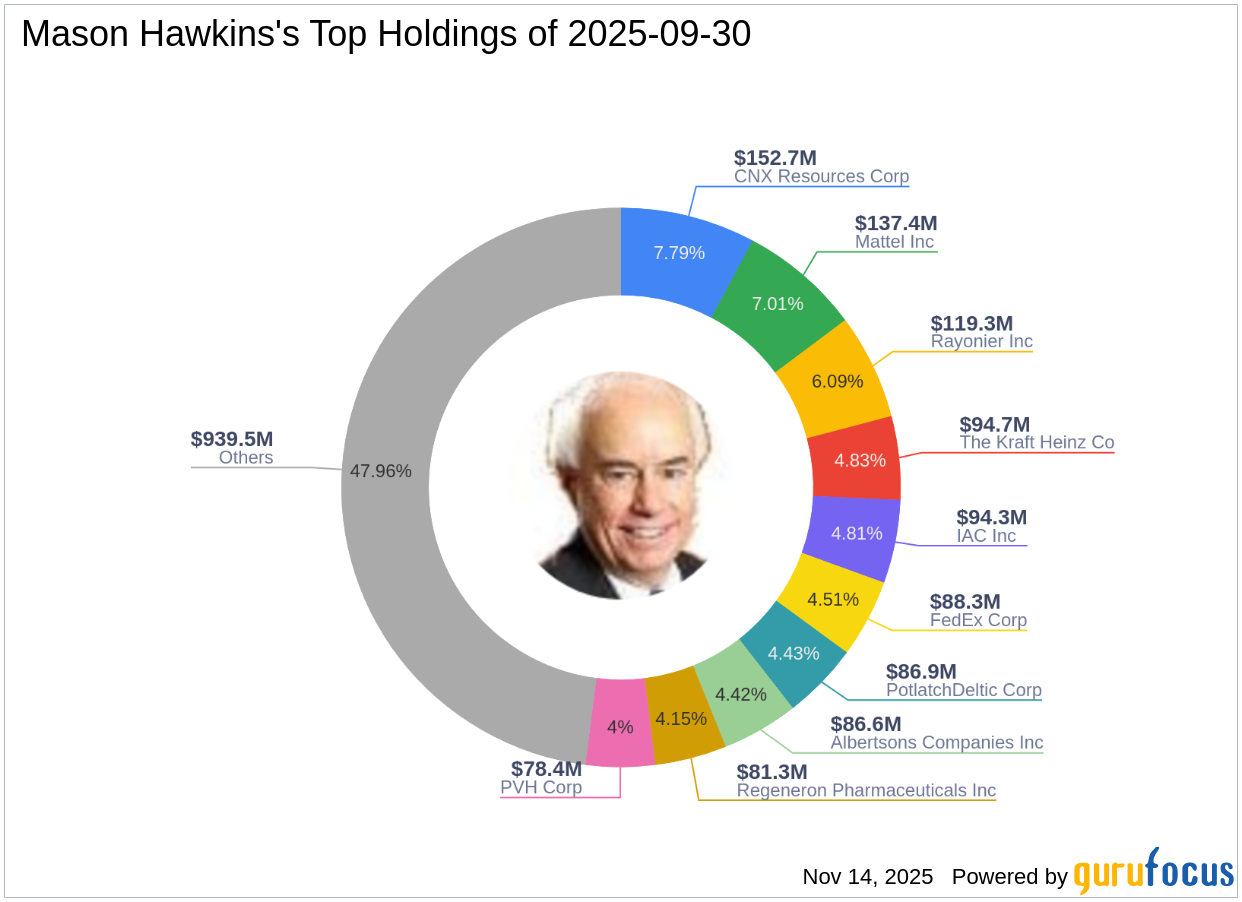
Mason Hawkins' Strategic Moves: Rayonier Inc. Takes Center Stage with 6.09% Portfolio Share

Insights from Mason Hawkins (Trades, Portfolio)' Third Quarter 2025 13F Filing Mason Hawkins (Trades, Portfolio) recently submitted the 13F filing for the thir

gurufocus.com2025-11-14

Ruane Cunniff's Strategic Moves: Significant Reduction in Jacobs Solutions Inc.

Exploring the Third Quarter 2025 13F Filing Introduction to Ruane Cunniff (Trades, Portfolio) Ruane Cunniff (Trades, Portfolio) recently submitted the 13F fili

📊 AI Financial Analysis

Powered by StockMarketInfo
Earnings Data: Q Ending 2026-03-31

"GLIBK reported Q1’26 revenue of $256M and net income of $18M (EPS $0.45). YoY, revenue decreased -3.8% (from $266M in Q1’25) and net income decreased -48.6% (from $35M). QoQ, revenue dipped -2.3% (from $262M in Q4’25) while net income rose +12.5% (from $16M). Profitability was weaker versus last year: net profit margin compressed to 7.0% from 13.2% in Q1’25, and gross margin declined to 28.1% from 53.0%. Sequentially, margins improved modestly from Q4’25 (net margin 6.1% to 7.0%), supported by better operating income ($33M vs. $32M). Operating cash flow remained strong at $78M, producing positive free cash flow of $22M in Q1’26 (despite operating cash flow being -$6M in Q4’25). Capital returns were muted in the quarter (no buybacks/dividends reported), while equity resilience appears adequate: total stockholders’ equity was $1.73B with leverage supported by ample cash ($435M) even as net debt remained elevated ($609M). Total shareholder return is supported by price momentum: the stock is up +20.77% over 1Y per provided marketPerformance, with a 0% dividend yield and no buybacks disclosed, so gains are primarily capital appreciation."

Revenue Growth

Fair

Revenue fell -3.8% YoY (266M→256M) and -2.3% QoQ (262M→256M), indicating mild top-line softness.

Profitability

Fair

Net income dropped -48.6% YoY ($35M→$18M) with net margin contracting to 7.0% from 13.2%. QoQ profitability improved (+12.5% net income; net margin 6.1%→7.0%).

Cash Flow Quality

Good

Operating cash flow of $78M and positive free cash flow of $22M in Q1’26. Dividend and buybacks were not present (dividendsPaid=0; repurchases=0), reducing cash outflow risk.

Leverage & Balance Sheet

Neutral

Total assets were $3.25B; equity was stable at $1.73B vs. $1.69B in Q4’25. Liquidity is strong (cash $435M), though net debt is elevated at $609M.

Shareholder Returns

Positive

1Y price momentum is strong (+20.77%). Dividend yield is 0% and no buybacks were reported, so total return is driven by capital appreciation.

Analyst Sentiment & Valuation

Neutral

No price target provided. Valuation multiples appear elevated (e.g., P/E ~20.4, P/S ~5.74), implying the market is pricing in recovery despite weaker YoY earnings.

Disclaimer:This analysis is AI-generated for informational purposes only. Accuracy is not guaranteed and this does not constitute financial advice.

Fundamentals Overview

Loading fundamentals overview...

GLIBK’s Q1 2026 results show modest top-line contraction ($256m, -4% YoY) with a much larger adjusted OIBDA decline ($93m, -18% YoY), driven by mix/cost pressure around restored Quintilion fiber services, plus ongoing public company costs and other comparability items. On the operational side, wireless is resilient (+2% YoY to 200k consumer lines; Q1 added 1k consumer lines), while data subscribers continue to slip (-3% YoY; 700 lost in-quarter) amid wireless substitution and limited competitive intensity from Starlight. Management argues broadband loss “pace” is improving, attributing stabilization to the G plus promotion and network speed/reliability work. The investment thesis centers on scaling Alaska connectivity via Quintilion (fiber rings/sub-rings, expected first-year free cash flow accretion post-close) and initiating parent-level expansion through a $107m Liberty Latin America stake. Near-term leverage dynamics may rise pro forma (2.3x at parent; ~2.7x at GCI for the loan), but liquidity appears solid ($377m undrawn capacity).

AI IconGrowth Catalysts

  • Definitive agreement to acquire Quintilion (complementary subsea/terrestrial fiber and rural microwave) expected to be accretive to free cash flow in the first year after closing
  • Stabilizing broadband losses driven by new G plus promotional offer plus network speed/reliability improvements
  • Convergence uplift: >40% of broadband customers now have one or more wireless lines; >60% of postpaid wireless lines are sold as part of bundled packages
  • Near completion of Alaska plan build-out (rural expansion) to increase wireless speeds across communities; continued focus on 5G coverage

Business Development

  • Acquired $107 million equity interest in Searchlight Capital Partners’ Liberty Latin America stake (6% equity interest) and discussed potentially acquiring additional shares from Doctor John Malone and affiliates
  • Liberty Latin America expected to distribute 9% preferred later this summer (preferred benefit mentioned as tax-sheltered but not the primary driver)
  • Quintilion relationship: GCI is more than half of Quintilion’s total revenues; Quintilion primarily serves wholesale/rural healthcare and GCI remarkets services rather than competing directly on customers
  • Quintilion customer base described as largely schools and healthcare providers; includes ACS and smaller local telephone companies throughout Alaska

AI IconFinancial Highlights

  • Consolidated revenue: $256 million, down 4% YoY
  • Adjusted OIBDA: $93 million, down 18% YoY; about $13 million of year-over-year comparability items
  • Margin/inputs: consumer gross margin 72.2% (up; driven by lower video programming costs); business gross margin 77.3% (down, driven by higher distribution costs tied to restored service on the Quintilion fiber network)
  • Items impacting comparability: ~$4 million 2025 benefit from successful rates appeal for certain healthcare customers; ~$2 million OIBDA benefit from prior quarter fiber break on Quintilion repaired; +~$4 million higher operating expenses from more efficient investments; +$3 million ongoing public company costs expected to continue
  • Subscriber metrics: consumer wireless +2% YoY to 200,000 consumer wireless lines (207,700 total wireless lines including 7,700 business); data subscribers -3% YoY to 150,500 (lost 700 during the quarter due to competitive pressure from wireless substitution and limited competition from Starlight)

AI IconCapital Funding

  • Cash, cash equivalents and restricted cash: $448 million at quarter end (includes $130.1 million at GCI parent level)
  • Total principal debt at GCI Liberty: approximately $1 billion
  • GCI Liberty consolidated net leverage: 1.0x (including parent cash and proceeds from last quarter’s rights offering and GCI non-voting preferred stock)
  • Liquidity: GCI credit facility had $377 million undrawn capacity (net of letters of credit)
  • Post-quarter transaction funding: GCI completed acquisition of a 6% equity interest in Liberty Latin America for $107 million
  • Quintilion financing: GCI will provide $160 million unsecured loan to Quintilion under the acquisition agreement
  • Pro forma leverage: 2.3x at GCI Liberty (for Searchlight/Latin America equity interest plus Quintilion loan) and ~2.7x at GCI for the $160 million loan
  • CapEx: $55 million net of grant proceeds in Q1; 2026 CapEx guidance ~$290 million (includes $20 million carried over from 2025 timing); expected peak year then step down toward 15%–20% of revenue
  • Free cash flow: $99 million trailing twelve months through Q1, down ~13% YoY (driven by higher CapEx net of grant proceeds plus working capital swings)

AI IconStrategy & Ops

  • Scale/resilience routing strategy for Alaska network: multiple rings and sub-rings as part of Quintilion-driven fiber architecture
  • Exit impact: consumer revenue decline mostly due to shutdown of the video business (exited Q3 2025) offset slightly by wireless growth
  • Operating efficiency: incremental investment into the operating business for more efficient operations (+~$4 million operating expense impact in Q1 comparability)
  • Brand/parent evolution: intention to change parent name from GCI Liberty to Liberty Capital Corporation while keeping the ticker; Alaska operations continue under the GCI name/brand

AI IconMarket Outlook

  • CapEx outlook: 2026 CapEx peak at ~$290 million then step down over coming years toward historical range of 15%–20% of revenue
  • Transaction cash flow: Quintilion acquisition expected to be accretive to free cash flow in the first year after closing
  • Broadband outlook: “pace of losses decreasing” and expect business to remain stable

AI IconRisks & Headwinds

  • Data subscriber losses: -3% YoY with 700 net data losses in the quarter driven by wireless substitution and limited competition from Starlight
  • Network cost headwind: business gross margin pressure from higher distribution costs related to restored Quintilion fiber service
  • Working capital and CapEx cycle risk: higher 2026 CapEx plus ordinary working capital swings expected to reduce free cash flow YoY
  • Competitive/regulatory uncertainty not quantified: ongoing competitive pressure in wireless/substitution

Q&A: Analyst Interest

  • Quintilion economics and operational risk: Management explained they did not break out total Quintilion payments and emphasized they are >50% of Quintilion revenue. They described Quintilion as largely wholesale (not competing on customers), and noted a repaired fiber break with past outages affecting distribution costs.
  • Liberty Latin America rationale and tax effects: Management said the investment is primarily strategic due to undervaluation and expected free cash flow inflection. They acknowledged the preferred distribution (9%) would be sheltered, but insisted the recapitalization decision was not the principal reason for initiating the position.
  • Liberty Broadband capital allocation and leverage narrative: An analyst questioned why Liberty Broadband doesn’t push Charter absolute debt reduction. Management responded with pro forma net leverage reduction tied to the Cox transaction close, and said the company remains supportive of capital allocation and expects leverage lowering at close rather than earlier absolute debt paydown.

Sentiment: MIXED

Note: This summary was synthesized by AI from the GLIBK Q1 2026 earnings transcript. Financial data is complex; please verify all metrics against official SEC filings before making investment decisions.

📋 Official Regulatory 10-K / 10-Q SEC Filings

Direct authenticated documentation links to audited SEC database reports for GLIBK.

SEC EDGAR Live Feed
Loading financial data and tables...
📁

SEC Filings (GLIBK)

© 2026 Stock Market Info — GCI Liberty, Inc. (GLIBK) Financial Profile