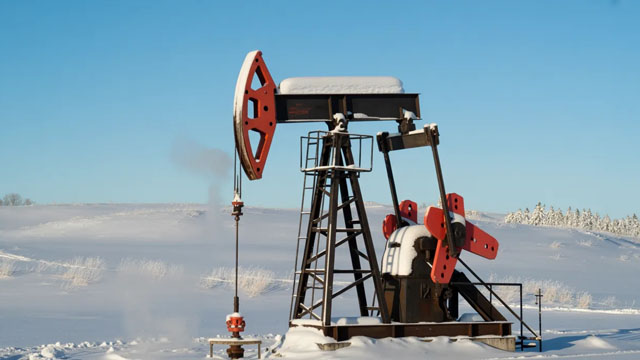
Halliburton Company

Halliburton Company (HAL) Market Cap

Halliburton Company has a market capitalization of $33.11B.

Financials based on reported quarter end 2025-12-31

Price: $39.65

0.54 (1.38%)

Market Cap: 33.11B

NYSE · time unavailable

CEO: Jeffrey Allen Miller

Sector: Energy

Industry: Oil & Gas Equipment & Services

IPO Date: 1972-06-01

Website: https://www.halliburton.com

Halliburton Company (HAL) - Company Information

Market Cap: 33.11B · Sector: Energy

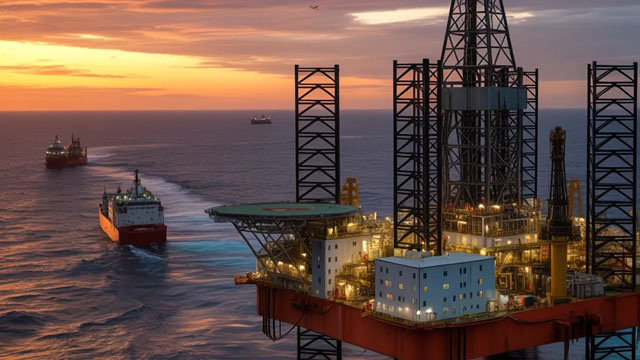
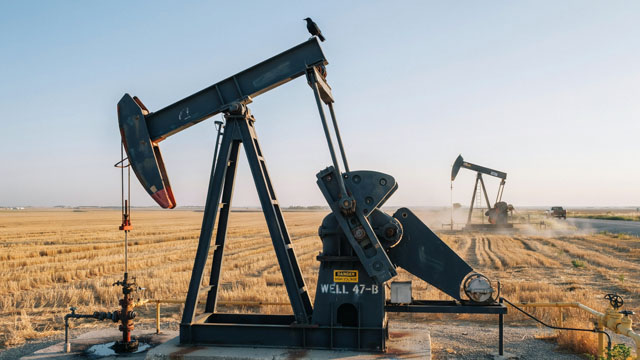
Halliburton Company provides products and services to the energy industry worldwide. It operates in two segments, Completion and Production, and Drilling and Evaluation. The Completion and Production segment offers production enhancement services that include stimulation and sand control services; cementing services, such as well bonding and casing, and casing equipment; completion tools that offer downhole solutions and services, including well completion products and services, intelligent well completions, and service tools, as well as liner hanger, sand control, and multilateral systems; production solutions comprising coiled tubing, hydraulic workover units, downhole tools, and pumping and nitrogen services; and pipeline and process services, such as pre-commissioning, commissioning, maintenance, and decommissioning. This segment also provides electrical submersible pumps, as well as artificial lift services. The Drilling and Evaluation segment offers drilling fluid systems, performance additives, completion fluids, solids control, specialized testing equipment, and waste management services; oilfield completion, production, and downstream water and process treatment chemicals and services; drilling systems and services; wireline and perforating services consists of open-hole logging, and cased-hole and slickline; and drill bits and services comprising roller cone rock bits, fixed cutter bits, hole enlargement, and related downhole tools and services, as well as coring equipment and services. This segment also provides cloud based digital services and artificial intelligence solutions on an open architecture for subsurface insights, integrated well construction, and reservoir and production management; testing and subsea services, such as acquisition and analysis of reservoir information and optimization solutions; and project management and integrated asset management services. Halliburton Company was founded in 1919 and is based in Houston, Texas.

Analyst Sentiment

72%
Strong Buy

Based on 64 ratings

Analyst 1Y Forecast: $32.50

Average target (based on 5 sources)

Consensus Price Target

Low

$29

Median

$37

High

$40

Average

$36

Downside: -8.1%

Price & Moving Averages

Loading chart...

📘 Full Research Report

ℹ️

AI-Generated Research: This report is for informational purposes only.

📘 Halliburton Company (HAL) — Investment Overview

🧩 Business Model Overview

Halliburton Company is one of the world’s largest providers of products and services to the energy industry, specializing predominantly in upstream oilfield services. The company operates in a broad range of oilfield-related domains, with core offerings that span drilling, evaluation, completion, production, and well intervention solutions. Its customer base primarily consists of integrated oil & gas majors, national oil companies, and independent exploration and production firms across the globe. With a presence in key hydrocarbon-producing regions worldwide, Halliburton’s operations are both extensive and diversified, supporting client projects in a wide variety of geographies and reservoir conditions.

💰 Revenue Model & Ecosystem

Halliburton’s revenue model is built upon a multi-stream approach, deriving income from services, engineering solutions, technology licensing, equipment rentals, and software platforms supporting oilfield exploration and development. The company provides field services—such as hydraulic fracturing, cementing, and directional drilling—supported by proprietary equipment and automation technologies. Software solutions for reservoir modeling and digital well management further strengthen client integration and increase the stickiness of the ecosystem. Revenue streams are predominantly enterprise-focused, catering to large-scale operators and multi-year development contracts, with an increasing tilt toward digital and consulting offerings that complement traditional field services.

🧠 Competitive Advantages

  • Brand strength: Halliburton’s legacy and extensive industry reputation position it as a go-to service provider among global energy operators.
  • Switching costs: Deep integration in client field operations and long-term contracts create significant switching costs for customers.
  • Ecosystem stickiness: Proprietary technologies and end-to-end workflows—from planning through production—entrench the company within client supply chains.
  • Scale + supply chain leverage: A global operating footprint and robust supplier relationships enable cost efficiencies and agile project delivery, while allowing rapid deployment of new technologies to core markets.

🚀 Growth Drivers Ahead

Key growth catalysts for Halliburton include the global demand for energy, increased upstream investment, and the ongoing digital transformation of the oilfield sector. The company is actively focused on expanding its portfolio of automation and digital subsurface solutions, which unlock efficiencies for customers and generate higher-value, recurring revenue streams. In addition, Halliburton is pursuing new opportunities in unconventional resource development and international markets, especially as certain regions ramp development activity. The growing emphasis on cost-effective extraction and environmentally responsible operations is also encouraging adoption of Halliburton’s advanced, lower-emission technologies and integrated service models.

⚠ Risk Factors to Monitor

Key risks include intense competition from both global and regional oilfield service providers, rapidly shifting commodity price environments, and customer capital discipline limiting spending on new projects. Regulatory scrutiny, especially regarding environmental and safety standards, represents an ongoing challenge that may affect operating costs or restrict certain activities. The energy sector’s secular transition toward renewables and alternative energy sources introduces long-term displacement risk, requiring adaptation and continuous innovation. Margin pressure due to cyclical service pricing and potential technological disruption by new entrants or by digital transformation are additional factors warranting ongoing attention.

📊 Valuation Perspective

Historically, Halliburton is valued by investors in relation to other diversified oilfield services peers, taking into account factors such as scale, technology portfolio, geographic exposure, and operational efficiency. The company’s valuation often reflects its ability to generate returns across industry cycles, with the market at times attaching a premium or discount based on management’s execution, balance sheet strength, and the sustainability of its order backlog relative to changing macro conditions and customer sentiment.

🔍 Investment Takeaway

The Halliburton investment thesis is defined by a strong brand, global scale, and an increasingly technology-driven offering suite, balanced by exposure to cyclical energy markets and evolving regulatory and competitive landscapes. The bull case centers on the company’s leadership in integrated oilfield services, technological innovation, and its ability to capture share as global energy demand recovers or transitions. The bear case highlights risks from commoditization of services, operational leverage in downturns, and potential secular headwinds as energy markets decarbonize. Investors should weigh Halliburton’s agility and strategic pivots against industry-specific risks and the pace of technological change when considering its long-term positioning.


⚠ AI-generated research summary — not financial advice. Validate using official filings & independent analysis.

Fundamentals Overview

Loading fundamentals overview...

📊 AI Financial Analysis

Powered by StockMarketInfo
Earnings Data: Q Ending 2026-03-31

"In Q1 2026, Halliburton reported revenue of $5.402 billion, a slight decrease from Q4 2025's $5.657 billion, but a marginal YoY increase from Q1 2025's $5.417 billion. Net income for Q1 2026 was $461 million, contrasted with $589 million in Q4 2025, but a substantial rise YoY from $204 million in Q1 2025. The company shows a mixed trend, with YoY revenue and net income growing, but QoQ declines. The EPS trend reflects similar movement. Margins show contraction given the drop in net income despite relatively stable revenue. HAL's asset base remained steady with slight QoQ growth, enhancing equity by Q1 2026. Dividend distributions remained consistent at $0.17/share per quarter with a payout ratio ranging around 30% recently. The company's market performance is noteworthy, with a remarkable 73.36% 1-year price increase. The current price of $37.15 is slightly above the target median, indicating positive market sentiment. These robust shareholder returns elevate the overall attractiveness of HAL shares."

Revenue Growth

Neutral

Revenue showed a marginal YoY increase but declined QoQ, indicating mixed growth signals.

Profitability

Positive

YoY improvement in net income, but EPS growth is inconsistent due to QoQ declines.

Cash Flow Quality

Good

Stable dividends with consistent payout ratios support strong cash flow evaluation.

Leverage & Balance Sheet

Positive

Total assets remained stable with minor growth, while equity showed improvement.

Shareholder Returns

Strong

Exceptional price gain of 73.36% over the year, bolstered by stable dividends.

Analyst Sentiment & Valuation

Good

Current price slightly above consensus target, reflecting positive sentiment.

Disclaimer:This analysis is AI-generated for informational purposes only. Accuracy is not guaranteed and this does not constitute financial advice.

Halliburton delivered steady top-line performance in Q1 2026 ($5.4B revenue, 13% operating margin) but with a meaningful mixed momentum profile: Completion & Production weakened (-3% revenue, -17% operating income) as North America stimulation and Middle East pressure/completions fell, only partially offset by Western Hemisphere tools and improved Africa pressure pumping. Drilling & Evaluation improved (+4% revenue) on Latin America project management and stronger Europe/Western Hemisphere drilling activity, offset by Middle East and Eastern Hemisphere softness. Management’s core narrative is a macro regime shift: supply overhang is “swept away,” structural demand persists, and energy security drives multi-year upstream/OFS capex. Near-term, however, the Middle East conflict still creates quantifiable per-share drag ($0.02–$0.03 in Q1; $0.07–$0.09 embedded for Q2 via logistics/fuel). Growth visibility is strengthened outside the Middle East through YPF’s Argentina award (Zeus + Octiv AutoFrac) and the Sekal acquisition enabling closed-loop automated geosteering.

AI IconGrowth Catalysts

  • YPF multibillion-dollar integrated completion services award in Argentina, deploying Zeus electric fracturing outside North America plus Octiv AutoFrac for electrification/automation/digital workflows
  • Sekal acquisition closing in rig automation; combined Halliburton LOGIX + Sekal Drilltronics enabling fully closed-loop automated geosteering (BHA, hydraulics, rig) with better-than-expected drilling times and improved reservoir contact
  • Collaborative offshore wins expanding early well-life-cycle alignment, including PETRONAS/Valaris strategic collaboration in Suriname

Business Development

  • YPF: multiyear, multibillion-dollar integrated completion services award in Argentina (first Zeus electric fracturing services outside North America) and inclusion of Octiv AutoFrac
  • PETRONAS (with Valaris): Suriname strategic collaboration agreement for offshore asset development; teams aligned early in the development cycle
  • Sekal: acquisition of global rig automation leader; combined automation platforms (LOGIX + Drilltronics) used offshore Guyana
  • VoltaGrid venture: international pursuit via venture/partnership activities referenced with customer inbounds/back-and-forth across Australia, Japan, Canada, and other regions

AI IconFinancial Highlights

  • Q1 total revenue $5.4B (flat YoY) with operating margin 13%; EPS (net income per diluted share) $0.55
  • Cash flow from operations $273M; free cash flow $123M; common stock repurchase $100M
  • Completion & Production: revenue $3.0B (-3% YoY), operating income $439M (-17% YoY), operating margin 15%; driven by lower North America stimulation and lower Middle East completion tool sales/pressure pumping, partially offset by Western Hemisphere completion tool sales and improved Africa pressure pumping
  • Drilling & Evaluation: revenue $2.4B (+4% YoY), operating income $351M (flat), operating margin 15%; driven by higher Latin America project management and increased drilling-related services in Europe/Western Hemisphere, partially offset by lower Middle East activity, lower Eastern Hemisphere wireline, and decreased fluid services in Gulf of America
  • Middle East conflict impact estimated at approximately $0.02 to $0.03 per share during Q1
  • Q2 embedded Middle East/logistics/fuel impact estimate: approximately $0.07 to $0.09 per share
  • Q2 guidance: Completion & Production sequential revenue +4% to +6%; margins improve 50 to 100 bps; Drilling & Evaluation sequential revenue flat to down 2%; margins decline 75 to 125 bps
  • Effective tax rate: Q1 18.5%; Q2 and full-year expected ~20% based on geographic earnings mix
  • Net interest expense: Q1 $82M lower than expected; Q2 expected +$5M
  • SAP S/4 migration: Q1 $42M; Q2 SAP expenses expected ~$45M

AI IconCapital Funding

  • Share repurchases: $100M in Q1 2026; management expects Q2 buybacks higher than Q1 and H2 higher than H1 (no explicit revised annual total provided in transcript)
  • Capital expenditures: Q1 $192M; full-year 2026 expected $1.1B; management reiterates staying within ~5% to 6% of revenue; CapEx above prior initial $1.0B guidance attributed to delayed capital equipment deliveries
  • VoltaGrid power deployment note: 400 megawatts referenced as “in the queue” but specifically stated not to happen in 2026, kept separate from 2026 CapEx

AI IconStrategy & Ops

  • North America operational recovery indicators: frac calendar white space in first half eliminated; uptick in inbound calls for spot work suggesting incremental demand and early capacity tightening
  • North America strategy: focus on returns not market share; improve returns of existing fleets before adding capacity; deploy Zeus IQ to improve recovery and iCruise to improve drilling efficiency
  • Middle East disruptions: Strait closure drives alternative supply chain routing increasing logistics cost; purchased materials/supplies price increases tied to conflict; management states disruptions are manageable via contract terms
  • Automation strategy: closed-loop automated geosteering combining Halliburton LOGIX with Sekal Drilltronics; claims better drilling times and improved reservoir contact
  • Offshore collaboration approach emphasized: earlier team alignment throughout well life cycle to win work in Guyana, Suriname, and other offshore markets

AI IconMarket Outlook

  • Full-year international revenue growth expected mid- to high-single digits for 2026, led by Latin America
  • Q2 guidance embedded Middle East impact: $0.07 to $0.09 per share
  • Q2 sequential: Completion & Production revenue +4% to +6%, margins +50 to +100 bps; Drilling & Evaluation revenue flat to down 2%, margins -75 to -125 bps
  • Q2 and full-year effective tax rate expected ~20%
  • Buyback seasonality: Q2 higher than Q1; H2 higher than H1 (timing relative to 2025 run rate described qualitatively)
  • Middle East recovery: timing/path to pre-conflict activity levels “unclear”; management describes operational readiness and that restart is well-by-well

AI IconRisks & Headwinds

  • Middle East conflict remains unresolved; guidance tied to unclear recovery path and continuing disruptions
  • Logistics cost and higher purchased materials/supplies prices driven by Strait closure; Q2 per-share cost impact embedded at $0.07 to $0.09
  • Equipment availability tightening risk acknowledged: premium fleets near-sold-out within “a handful” of dual-fuel-type fleets (tightness can help pricing, but execution depends on capacity/equipment flow)
  • North America winter weather delayed services in Permian and Northeast early in the quarter (mitigated later in-quarter)

Q&A: Analyst Interest

  • Middle East macro uncertainty: analyst asked how the unresolved Iran conflict shapes multi-quarter views after the last ~60 days. Management said the key change is supply overhang no longer a concern and structural demand remains intact; energy security shifts from rhetoric to multi-year activity drivers.
  • North America pricing/equipment tightness mechanics: analyst probed white-space shrink, E&P demand pick-up timing, and how much depends on the back end of the curve. Management confirmed Q2 white space “all but gone,” pull-forwards and inbound spot calls rising; H2 firming noted with next catalysts likely rig adds and longer frac discussions.
  • Share repurchase timing vs run rate: analyst asked why Q1 buyback ($100M) lagged prior ~$250M quarterly run rate and outlook for the rest of the year. CFO replied focus unchanged; intent to start lower due to macro/concern over Middle East activity speed. Q2 expected higher than Q1 and H2 higher than H1.

Sentiment: MIXED

Note: This summary was synthesized by AI from the HAL Q1 2026 earnings transcript. Financial data is complex; please verify all metrics against official SEC filings before making investment decisions.

Loading financial data and tables...
📁

SEC Filings (HAL)

© 2026 Stock Market Info — Halliburton Company (HAL) Financial Profile