Kosmos Energy Ltd.

Kosmos Energy Ltd. (KOS) Market Cap

Kosmos Energy Ltd. has a market capitalization of $1.36B.

Price: $2.81

-0.21 (-6.95%)

Market Cap: 1.36B

NYSE · time unavailable

CEO: Andrew G. Inglis

Sector: Energy

Industry: Oil & Gas Exploration & Production

IPO Date: 2011-05-11

Website: https://www.kosmosenergy.com

Kosmos Energy Ltd. (KOS) - Company Information

Market Cap: 1.36B|Sector: Energy

Company Profile

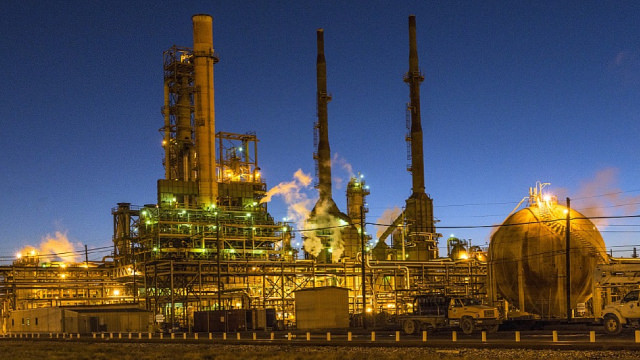
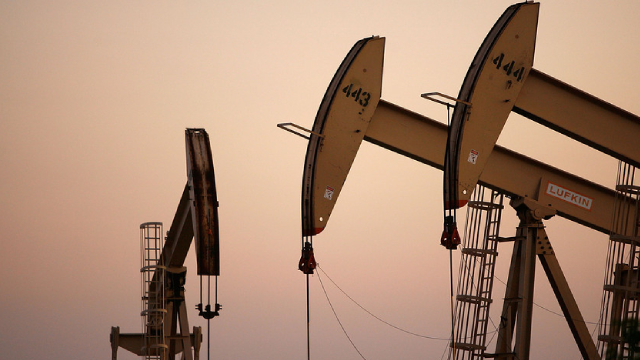
Kosmos Energy Ltd., a deep-water independent oil and gas exploration and production company, focuses along the Atlantic Margins. The company's primary assets include production offshore Ghana, Equatorial Guinea, and the U.S. Gulf of Mexico, as well as a gas development offshore Mauritania and Senegal. It also maintains a proven basin exploration program. The company was founded in 2003 and is headquartered in Dallas, Texas.

Analyst Sentiment

43%
Hold

From 12 Active Polls

1Y Forecast: $2.63

▼ -6.4% Potential Upside

Consensus Target Metrics

Low Bound

$2

Median

$3

High Bound

$3

Average

$3

Price & Moving Averages

Loading chart...

🎯 Wall Street Analyst Intelligence Report

1-Year structural target targets, chart projections, and sentiment maps.

Average 1Y Target
$2.63
▼ -6.41% Upside
Low Target
$2.40
-15% Risk
Median Target
$2.50
-11% Mid
High Target
$3.00
7% Max
Consensus
Buy
17 / 26 Buys

Consensus Trend Projection

Trailing closures vs. 12-month metrics map.

Analyst Vote Distribution

Aggregate institutional coverage sentiment weights.

📊 Historical Valuation Multiples

Real-time Trailing Twelve Month (TTM) momentum side-by-side with discrete quarterly metrics.

Fiscal QuarterTTMQ1 2026Q4 2025Q3 2025Q2 2025Q1 2025Q4 2024Q3 2024Q2 2024
Period EndingTrailing 12MMar 31, 2026Dec 31, 2025Sep 30, 2025Jun 30, 2025Mar 31, 2025Dec 31, 2024Sep 30, 2024Jun 30, 2024
Market Cap ($M)1,3641,4074347948221,0851,6141,9012,627
Enterprise Value ($M)4,2214,2653,4073,7223,6213,8824,2744,5425,048
Price to Earnings Ratio (P/E)-1.75-1.56-0.29-1.60-2.34-2.45-61.3310.5710.99
Price/Earnings-to-Growth Ratio (PEG)-0.04-0.071.45
Price to Sales Ratio (P/S)0.963.341.462.552.093.744.064.665.83
Price to Book Ratio (P/B)2.762.730.820.880.810.991.341.592.30
Price to Free Cash Flow Ratio (P/FCF)-19.5572.13-12.41-8.0218.42-11.90112.65-8.93-180.98
Enterprise Value to Sales (EV/Sales)10.1111.4611.969.2213.3810.7511.1411.20
Enterprise Value to EBITDA (EV/EBITDA)9.0116.95-202.2143.9924.2643.8132.6317.9620.42
Debt to Equity Ratio6.105.805.803.332.802.592.292.252.27
⚠️

Valuation Model Suspended

API Payload Error: Inverted or negative baseline Free Cash Flow margin detected (-9.3%).

Troubleshooting Notice: The upstream financial data supplier has uploaded corrupted or inverted baseline metrics for KOS. The server sandbox cannot calculate an intrinsic value path from negative cash generation baselines.

📘 Full Research Report

ℹ️

AI-Generated Research: This report is for informational purposes only.

📘 KOSMOS ENERGY LTD (KOS) — Investment Overview

🧩 Business Model Overview

Kosmos Energy is an upstream exploration and production company focused on developing and operating offshore oil and gas fields, with an emphasis on producing assets located in West Africa and adjacent basins. The value chain runs from (1) exploration and appraisal to identify recoverable hydrocarbon volumes, (2) development planning that ties reservoirs to production and export infrastructure, and (3) production operations that monetize volumes through sales and/or gas processing arrangements subject to local fiscal terms.

A key feature of upstream cash generation is that project economics depend not only on reservoir quality, but also on how efficiently production volumes can be delivered to market through existing logistical infrastructure (e.g., offshore production systems and export capabilities) and how predictable the fiscal and operating framework remains over time.

💰 Revenue Streams & Monetisation Model

Kosmos monetizes hydrocarbons through predominantly transactional sales of oil and condensate, with additional contributions from natural gas and related products depending on field-specific commercialization pathways. Revenue is largely a function of:

  • Production volumes (field output, uptime, and decline management)
  • Realized pricing (linked to global crude benchmarks and regional differentials)
  • Product mix (oil versus gas/NGL contributions)
  • Fiscal and cost structure (royalties, production sharing economics, operating and transportation costs)

Margin drivers are primarily lifting and operating costs, transportation and processing fees, and the share of revenues retained after local taxes/royalties and production sharing terms. Because upstream production is physically tied to infrastructure and reservoir performance, the business does not fit a classic “recurring revenue” model; instead, cash flow stability is more dependent on portfolio maturity and infrastructure readiness than on contractual repetition.

🧠 Competitive Advantages & Market Positioning

Kosmos’ competitive position is best understood through geographic cost advantage and logistical infrastructure rather than traditional switching costs. Offshore assets that are connected to established production and export pathways can achieve lower realized unit costs versus greenfield developments that require full infrastructure builds.

In West Africa, where development requires significant upfront capital and careful management of operational and regulatory variables, the practical barriers to replication are high. Once infrastructure and field operations are in place, the incremental cost to sustain production can be meaningfully lower than the cost to restart an equivalent project from exploration to first production.

  • Competitor set: West African and offshore independents/majors such as Tullow Oil, TotalEnergies, and ExxonMobil.
  • Contrast: Majors like TotalEnergies and ExxonMobil bring larger balance sheets and diversified regional portfolios, which can support faster capital deployment and lower cost of capital. Tullow Oil has historically competed in similar offshore regions with exploration-to-development risk. Kosmos’ positioning emphasizes smaller, more focused development strategies, where execution around infrastructure tie-ins, disciplined cost control, and reservoir advancement are central to competitive outcomes.

Moat articulation (hard-to-copy economics): Kosmos benefits from (1) resource access in geologically prospective basins, (2) infrastructure linkage that can reduce unit transport and commercialization friction, and (3) operational know-how accumulated through offshore development cycles—factors that increase the cost and time for competitors to match production performance in the same geographic arenas.

🚀 Multi-Year Growth Drivers

Over a 5–10 year horizon, the investment case typically hinges on extending field life, adding incremental volumes, and sustaining exploration success. Structural drivers include:

  • Portfolio reinvestment and development momentum: appraisal-to-development conversion and value-accretive tie-ins that leverage existing platforms and logistical routes.
  • Regional resource potential: West African basins offer multi-cycle exploration opportunities, where new discoveries and extensions can broaden the production base.
  • Infrastructure leverage: developments that connect to established offshore production/export systems can improve project returns versus fully standalone facilities.
  • Capital discipline and partner optionality: upstream economics reward project selection that respects fiscal terms, unit cost targets, and execution risk—especially where local partners and service providers shape delivery timelines.

Because hydrocarbon pricing drives revenue, volume and cost execution are the controllable levers that determine how much value the company can extract from each development cycle.

⚠ Risk Factors to Monitor

  • Commodity price volatility: realized oil and gas prices can swing substantially, compressing margins even when operating performance holds.
  • Reservoir and development risk: exploration success rates, appraisal uncertainty, and engineering/production uptime variability can affect timelines and ultimate recoverable volumes.
  • Fiscal and regulatory exposure: changes to production sharing terms, royalties, tax regimes, environmental permitting, and export/commercialization requirements can alter project economics.
  • Geopolitical and operating environment risks: offshore operations in developing jurisdictions can face constraints around logistics, supply chains, and administrative continuity.
  • Capital intensity and funding risk: large development and infrastructure commitments require sustained access to capital and disciplined prioritization across multiple prospects.
  • ESG and carbon regulatory pressures: stricter emissions requirements and flaring/operational constraints can increase costs or delay operations.

📊 Valuation & Market View

Equity markets commonly value upstream oil and gas producers using asset-based and cash-flow sensitive frameworks rather than simple earnings multiples. Typical valuation approaches include:

  • EV/EBITDAX and cash flow metrics: value is sensitive to margins and production volumes net of operating and transportation costs.
  • Discounted cash flow (DCF): relies on assumptions for oil/gas price curves, production profiles, capital plans, and fiscal terms.
  • Net asset value (NAV) / proved-reserves economics: resource quality, field cost curves, and development timing drive NAV outcomes.

Key variables that move the valuation needle tend to include proved/likely reserve conversion, unit operating cost performance, execution against development schedules, and changes to fiscal or commercialization terms that affect netbacks.

🔍 Investment Takeaway

Kosmos’ long-term thesis is anchored in offshore West African asset execution supported by geographic cost advantage and logistical infrastructure leverage. The primary question for investors is whether the company can consistently convert exploration and appraisal work into value-accretive development volumes while maintaining operational reliability and cost discipline under variable commodity pricing and evolving regulatory conditions.


⚠ AI-generated — informational only. Validate using filings before investing.

📰 Market News & Coverage

15 Stories Available

Real-time institutional reporting and market updates for KOS.

247wallst.com2026-06-03

As Energy M&A Heats Up, These 3 Smaller Players Are Prime Takeover Candidates

Energy sector M&A is hot again. With West Texas Intermediate (WTI) crude recently trading at $94.77 per barrel and the EIA's May 2026 Short-Term Energy Outlook projecting continued growth in Permian output, larger operators are hunting for accretive bolt-ons, scarcity acreage, and discounted offshore portfolios.

seekingalpha.com2026-05-12

Kosmos 1Q26 Review: Why The 16% Post-Earnings Drop Is A Gift

Kosmos Energy Ltd. (KOS) reported Q1 2026 EPS of -$0.07, missing consensus of $0.08 and triggering a 6% pre-market decline. My BUY rating remain, and increased the price target from $4.97 to $7.26 on the back of higher oil prices. Management demonstrated Turnaround progress with annualized oil production increasing more than 20% YoY.

marketbeat.com2026-05-11

Kosmos Energy Q1 Earnings Call Highlights

Kosmos Energy NYSE: KOS said first-quarter production rose to a company record as the ramp-up of Greater Tortue Ahmeyim and new wells at Jubilee lifted volumes, while management said the company is ahead of schedule on its 2026 debt-reduction plans.

gurufocus.com2026-05-07

Jeremy Grantham Reduces Stake in Kosmos Energy Ltd

On March 31, 2026, Jeremy Grantham (Trades, Portfolio) executed a significant reduction in holdings of Kosmos Energy Ltd (KOS). The transaction involved a decre

zacks.com2026-05-06

Kosmos Energy (KOS) Upgraded to Buy: What Does It Mean for the Stock?

Kosmos Energy (KOS) might move higher on growing optimism about its earnings prospects, which is reflected by its upgrade to a Zacks Rank #2 (Buy).

seekingalpha.com2026-05-05

Kosmos Energy Ltd. (KOS) Q1 2026 Earnings Call Transcript

Kosmos Energy Ltd. (KOS) Q1 2026 Earnings Call Transcript

globenewswire.com2026-05-05

Kosmos Energy Announces First Quarter 2026 Results

DALLAS, May 05, 2026 (GLOBE NEWSWIRE) -- Kosmos Energy Ltd. (“Kosmos” or the “Company”) (NYSE/LSE: KOS) announced today its financial and operating results for the first quarter of 2026.

globenewswire.com2026-04-15

Kosmos Energy to Host First Quarter 2026 Results and Webcast on May 5, 2026

DALLAS, April 15, 2026 (GLOBE NEWSWIRE) -- Kosmos Energy (NYSE/LSE: KOS) announced today the following schedule for its first quarter 2026 results:

seekingalpha.com2026-04-13

Kosmos Energy: An O&G Company Still Priced For Disaster After A 180% Rally

Kosmos Energy is a midcap offshore oil and gas company with operations off Africa and in the Gulf of America. KOS experienced an 60% drawdown due to high leverage and persistent negative cash flow generation. I analyze the company's financial backstory to understand the drivers behind its current distressed position.

fool.com2026-04-06

Stock Market Today, April 6: Kosmos Energy Rises to 52-Week High as Shares Outpace Analyst Targets

Expand NYSE: KOS Kosmos Energy Today's Change (6.16%) $0.18 Current Price $3.10 Key Data Points Market Cap $1.7B Day's Range $2.88 - $3.17 52wk Range $0.84 - $3.17 Volume 39M Avg Vol 27M Gross Margin -1458.78% Kosmos Energy (KOS +6.16%), deepwater Atlantic oil and gas producer, closed Monday at $3.10, up 6.36%. The stock advanced after multiple reports highlighted new 52-week highs and reiterated neutral analyst views.

defenseworld.net2026-04-06

Kosmos Energy Ltd. (NYSE:KOS) Given Average Recommendation of “Hold” by Brokerages

Kosmos Energy Ltd. (NYSE: KOS - Get Free Report) has received a consensus recommendation of "Hold" from the nine ratings firms that are currently covering the firm, Marketbeat.com reports. Two analysts have rated the stock with a sell rating, five have issued a hold rating and two have assigned a buy rating to the company. The

defenseworld.net2026-04-04

Kosmos Energy (NYSE:KOS) Shares Gap Up – What’s Next?

Shares of Kosmos Energy Ltd. (NYSE: KOS - Get Free Report) gapped up prior to trading on Thursday. The stock had previously closed at $2.69, but opened at $2.93. Kosmos Energy shares last traded at $2.98, with a volume of 5,678,729 shares traded. Analysts Set New Price Targets A number of analysts recently weighed in

defenseworld.net2026-03-27

Kosmos Energy (NYSE:KOS) Shares Up 8.3% on Analyst Upgrade

Kosmos Energy Ltd. (NYSE: KOS - Get Free Report) shares were up 8.3% during trading on Thursday after Johnson Rice upgraded the stock from an accumulate rating to a buy rating. Johnson Rice now has a $4.25 price target on the stock. Kosmos Energy traded as high as $2.93 and last traded at $2.88. Approximately 6,357,492

fool.com2026-03-24

Director Loads Up With 3.2 Million Shares of Kosmos Energy

Adebayo Ogunlesi acquired 3,157,895 common shares for a total of ~$6.0 million on March 10, 2026, at around $1.90 per share. This transaction increased his direct common stock holdings by 173.87%, taking direct ownership from 1,816,289 to 4,974,184 shares.

defenseworld.net2026-03-20

Kosmos Energy Sees Unusually Large Options Volume (NYSE:KOS)

Kosmos Energy Ltd. (NYSE: KOS - Get Free Report) saw some unusual options trading on Thursday. Investors purchased 16,738 call options on the company. This is an increase of 109% compared to the typical daily volume of 8,002 call options. Analyst Ratings Changes Several research firms have recently weighed in on KOS. Weiss Ratings reiterated a

📊 AI Financial Analysis

Powered by StockMarketInfo
Earnings Data: Q Ending 2026-03-31

"KOS (most recent: 2026-03-31) reported Revenue of $371.0M and EPS of -$0.45, with Net Income of -$225.6M (net margin: -60.8%). On a QoQ basis, revenue rose from $297.4M (2025-12-31) to $370.9M (+24.8%), while losses widened: net income fell from -$377.1M to -$225.6M (i.e., loss magnitude improved by ~40.2%). On a YoY basis, revenue increased from $290.1M (2025-03-31) to $370.9M (+27.9%), and net income was less negative than -$110.6M (YoY net income deteriorated by ~104.0% vs last year). Profitability remains unstable across the last four quarters: margins swung from positive/near-break-even in Q3’25 and early Q2’25 to deeply negative again in Q4’25 and Q1’26. Cash flow, however, looks better this quarter: operating cash flow was +$106.6M and free cash flow was +$106.6M, versus -$34.98M free cash flow in Q4’25. Balance-sheet resilience has improved vs the immediately prior quarter: total assets rose modestly to $4.78B, while equity increased to $0.52B from $0.53B, and net debt turned much less severe (-$99.7M net debt vs $2.97B prior quarter). Total shareholder returns are strongly positive: price is up 49.4% over 1 year (with no dividend). With 1Y momentum exceeding 20%, sentiment/expectations appear to be improving despite ongoing profitability challenges. Valuation context: current price ~$2.48 versus consensus target ~$2.42 implies near-market valuation with wide upside/downside ranges."

Revenue Growth

Positive

Revenue rose QoQ from $297.4M to $370.9M (+24.8%) and is up YoY from $290.1M to $370.9M (+27.9%), indicating solid top-line momentum despite quarter-to-quarter volatility in profitability.

Profitability

Neutral

Net margin remains deeply negative at -60.8% in Q1’26. While QoQ losses improved (net income -$377.1M to -$225.6M), YoY losses worsened vs -$110.6M last year. Over the 4-quarter window, margins have swung sharply, suggesting unstable operating profitability.

Cash Flow Quality

Positive

Q1’26 delivered positive operating cash flow (+$106.6M) and positive free cash flow (+$106.6M), a clear improvement from Q4’25 (free cash flow -$35.0M). Net income is negative, but cash generation this quarter supports near-term liquidity.

Leverage & Balance Sheet

Neutral

Total assets increased to $4.78B QoQ and equity was roughly stable ($0.52B vs $0.53B). Notably, net debt improved dramatically to -$99.7M (net cash) from $2.97B prior quarter, improving balance-sheet resilience, though retained earnings remain highly negative.

Shareholder Returns

Strong

Strong capital appreciation: 1-year price change is +49.4% (well above the 20% momentum threshold). Dividend is 0, and buybacks are not indicated, so returns are primarily price-driven.

Analyst Sentiment & Valuation

Fair

Consensus price target (~$2.42) is close to the current price (~$2.48), implying limited near-term upside in base case. However, targets range from $1.50 to $3.50, indicating high uncertainty/optionality.

Disclaimer:This analysis is AI-generated for informational purposes only. Accuracy is not guaranteed and this does not constitute financial advice.

Fundamentals Overview

Loading fundamentals overview...

Kosmos delivered a strong start to 2026 with record Q1 production of 75,000 BOE/d (+25% YoY) and materially lower costs (OpEx just under $20/BOE, -47% YoY). Management tied the cost improvement to portfolio high-grading (Equatorial Guinea sale and TEN FPSO lease-cost effects) and ongoing GTA cost takeouts as volumes ramp. While realized prices were slightly lower YoY, the company emphasized a contractual lag: higher Dated Brent/benchmark differentials since late Q1 should flow through to results in 2Q and 3Q. Jubilee is on track to sustain growth despite a planned 2Q gap in new additions, with June/July wells expected to add ~20,000 bpd gross before decline. Financially, liquidity improved to ~$500m post bond, note repurchases, and an equity raise, supporting deleveraging and an announced mid-year EG sale. Key near-term risks are Q2 seasonality/Winterfell-2 and derivative-driven earnings optics, not cash stress.

AI IconGrowth Catalysts

  • Ramp-up of GTA and Jubilee drove record quarterly production of 75,000 BOE/d in Q1
  • Jubilee drilling campaign: J74 online early 2026 and J75 online by end of quarter; 3 producer wells due online in June/July expected to add ~20,000 bpd gross before natural decline in Q4
  • GTA output exceeded LNG floating nameplate capacity: ~2.85 mtpa vs 2.7 mtpa, with 9.5 gross LNG cargos lifted in Q1
  • Tiberius FID: Kosmos-operated Tiberius development (50/50 with Oxy) with first oil expected in 2H 2028; drill first prospect in 1H 2027 and target ~200 mmboe gross resource
  • GTA Phase 1 expansion progress in Senegal: ~50% of onshore northern segment cleared; remaining 50% expected this quarter; pipelines exported from China in May with Senegal arrival around mid-year

Business Development

  • Strategic exploration alliance with Shell in the Gulf of America; exchanged interests across multiple blocks in the North Pole play; first well (Tiberius) expected in 1H 2027
  • Jubilee partnership: operator refinancing earlier in the year plus commitment to drill in '27 and '28 with rig program up to 10 wells; restart targeted around mid-2027
  • Tiberius farm-out process underway to reduce Kosmos working interest to around a third (after FID taken with Oxy as 50/50 partner)
  • GTA condensate cargo sales: one Q1 condensate cargo lifted by BP; second/third later in year (including one Q1) expected to be assigned to Kosmos and NOCs
  • Yakaar-Teranga: Kosmos relinquished; government picked up development with Petrosen leading; provides domestic gas source for Senegal

AI IconFinancial Highlights

  • Production up ~25% YoY; record production 75,000 BOE/d in Q1
  • Absolute operating costs down ~22% YoY; OpEx just under $20/BOE, down 47% YoY
  • Realized price slightly lower YoY due to production mix (more GTA gas volumes) and pricing lag; full benefit from late Q1 pricing expected in 2Q and 3Q
  • Tax impacted by large mark-to-market change in derivatives (rather than operational tax changes); cash taxes only paid in Ghana currently (US net operating losses; cost recovery at GTA)
  • Q2 guidance: production expected slightly lower than Q1 due to GTA seasonality and lower Gulf of America output after Winterfell-2 shut-in
  • Ghana Q2 guidance: 3 to 4 cargos including a TEN cargo; TEN FPSO lease payments increase Q2 OpEx with normalization expected in Q3/Q4
  • Jubilee Q2 cargo timing: one Jubilee cargo expected at very end of quarter; aligns with 3–4 cargo range for Ghana guidance

AI IconCapital Funding

  • January financing: completed $350 million Nordic bond; repurchased $250 million of 2027 notes with proceeds
  • January bank facility: paid down $100 million of the bank facility; remaining proceeds from bond
  • March: raised around $200 million of equity during a share price rally; used to accelerate debt paydown
  • Liquidity: exited quarter with around $500 million of liquidity post transactions; additional liquidity expected from EG sale and free cash flow
  • RBL: covenant waiver approved through mid-year; banks approved sale of producing assets in Equatorial Guinea expected to close around mid-year; proceeds intended for further facility paydown
  • Hedging: targeting more hedges in 2027 at higher floors and higher ceilings than existing 2027 hedges

AI IconStrategy & Ops

  • 2026 goals tracking: production growth, cost reduction (focus on operating costs), net debt reduction, and advancing growth portfolio with minimal CapEx
  • Cost initiatives explicitly tied to portfolio high-grading: Equatorial Guinea asset sale and TEN FPSO lease cost reduction cited as major drivers of OpEx improvements
  • GTA: ongoing reduction in operating costs driven by ramp-up and removal of additional start-up-related costs from last year; per BOE/MMBTU economics improve as production ramps
  • Jubilee operations: efficiency enhancement via drilling a series of wells before completing them simultaneously, creating a 2Q gap in new production additions; completions/production expected to resume via June/July well starts
  • Gulf of America: Winterfell-2 shut in April pending future intervention; full-year Gulf of America production now expected toward the lower end of guidance
  • Farming out Tiberius: commenced to reduce working interest to ~one-third

AI IconMarket Outlook

  • Pricing structure commentary: Dated Brent premium over WTI has more than tripled since Middle East conflict breakout; however, contractual pricing lags mean higher realized prices impact financials in 2Q/3Q
  • Full-year 2026 guidance unchanged: production growth remains close to ~15% target; operating cost reduction target maintained with confidence to meet/exceed 20% reduction (targeting ~35% YoY operating cost reduction for BOE)
  • Production milestone: with EG sale expected to close around mid-year, updated production phasing implies growth closer to the ~15% target remains achievable
  • Leverage/ratings: Fitch upgraded corporate rating to B- (discussion ongoing with S&P)

AI IconRisks & Headwinds

  • Pricing timing risk: realized price lag from contract structures means higher commodity benchmarks won’t fully translate until 2Q/3Q
  • Derivative volatility affecting earnings optics: Q1 tax impacted by large mark-to-market change in derivatives; cash derivative outflow limited to ~$30m despite ~$250m mark-to-market loss
  • Q2 production headwinds: GTA seasonal volume decline and Winterfell-2 shut-in reduce Q2 vs Q1 production
  • Ghana cost volatility: TEN cargo in Q2 implies higher accrued OpEx due to TEN FPSO lease payments; OpEx expected to normalize in Q3/Q4
  • Hedging/price sensitivity: final outcome depends on realized Dated Brent for remaining 2026 exposure; stronger physical upside may be larger as hedges step down into Q3/Q4

Q&A: Analyst Interest

  • Jubilee seismic inputs and timing: Management said the OBN seismic impacts mainly the '27–'28 program, while the '26 drilling program is already leveraging 4D NAS. Early OBN products will inform later selections, enabling continuous seismic-quality upgrades and ongoing derisking of future drilling—supporting economically strong wells.
  • GTA cost-reduction mechanics to hit 20% OpEx reduction: Management attributed the 20% 2026 reduction to portfolio high-grading (Equatorial Guinea sale and TEN lease-cost removal) plus ongoing GTA cost takeouts from ramp-up and removing start-up-related costs. They also noted potential 2027 synergies from operating-model changes and dual FPSO capability.
  • Derivatives and 2026 impact on cash vs mark-to-market: Management quantified a ~$250m Q1 mark-to-market loss on derivatives versus ~$50m opening asset, explaining ~$30m cash cost due to January/February hedge payouts. Exposure is heavier in Q2 with remaining 6m barrels; they are adding 2027 downside protection and expect Q2 to benefit from greater physical volume.

Sentiment: POSITIVE

Note: This summary was synthesized by AI from the KOS Q1 2026 earnings transcript. Financial data is complex; please verify all metrics against official SEC filings before making investment decisions.

📋 Official Regulatory 10-K / 10-Q SEC Filings

Direct authenticated documentation links to audited SEC database reports for KOS.

SEC EDGAR Live Feed
Loading financial data and tables...
📁

SEC Filings (KOS)

© 2026 Stock Market Info — Kosmos Energy Ltd. (KOS) Financial Profile