ProPetro Holding Corp.

ProPetro Holding Corp. (PUMP) Market Cap

ProPetro Holding Corp. has a market capitalization of $1.81B.

Price: $14.74

-1.73 (-10.50%)

Market Cap: 1.81B

NYSE · time unavailable

CEO: Samuel D. Sledge

Sector: Energy

Industry: Oil & Gas Equipment & Services

IPO Date: 2017-03-17

Website: https://www.propetroservices.com

ProPetro Holding Corp. (PUMP) - Company Information

Market Cap: 1.81B|Sector: Energy

Company Profile

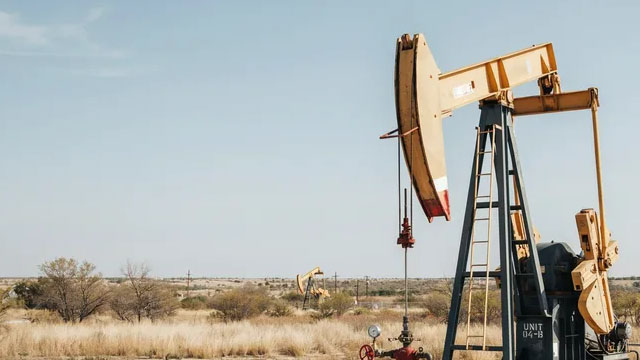
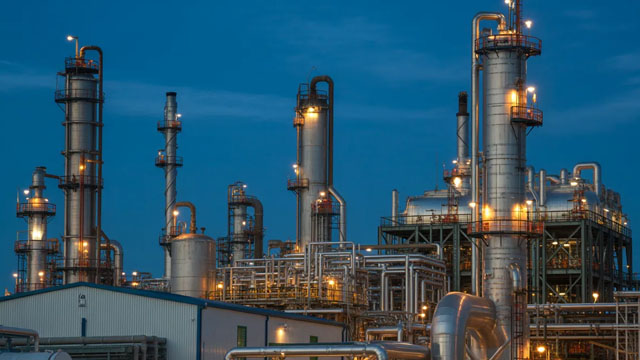
ProPetro Holding Corp., an oilfield services company, provides hydraulic fracturing and other related services. The company operates through Pressure Pumping and All Other segments. It offers cementing, acidizing, and coiled tubing services. The company serves oil and gas companies engaged in the exploration and production of North American oil and natural gas resources. As of December 31, 2021, its fleet comprised 12 hydraulic fracturing units with 1,423,000 hydraulic horsepower. ProPetro Holding Corp. was founded in 2007 and is headquartered in Midland, Texas.

Analyst Sentiment

81%
Strong Buy

From 12 Active Polls

1Y Forecast: $15.75

▲ +6.9% Potential Upside

Consensus Target Metrics

Low Bound

$13

Median

$15

High Bound

$20

Average

$16

Price & Moving Averages

Loading chart...

🎯 Wall Street Analyst Intelligence Report

1-Year structural target targets, chart projections, and sentiment maps.

Average 1Y Target
$15.75
▲ +6.85% Upside
Low Target
$13.00
-12% Risk
Median Target
$15.00
2% Mid
High Target
$20.00
36% Max
Consensus
Buy
19 / 30 Buys

Consensus Trend Projection

Trailing closures vs. 12-month metrics map.

Analyst Vote Distribution

Aggregate institutional coverage sentiment weights.

📊 Historical Valuation Multiples

Real-time Trailing Twelve Month (TTM) momentum side-by-side with discrete quarterly metrics.

Fiscal QuarterTTMQ1 2026Q4 2025Q3 2025Q2 2025Q1 2025Q4 2024Q3 2024Q2 2024
Period EndingTrailing 12MMar 31, 2026Dec 31, 2025Sep 30, 2025Jun 30, 2025Mar 31, 2025Dec 31, 2024Sep 30, 2024Jun 30, 2024
Market Cap ($M)1,8071,685990545620759961798897
Enterprise Value ($M)1,8381,7151,1486807138681,0869231,006
Price to Earnings Ratio (P/E)-138.74-115.61333.71-57.59-21.6719.77-14.07-1.45-61.28
Price/Earnings-to-Growth Ratio (PEG)1.63-1.35
Price to Sales Ratio (P/S)1.536.223.421.851.902.113.002.212.51
Price to Book Ratio (P/B)1.741.701.190.660.750.921.180.960.92
Price to Free Cash Flow Ratio (P/FCF)-161.82-41.4667.11-228.9236.3155.1295.91-133.4813.25
Enterprise Value to Sales (EV/Sales)6.343.962.312.192.423.392.562.82
Enterprise Value to EBITDA (EV/EBITDA)11.5653.8724.9116.7117.6714.2037.20-7.5516.15
Debt to Equity Ratio0.190.190.300.240.200.210.210.210.18
⚠️

Valuation Model Suspended

API Payload Error: Inverted or negative baseline Free Cash Flow margin detected (-5.6%).

Troubleshooting Notice: The upstream financial data supplier has uploaded corrupted or inverted baseline metrics for PUMP. The server sandbox cannot calculate an intrinsic value path from negative cash generation baselines.

📘 Full Research Report

ℹ️

AI-Generated Research: This report is for informational purposes only.

📘 PROPETRO HOLDING CORP (PUMP) — Investment Overview

🧩 Business Model Overview

ProPetro is a U.S.-focused oilfield services provider centered on pressure pumping and well stimulation, delivering stimulation services that enable producers to complete and sustain production from unconventional reservoirs. The operating model is asset- and execution-driven: ProPetro contracts with upstream operators to perform multi-stage well services using pressure pumping fleets (blenders/irrigation equipment, pumps, and related infrastructure) and trained field personnel. Revenue is generated per service execution, while profitability depends on equipment availability, fleet utilization, and the efficiency of scheduling, sourcing, and execution across locations.

💰 Revenue Streams & Monetisation Model

  • Transactional, job-based stimulation revenue: Pricing is typically tied to the scope and intensity of stimulation work (e.g., stages/meters pumped, horsepower/fleet usage, and field-specific inputs), resulting in revenue that moves with drilling and completion activity.
  • Operational leverage through utilization: While contracts are largely transactional, margins improve when fleets are kept busy and downtime is minimized. Better fleet planning converts fixed and semi-fixed cost bases into higher incremental margins.
  • Margin drivers: (1) service pricing and customer mix, (2) logistics efficiency (staging, turnaround times, and transport), (3) input procurement and blending efficiency, and (4) labor productivity and safety performance that reduces operational disruptions.

🧠 Competitive Advantages & Market Positioning

ProPetro’s competitive position is best characterized as a combination of execution moat and operational switching costs, supported by asset ownership and geographic responsiveness.

  • High switching costs / qualification friction: Upstream operators award stimulation work based on track record, safety performance, quality of execution, and operational reliability. Requalification and performance risk discourage frequent provider changes, increasing customer stickiness for active programs.
  • Asset-intensity and fleet economics: Owning and operating stimulation fleets creates a scale advantage in planning and execution, with the ability to optimize utilization and maintenance schedules. Competitors that must rely on higher-cost outsourcing or intermittent availability face margin headwinds.
  • Logistical infrastructure in core basins: ProPetro’s focus on major North American unconventional regions supports faster deployment and improved turnaround efficiency through established field operations and supply coordination (equipment staging, local sourcing, and crew readiness).

Competitive benchmarking: Major integrated service providers—Halliburton, Schlumberger, and Baker Hughes—compete across broader international and service lines, often mixing stimulation with a diversified portfolio. ProPetro’s positioning differs by emphasizing U.S. land stimulation execution and operational focus rather than a fully diversified global platform.

🚀 Multi-Year Growth Drivers

  • Unconventional resource development persists: The need for stimulation services remains structurally linked to maintaining well productivity and inventory development in North American shale plays.
  • Stimulation intensity and well complexity: Longer laterals, higher stage counts, and evolving completion designs typically support greater demand for pumping hours and service execution per well, even when drilling pace varies.
  • Operational outsourcing and specialization: Upstream operators often rely on specialized service providers for capacity, reliability, and throughput—particularly when execution speed and safety performance are critical.
  • TAM expansion through completions optimization: As operators optimize well economics, stimulation programs can shift in mix and design, sustaining demand for providers that can execute efficiently across changing job parameters.

⚠ Risk Factors to Monitor

  • Cyclical customer capex: Stimulation activity is closely tied to upstream drilling and completion budgets, which respond to commodity price levels and capital availability.
  • Utilization and pricing pressure: During slower activity periods, industry capacity can exceed demand, leading to utilization declines and pricing concessions.
  • Capital intensity and fleet management: Maintenance, rebuilds, and capacity additions require disciplined capital allocation; overbuilding relative to market demand can impair returns.
  • Regulatory and environmental compliance: Water handling, emissions controls, chemical disclosure, and local permitting requirements can increase costs and constrain operating flexibility.
  • Execution and safety risk: Operational disruptions, mechanical failures, or safety incidents can reduce throughput and lead to reputational or contractual consequences.

📊 Valuation & Market View

Oilfield services are typically valued on cash flow capacity through EV/EBITDA or enterprise value multiples, with meaningful emphasis on cycle-adjusted profitability and operating leverage. Market expectations generally move with:

  • Utilization and margin trajectory: Incremental margins expand as fleets operate closer to capacity.
  • Customer activity visibility: Contract mix and the durability of completion demand influence earnings durability assumptions.
  • Balance sheet resilience: Leverage and liquidity affect how well the company can fund fleet upkeep and absorb downturn pricing.
  • Operational reliability metrics: Consistent execution tends to support pricing power and re-contracting with key operators.

Given the sector’s cyclicality, investors typically differentiate providers based on fleet efficiency, cost structure, and ability to maintain competitive position through downturns.

🔍 Investment Takeaway

ProPetro’s long-term value proposition rests on stimulation execution capability, fleet utilization economics, and customer stickiness driven by qualification and operational switching costs. In North American unconventional basins, stimulation demand is supported by structural well maintenance requirements and ongoing completion complexity. The primary investment challenge is managing the service cycle—specifically utilization swings and pricing pressure—while preserving fleet economics and compliance discipline.


⚠ AI-generated — informational only. Validate using filings before investing.
📰 Market News & Coverage

15 Stories Available

Real-time institutional reporting and market updates for PUMP.

businesswire.com2026-05-04

ProPetro Holding Corp. Prices Upsized $600 Million Convertible Senior Notes Offering

MIDLAND, Texas--(BUSINESS WIRE)--ProPetro Holding Corp. Prices Upsized $600 Million Convertible Senior Notes Offering.

zacks.com2026-05-04

ProPetro Holding Posts Narrower-Than-Expected Q1 Loss, Sales Beat

PUMP expects 2026 capital expenditures of $540-$610 million, while PROPWR anticipates capital spending of approximately $400-$450 million.

businesswire.com2026-05-04

ProPetro Holding Corp. Announces Proposed Convertible Senior Notes Offering to Optimize Capital Structure

MIDLAND, Texas--(BUSINESS WIRE)--ProPetro Holding Corp. Announces Proposed Convertible Senior Notes Offering to Optimize Capital Structure.

seekingalpha.com2026-04-30

ProPetro Holding Corp. (PUMP) Q1 2026 Earnings Call Transcript

ProPetro Holding Corp. (PUMP) Q1 2026 Earnings Call Transcript

zacks.com2026-04-30

ProPetro Holding (PUMP) Reports Q1 Loss, Tops Revenue Estimates

ProPetro Holding (PUMP) came out with a quarterly loss of $0.03 per share versus the Zacks Consensus Estimate of a loss of $0.12. This compares to earnings of $0.09 per share a year ago.

businesswire.com2026-04-30

ProPetro Reports Financial Results for the First Quarter of 2026

MIDLAND, Texas--(BUSINESS WIRE)--ProPetro Reports Financial Results for the First Quarter of 2026.

prnewswire.com2026-04-29

PROPWR Secures Strategic Framework Agreement with Caterpillar Inc.

Agreement Enables Acquisition of Up to 2.1 Gigawatts of Incremental Power Generation Capacity by 2031 IRVING, Texas, April 29, 2026 /PRNewswire/ -- ProPetro Holding Corp. (NYSE: PUMP) ("ProPetro") today announced that its PROPWR business unit has entered into a strategic framework agreement with Caterpillar Inc. (NYSE: CAT) to purchase up to 2.1 gigawatts of power generation assets to support the growing energy demands of data center, oil and gas and industrial customers with efficient, reliable solutions. "We are pleased to build upon the strong momentum PROPWR has established since its inception.

businesswire.com2026-04-29

PROPWR Secures Strategic Framework Agreement with Caterpillar Inc.

MIDLAND, Texas--(BUSINESS WIRE)--PROPWR Secures Strategic Framework Agreement with Caterpillar Inc.

zacks.com2026-04-28

Factors You Need to Know Ahead of ProPetro's Q1 Earnings Release

PUMP expects Q1 loss and revenue drop as weaker activity and cost pressures weigh despite late-quarter recovery signals and efficiency efforts.

zacks.com2026-04-28

Archrock Inc. (AROC) Reports Next Week: Wall Street Expects Earnings Growth

Archrock Inc. (AROC) doesn't possess the right combination of the two key ingredients for a likely earnings beat in its upcoming report. Get prepared with the key expectations.

businesswire.com2026-04-23

ProPetro Announces Change to the Date of the First Quarter 2026 Earnings Call

MIDLAND, Texas--(BUSINESS WIRE)--ProPetro Announces Change to the Date of the First Quarter 2026 Earnings Call.

zacks.com2026-04-22

Earnings Preview: ProPetro Holding (PUMP) Q1 Earnings Expected to Decline

ProPetro (PUMP) doesn't possess the right combination of the two key ingredients for a likely earnings beat in its upcoming report. Get prepared with the key expectations.

businesswire.com2026-04-16

ProPetro Announces First Quarter 2026 Earnings Call

MIDLAND, Texas--(BUSINESS WIRE)--ProPetro Announces First Quarter 2026 Earnings Call.

proactiveinvestors.com2026-03-30

ProPetro awarded ‘Buy' rating in initial coverage from Bank of America

Bank of America has initiated coverage on ProPetro (NYSE:PUMP) with a 'Buy' rating and a price objective of $18, citing a combination of cyclical recovery in oilfield services and longer-term growth in power infrastructure. Shares of ProPetro traded up almost 3% at $15 on Monday afternoon.

proactiveinvestors.com2026-03-30

ProPetro awarded ‘Buy’ rating in initial coverage from Bank of America

Bank of America has initiated coverage on ProPetro (NYSE:PUMP) with a 'Buy' rating and a price objective of $18, citing a combination of cyclical recovery...

📊 AI Financial Analysis

Powered by StockMarketInfo
Earnings Data: Q Ending 2026-03-31

"PUMP reported Q1’26 revenue of $0 and net income of -$14.99M (EPS -$0.03). On a reported-quarter basis, profitability deteriorated versus the prior quarter: net income swung from +$0.74M in Q4’25 to -$14.99M in Q1’26. Versus the same quarter last year, net income also worsened materially (Q1’25 net income +$9.60M to Q1’26 -$14.99M), indicating a significant year-over-year earnings decline. Margins have contracted sharply over the last four quarters: the net profit margin was +2.67% in Q1’25 and +0.26% in Q4’25, but fell to negative territory in Q2’25, Q3’25, and Q1’26 (Q1’26 net margin is not meaningfully comparable given revenue is reported as $0). Operating income moved from positive in Q1’25 and Q4’25 to negative in the intermediate quarters, suggesting weaker profitability throughput. Cash flow quality was mixed: Q1’26 generated $2.7M of operating cash flow but used about $43.4M for capex (driving negative free cash flow of -$40.6M). Balance sheet resilience remains strong with $156.6M cash and $988.7M equity, and net debt improved to -$63.4M (net cash position). Shareholder returns look strong: the stock is up +168.98% over 1 year (1y_change >20%), with no dividend."

Revenue Growth

Neutral

Q1’26 revenue is reported as $0, making growth trends not analytically meaningful for this quarter. Over the prior year trend, revenue declined from $359.4M (Q1’25) to $326.2M (Q2’25) and $293.9M (Q3’25), then recovered to $289.7M (Q4’25).

Profitability

Neutral

Net income fell sharply QoQ from +$0.74M (Q4’25) to -$14.99M (Q1’26). YoY net income declined from +$9.60M (Q1’25) to -$14.99M (Q1’26). Margin trend over the four quarters shows contraction: net margin moved from +2.67% (Q1’25) / +0.26% (Q4’25) to negative in Q2’25, Q3’25, and Q1’26.

Cash Flow Quality

Fair

Q1’26 operating cash flow was +$2.7M versus net loss, but capex of -$43.4M drove free cash flow to -$40.6M. This is weaker than Q4’25 (FCF +$14.8M). No dividends; buybacks were not reported in Q1’26.

Leverage & Balance Sheet

Good

Equity increased to $988.7M (from $829.8M in Q4’25). Liquidity improved materially: cash rose to $156.6M (from $91.3M). Net debt turned to net cash (-$63.4M) versus net debt of $157.5M in Q4’25, indicating improved financial resilience.

Shareholder Returns

Good

Strong total return momentum: price is up +168.98% over 1 year (well above the 20% threshold). Dividend yield is 0%; buybacks not evident in the most recent quarter’s cash flow.

Analyst Sentiment & Valuation

Neutral

Street targets imply upside: current price $13.96 vs consensus target $14.75 (~+5.6%) with a range of $13–$17. Valuation metrics are not favorable given recent profitability downturn, but price momentum is supportive.

Disclaimer:This analysis is AI-generated for informational purposes only. Accuracy is not guaranteed and this does not constitute financial advice.

Fundamentals Overview

Loading fundamentals overview...

Q1 2026 showed resilience despite weather-driven utilization weakness. Revenue declined 7% QoQ to $271M and adjusted EBITDA fell 29% to $36M (13% margin), with a $16M electric-fleet lease expense and weaker operating cash flow ($3M vs $81M). Management’s core thesis is that industrialized completions generate durable funding while market tightening supports constructive pricing. The supply/demand setup is improving: next-gen gas-burning fleets are sold out and Q2 fleet run-rate rises to ~12 vs ~11. Diesel-to-natural-gas discounts tied to Iran-war dynamics are a key demand catalyst, but deployment is constrained by equipment and, importantly, people availability. On growth, PROPWR is de-risking expansion via a Caterpillar strategic framework enabling up to ~2.1GW over five years, plus 2026 capex ramp guidance ($540–$610M total, including ~$400–$450M PROPWR). The main forward focus is translating backlog growth (data centers and microgrids) into contracted capacity while maintaining a strong balance sheet and limiting dilution.

AI IconGrowth Catalysts

  • Completions: sold out Tier 4 DGB dual-fuel and FORCE electric fleets; expecting ~12 fleets in Q2 vs ~11 in Q1 (limited capacity amplifying pricing tailwinds)
  • Gas-burning demand uplift in Permian due to diesel-to-natural-gas discount tied to Iran-war impacts; NEXT-gen fleet mix ~75% (Tier 4 DGB + FORCE electric) with some incremental 100% natural-gas direct-drive additions
  • PROPWR: Caterpillar framework enables up to ~2.1 GW additional capacity over 5 years; positions ~2.6 GW delivered by year-end 2031 and fully deployed in 2032 (with expanded data center/industrial pipeline)

Business Development

  • Strategic framework agreement with Caterpillar: up to ~2.1 GW additional power generation capacity over next 5 years; nearly 20-year partnership underpinning constrained-supply-chain access
  • Advanced negotiations: several hundred MW of high-potential data center opportunities (specific customer/terms not disclosed)
  • Advanced contract negotiations for ~100 MW of oil-and-gas microgrid projects with deployment expected later in 2026 (terms not disclosed)

AI IconFinancial Highlights

  • Revenue: $271 million, down 7% QoQ
  • Net loss: $4 million (-$0.03 diluted EPS) vs Q4 2025 net income $1 million (+$0.01)
  • Adjusted EBITDA: $36 million (13% of revenue), down 29% QoQ; lease expense related to electric fleets was $16 million
  • Operating cash flow: $3 million vs $81 million prior quarter; $32 million cash/working-capital use vs ~$35 million source in prior quarter
  • CapEx: $43 million paid; $85 million incurred; incurred includes ~$71 million supporting PROPWR orders financed/purchased via partners and ~$14 million mainly maintenance in completions
  • Full-year 2026 capex incurred guidance: $540–$610 million (up from prior $390–$435 million), including completions $140–$160 million and ~ $40–$50 million for planned FORCE electric fleet lease buyouts
  • PROPWR 2026 capex estimate: ~$400–$450 million for equipment down payments associated with Caterpillar framework; cash outflow impact reduced by financing arrangements (not quantified)

AI IconCapital Funding

  • Balance sheet/liquidity: total cash $157 million as of Mar 31, 2026; total liquidity $289 million including $132 million available under ABL
  • ABL and cap finance lines available; lease finance facility with Stonebriar described as committed capital
  • Management stated priority funding sources: free cash flow from completions, balance-sheet cash, ABL/cap finance lines, and lease finance; also noted proceeds from a recent equity offering (amount not disclosed)
  • No explicit buyback amount disclosed in the transcript; no explicit net-debt figure disclosed

AI IconStrategy & Ops

  • Fleet: ~75% of fleet is next-generation (Tier 4 DGB dual-fuel + FORCE electric); added a small number of 100% natural-gas direct-drive units (measured, not capacity expansion); expect ~12 fleets running in Q2
  • Tier 2 deployment: additional Tier 2 diesel fleets available but will be deployed only if economic return threshold met; characterized as likely more “second half” and conditional on pricing
  • FORCE electric fleet: 5 electric fleet leases secured with initial 3-year terms and options; intent to buy out all 5 fleets with buyouts beginning late 2026 through 2028 to take ownership and reduce lease expense, strengthening commercial flexibility
  • Capex execution: gap between incurred and paid largely due to PROPWR capital financed directly by financing partners and unpaid items in accounts payable/accrued liabilities

AI IconMarket Outlook

  • Completions: structural tightening continues (attrition among smaller/less disciplined competitors); diesel-to-gas discount driving demand for natural gas burning fleets; expect tightening/volatile until Middle East disruption clarity improves
  • Oilfield pricing: management cited early “green shoots” of pricing increases in its own portfolio; pricing inflection expected to accelerate with small customer decisions to switch/pick up equipment
  • PROPWR: committed capacity currently ~240 MW under contract; expects commercial pipeline to expand committed capacity quickly once deals finalize (details contingent on agreements)
  • No explicit EPS/revenue numeric guidance beyond capex and operating fleet count disclosed

AI IconRisks & Headwinds

  • Weather-related disruptions materially impacted Q1 revenue and profitability; reduced utilization drove EBITDA decline
  • Iran-war uncertainty: expected to persist until more clarity on disruption impacts to global supply/demand and activity levels
  • Completions execution constraints: very limited spare frac equipment capacity even before conflict; workforce constraints (people availability) could limit ability to restart “warm/hot stacked” fleets
  • Market volatility and capex discipline: management emphasized not expanding capacity broadly; deployment requires meeting economic return thresholds

Q&A: Analyst Interest

  • Topic: Caterpillar framework details—equipment mix, technology choices, and long-horizon economics. Management said part of capacity will be gas reciprocating; some details can’t be disclosed yet. Travis emphasized matching “right technology to right project,” leaning on reciprocating engines for data-center differentiation and efficiency.
  • Topic: PROPWR financing and dilution concerns—how cap cost and funding strategy reduce shareholder risk. Management updated equipment guidance to $1.4–$1.5M per MW, then highlighted funding hierarchy: balance-sheet cash and completions cash first, then ABL/cap finance, plus committed Stonebriar lease finance, with proactive low-cost bank discussions.
  • Topic: Securing frac capacity and fleet deployment under rising activity—what drives incremental fleet counts and pricing inflection. Management guided Permian full-time fleets of ~70–75 today (12 operating; 4 large simul-frac). If activity ramps, “hot stacked” frac fleets may be 10–15 nationally, potentially taking Permian to ~80 quickly; pricing can inflect without large capacity waves as customers switch providers.

Sentiment: MIXED

Note: This summary was synthesized by AI from the PUMP Q1 2026 earnings transcript. Financial data is complex; please verify all metrics against official SEC filings before making investment decisions.

📋 Official Regulatory 10-K / 10-Q SEC Filings

Direct authenticated documentation links to audited SEC database reports for PUMP.

SEC EDGAR Live Feed
Loading financial data and tables...
📁

SEC Filings (PUMP)

© 2026 Stock Market Info — ProPetro Holding Corp. (PUMP) Financial Profile