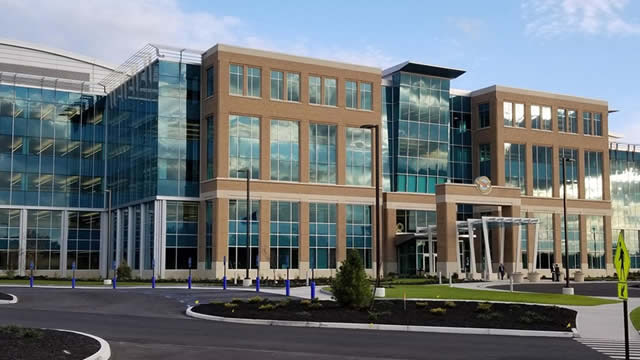
Rexford Industrial Realty, Inc.

Rexford Industrial Realty, Inc. (REXR) Market Cap

Rexford Industrial Realty, Inc. has a market capitalization of .

No quote data available.

CEO: Laura Elizabeth Clark

Sector: Real Estate

Industry: REIT - Industrial

IPO Date: 2013-07-19

Website: https://www.rexfordindustrial.com

Rexford Industrial Realty, Inc. (REXR) - Company Information

Market Cap: -|Sector: Real Estate

Company Profile

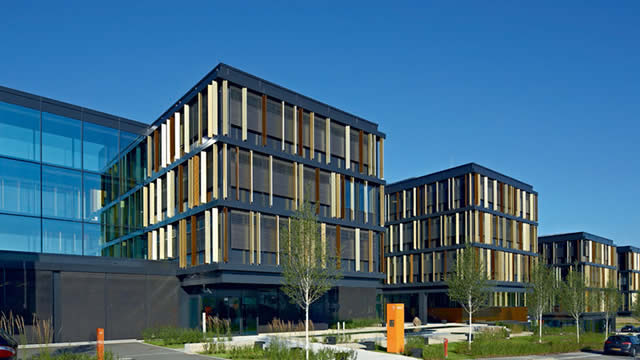
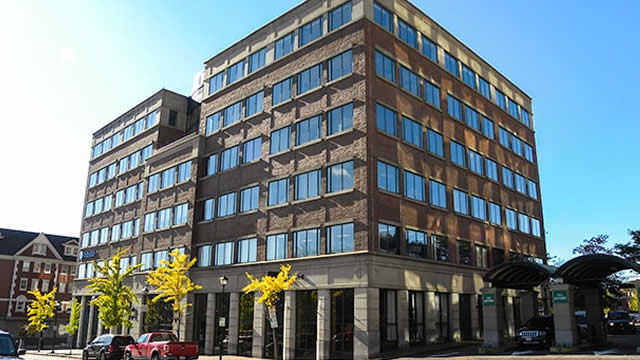
Rexford Industrial, a real estate investment trust focused on owning and operating industrial properties throughout Southern California infill markets, owns 232 properties with approximately 27.9 million rentable square feet and manages an additional 20 properties with approximately 1.0 million rentable square feet.

Analyst Sentiment

60%
Buy

From 17 Active Polls

1Y Forecast: $40.25

▲ +0.0% Potential Upside

Consensus Target Metrics

Low Bound

$38

Median

$39

High Bound

$45

Average

$40

Price & Moving Averages

Loading chart...

🎯 Wall Street Analyst Intelligence Report

1-Year structural target targets, chart projections, and sentiment maps.

Average 1Y Target
$40.25
▲ +18.14% Upside
Low Target
$38.00
12% Risk
Median Target
$39.00
14% Mid
High Target
$45.00
32% Max

Consensus Trend Projection

Trailing closures vs. 12-month metrics map.

Analyst Vote Distribution

Aggregate institutional coverage sentiment weights.

Sentiment volume allocation data unavailable.

Historical valuation matrix unavailable.

📘 Full Research Report

ℹ️

AI-Generated Research: This report is for informational purposes only.

📘 REXFORD INDUSTRIAL REALTY REIT INC (REXR) — Investment Overview

🧩 Business Model Overview

REXFORD INDUSTRIAL REALTY REIT INC operates as a focused owner and developer of industrial properties, with an emphasis on strategic infill and logistics-oriented submarkets. The value chain is straightforward: acquire or develop warehouses and light industrial space, lease to businesses that require efficient last-mile and regional distribution, then generate income through contractual rent and tenant reimbursements.

Customer stickiness is driven by the operational cost of relocating distribution networks (real estate, permitting, build-out, and logistics disruption). As tenants renew or expand, incremental space from the same property base can support revenue stability, while development and redevelopment activity can create future growth.

💰 Revenue Streams & Monetisation Model

The monetisation model is dominated by recurring rental income. Rent typically reflects a combination of base rent and lease structure features such as scheduled escalators. Tenant reimbursements for operating expenses (common area maintenance, property taxes, insurance, and utilities) provide additional recurring cash flow, partially insulating net rental performance from cost inflation depending on lease terms.

A secondary source of monetisation comes from capital recycling: dispositions of stabilized assets and capital invested into new development opportunities. Over a full cycle, the ability to underwrite spreads between acquisition/development costs and stabilized market rents is a key margin driver.

🧠 Competitive Advantages & Market Positioning

REXR’s primary moat is not a product IP advantage; it is a location- and execution-based advantage that creates effective customer stickiness (logistics “switching costs”) and supports development optionality.

  • Geographic concentration and logistics adjacency (switching costs): Tenants value proximity to demand centers and transportation corridors. Moving distribution capacity is operationally disruptive and expensive, which increases lease retention and reduces effective churn versus purely interchangeable space.
  • Infill land scarcity and development know-how (cost and timing advantage): Building viable industrial space in high-demand, constrained locations requires land access, entitlement execution, construction planning, and market-specific underwriting. These execution competencies are difficult for new entrants to replicate quickly.
  • Portfolio-level tenant demand and renewal dynamics (durable occupancy): A diversified base of industrial users can support stabilization through cycle moves, while in-place assets benefit from ongoing tenant improvements and operational familiarity.

Competitive benchmarking:

  • Prologis (PLD): A global, scaled logistics owner/manager with broad footprint and development capability across many major industrial markets. Compared with Prologis, REXR’s positioning is more focused toward specific infill and logistics-intensive submarkets, aiming for differentiated demand through local market depth.
  • Terreno Realty (TRNO): Concentrated on urban infill industrial and smaller warehouse formats. Terreno competes for similar tenant “last-mile” needs, but REXR’s differentiation relies on localized development and redevelopment execution in its targeted geographies.
  • EastGroup Properties (EGP): Emphasizes high-quality industrial assets in growing Sunbelt and logistics corridors. EastGroup’s strategy competes for tenant share, while REXR’s advantage centers on infill market access and the ability to create supply where land availability and entitlement timelines constrain competing development.

Overall, REXR’s competitive strength is “hard-to-replicate” through a combination of constrained infill supply, customer location preference, and an experienced development/redevelopment platform that improves odds of achieving stabilized performance.

🚀 Multi-Year Growth Drivers

Over a 5–10 year horizon, industrial real estate demand is supported by structural supply chain and occupancy fundamentals:

  • Supply chain reconfiguration and capacity rationalization: Businesses seek distribution networks that shorten delivery times and reduce end-to-end logistics friction, supporting demand for strategically placed industrial space.
  • Infill and near-demand warehousing: Population growth and economic activity concentrated near major metro areas tend to favor industrial assets close to customer density, where land scarcity limits new supply.
  • Tenant operational complexity (rational switching costs): Leasehold improvements, specialized configurations, and compliance needs make relocations costly, supporting retention and rent durability when properties match tenant workflows.
  • Redevelopment and modernization cycle: Upgrading older assets toward contemporary warehouse requirements can expand utility and improve the probability of locking in favorable leases as the tenant base evolves.

TAM expansion is tied to the scale of industrial space required for distribution within constrained metro and logistics-adjacent markets, not simply broad national square footage. REXR’s model targets where new supply is structurally harder to create at attractive economics.

⚠ Risk Factors to Monitor

  • Interest rate and financing environment risk: REIT performance is sensitive to debt costs and refinancing conditions, which can affect development timelines and capitalization rates across the sector.
  • Leasing and absorption variability: Industrial demand can soften during economic slowdowns, and lease-up pace for development/redevelopment assets may lag underwriting assumptions.
  • Tenant credit and rollover risk: Concentrated exposure to certain business segments or tenant capitalization stress can impact rent collection and renewal outcomes.
  • Development execution and entitlement risk: Permitting, construction cost inflation, and schedule slippage can reduce development spreads and extend capital at risk.
  • Environmental and regulatory liabilities: Industrial properties can carry environmental remediation and compliance obligations that influence cash flows and operating costs.

📊 Valuation & Market View

Industrial REIT valuation is typically anchored to cash-flow durability metrics such as FFO/AFFO and net operating income (NOI), adjusted for reinvestment needs. The market also implicitly prices assets through cap rates, and sentiment is influenced by interest rates and the credit quality of debt markets.

Key valuation drivers include:

  • Stabilized occupancy and rent growth visibility (including the quality of lease structure)
  • Development pipeline execution and expected yield on incremental capital
  • Interest coverage and debt maturity profile affecting refinancing optionality
  • NOI resilience through expense pass-through and lease protections

🔍 Investment Takeaway

REXR’s long-term thesis rests on a defensible position in industrial infill markets where tenant operations create practical switching costs, and where development/redevelopment execution in constrained geographies supports future growth. The investment case is strongest when capital allocation maintains disciplined underwriting, occupancy durability holds through cycle variability, and the platform continues converting land and entitlement advantages into stabilized income streams.


⚠ AI-generated — informational only. Validate using filings before investing.

📊 AI Financial Analysis

Powered by StockMarketInfo
Earnings Data: Q Ending 2026-03-31

"REXR reported Q1 2026 revenue of $245.1M and net income of $91.2M (EPS: $0.38). Versus the prior quarter (QoQ), revenue was up +1.8% (from $240.7M in 2025-12-31) and net income swung to a profit from a net loss of -$65.4M (an improvement of $156.6M QoQ). Versus the same quarter last year (YoY), revenue was down -2.8% (from $252.3M in 2025-03-31) while net income rose +28.1% (from $71.2M). Profitability is strong in the latest quarter: gross margin was 76.8% and net margin was 37.2%—both materially above the seasonally depressed Q4 2025 levels, and roughly stable to slightly improved vs prior-year Q1. Operating income was $100.5M (operating margin 41.0%), indicating cost discipline relative to revenue. Cash flow quality is solid: operating cash flow was $141.2M and free cash flow was $78.1M in Q1 2026. Shareholder returns appear supportive, with modest dividend payout (dividend yield ~0.03% per provided ratios) and aggressive buybacks evident in cash flow (common stock repurchased of -$200.1M). Balance sheet leverage remains meaningful (long-term debt ~$3.25B; equity ~$8.25B), but interest coverage is adequate (~3.8x), and liquidity improved sequentially due to operating cash generation despite a cash balance decline QoQ (to $51.7M). Total shareholder return should be positive given the +13.2% 1Y share price change, though it does not meet the >20% momentum threshold."

Revenue Growth

Neutral

Revenue improved slightly QoQ (+1.8% to $245.1M) but declined YoY (-2.8% vs $252.3M). Trend suggests mild sequential stabilization rather than sustained top-line growth.

Profitability

Good

Net income turned sharply higher QoQ (from -$65.4M to +$91.2M) and was up YoY (+28.1%). Margins are strong: gross margin 76.8% and net margin 37.2% in Q1 2026, versus much weaker Q4 2025.

Cash Flow Quality

Positive

Operating cash flow rose to $141.2M and free cash flow was $78.1M. Buybacks were sizable (-$200.1M), but dividends were small (-$2.3M), implying capital return is primarily buyback-driven.

Leverage & Balance Sheet

Neutral

Long-term debt remains high (~$3.25B), and net debt increased (to ~$3.20B). However, liquidity is not strong in absolute terms (cash $51.7M; current ratio 0.16), while interest coverage is adequate (~3.8x), supporting resilience.

Shareholder Returns

Positive

Price performance is positive (+13.2% 1Y) and capital returns via buybacks were substantial. Dividend yield is very low (~0.03%), so most return is from price appreciation and buybacks rather than yield.

Analyst Sentiment & Valuation

Neutral

Provided targets suggest upside: consensus target ~$42.5 vs current price $37.01 (~14.8% potential). No evidence of >20% 1Y momentum, so valuation upside may be more moderate than speculative.

Disclaimer:This analysis is AI-generated for informational purposes only. Accuracy is not guaranteed and this does not constitute financial advice.

Fundamentals Overview

Loading fundamentals overview...

REXR delivered a Q1 beat driven by leasing momentum and accretive buybacks, despite continuing rent reset pressure. Core FFO per share was $0.61 (+$0.01 vs internal forecast; +$0.02 sequential), aided by stronger NOI growth and lower G&A. Same-property NOI growth improved to +90 bps net effective but was -40 bps on a cash basis, consistent with concessions and elevated bad debt. Leasing performance stayed occupancy-focused: 4.1 million sq ft (144 deals; ~70% renewals), with current leasing interest on vacant space rising to ~90% (~75% prior). Management flagged negative infill SoCal net absorption and rising vacancy (+20 bps) alongside ~70 bps rent decline. Capital recycling remained the financial lever: $144M dispositions closed and $170M under contract, funding $200M buybacks. Guidance lifted: Core FFO per share midpoint +$0.02 and same-property NOI +50 bps; occupancy midpoint up 30 bps. The key watch item is conversion of improving early leasing pipeline into executed deals over 2–3 months and whether re-leasing spreads can reaccelerate into the back half.

AI IconGrowth Catalysts

  • Record leasing activity: 4.1 million square feet executed (144 deals; ~70% renewals) supporting occupancy-first execution
  • Increased current leasing interest on vacant space to ~90% vs 75% last quarter and year ago
  • Supply under construction near historic lows; structural regulatory barriers deepening scarcity, especially for buildings <50,000 sq ft
  • Re-accelerating early leasing pipeline signals expected to convert to executed deals over the next 2–3 months

Business Development

  • Tyco renewal: 1.1 million sq ft building on Production Avenue (Inland Empire West); strategy included converting to gross and limiting extended term to 3 years for tax assessment reduction
  • Tireco lease renewal cited as disproportionate driver of Q1 re-leasing pod/spread impacts
  • 1315 Storm Parkway (38,000 sq ft, South Bay) leased to an advanced manufacturer as part of stabilization of completed repositioning
  • Rofin Road (San Diego) added to future development pipeline with forecasted ~200 basis point development spread

AI IconFinancial Highlights

  • Core FFO per share: $0.61, $0.01 above internal forecast; +$0.02 sequentially vs Q4 2025 driven by stronger NOI growth and accretive share buybacks
  • Same-property NOI growth: +90 bps on net effective basis; -40 bps on cash basis; higher concessions and elevated bad debt concentrated initially then broad-based
  • Cash re-leasing spreads: -15.4% for the quarter; -1.8% excluding the Tireco renewal (in-line with expectations)
  • Guidance increase: full-year Core FFO per share midpoint raised by $0.02; same-property NOI growth midpoint raised by 50 bps net effective and cash
  • Bad debt assumption unchanged at 75 bps of revenue; net effective re-leasing spreads unchanged at 5%
  • Same-property occupancy guidance: 95.1% to 95.6% expected (midpoint up 30 bps)
  • Vacancy and rent indicators: infill SoCal vacancy +20 bps; rents declined ~70 bps vs last quarter

AI IconCapital Funding

  • Share repurchases: $200 million in Q1 at weighted average $36; cumulative since mid-2025 total $450 million
  • Remaining authorization/program: $500 million remaining on buyback program; linked to disposition activity
  • Disposition proceeds redeployed into buybacks; $144 million dispositions closed in Q1 plus $170 million under contract/accepted offer
  • Balance sheet: net debt/adjusted EBITDA 4.5x; $1.3 billion total liquidity; no significant maturities noted
  • Liquidity runway referenced: ~$300 million remaining dispositions expected to be completed by end of year

AI IconStrategy & Ops

  • Operational rigor: pursuing meaningful G&A savings; G&A as % of revenue below peer average and expected to continue declining over time
  • Capital recycling: dispositions and pipeline repricing—removed 2 projects from prior near-term pipeline to pursue more accretive outcomes
  • Pipeline pivots: Green Drive (City of Industry) shifted to sale/harvesting premium valuation after meeting an active user requirement
  • Mulberry Avenue (Inland Empire West) repositioning stopped; property offered for sale and for lease 'as is' due to no longer meeting return requirements
  • Development to stabilize/start rent: ~1.1 million sq ft value-add projects targeting $17 million annualized NOI; majority expected in 2H 2026
  • NOI offline: ~$12 million annualized in-place NOI coming offline related to 2026 construction starts; weighted timing late Q3

AI IconMarket Outlook

  • Re-leasing spreads expectations unchanged: net effective between 5% and 10%; cash flat to negative 5%
  • Management expects re-leasing spreads to reaccelerate into the back half of 2026
  • Early leasing pipeline conversion expected over the next 2–3 months (watching conversion quality closely)
  • Same-property occupancy expected 95.1%–95.6% (midpoint +30 bps)
  • Full-year Core FFO per share raised +$0.02 at midpoint; same-property NOI growth +50 bps at midpoint
  • Repositioning/development NOI ramp referenced: ~$50 million of NOI poised to come online over the next 2+ years

AI IconRisks & Headwinds

  • Near-term pressure from negative re-leasing spreads given market rent decline over past ~3 years
  • Net absorption remains negative in infill SoCal; vacancy increased +20 bps and rents declined ~70 bps vs last quarter
  • Development leasing still lagging: activity varies by size, submarket, and product type; Class A pockets show slower recovery and delayed rent commencements on delivered development projects
  • Bad debt elevated in Q1, initially concentrated then broad-based; bad debt assumption remains 75 bps of revenue
  • Transaction volume remains low overall, driving limited cap rate discovery for user-sold assets

Q&A: Analyst Interest

  • Topic: Submarket pockets behind leasing “bottoming”/acceleration: Management described consistent demand themes (construction-related uses, advanced manufacturing, food & beverage) and emphasized bifurcation by size (<50k consumption-driven breadth vs >50k micro-market dependence). John added that early leasing pipelines are forming, but conversion to executed deals is being watched closely over 2–3 months.
  • Topic: Reconciling development leasing lag vs tenant leasing improvement: Management acknowledged that market fundamentals remain under pressure (negative net absorption, vacancy ticked up) while pointing to early signs of improvement—more tenant decision-making and lease executions that vary by size/submarket/product type. They reiterated expectations that incremental demand is needed for net absorption to turn positive and rates to firm.
  • Topic: Market rents / re-leasing spread implications for expiring leases: Management stated re-leasing spread guidance is unchanged—net effective 5% to 10%, cash flat to negative 5%—and attributed disproportionate Q1 impact to Tire Co. They indicated spreads should reaccelerate in the back half of the year, aligning with their mark-to-market assumptions.

Sentiment: MIXED

Note: This summary was synthesized by AI from the REXR Q1 2026 earnings transcript. Financial data is complex; please verify all metrics against official SEC filings before making investment decisions.

Loading financial data and tables...
© 2026 Stock Market Info — Rexford Industrial Realty, Inc. (REXR) Financial Profile