📘 SCHLUMBERGER NV (SLB) — Investment Overview
🧩 Business Model Overview
Schlumberger is an oilfield services and technology provider that monetizes expertise across the exploration, appraisal, development, and production phases of hydrocarbon projects. The value chain runs from subsurface data acquisition and interpretation (e.g., logging, testing, reservoir characterization) to engineering and well delivery (e.g., project management, drilling services coordination, completions and production optimization), and finally to ongoing production enhancement through digital analytics and managed services.
The business model is typically project- and customer-program driven: SLB supplies people, equipment, and proprietary tools/software to solve defined operational problems for E&P operators. Customer stickiness arises because results are path-dependent (data history, workflows, and field-specific calibration) and because switching providers can require re-acquiring datasets, revalidating models, and retraining operations.
💰 Revenue Streams & Monetisation Model
Revenue is primarily transactional, tied to field activity and the delivery of technical services. Monetisation is diversified across:
- Products and services: specialized equipment, downhole tools, and consumables used in well construction and production.
- Integrated solutions: broader end-to-end scopes that bundle technology, project execution, and data workflows.
- Software and digital: analytics, decision-support platforms, and related subscriptions/managed services that often embed into operator processes.
Margin drivers are influenced by (1) utilization of specialized equipment and field crews, (2) the mix shift toward higher-margin software/digital and specialty services, (3) pricing discipline and contract structure, and (4) execution efficiency that reduces nonproductive time and rework. Because much of the cost base is variable-leaned (field labor and activity-linked expenses) yet still carries meaningful fixed infrastructure (global fleets, engineering centers), operating leverage tends to matter when industry activity changes.
🧠 Competitive Advantages & Market Positioning
SLB’s moat is strongest in intangible assets and switching costs, supported by cost advantages from scale in specialized tools, personnel training pipelines, and global logistics. Competitors can match individual services, but replicating SLB’s integrated data-to-decision workflow is harder because it requires (a) field-proven technology, (b) large historical datasets, (c) embedded workflows within customer organizations, and (d) operational execution know-how across diverse geologies.
Moat mechanisms:
- Switching costs (data gravity): reservoir models, calibration methods, and field operational learnings accumulate over time, making it operationally costly to change the provider that maintains and evolves those datasets and interpretations.
- Intangible assets (technology breadth): proprietary interpretation, measurement techniques, and platform-based analytics support repeatable improvement in recovery and production efficiency.
- Cost advantages (scale & infrastructure): dense technical staffing, integrated tooling ecosystems, and global service footprints reduce unit costs and improve response time across basins.
Competitive benchmarking:
- Halliburton (HAL) and Baker Hughes (BKR) compete across broad oilfield services and technology offerings. Competition often manifests in pricing, service availability, and execution quality across wells.
- Weatherford is a focused competitor with strengths in certain service lines and geographic footprints.
Relative positioning: SLB tends to emphasize differentiated subsurface characterization, data/interpretation workflows, and technology-led integrated solutions. This contrasts with peers that may lead with different service-line mixes or regional strengths, but the defensibility for SLB typically comes from the integration of measurement, interpretation, and decision support—where switching is more operationally disruptive than swapping a single equipment component.
🚀 Multi-Year Growth Drivers
- Rising development complexity: unconventional reservoirs, deeper plays, harsh environments, and tighter operating tolerances increase demand for advanced interpretation, well planning, and production optimization.
- Operational efficiency requirements: operators seek lower cost per barrel and improved recovery; technology-enabled execution and digital optimization provide measurable levers.
- Long-life reservoir management: mature-field strategies sustain service demand through maintenance, recompletions, production enhancement, and continuous data-driven optimization.
- Digital and workflow integration: adoption of managed services and analytics can expand share of wallet beyond point solutions by embedding SLB into the operator’s technical decision cycle.
- Geographic distribution of resource needs: growth in technically complex basins across multiple regions supports SLB’s global footprint and ability to scale crews/tools rapidly.
Over a 5–10 year horizon, SLB’s total addressable market is supported less by the number of exploratory wells and more by the increasing technical burden of producing hydrocarbons economically and reliably—where higher-value technology and integrated services can command steadier demand.
⚠ Risk Factors to Monitor
- Industry cyclicality: oilfield service demand is linked to operator capital spending and activity levels; pricing pressure can increase during downcycles.
- Technology substitution and competitive parity: peers can narrow differentiation in certain service segments; sustaining differentiation requires continual investment and field validation.
- Capital intensity and execution risk: specialized equipment fleets, tool development, and project execution can expose margins to downtime, service failures, or cost overruns.
- Contracting and regulatory exposure: compliance requirements (safety, emissions, data handling) and changing regulatory regimes can increase costs or constrain operations.
- Geopolitical and operational constraints: sanctions, political instability, and permitting restrictions can impact logistics, staffing, and customer activity.
- Customer insourcing and procurement leverage: large operators may consolidate preferred vendors or renegotiate scopes to lower unit costs.
📊 Valuation & Market View
Valuation for oilfield services companies often reflects both (1) the cyclical nature of earnings and (2) the quality of cash generation when activity turns. Market participants commonly emphasize forward earnings power rather than purely asset-based metrics. Typical framing includes:
- EV/EBITDA and EV/EBIT: sensitivity to operating leverage, utilization, and mix shift toward technology/software services.
- Cash flow quality: working-capital dynamics, capital discipline, and the sustainability of margins through commodity cycle volatility.
- Service-line mix: higher-value technology and integrated solutions can be valued at a premium if they demonstrate resilience in downcycles.
Key drivers that can move valuation include evidence of sustained technology differentiation, pricing discipline, improved execution efficiency, and a credible path to maintaining margins through varying activity levels.
🔍 Investment Takeaway
SLB offers an institutional investment profile anchored by intangible technology assets and switching costs created by data-driven workflows and field-specific knowledge accumulation. While earnings remain exposed to hydrocarbon spending cycles, the company’s positioning in integrated subsurface characterization, digital decision support, and specialty execution supports a durable share-of-wallet thesis. The core investment case rests on the expectation that increasing reservoir and production complexity sustains demand for higher-value services and embedded technology, allowing SLB to defend economics versus peers in a structurally demanding environment.
⚠ AI-generated — informational only. Validate using filings before investing.



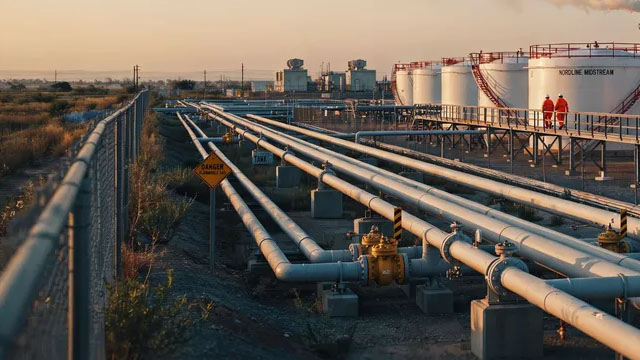
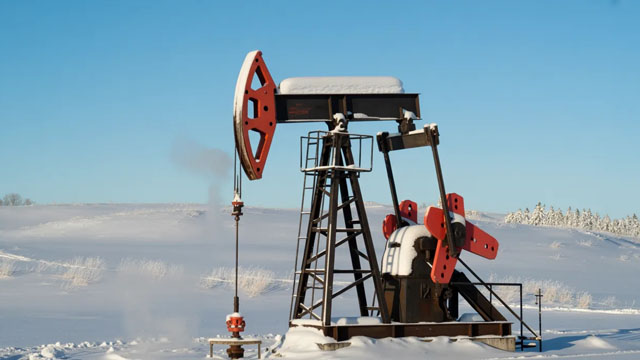













 Growth Catalysts