The Hain Celestial Group, Inc.

The Hain Celestial Group, Inc. (HAIN) Market Cap

The Hain Celestial Group, Inc. has a market capitalization of $57.2M.

Price: $0.63

-0.02 (-3.26%)

Market Cap: 57.23M

NASDAQ · time unavailable

CEO: Alison E. Lewis

Sector: Consumer Defensive

Industry: Packaged Foods

IPO Date: 1994-01-20

Website: https://www.hain.com

The Hain Celestial Group, Inc. (HAIN) - Company Information

Market Cap: 57.23M|Sector: Consumer Defensive

Company Profile

The Hain Celestial Group, Inc. manufactures, markets, and sells organic and natural products in United States, United Kingdom, and internationally. It operates through two segments, North America and International. The company offers infant formula; infant, toddler, and kids' food; plant-based beverages and frozen desserts, such as soy, rice, oat, almond, and coconut; and condiments. It also provides cooking and culinary oils; cereal bars; canned, chilled fresh, aseptic, and instant soups; yogurts, chilis, chocolate, and nut butters; and juices. In addition, the company offers hot-eating desserts, cookies, refrigerated and frozen plant-based meat-alternative products, jams, fruit spreads, jellies, honey, natural sweeteners, and marmalade products, as well as other food products. Further, it provides snack products comprising potato, root vegetable and other exotic vegetable chips, straws, tortilla chips, whole grain chips, pita chips, and puffs; and personal care products that include hand, skin, hair, and oral care products, as well as deodorants, baby food, body washes, sunscreens, and lotions under the Alba Botanica, Avalon Organics, Earth's Best, JASON, Live Clean, and Queen Helene brands name. Additionally, the company offers herbal, green, black, wellness, rooibos, and chai tea under the Celestial Seasonings brand. It sells pantry products under the Spectrum, Spectrum Essentials, MaraNatha, Imagine broths, Hain Pure Foods, Health Valley, and Hollywood brands. It sells its products through specialty and natural food distributors, supermarkets, natural food stores, mass-market and e-commerce retailers, food service channels and clubs, and drug and convenience stores in approximately 80 countries worldwide. The company was incorporated in 1993 and is headquartered in Lake Success, New York.

Analyst Sentiment

68%
Buy

From 44 Active Polls

1Y Forecast: $1.00

▲ +57.7% Potential Upside

Consensus Target Metrics

Low Bound

$1

Median

$1

High Bound

$1

Average

$1

Price & Moving Averages

Loading chart...

🎯 Wall Street Analyst Intelligence Report

1-Year structural target targets, chart projections, and sentiment maps.

Average 1Y Target
$1.00
▲ +57.70% Upside
Low Target
$1.00
58% Risk
Median Target
$1.00
58% Mid
High Target
$1.00
58% Max
Consensus
Hold
13 / 44 Buys

Consensus Trend Projection

Trailing closures vs. 12-month metrics map.

Analyst Vote Distribution

Aggregate institutional coverage sentiment weights.

📊 Historical Valuation Multiples

Real-time Trailing Twelve Month (TTM) momentum side-by-side with discrete quarterly metrics.

Fiscal QuarterTTMQ1 2026Q4 2025Q3 2025Q2 2025Q1 2025Q4 2024Q3 2024Q2 2024
Period EndingTrailing 12MMar 31, 2026Dec 31, 2025Sep 30, 2025Jun 30, 2025Mar 31, 2025Dec 31, 2024Sep 30, 2024Jun 30, 2024
Market Cap ($M)576397143135375554776625
Enterprise Value ($M)6096157958758601,1051,3021,5381,407
Price to Earnings Ratio (P/E)-0.11-0.15-0.21-1.73-0.12-0.70-1.33-9.86-53.23
Price/Earnings-to-Growth Ratio (PEG)-0.05-1.39-0.31
Price to Sales Ratio (P/S)0.040.190.250.390.370.961.351.971.49
Price to Book Ratio (P/B)0.270.290.290.320.280.540.690.800.66
Price to Free Cash Flow Ratio (P/FCF)1.361.843.24-10.41-15.25-164.5522.60-46.8820.37
Enterprise Value to Sales (EV/Sales)1.822.072.382.372.833.163.903.36
Enterprise Value to EBITDA (EV/EBITDA)8.2033.1434.5450.8755.6136.7039.3180.6278.20
Debt to Equity Ratio7.432.762.321.751.641.111.000.850.89

HAIN Growth Runway Model

Standard long term linear growth fade

Multi-Stage Discounted Cash Flow Sandbox

Market Price$0.63
Intrinsic Value$0.63
Market Alignment
Overvalued by 0.3%relative to calculated intrinsic value
9.00%
Exp: -6%-6%
i

Growth runway slowdown

This value provides a time window for the growth rate to decline beyond Stage 1 toward the terminal rate. Longer windows are most useful for companies with high growth starting conditions or strong competitive advantages. This option stretches out the growth rate slowdown across 5, 10, or 15-year steps. A high-growth starting condition (exceeding a 25% initial growth rate) automatically applies a curve decay to simulate realistic, rapid market saturation.
i

Terminal growth rate

With long-term inflation between 3-5%, revenue must grow by that baseline to maintain flat real-world market share. This value sets the permanent terminal growth rate to factor into the valuation beyond the growth slowdown runway toward maturity.

3-Stage Financial Runway Horizon

🧠 Perpetuity Horizon Engine (Stage 3: Post-2035)

Terminal FCF Base$0.03B
Perpetuity TV Value$0.56B
Discounted TV (PV)$0.24B
TV Weighting %54.0%
⚠️
Financial Model Disclaimer & Risk Disclosure: This interactive scenario simulator is an educational sandbox provided strictly for informational and analytical research purposes. Core historical financial statements and consensus estimates are sourced directly via Financial Modeling Prep (FMP). All downstream outputs are entirely deterministic, hypothetical projections generated by combining automated mathematical formulas (including linear interpolation and Gaussian bell-curve decay models) with user-selected variables and third-party financial data inputs. Users assume all liability for trading decisions executed based on these sandbox calculations.

📘 Full Research Report

ℹ️

AI-Generated Research: This report is for informational purposes only.

📘 HAIN CELESTIAL GROUP INC (HAIN) — Investment Overview

🧩 Business Model Overview

HAIN Celestial is a branded consumer packaged goods (CPG) company focused on natural, organic, and better-for-you food categories. The value chain is straightforward but operationally demanding: (1) source and develop product lines with consumer-facing brand equity, (2) manufacture (owned and contract production) and package SKUs designed for retail velocity and category requirements, and (3) sell through mass retail, grocery, specialty channels, and select foodservice/wholesale routes.

Customer “stickiness” in packaged food is not driven by switching costs in the software sense, but by merchandising placement, brand trust, and retailer category planning. Once a brand earns shelf space and a repeat purchase habit in its category, HAIN benefits from improved forecastability, distributor pull-through, and more efficient promotional execution.

💰 Revenue Streams & Monetisation Model

Revenue is primarily generated from wholesale sales of branded packaged foods. Monetisation is driven by a mix of branded volume and pricing/mix, partially offset by trade spending.

  • Branded packaged food sales (primary): revenue tied to unit volumes, retailer case-pack flows, and price realizations.
  • Category mix and formulation: higher-margin items (where applicable) and differentiated propositions tend to support gross margin stability, even when commodity inputs fluctuate.
  • Trading/promotional mechanics: retail programs and pricing promotions can pressure margins but can also protect share during consumption cycles.

Margin drivers are largely operational: input cost and freight dynamics, manufacturing utilization, packaging costs, and cost discipline in overhead and supply chain execution. Because many HAIN categories are commoditized at the ingredient level, the key monetisation lever is differentiation that holds price/mix rather than competing solely on cost.

🧠 Competitive Advantages & Market Positioning

HAIN competes in the natural/organic and “better-for-you” packaged food landscape, where differentiation must translate into retailer confidence and sustained consumer repeat demand.

Competitive benchmarking (primary rivals): General Mills, Danone (including its plant-based and dairy-aligned brands), and Conagra Brands. These peers vary in scale and category breadth, but they compete directly for shopper budgets in grocery and for retailer shelf space in overlapping “health-oriented” segments.

  • Scale/distribution leverage (retail execution moat): Larger CPG peers can spread fixed costs across broader volumes; HAIN’s relative advantage is executing focused natural categories with retailer know-how—earning and defending distribution through category management, consistent supply, and promotional planning that protects turnover.
  • Private-label resistance via formulation and brand proposition: Competitors with extensive commoditized portfolios often face aggressive private-label substitution. HAIN’s positioning in “natural” subcategories can reduce direct private-label equivalency when consumers perceive meaningful differences in ingredients, taste profiles, or intended use cases.
  • Intangible assets (brand equity and product development): Brand equity in legacy categories (e.g., tea and other household staples within natural health positioning) supports shelf durability and rebuy behavior, lowering the cost of maintaining distribution versus purely unbranded products.

While no packaged-food business has true permanent “switching costs,” HAIN’s moat is best characterized as a combination of brand-led merchandising durability and retailer execution that reduces the probability of share erosion during promotional and competitive cycles.

🚀 Multi-Year Growth Drivers

  • Premiumization and health-forward consumption: Growth in categories associated with natural ingredients, reduced additives, and healthier eating frameworks supports TAM expansion beyond traditional mass staples.
  • Plant-forward and protein/better-for-you eating trends: Continued consumer demand for plant-based and alternative nutrition products can expand both share and product-specific volumes where supply and distribution align.
  • Innovation cadence in adjacent categories: Incremental SKU expansion and line extensions (formats, flavors, and ingredient upgrades) can improve mix and help defend share against larger multi-category competitors.
  • Channel expansion and international brand rollouts: Where retailer relationships and product-market fit exist, cross-channel growth can broaden the customer base and spread fixed costs.

Over a 5–10 year horizon, the investment case depends less on a single end market and more on HAIN’s ability to maintain shelf distribution, sustain consumer relevance through product innovation, and manage input cost variability through operational discipline.

⚠ Risk Factors to Monitor

  • Retailer bargaining power and slotting/promo intensity: Grocery concentration can increase pressure on trade terms and promotional spending, compressing margins even when demand is stable.
  • Commodity and input cost volatility: Ingredient inflation, packaging costs, and freight volatility can create margin uncertainty without commensurate pricing power.
  • Private-label substitution and category commoditization: If consumer differentiation narrows or private-label offerings improve, share can be vulnerable despite brand history.
  • Execution risk in manufacturing and supply chain: Underutilization, quality events, or distribution disruptions can drive write-offs and damage retailer confidence.
  • Leverage and capital market sensitivity: Consumer demand swings plus margin pressure can stress cash generation, increasing refinancing risk and limiting flexibility for reinvestment or restructuring.

📊 Valuation & Market View

Markets typically value branded CPG businesses on a combination of EV/EBITDA (or enterprise cash flow multiples) and P/S, with the premium or discount largely tied to margin structure and earnings durability rather than top-line growth alone.

Key valuation drivers include: evidence of sustainable gross margin (pricing discipline and mix), controlled trade spend, operating leverage as volumes normalize, and credible paths to free cash flow generation. Downside typically emerges when promotional intensity rises, input costs lag behind price actions, or cost structure inflects upward faster than sales.

🔍 Investment Takeaway

HAIN’s long-term value proposition rests on earning and defending distribution in natural/better-for-you categories through brand-led differentiation and retailer execution. The core moat is best viewed as distribution durability supported by intangible brand assets, with scale/distribution leverage helping offset the structural threat of private-label substitution and retail bargaining power. Returns depend on maintaining margin resilience through input-cost cycles and sustaining consumer relevance via innovation and assortment discipline.


⚠ AI-generated — informational only. Validate using filings before investing.

📰 Market News & Coverage

15 Stories Available

Real-time institutional reporting and market updates for HAIN.

zacks.com2026-06-10

Why Is Hain Celestial (HAIN) Down 18.6% Since Last Earnings Report?

Hain Celestial (HAIN) reported earnings 30 days ago. What's next for the stock?

zacks.com2026-05-12

HAIN Stock Jumps 10% Despite Reporting Q2 Loss & Y/Y Sales Decline

Hain Celestial shares jump after posting Q3 results as debt falls sharply, cash flow improves and management outlines more asset sales and refinancing plans.

seekingalpha.com2026-05-11

The Hain Celestial Group, Inc. (HAIN) Q3 2026 Earnings Call Transcript

The Hain Celestial Group, Inc. (HAIN) Q3 2026 Earnings Call Transcript

zacks.com2026-05-11

Hain Celestial (HAIN) Reports Q3 Loss, Lags Revenue Estimates

Hain Celestial (HAIN) came out with a quarterly loss of $0.01 per share versus the Zacks Consensus Estimate of a loss of $0.02. This compares to earnings of $0.07 per share a year ago.

marketbeat.com2026-05-11

The Hain Celestial Group Q3 Earnings Call Highlights

The Hain Celestial Group NASDAQ: HAIN reported fiscal third-quarter results that management said reflected improved execution, stronger cash generation and progress on its turnaround plan, even as organic sales declined and international markets remained pressured.

globenewswire.com2026-05-11

Hain Celestial Reports Fiscal Third Quarter 2026 Financial Results

HOBOKEN, N.J., May 11, 2026 (GLOBE NEWSWIRE) -- The Hain Celestial Group, Inc. (Nasdaq: HAIN), a leading global health and wellness company whose purpose is to inspire healthier living through better-for-you brands, today reported financial results for its fiscal third quarter ended March 31, 2026.

globenewswire.com2026-05-04

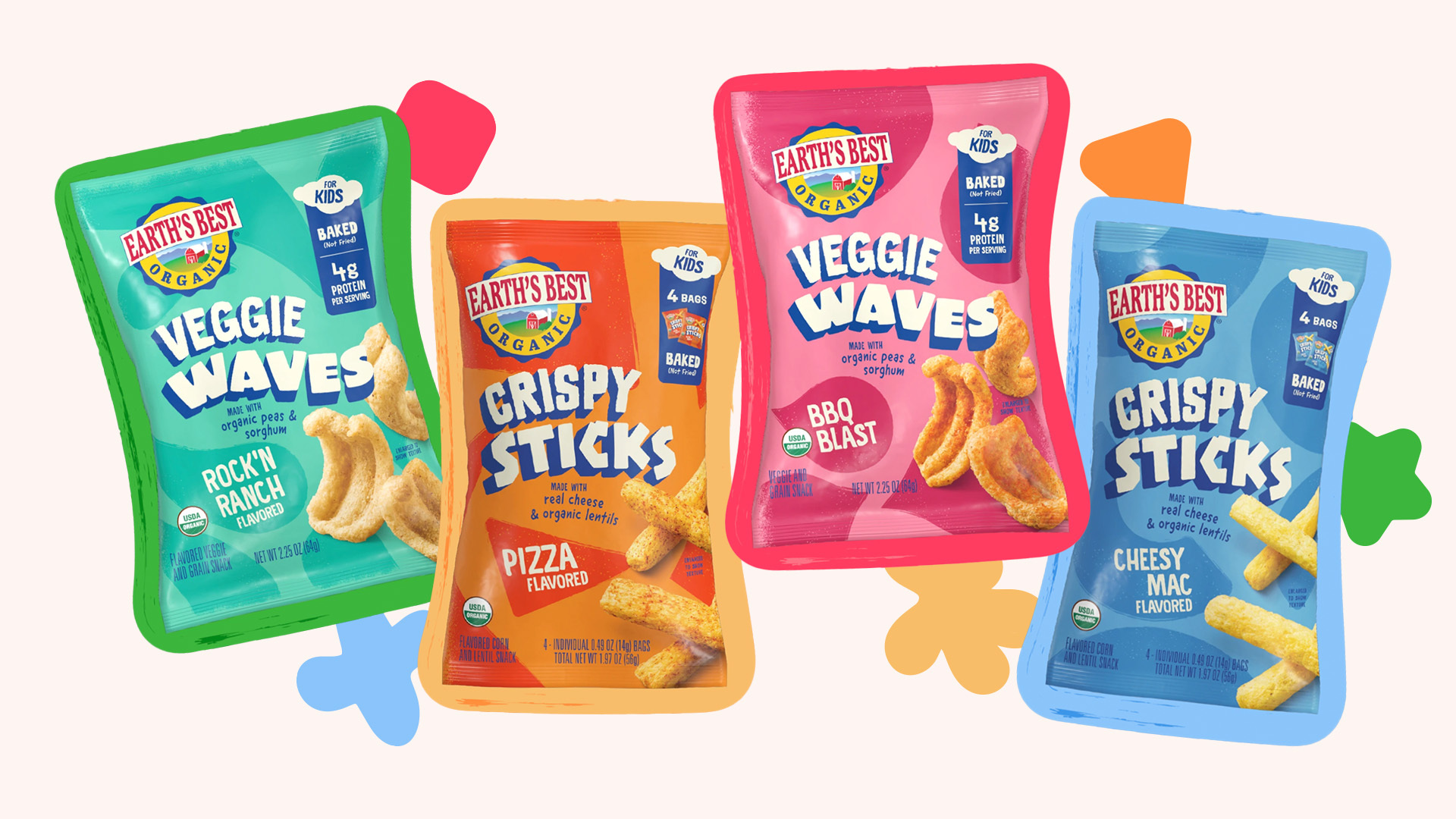
Earth’s Best Debuts All-New Organic Snacks Made Just for Big Kids

HOBOKEN, N. J. , May 04, 2026 (GLOBE NEWSWIRE) -- Earth's Best, a trusted brand of organic foods for babies and kids to grow with, is proud to introduce its first line of organic snacks created specifically for kids ages 4 to 8 years old: Earth's Best Big Kids Snacks.

globenewswire.com2026-05-04

Earth's Best Debuts All-New Organic Snacks Made Just for Big Kids

Earth's Best® is proud to introduce its first line of organic snacks created specifically for kids ages 4 to 8 years old: Earth's Best Big Kids Snacks.

defenseworld.net2026-04-27

The Hain Celestial Group (NASDAQ:HAIN) versus Associated British Foods (OTCMKTS:ASBFY) Critical Comparison

The Hain Celestial Group (NASDAQ: HAIN - Get Free Report) and Associated British Foods (OTCMKTS:ASBFY - Get Free Report) are both consumer staples companies, but which is the superior stock? We will contrast the two companies based on the strength of their earnings, valuation, profitability, institutional ownership, analyst recommendations, risk and dividends. Insider and Institutional Ownership

globenewswire.com2026-04-20

Hain Celestial Announces Fiscal 2026 Third Quarter Earnings Results Conference Call and Webcast

HOBOKEN, N.J., April 20, 2026 (GLOBE NEWSWIRE) -- The Hain Celestial Group, Inc. (Nasdaq: HAIN), a leading global health and wellness company whose purpose is to inspire healthier living through better-for-you brands, will release its fiscal third quarter financial results before the market opens on Monday, May 11, 2026.

zacks.com2026-03-11

Hain Celestial (HAIN) Down 29.8% Since Last Earnings Report: Can It Rebound?

Hain Celestial (HAIN) reported earnings 30 days ago. What's next for the stock?

globenewswire.com2026-03-02

Hain Celestial Completes Sale of North American Snacks Business

HOBOKEN, N.J., March 02, 2026 (GLOBE NEWSWIRE) -- Hain Celestial Group (Nasdaq: HAIN), a leading global health and wellness company whose purpose is to inspire healthier living through better-for-you brands, today announced that it has completed the previously announced sale of its North American Snacks business, including Garden Veggie Snacks™, Terra® chips and Garden of Eatin'® snacks, to Snackruptors Inc., a Canadian, family-owned snacks manufacturer.

zacks.com2026-02-23

Natural Food Stocks in Focus as Health & Wellness Trend Grows

Hain Celestial, United Natural Foods and Beyond Meat are in focus as health-conscious consumers fuel demand for organic, clean-label and ethically sourced foods.

zacks.com2026-02-10

HAIN Stock Falls 20% After Reporting Q2 Loss & Y/Y Sales Decline

Hain Celestial shares sink nearly 20% after a Q2 adjusted loss and a y/y sales decline, with investors rattled by weak volumes and margin pressure.

seekingalpha.com2026-02-09

The Hain Celestial Group, Inc. (HAIN) Q2 2026 Earnings Call Transcript

The Hain Celestial Group, Inc. (HAIN) Q2 2026 Earnings Call Transcript

📊 AI Financial Analysis

Powered by StockMarketInfo
Earnings Data: Q Ending 2026-03-31

"Headline (2026-03-31, Q3): Revenue $338.4M, EPS -$1.17, net income -$106.3M (net margin -31.4%). QoQ: Revenue declined from $367.9M (2025-09-30) to $338.4M (-8.1%) and losses narrowed vs prior quarter’s net income -$20.6M to -$106.3M (net income deteriorated). YoY (vs 2025-03-31): Revenue is down from $390.4M (-13.3%) and net income remains deeply negative, worsening from -$134.6M to -$106.3M (+20.9% improvement in losses, still negative overall). Profitability is volatile: gross margin improved sequentially (20.8% vs 18.5% QoQ) but operating margin remained slightly positive (3.3% operating income ratio) while the company posted a severely negative pre-tax/net impact (net income ratio -31.4%), indicating material below-the-line pressure (e.g., “other income/expenses net”). Cash flow remains positive at the operating line: operating cash flow (OCF) was +$38.3M and free cash flow +$34.5M. Balance sheet liquidity is weak (current ratio 0.52; cash ~$44.3M) and leverage is high: total debt ~$595.5M with net debt ~$551.2M, while equity is relatively low at $215.5M. Shareholder returns appear negative: stock price is $0.8543 and the 1-year change is -68.24% with no dividend (dividend yield 0%), implying total shareholder return is primarily capital destruction, with likely limited support from fundamentals. Revenue and Earnings-based metrics were not applicable for this analysis due to the company's pre-revenue status. The evaluation focused on cash runway, burn rate, and market sentiment instead."

Revenue Growth

Neutral

Revenue was $338.4M in Q3’26; QoQ -8.1% (from $367.9M) and YoY -13.3% (from $390.4M). Downtrend across the comparison windows.

Profitability

Neutral

Net income remained deeply negative (net margin -31.4%). While gross margin improved QoQ (20.8% vs 18.5%), net profitability deteriorated vs the prior quarter’s -$20.6M.

Cash Flow Quality

Fair

Despite net losses, OCF was +$38.3M and free cash flow +$34.5M in Q3’26, supporting near-term liquidity vs earlier quarters that were cash-flow pressured.

Leverage & Balance Sheet

Neutral

High leverage and thin liquidity: current ratio 0.52, cash ~$44.3M, total equity $215.5M. Net debt remains elevated at ~$551.2M (total debt ~$595.5M).

Shareholder Returns

Neutral

Price momentum is strongly negative: 1Y change -68.24%. No dividend payments (yield 0%) and no evidence of shareholder return via buybacks in the quarter.

Analyst Sentiment & Valuation

Neutral

Street targets are below/near current price (consensus target ~$1.13 vs price $0.8543), implying limited upside and continued risk given ongoing losses and weak liquidity.

Disclaimer:This analysis is AI-generated for informational purposes only. Accuracy is not guaranteed and this does not constitute financial advice.

Fundamentals Overview

Loading fundamentals overview...

HAIN’s Q3 2026 showed improving profitability and strong cash generation, but topline softness—especially internationally—continued to mask the turnaround progress. Adjusted gross margin was 21% (about -90 bps YoY but +150 bps sequential), while adjusted EBITDA rose sequentially to 7.8% margin. The key operational inflection was North America snacks divestiture completed Feb 27, 2026, alongside rapid stranded-cost elimination (nearly 70% removed) and ongoing productivity/trade actions. Free cash flow rebounded to $35 million, driving net debt down to $505 million and maintaining ample covenant headroom (4.3x vs 5.5x). Growth catalysts are innovation-led: wellness tea expansion, Greek Gods single-serve and 20g protein launch, and Earth’s Best finger-food extensions. International remains the main risk with -8% organic net sales from wet baby softness, spreads/drizzles weakness, and private-label-driven soup pressure. Management provided no fiscal 2026 numeric guidance but reiterated positive full-year FCF and North America go-forward margins (gross >30%, EBITDA low double digits).

AI IconGrowth Catalysts

  • North America tea wellness platform: Celestial Seasonings expanding wellness platform with innovation launching beginning this month in gut health and throat support; wellness tea dollar sales up high single digits and segment share gains
  • Yogurt: Greek Gods high-teens dollar growth and share gains; scaling new single-serve packaging and launching a new high-protein offering delivering 20 grams protein per serving while maintaining indulgent taste (launched at select retailers in April)
  • Baby & Kids: finger foods strength led by Earth's Best (#2 in segment) and momentum behind crunchy sticks Teething snacks; upcoming launch of Earth's Best Big Kids finger food (multi-SKU with protein and fiber; marketed to extend occasions into backpack territory)
  • Innovation renewal: innovation and renovation renewal rate (percent of net sales from SKUs launched/relaunched in last 3 years) >12% in the quarter, up >2.5 points vs. a year ago

Business Development

  • Completed divestiture of North America Snacks business (sale completed February 27, 2026); TSA proceeds providing ongoing support to the divested business

AI IconFinancial Highlights

  • Organic net sales: -6% YoY (excluding North America snacks per definition), driven primarily by International segment weakness
  • Organic net sales bridge: -11 points from volume/mix and +5 points from price
  • Adjusted gross margin: 21% in Q3; ~90 bps decrease YoY and ~150 bps sequential improvement
  • Adjusted EBITDA: $26 million vs. $34 million prior year; adjusted EBITDA margin 7.8% vs. 6.3% in Q2 (sequential improvement)
  • North America margins: adjusted gross margin 23.4% (+100 bps YoY); adjusted EBITDA margin 10% of net sales (excluding snacks would be 16.4%)
  • International margins: adjusted gross margin 18.5% (-270 bps YoY); adjusted EBITDA margin 11.7% (-12% YoY)
  • Stranded costs outlook: eliminating stranded costs; now expected in high end of $20 million to $25 million range (nearly 70% removed to date)
  • Restructuring charges: $108 million incurred out of expected $115 million to $125 million charges (excluding inventory write-downs); targeted benefits remain $130 million to $150 million through fiscal 2027
  • Free cash flow: $35 million in Q3 vs. $2 million outflow prior year; improvement driven by inventory delivery, improved A/R collections, and insurance proceeds
  • Working capital: days inventory outstanding (DIO) 73 days (lowest in 2 years) vs. 75 in Q2 and 79 prior year; every day of inventory ≈ $3.5 million
  • SG&A: $59 million (-6% YoY); SG&A as % of net sales 17.5% vs. 16.1% prior year (stranded costs less impact of mitigation and TSA proceeds negligible in quarter)

AI IconCapital Funding

  • Cash on hand: $44 million after snack sale and cash generation; net debt: $505 million (reduction of $145 million since fiscal year start)
  • Available liquidity: $196 million under revolver; leverage 4.3x vs. covenant 5.5x
  • Free cash flow in quarter: $35 million
  • No share repurchase amounts or explicit debt balances beyond net debt/leverage were disclosed in the provided transcript

AI IconStrategy & Ops

  • Turnaround actions: 5 actions to win (portfolio streamlining; accelerate brand renovation and innovation; revenue growth management and pricing; productivity and working capital management; enhanced digital capabilities)
  • SKU simplification: pantry brands SKU simplification had ~-1 point impact on Meal Prep organic net sales in the quarter but is intended to drive more productive assortment and stronger margin performance over time
  • Trade/marketing effectiveness: shift to more digitally-led, social-led approach with emphasis on improving effectiveness of marketing spend alongside innovation
  • Manufacturing optimization to address near-term margin pressure in the U.K./Europe

AI IconMarket Outlook

  • No numeric guidance for fiscal 2026 operating results; company reiterated strategic-review uncertainty
  • Go-forward (post-snacks divestiture) North America: gross margin above 30% and EBITDA margin in low double digits
  • Fiscal 2026: continue to expect positive free cash flow for the full year
  • Fiscal 2027: no guidance timing/amount provided; plan to provide guidance after completion of strategic review

AI IconRisks & Headwinds

  • International category pressure: wet baby food volume softness (organic net sales -8%), spreads/drizzles weakness, and challenging branded soup year-ago comparisons
  • U.K./Europe consumer confidence decline attributed to geopolitical uncertainty and elevated inflation (including rising fuel prices)
  • Baby & Kids: industry-wide purees decline stabilized; improvement expected as it laps slowdown beginning last May following nutritional-content BBC documentary; reliance on recovery timing
  • Spreads and drizzles category consumption impacted by consumer focus on health and wellness; Hartley relaunch execution risk (shelves in June)
  • Soup: remaining brands facing aggressive private label competition and tough distribution gain comparisons versus year-ago period

Q&A: Analyst Interest

  • Topic: Innovation support and flow-through to margins/trade spend — Management said innovation must be supported with marketing to create awareness, trial, and repeat, and it should be leveraged over a three-year horizon. They described stabilizing/growing core businesses while using simplification savings more productively and investing back in balanced fashion.
  • Topic: Competitive intensity and flexibility in spend — Management stated they have not seen a significant uptick in competitive activity in North America; promotion activity appears relatively stable. They expect stability for yogurt, tea, and baby businesses and emphasized being “surgical and smart” if competition becomes more aggressive.
  • Topic: Private label strategy and when high-protein launches hit shelves — Management differentiated North America vs international: private label is relatively low share in tea/baby and generally managed via faster innovation. International has seen private label increase with more premium private label. They discussed protein innovation resonance but did not clearly confirm the exact shelf date for the branded non-dairy high-protein launch in the excerpt provided.

Sentiment: MIXED

Note: This summary was synthesized by AI from the HAIN Q3 2026 earnings transcript. Financial data is complex; please verify all metrics against official SEC filings before making investment decisions.

📋 Official Regulatory 10-K / 10-Q SEC Filings

Direct authenticated documentation links to audited SEC database reports for HAIN.

SEC EDGAR Live Feed
Loading financial data and tables...
📁

SEC Filings (HAIN)

© 2026 Stock Market Info — The Hain Celestial Group, Inc. (HAIN) Financial Profile