M/I Homes, Inc.

M/I Homes, Inc. (MHO) Market Cap

M/I Homes, Inc. has a market capitalization of $3.54B.

Price: $137.33

-1.03 (-0.74%)

Market Cap: 3.54B

NYSE · time unavailable

CEO: Robert H. Schottenstein

Sector: Consumer Cyclical

Industry: Residential Construction

IPO Date: 1993-11-03

Website: https://www.mihomes.com

M/I Homes, Inc. (MHO) - Company Information

Market Cap: 3.54B|Sector: Consumer Cyclical

Company Profile

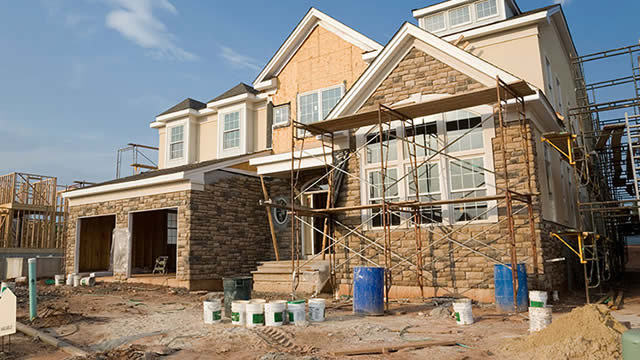
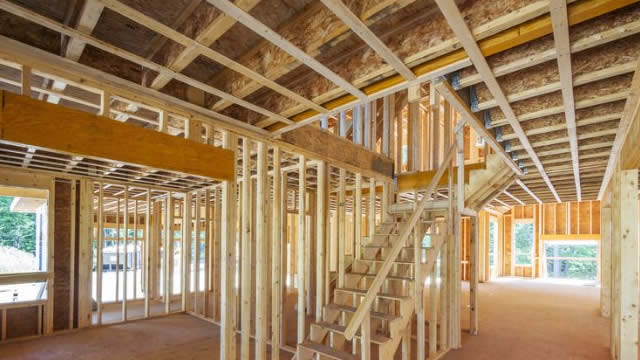
M/I Homes, Inc., together with its subsidiaries, operates as a builder of single-family homes in Ohio, Indiana, Illinois, Minnesota, Michigan, Florida, Texas, North Carolina, and Tennessee. The company operates through Northern Homebuilding, Southern Homebuilding, and Financial Services segments. It designs, constructs, markets, and sells single-family homes and attached townhomes to first-time, millennial, move-up, empty-nester, and luxury buyers under the M/I Homes brand name. The company also purchases undeveloped land to develop into developed lots for the construction of single-family homes, as well as for sale to others. In addition, it originates and sells mortgages; and serves as a title insurance agent by providing title insurance policies, examination, and closing services to purchasers of its homes. The company was formerly known as M/I Schottenstein Homes, Inc. and changed its name to M/I Homes, Inc. in January 2004. M/I Homes, Inc. was founded in 1976 and is based in Columbus, Ohio.

Analyst Sentiment

78%
Strong Buy

From 3 Active Polls

1Y Forecast: $165.00

▲ +20.1% Potential Upside

Consensus Target Metrics

Low Bound

$165

Median

$165

High Bound

$165

Average

$165

Price & Moving Averages

Loading chart...

🎯 Wall Street Analyst Intelligence Report

1-Year structural target targets, chart projections, and sentiment maps.

Average 1Y Target
$165.00
▲ +20.15% Upside
Low Target
$165.00
20% Risk
Median Target
$165.00
20% Mid
High Target
$165.00
20% Max
Consensus
Hold
5 / 10 Buys

Consensus Trend Projection

Trailing closures vs. 12-month metrics map.

Analyst Vote Distribution

Aggregate institutional coverage sentiment weights.

📊 Historical Valuation Multiples

Real-time Trailing Twelve Month (TTM) momentum side-by-side with discrete quarterly metrics.

Fiscal QuarterTTMQ1 2026Q4 2025Q3 2025Q2 2025Q1 2025Q4 2024Q3 2024Q2 2024
Period EndingTrailing 12MMar 31, 2026Dec 31, 2025Sep 30, 2025Jun 30, 2025Mar 31, 2025Dec 31, 2024Sep 30, 2024Jun 30, 2024
Market Cap ($M)3,5393,1853,3583,8853,0363,1193,6934,7373,281
Enterprise Value ($M)3,7833,4293,7554,1303,2653,3253,9085,0043,419
Price to Earnings Ratio (P/E)9.9311.7413.129.126.267.016.928.145.59
Price/Earnings-to-Growth Ratio (PEG)9.570.321.212.930.94
Price to Sales Ratio (P/S)0.813.462.933.432.613.203.064.162.96
Price to Book Ratio (P/B)1.121.001.061.230.981.041.261.661.20
Price to Free Cash Flow Ratio (P/FCF)17.7623.49-249.4192.4786.3749.0836.09-69.13149.03
Enterprise Value to Sales (EV/Sales)3.723.273.652.813.423.244.393.08
Enterprise Value to EBITDA (EV/EBITDA)6.7639.8426.8324.4919.7922.1523.2725.9717.99
Debt to Equity Ratio0.440.320.340.310.330.330.350.350.36

MHO Growth Runway Model

Standard long term linear growth fade

Multi-Stage Discounted Cash Flow Sandbox

Market Price$137.33
Intrinsic Value$272.41
Market Alignment
Undervalued by 98.4%relative to calculated intrinsic value
9.00%
Exp: -1%-1%
i

Growth runway slowdown

This value provides a time window for the growth rate to decline beyond Stage 1 toward the terminal rate. Longer windows are most useful for companies with high growth starting conditions or strong competitive advantages. This option stretches out the growth rate slowdown across 5, 10, or 15-year steps. A high-growth starting condition (exceeding a 25% initial growth rate) automatically applies a curve decay to simulate realistic, rapid market saturation.
i

Terminal growth rate

With long-term inflation between 3-5%, revenue must grow by that baseline to maintain flat real-world market share. This value sets the permanent terminal growth rate to factor into the valuation beyond the growth slowdown runway toward maturity.

3-Stage Financial Runway Horizon

🧠 Perpetuity Horizon Engine (Stage 3: Post-2035)

Terminal FCF Base$0.50B
Perpetuity TV Value$9.33B
Discounted TV (PV)$3.94B
TV Weighting %57.0%
⚠️
Financial Model Disclaimer & Risk Disclosure: This interactive scenario simulator is an educational sandbox provided strictly for informational and analytical research purposes. Core historical financial statements and consensus estimates are sourced directly via Financial Modeling Prep (FMP). All downstream outputs are entirely deterministic, hypothetical projections generated by combining automated mathematical formulas (including linear interpolation and Gaussian bell-curve decay models) with user-selected variables and third-party financial data inputs. Users assume all liability for trading decisions executed based on these sandbox calculations.

📘 Full Research Report

ℹ️

AI-Generated Research: This report is for informational purposes only.

📘 M I HOMES INC (MHO) — Investment Overview

🧩 Business Model Overview

M/I Homes operates as a residential homebuilder, focused on acquiring or controlling land and converting it into build-ready communities. The value chain spans land sourcing and entitlement (where applicable), development and infrastructure build-out, home construction, marketing and sales, and post-sale warranty/servicing. Revenue is generated primarily at the point of home delivery/closing, with margins driven by (i) land and lot costs, (ii) construction cycle efficiency, (iii) selling prices and sales pace, and (iv) the ability to manage construction inputs and change orders throughout the build.

Customer “stickiness” is less about software-like switching costs and more about project certainty: once a buyer is under contract, the settlement timetable and build schedule create natural friction that reduces opportunistic churn. The more durable advantage tends to come from operational execution, land strategy, and cost discipline rather than customer switching behavior.

💰 Revenue Streams & Monetisation Model

Homebuilding revenue is largely transactional: homes are sold to end customers through community-based sales, with revenue recognized at closing/delivery. Monetisation therefore depends on the interaction between (1) housing demand and achievable selling prices, and (2) the margin structure embedded in the company’s land position and construction cost base.

Margin drivers are predominantly:

  • Gross margin sensitivity to land basis: Lot/land acquisition terms, development costs, and the timing of land conversion into inventory.
  • Construction productivity and labor efficiency: The ability to maintain cycle times and manage scope and quality at scale.
  • Input cost management: Monitoring and mitigating inflation in key building materials and subcontractor services.
  • Sales pace and mix: The proportion of higher-spec versus standard offerings and the speed at which inventory clears.

Given the transactional nature of deliveries, operating leverage can be meaningful when the company maintains disciplined cost control and avoids overextending on land at unfavorable pricing.

🧠 Competitive Advantages & Market Positioning

M/I Homes’ core competitive edge is best characterized as cost advantages and execution-driven barriers, reinforced by land/lot strategy and operating know-how. The sector is cyclical, but consistent execution can preserve margin through different housing regimes.

  • Cost Advantages (Operational Scale & Procurement Discipline): Building at meaningful scale supports more favorable contracting and procurement processes, standardization of designs/components, and tighter construction supervision.
  • Land Strategy as an “Embedded Option”: Having a pipeline of appropriately priced lots (and the capacity to time their conversion) can cushion margin when pricing softens and protect downside when costs rise.
  • Execution and Quality Credibility: Repeatable construction processes reduce defects and warranty burden, improving both economics and brand credibility with buyers and trade partners.

Competitive benchmarking: Major homebuilders such as D.R. Horton, Lennar, and Toll Brothers operate across different positioning and geographic footprints. D.R. Horton and Lennar often compete on scale and breadth across entry-to-move-up segments, while Toll Brothers typically emphasizes move-up/luxury product. M/I Homes competes by focusing on building communities that can achieve attractive relative value proposition and by leveraging operational discipline to sustain margin through cycles.

The company’s “moat” is therefore less about durable proprietary technology and more about repeatable execution—a practical barrier grounded in land access, development capabilities, construction management, and cost control.

🚀 Multi-Year Growth Drivers

Over a 5–10 year horizon, growth is primarily driven by industry-level housing demand and the company’s ability to convert demand into deliveries at attractive margins.

  • Household formation and demographic demand: Long-run growth in the number of households supports ongoing replacement and new-home demand.
  • Housing stock depreciation and replacement: Older housing stock drives continued demand for new construction.
  • Regional community development capabilities: Where supply is constrained or land availability is limited, builders with proven development execution can secure sites that improve future delivery economics.
  • Product and community mix optimization: Adapting home plans, specifications, and financing-friendly features can maintain sales pace and protect margins when demand fluctuates.
  • Operational learning curve: Standardized processes and improved construction productivity can gradually raise gross margin resilience across building cycles.

TAM expansion for homebuilding is not unlimited—growth is capped by affordability, financing availability, and local permitting constraints—but disciplined builders can still compound value by winning share in their target markets through execution and inventory planning.

⚠ Risk Factors to Monitor

  • Interest-rate and affordability sensitivity: Demand can weaken when mortgage rates rise or when buyer qualification tightens, impacting order flow and sales pace.
  • Land and inventory risk: Overpaying for land, unfavorable contract terms, or delays in development can compress returns and increase exposure to market downturns.
  • Construction cost inflation and subcontractor availability: Labor and materials volatility can force margin resets if price concessions are required to clear inventory.
  • Regulatory and permitting constraints: Entitlement timelines, local infrastructure requirements, and regulatory changes can delay projects and increase carrying costs.
  • Cyclical credit and liquidity conditions: Homebuilders can face balance-sheet pressure if capital markets tighten or if working capital needs rise due to inventory buildup.

📊 Valuation & Market View

The market typically values homebuilders using a combination of profitability and throughput measures rather than pure growth multiples. Common frameworks include P/E-like earnings sensitivity and price-to-sales/throughput metrics tied to deliveries and margins, reflecting the business’s transactional revenue model. Value drivers that move the needle most often include:

  • Gross margin durability: The ability to defend margin through land basis and construction cost control.
  • Inventory position and sales pace: Inventory turns and the likelihood of markdowns materially influence profitability.
  • Balance-sheet flexibility: Liquidity and capital allocation discipline during housing downturns.
  • Execution consistency: Conversion of community pipeline into deliveries without cost overruns or schedule slippage.

In such a model, the market’s discount/premium tends to reflect confidence in execution, land strategy, and the company’s ability to maintain margin through cycle downturns.

🔍 Investment Takeaway

M/I Homes is best viewed as a cycle-driven, execution-focused homebuilder whose investment case rests on operational cost advantages, prudent land/lot strategy, and repeatable construction productivity. While the housing market introduces meaningful macro and liquidity sensitivity, sustained value creation is more attainable when the company maintains disciplined inventory planning and construction cost control, translating demand into deliveries with resilient margins.


⚠ AI-generated — informational only. Validate using filings before investing.

📰 Market News & Coverage

15 Stories Available

Real-time institutional reporting and market updates for MHO.

zacks.com2026-06-03

M/I Homes (MHO) Dips More Than Broader Market: What You Should Know

In the most recent trading session, M/I Homes (MHO) closed at $135.93, indicating a -1.81% shift from the previous trading day.

zacks.com2026-06-01

Implied Volatility Surging for M/I Homes Stock Options

Investors need to pay close attention to MHO stock based on the movements in the options market lately.

prnewswire.com2026-06-01

M/I Homes Engages Prophetic for Land Acquisition Technology Support

Collaboration supports evaluation of land opportunities across M/I Homes' markets PORTLAND, Ore. and COLUMBUS, Ohio, June 1, 2026 /PRNewswire/ -- M/I Homes, Inc. (NYSE: MHO) has engaged Prophetic, a technology provider focused on land acquisition tools, to support aspects of its land evaluation processes across markets.

prnewswire.com2026-05-18

M/I HOMES ANNOUNCES ELECTION OF GENE SMITH TO BOARD OF DIRECTORS

COLUMBUS, Ohio, May 18, 2026 /PRNewswire/ -- M/I Homes, Inc. (NYSE: MHO) today announced that Eugene D. Smith, formerly Senior Vice President and Director of Athletics at The Ohio State University and currently President of Gene Smith Consulting, LLC, was elected to the Company's Board of Directors at its 2026 Annual Meeting of Shareholders held on May 13, 2026.

seekingalpha.com2026-05-13

M/I Homes, Inc. (MHO) Shareholder/Analyst Call Prepared Remarks Transcript

M/I Homes, Inc. (MHO) Shareholder/Analyst Call Prepared Remarks Transcript

zacks.com2026-05-11

Bear Of The Day: MI Homes (MHO)

This homebuilding company has been waiting for lower rates and it looks like the wait is going to be longer than expected.

defenseworld.net2026-04-24

M/I Homes Q1 Earnings Call Highlights

M/I Homes (NYSE: MHO) reported what management called a "very solid" first quarter, posting $921 million of revenue and $89.2 million of pre-tax income, while navigating a housing market shaped by affordability pressures, shifting consumer confidence, and higher mortgage-rate volatility. On the company's April 22 earnings call, CEO and President Robert H. Schottenstein said results were

seekingalpha.com2026-04-22

M/I Homes, Inc. (MHO) Q1 2026 Earnings Call Transcript

M/I Homes, Inc. (MHO) Q1 2026 Earnings Call Transcript

seekingalpha.com2026-04-22

M/I Homes Q1 Review: The Inflection Point May Have Moved

M/I Homes, Inc. reported Q1 revenues of $921M, down 5.7% y/y, with gross margins declining 400bps to 22%. New contracts rose 3% and cancellation rates improved, but backlog units and average home prices continued to fall. Profitability remains pressured, with Q1 GAAP EPS at $2.55 versus $3.98 last year; backlog sales value dropped to $1.2B.

zacks.com2026-04-22

M/I Homes (MHO) Lags Q1 Earnings and Revenue Estimates

M/I Homes (MHO) came out with quarterly earnings of $2.55 per share, missing the Zacks Consensus Estimate of $2.64 per share. This compares to earnings of $3.98 per share a year ago.

prnewswire.com2026-04-22

M/I Homes Reports 2026 First Quarter Results

COLUMBUS, Ohio, April 22, 2026 /PRNewswire/ -- M/I Homes, Inc. (NYSE:MHO) announced results for the three months ended March 31, 2026. 2026 First Quarter Highlights: New contracts increased 3% to 2,350 Homes delivered decreased 3% to 1,914 Revenue declined 6% to $921 million Gross margin of 22% Pre-tax income of $89 million, 10% of revenue, down 39% Net income of $68 million ($2.55 per diluted share) versus $111 million ($3.98 per diluted share) Shareholders' equity reached a record $3.2 billion, with book value per share increasing to a record $125 Repurchased $50 million of common stock Return on equity of 12% The Company reported pre-tax income of $89.2 million and net income of $67.8 million ($2.55 per diluted share).

defenseworld.net2026-04-19

M/I Homes, Inc. (NYSE:MHO) Receives Average Rating of “Moderate Buy” from Analysts

M/I Homes, Inc. (NYSE: MHO - Get Free Report) has been given an average rating of "Moderate Buy" by the six ratings firms that are presently covering the stock, MarketBeat reports. Two investment analysts have rated the stock with a hold rating, three have assigned a buy rating and one has given a strong buy rating

zacks.com2026-04-17

Is It Worth Investing in M/I Homes (MHO) Based on Wall Street's Bullish Views?

Investors often turn to recommendations made by Wall Street analysts before making a Buy, Sell, or Hold decision about a stock. While media reports about rating changes by these brokerage-firm employed (or sell-side) analysts often affect a stock's price, do they really matter?

zacks.com2026-04-15

M/I Homes (MHO) Stock Sinks As Market Gains: Here's Why

M/I Homes (MHO) closed the most recent trading day at $120.47, moving 2.97% from the previous trading session.

marketwatch.com2026-04-07

Here's an overlooked reason the housing market could soon get even worse

A Seaport analyst has turned bearish on multiple home-builder stocks, saying the outlook for job growth could be worse for the housing market over the long term than the recent jump in oil prices.

📊 AI Financial Analysis

Powered by StockMarketInfo
Earnings Data: Q Ending 2026-03-31

"Headline (2026-03-31): Revenue $920.7M, Net Income $67.8M, EPS $2.61. YoY (vs 2025-03-31), Revenue fell ~5.4% and Net Income declined ~39.0%. QoQ (vs 2025-12-31), Revenue decreased ~19.8% while Net Income increased ~6.1%, indicating profitability held up better than sales in the latest quarter. Over the 4-quarter window, revenue has been volatile (peaking near $1.16B in 2025-06-30 and dropping below $1.0B by 2026-03-31). Net margin improved QoQ (about 7.4% in the latest quarter vs ~5.6% in 2025-12-31), but remains materially weaker YoY (latest ~7.4% vs ~11.4% a year ago), suggesting some mix/cost pressure versus last year. Cash flow isn’t provided here, but the earnings trajectory implies reduced profitability year-over-year. Balance sheet signals improved leverage: net debt fell to ~$189M from ~$397M in the prior quarter and also declined vs ~$206M a year ago. For shareholder returns, the stock delivered strong 1-year price momentum (+21.4%) with no dividend activity reported, and the analyst consensus target ($160) is above the current price (~$126), supporting a constructive valuation backdrop."

Revenue Growth

Caution

Latest Revenue $920.7M: -19.8% QoQ (vs $1,147.3M) and -5.4% YoY (vs $973.4M). Trend is volatile with a clear YoY decline.

Profitability

Neutral

Net Income $67.8M: +6.1% QoQ but -39.0% YoY. Net margin improved QoQ (≈7.4% vs ≈5.6%) yet contracted vs last year (≈11.4%). EPS declined YoY in line with earnings.

Cash Flow Quality

Fair

Net income weakened YoY, but dividend payout is not active and no buyback data is provided. Without cash flow figures, cash conversion/quality can’t be directly confirmed.

Leverage & Balance Sheet

Good

Net debt improved to ~$189M from ~$397M QoQ and remains below ~$206M YoY, indicating better balance-sheet resilience.

Shareholder Returns

Strong

Total value supported by strong price momentum: +21.4% over 1Y (>20% threshold). No dividend yield reported; buybacks not quantified.

Analyst Sentiment & Valuation

Good

Consensus target $160 vs price ~$126 implies ~26.6% upside, suggesting favorable sentiment/valuation support despite weaker YoY earnings.

Disclaimer:This analysis is AI-generated for informational purposes only. Accuracy is not guaranteed and this does not constitute financial advice.

Fundamentals Overview

Loading fundamentals overview...

M/I Homes delivered a solid absolute first quarter headline (revenue $921M; 10% pretax return; ROE 12%) but profitability compressed sharply versus last year. The key datapoint is gross margin at 22%, down 390 bps YoY, attributed directly to higher buyer incentives and higher lot costs, partially offset by maintaining a 3% YoY increase in new contracts and strong pace into spring despite winter storms. Management leaned on mortgage rate buydowns (spec and to-be-built) amid mortgage-rate volatility driven by Middle East developments. They also highlighted resilient affordability demand via Smart Series, though Smart Series mix fell to 47% of sales (from 53% prior year), implying pricing pressure is more mix-driven than a fundamental demand collapse. Balance sheet strength remained a strategic buffer: $3.2B equity, $767M cash, and zero revolver borrowings. Q&A centered on vendor fuel-surcharge risk (limited impact so far), ASP stability (upper-4s outlook), and incentive mechanics amid rate swings.

AI IconGrowth Catalysts

  • 3% YoY increase in new contracts; January +11%, February +7%, March -6% (vs 2025).
  • Smart Series affordability initiative drove 47% of sales vs 53% prior year (mix shift).
  • Improved traffic and buyer activity into spring selling season after winter storm disruptions.
  • Mortgage rate buydowns across spec and to-be-built homes to sustain sales pace amid rate volatility.

Business Development

    AI IconFinancial Highlights

    • Revenue: $921M (-6% YoY). Pretax income: $89.2M (-39% YoY); pretax return 10%.
    • Gross margin: 22% (-390 bps YoY) driven by higher buyer incentives and higher lot costs.
    • SG&A: 12.7% of revenue vs 11.5% prior year (+120 bps); expenses +4% YoY (selling/community/headcount).
    • EPS (diluted): $2.55 vs $3.98 prior year.
    • Effective tax rate: 24% (unchanged YoY).
    • Book value per share: $125 (+11% YoY); shareholders’ equity $3.2B record.
    • Mortgage segment pretax income: $14.1M (-12% YoY); mortgage operation captured 96% of its business (up from 92%).

    AI IconCapital Funding

    • Repurchased $50M of stock in Q1; $170M remained under board authorization.
    • No borrowings under $900M unsecured revolving credit facility; $767M cash.
    • Debt-to-capital ratio 18%; net debt-to-capital ratio negative 2%.
    • Debt maturities: bank line in 2030; public debt in 2028 and 2030 with rates below 5%.

    AI IconStrategy & Ops

    • Rate buydowns remain a core sales incentive; management emphasized balancing margin vs sales pace community-by-community.
    • Spec/inventory management: ~740 completed specs at quarter end (vs 686 prior year); Q1 closings showed ~50% sold-and-delivered within the quarter.
    • Prefers more to-be-built than specs for margin/upgrades but offsets with expanded rate buydowns for to-be-builts as well.
    • Community footprint: 230 communities end of Q1; opened 22, closed 24; targeting +~5% community count in 2026 vs 2025.
    • Land posture: owned/controlled lot supply ~5-year; owned lots ~24,200 and option-controlled ~25,800.
    • Finished lots and cost trends: completed inventory homes 740 plus total inventory homes 2,584; finished lot cost up ~5% YoY; land development costs settled down over recent quarters.

    AI IconMarket Outlook

    • No explicit numerical guidance in transcript. Management expects ASP to remain around the current level (upper 4s) going forward.
    • Traffic commentary: management said it has been pleased through Q1 and “through April so far,” while noting April is not finished.

    AI IconRisks & Headwinds

    • Mortgage rate volatility tied to Middle East events pushed rates higher and increased market uncertainty; also affected gas prices.
    • Affordability constraints and challenged homebuilding conditions; consumer confidence pressured.
    • Higher homebuyer incentives and higher lot costs drove -390 bps gross margin YoY.
    • Potential vendor cost pressure from fuel/fuel surcharges was raised by an analyst; management said they had seen limited/no impact so far.
    • Regional softness highlighted: West Coast of Florida (Tampa to Sarasota) described as most challenging, though “not horrible.”

    Q&A: Analyst Interest

    • Fuel cost/vendor surcharges: Management confirmed fuel-cost issues have come up in multiple divisions and described a process of longstanding subcontractor/supplier relationships. They said little/no impact so far, and emphasized “fair” two-way negotiations plus an internal cost-reduction effort launched over a year ago to offset margin pressure.
    • ASP drivers and forward level: Management said ASP came in a bit lower than expected (roughly $470k vs ~$460k observed). They attributed the drop primarily to mix (affordability product and closeout timing), not a lasting price decline, expecting ASP to bounce in the upper-4s going forward.
    • Incentive carryforward from rate volatility: Management said incentives strategy stayed consistent: predominately 30-year fixed for ~60-day inventory homes plus long-term locks in the low-5s for to-be-builts. They acknowledged mortgage-rate news volatility drives cost changes minute-to-minute, but framed results as working for spec programs through March without guaranteeing margin carryforward.

    Sentiment: MIXED

    Note: This summary was synthesized by AI from the MHO Q1 2026 earnings transcript. Financial data is complex; please verify all metrics against official SEC filings before making investment decisions.

    📋 Official Regulatory 10-K / 10-Q SEC Filings

    Direct authenticated documentation links to audited SEC database reports for MHO.

    SEC EDGAR Live Feed
    Loading financial data and tables...
    📁

    SEC Filings (MHO)

    © 2026 Stock Market Info — M/I Homes, Inc. (MHO) Financial Profile