
📘 NORFOLK SOUTHERN CORP (NSC) — Investment Overview
🧩 Business Model Overview
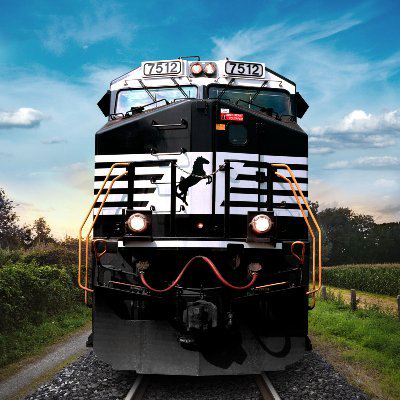
Norfolk Southern operates a large, interconnected rail network in the eastern United States, linking major origin-and-destination (O&D) markets for bulk and industrial freight. The business converts fixed infrastructure (track, rights-of-way, terminals, switching and intermodal facilities) into measured freight throughput (ton-miles and intermodal units).
Customer stickiness is driven less by a “product” than by transportation reliability and end-to-end execution. Rail shippers value predictable transit times, routing options, and the ability to aggregate large volumes efficiently. NS’s network design supports route flexibility and operational density: higher utilization on shared corridors reduces per-unit costs and improves service performance, reinforcing demand capture for customers with recurring shipping patterns.
💰 Revenue Streams & Monetisation Model
Revenue is primarily earned from transporting freight, monetized through a combination of contract rates and commodity/service mix pricing. Key monetisation components include:
- Carload freight: industrial and bulk commodities where volume density and network coverage matter for cost and service.
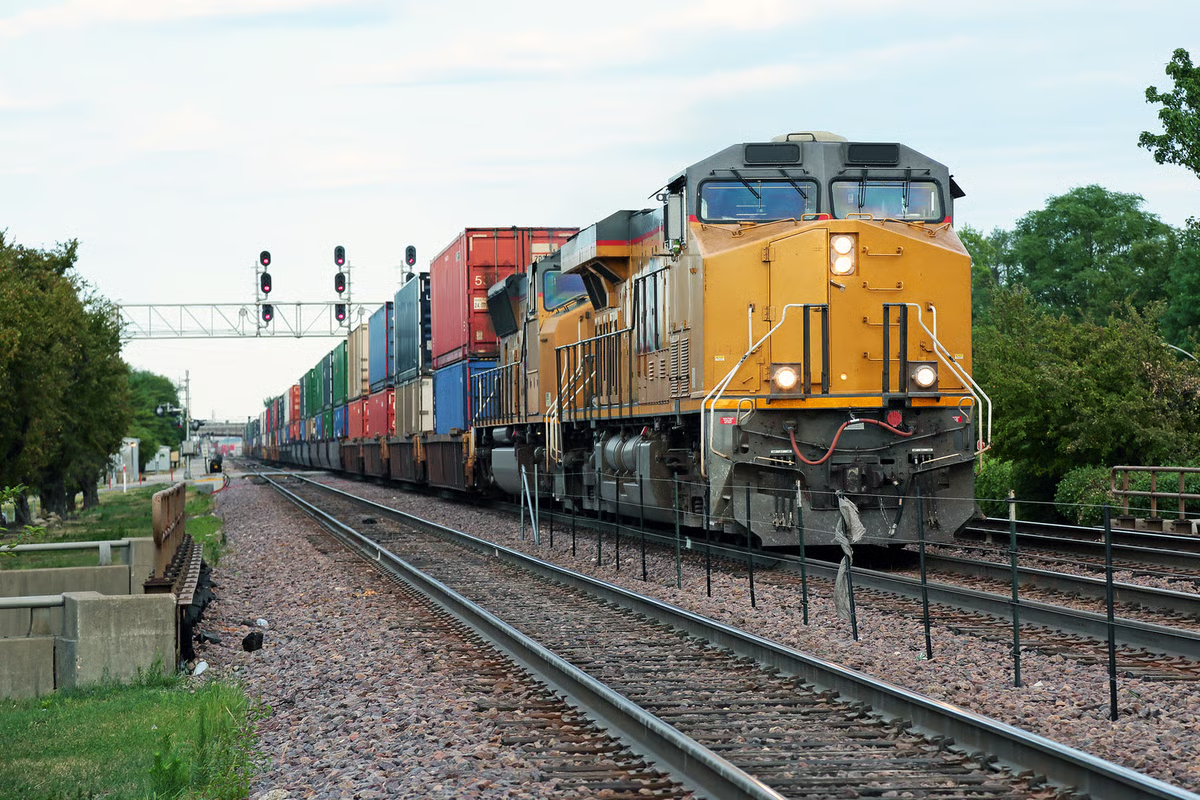
- Intermodal: moving containers and trailers between rail and drayage networks, often with longer customer contracts and logistics-plan integration.
- Supplemental charges and service economics: accessorial elements tied to routing, equipment, and operational execution; fuel-related pass-through mechanisms may affect reported revenue timing but tend to preserve underlying margin structure when implemented consistently.
Margin drivers follow the operating model: (1) yield/pricing power tied to capacity discipline and service performance, (2) network productivity reflected in operating efficiency, and (3) cost structure leverage as traffic scales over a largely fixed asset base.
🧠 Competitive Advantages & Market Positioning
NSC’s durable advantage is best characterized as a network and switching-cost moat combined with cost advantages from density.
- Switching costs (operational and contractual): Large shippers plan procurement and inventory around transit reliability and routing. Switching railroads often involves rerouting logistics networks, re-qualifying service performance, and renegotiating terms—making displacement difficult without a clear service or cost improvement.
- Network effects (routing optionality): The value of rail capacity increases with the availability of connected routes, terminals, and interchange points. NS benefits when traffic density supports more efficient scheduling, reducing delays and enabling better service metrics that attract further volume.
- Cost advantage via density and asset utilization: Unit costs decline as fixed infrastructure is used more efficiently. Competitors must invest in comparable footprint, right-of-way, and terminal capacity to replicate performance.
- Intangible operational know-how: Dispatching, yard/terminal execution, and crew and equipment planning are difficult to replicate quickly, even when competitors possess similar physical assets.
Competitive benchmarking:
- BNSF Railway (BNSF): Major competitor with a scale-heavy western network and different corridor focus. BNSF’s geography and interchanges shape where it is strongest.
- CSX (CSX): Closest eastern peer with overlapping industrial markets; competition centers on corridor service and terminal efficiency.
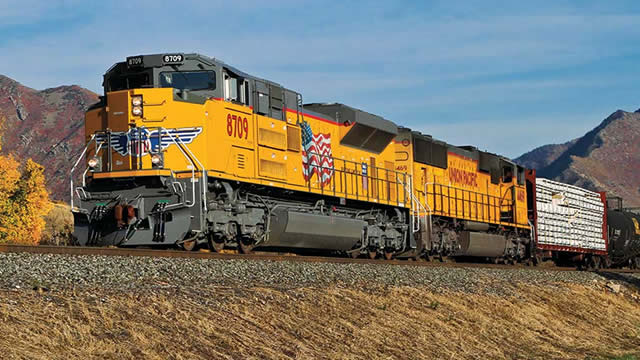
- Union Pacific (UP): Strong western franchise and intermodal capability; competes for national lanes where its network can offer routing efficiency and terminal access.
NSC’s industry focus emphasizes eastern industrial connectivity and intermodal participation across key O&D flows, competing most directly where its network density and service execution align with shipper lane requirements—rather than matching competitors by duplicating the same network across regions.
🚀 Multi-Year Growth Drivers
Growth prospects over a 5–10 year horizon are supported by structural logistics shifts and the enduring economics of rail for long-haul and high-volume lanes:
- Intermodal substitution: Rail remains structurally advantaged versus truck for longer-haul moves, especially where capacity constraints, labor availability, and highway congestion increase the attractiveness of rail-based logistics.
- Industrial demand for reliable throughput: Manufacturing, warehousing, and distribution supply chains typically require resilient transportation capacity; railroads benefit when schedules and network coverage align with industrial geography.
- Network-driven share capture: When operating discipline enables consistent service, railroads can win incremental volume in lanes that previously faced capacity or reliability constraints.
- Capex-led capacity improvements: Targeted investment in terminals, track, signaling, and grade/clearance projects can expand practical capacity and reduce operational friction, supporting volume growth without proportionate cost inflation.
The TAM is tied to North American freight volumes that can economically move by rail, including intermodal and industrial/bulk categories. NS’s competitive position tends to strengthen when logistics demand shifts toward modes that can handle higher density moves with predictable execution.
⚠ Risk Factors to Monitor
- Regulatory and labor risk: Rail is subject to oversight on service, rates/contracting frameworks, and safety, while labor agreements can influence cost structure and operational flexibility.
- Capital intensity and execution risk: Maintaining and improving network capacity requires ongoing investment; mis-timed or underperforming projects can pressure returns and service quality.
- Commodity and volume cyclicality: Freight demand can fluctuate with industrial production and bulk commodity cycles, affecting pricing, utilization, and margin stability.
- Mode competition: Trucking and integrated logistics providers can reassert share when highway capacity, freight rates, or service expectations shift.
- Operational and safety disruptions: Weather events, network disruptions, equipment reliability, and safety incidents can temporarily degrade service and increase costs, with knock-on effects for shipper confidence.
📊 Valuation & Market View
Markets typically value railroads through cash-flow-based metrics that reflect the relationship between utilization, operating efficiency, and reinvestment needs—commonly using EV/EBITDA and dividend/cash-return perspectives rather than growth-at-any-price measures.
Key drivers that move valuation include:
- Operating efficiency: improvements in operating ratio and service metrics support margin durability.
- Pricing and yield sustainability: evidence of capacity discipline and mix support more stable earnings power across cycles.
- Capex discipline and return on invested capital: the balance between growth projects and maintenance needs determines free cash flow characteristics.
- Balance sheet and credit quality: financing flexibility matters for a capital-intensive business with cyclical volumes.
🔍 Investment Takeaway
Norfolk Southern’s long-term investment case rests on a structurally difficult-to-replicate eastern rail network moat anchored in switching costs, density-driven cost advantages, and operational execution advantages. With rail’s role in North American freight remaining supported by intermodal economics and industrial logistics needs, NSC’s durable challenge is to maintain service and efficiency while executing disciplined capital programs through freight cycles.
⚠ AI-generated — informational only. Validate using filings before investing.







 Growth Catalysts