Restaurant Brands International Inc.

Restaurant Brands International Inc. (QSR) Market Cap

Restaurant Brands International Inc. has a market capitalization of $25.21B.

Price: $72.66

0.83 (1.16%)

Market Cap: 25.21B

NYSE · time unavailable

CEO: Joshua Kobza

Sector: Consumer Cyclical

Industry: Restaurants

IPO Date: 2014-12-11

Website: https://www.rbi.com

Restaurant Brands International Inc. (QSR) - Company Information

Market Cap: 25.21B|Sector: Consumer Cyclical

Company Profile

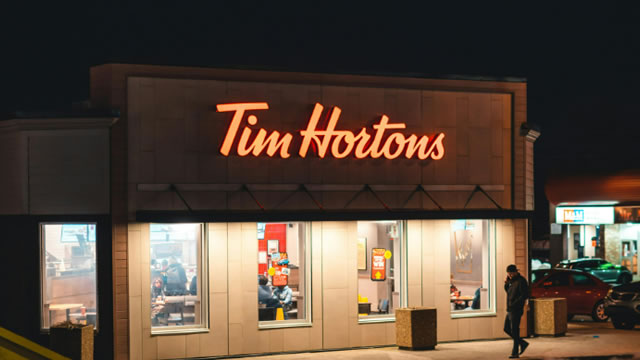
Restaurant Brands International Inc. operates as quick service restaurant company in Canada and internationally. It operates through four segments: Tim Hortons (TH), Burger King (BK), Popeyes Louisiana Kitchen (PLK), and Firehouse Subs (FHS). The company owns and franchises TH chain of donut/coffee/tea restaurants that offer blend coffee, tea, and espresso-based hot and cold specialty drinks; and fresh baked goods, including donuts, Timbits, bagels, muffins, cookies and pastries, grilled paninis, classic sandwiches, wraps, soups, and others. It is also involved in owning and franchising BK, a fast food hamburger restaurant chain, which offers flame-grilled hamburgers, chicken and other specialty sandwiches, french fries, soft drinks, and other food items; and PLK quick service restaurants that provide Louisiana style fried chicken, chicken tenders, fried shrimp and other seafood, red beans and rice, and other regional items. In addition, the company owns and franchises FHS restaurants quick service restaurants that offer subs, soft drinks, and local specialties. As of February 15, 2022, the company had approximately 29,000 restaurants in 100 countries under the Tim Hortons, Burger King, Popeyes, And Firehouse Subs brands. Restaurant Brands International Inc. was founded in 1954 and is headquartered in Toronto, Canada.

Analyst Sentiment

72%
Strong Buy

From 29 Active Polls

1Y Forecast: $83.73

▲ +15.2% Potential Upside

Consensus Target Metrics

Low Bound

$71

Median

$84

High Bound

$92

Average

$84

Price & Moving Averages

Loading chart...

🎯 Wall Street Analyst Intelligence Report

1-Year structural target targets, chart projections, and sentiment maps.

Average 1Y Target
$83.73
▲ +15.24% Upside
Low Target
$71.00
-2% Risk
Median Target
$84.00
16% Mid
High Target
$92.00
27% Max
Consensus
Buy
27 / 44 Buys

Consensus Trend Projection

Trailing closures vs. 12-month metrics map.

Analyst Vote Distribution

Aggregate institutional coverage sentiment weights.

📊 Historical Valuation Multiples

Real-time Trailing Twelve Month (TTM) momentum side-by-side with discrete quarterly metrics.

Fiscal QuarterTTMQ1 2026Q4 2025Q3 2025Q2 2025Q1 2025Q4 2024Q3 2024Q2 2024
Period EndingTrailing 12MMar 31, 2026Dec 31, 2025Sep 30, 2025Jun 30, 2025Mar 31, 2025Dec 31, 2024Sep 30, 2024Jun 30, 2024
Market Cap ($M)25,21125,64322,78921,03821,74321,72521,11823,00622,282
Enterprise Value ($M)39,88240,31439,20535,67436,71336,77235,74037,83737,343
Price to Earnings Ratio (P/E)26.4018.9750.4216.7028.7634.1620.3822.8219.89
Price/Earnings-to-Growth Ratio (PEG)72.6310.322.0293.402.251.01
Price to Sales Ratio (P/S)2.6311.339.248.599.0210.309.2010.0410.71
Price to Book Ratio (P/B)6.746.856.276.226.566.976.797.117.26
Price to Free Cash Flow Ratio (P/FCF)16.65151.7451.6943.3951.83402.3152.2747.4476.89
Enterprise Value to Sales (EV/Sales)17.8115.9014.5715.2317.4415.5716.5217.95
Enterprise Value to EBITDA (EV/EBITDA)15.5158.5156.4156.8165.6872.3949.9257.5953.89
Debt to Equity Ratio5.714.194.844.694.825.125.134.955.22

QSR Growth Runway Model

Standard long term linear growth fade

Multi-Stage Discounted Cash Flow Sandbox

Market Price$72.66
Intrinsic Value$126.23
Market Alignment
Undervalued by 73.7%relative to calculated intrinsic value
9.00%
Exp: 13%13%
i

Growth runway slowdown

This value provides a time window for the growth rate to decline beyond Stage 1 toward the terminal rate. Longer windows are most useful for companies with high growth starting conditions or strong competitive advantages. This option stretches out the growth rate slowdown across 5, 10, or 15-year steps. A high-growth starting condition (exceeding a 25% initial growth rate) automatically applies a curve decay to simulate realistic, rapid market saturation.
i

Terminal growth rate

With long-term inflation between 3-5%, revenue must grow by that baseline to maintain flat real-world market share. This value sets the permanent terminal growth rate to factor into the valuation beyond the growth slowdown runway toward maturity.

3-Stage Financial Runway Horizon

🧠 Perpetuity Horizon Engine (Stage 3: Post-2035)

Terminal FCF Base$4.78B
Perpetuity TV Value$89.98B
Discounted TV (PV)$38.01B
TV Weighting %64.5%
⚠️
Financial Model Disclaimer & Risk Disclosure: This interactive scenario simulator is an educational sandbox provided strictly for informational and analytical research purposes. Core historical financial statements and consensus estimates are sourced directly via Financial Modeling Prep (FMP). All downstream outputs are entirely deterministic, hypothetical projections generated by combining automated mathematical formulas (including linear interpolation and Gaussian bell-curve decay models) with user-selected variables and third-party financial data inputs. Users assume all liability for trading decisions executed based on these sandbox calculations.

📘 Full Research Report

ℹ️

AI-Generated Research: This report is for informational purposes only.

📘 RESTAURANTS BRANDS INTERNATIONAL I (QSR) — Investment Overview

🧩 Business Model Overview

Restaurant Brands International operates a multi-brand quick-service restaurant (QSR) platform primarily through a franchising model. The value chain is centered on (1) brand development and system standards, (2) franchisor services that include operational playbooks, marketing programs, and technology enablement, and (3) monetisation via fees and royalties paid by franchisees, rather than direct restaurant ownership.

Most restaurant-level economics accrue to franchisees, while the franchisor captures recurring revenue streams linked to system size and unit performance. This structure reduces direct capital intensity versus an owner-operated restaurant model and creates an incentive alignment around franchisee profitability, which supports long-term system growth.

Customer stickiness is largely franchise- and brand-driven rather than contractual: repeat visits depend on brand preference, menu relevance, and service convenience. From the franchisor perspective, stickiness is reinforced by the long-running nature of franchise agreements, brand standards, and franchisee reliance on established supply, marketing, and operational systems.

💰 Revenue Streams & Monetisation Model

The monetisation model is dominated by recurring, system-based revenue:

  • Royalties tied to franchise restaurant sales, creating an operating lever that scales with system performance.
  • Franchise and development fees that increase with unit expansion (new store openings, renewals, and development commitments).
  • Marketing and advertising fund contributions that support brand-building activities and local execution, while typically flowing through the franchisor’s revenue and cost structure.
  • Other services (including technology, training, and related franchisor services), which can support margin stability when scaled across the system.

Key margin drivers follow system growth and royalty economics: unit expansion increases fee revenue, while stable or improving franchisee sales lift royalty streams. Because the franchisor model is less capital intensive than ownership, incremental revenue associated with system-level performance can translate into attractive earnings power as fixed overhead is spread over a larger footprint.

🧠 Competitive Advantages & Market Positioning

The durable moat is best described as a combination of Intangible Assets (brand equity and global system know-how) and Scale/Distribution leverage (standardised supply chain relationships, technology platforms, and marketing execution across a large franchise base). The operational system creates switching frictions for franchisees because successful execution depends on adherence to brand standards, training, and established processes.

Competitive benchmarking:

  • Yum! Brands (Taco Bell, KFC, Pizza Hut): broad QSR portfolio with a stronger emphasis on certain chicken and Mexican-led formats.
  • McDonald’s: a scale leader with a heavy emphasis on company-supported franchising and corporate operational capability, with strong delivery and value-platform execution.
  • Wendy’s: a more concentrated single-brand exposure with different menu positioning and unit economics.

Industry focus contrast: Restaurants Brands International’s positioning is built around a multi-brand franchisor platform featuring Burger King, Tim Hortons, and Popeyes, balancing burger and chicken exposure with a beverage-forward daypart strategy through Tim Hortons. Competitors may lead in specific geographies or formats, but the franchisor’s advantage comes from operating multiple brands under one systems-and-services umbrella, enabling scale efficiencies in technology, training, and marketing programs while maintaining brand-specific menu and operational execution.

Why competitors face difficulty taking share:

  • Intangible asset depth: established brands carry customer recognition, menu development history, and tested operational standards that raise the learning curve for new entrants.
  • System scale: large franchise networks support better bargaining power and technology rollout economics, which can reduce unit-level cost volatility and improve execution consistency.
  • Franchisee dependence: franchise success is tied to adherence to the system, supply guidance, and marketing initiatives; changing systems typically requires re-training, reconfiguration of operations, and loss of shared brand leverage.

🚀 Multi-Year Growth Drivers

A 5–10 year growth framework for a franchising QSR platform is anchored in unit expansion, brand evolution, and sales-per-unit resilience:

  • Geographic expansion: extending brand footprints in underpenetrated regions where franchising supports lower incremental capital requirements than ownership.
  • Menu and format refresh: ongoing product development tied to category trends (e.g., chicken and value-oriented offerings), plus remodel programs and improved store designs that lift throughput and customer satisfaction.
  • Digital ordering and loyalty: increased ordering convenience and higher frequency through app-based experiences, loyalty mechanics, and operational support for delivery and pickup.
  • Daypart and beverage strategy: leveraging formats that can capture morning and afternoon traffic, particularly through Tim Hortons’ beverage and snack structure.
  • Franchisee profitability as a growth catalyst: disciplined franchisor support and supply practices can help franchisees sustain reinvestment cycles, supporting new store openings and refurbishments.

The total addressable market remains large in QSR globally, with meaningful growth potential in regions where population growth, urbanisation, and shifting eating habits continue to expand store counts and frequency of visits.

⚠ Risk Factors to Monitor

  • Franchisee credit risk and cannibalisation: a downturn in consumer demand or mispricing of store openings can pressure franchisee cash flows and increase the likelihood of underperformance, which can affect royalty durability and system expansion.
  • Commodity and input cost volatility: sustained inflation in key food and packaging inputs can pressure franchise profitability and franchisee sales volumes, potentially requiring pricing actions that can impact traffic.
  • Regulatory and public health scrutiny: nutrition and advertising standards, labour regulations, and potential restrictions on certain marketing practices can raise compliance costs and constrain promotional flexibility.
  • Brand execution risk: menu missteps, slower-than-expected digital adoption, or weaker promotional cadence can reduce brand momentum and franchise sales.
  • Foreign exchange and macro sensitivity: international franchising introduces currency and economic-cycle exposures affecting consumer spending and franchisee expansion pace.

📊 Valuation & Market View

Equity markets often value mature franchisors using a blend of EV/EBITDA-style frameworks and price-to-sales (P/S) where recurring fee revenue provides visibility. For QSR franchisors, valuation sensitivity typically concentrates on:

  • System growth: unit expansion rate and the quality of new store economics.
  • Royalty and comparable sales durability: performance linked to franchise restaurant throughput and traffic stability.
  • Margin profile: operating leverage at the franchisor level and stability of overhead versus system scale.
  • Capital allocation discipline: debt management and the balance between reinvestment in brand systems versus shareholder returns.

A credible market view treats franchise revenue as structurally resilient but still exposed to consumer demand elasticity, franchisee financial health, and input cost inflation.

🔍 Investment Takeaway

Restaurants Brands International presents a high-quality franchisor investment profile built on intangible brand assets, system-scale operational advantages, and recurring royalty-like revenue tied to franchise performance. The core thesis is that sustained unit growth supported by menu innovation, digital convenience, and franchisor-led execution can compound system revenue while limiting direct capital intensity. Risks concentrate in franchisee credit stress, input cost inflation, and brand execution—areas that warrant ongoing diligence, but that do not negate the structural advantages of a scaled multi-brand franchising platform.


⚠ AI-generated — informational only. Validate using filings before investing.

📰 Market News & Coverage

15 Stories Available

Real-time institutional reporting and market updates for QSR.

zacks.com2026-06-05

Restaurant Brands (QSR) Down 9.2% Since Last Earnings Report: Can It Rebound?

Restaurant Brands (QSR) reported earnings 30 days ago. What's next for the stock?

newsfilecorp.com2026-06-05

Happy Belly Food Group's Heal Wellness QSR Announces the Grand Opening of Its Newest Location in Woodstock, Ontario

Toronto, Ontario--(Newsfile Corp. - June 5, 2026) - Happy Belly Food Group Inc. (CSE: HBFG) (OTCQB: HBFGF) ("Happy Belly" or the "Company"), a leading consolidator of emerging restaurant brands, is pleased to announce the grand opening of its newest Heal Wellness ("Heal") restaurant location this Saturday, June 6th, 2026, at 860 Dundas St, Unit 2, Woodstock, Ontario. This location further advances Heal's disciplined, asset-light growth strategy as the brand continues to expand across Ontario's high-growth urban and suburban markets.

newsfilecorp.com2026-06-04

Happy Belly Food Group's Heal Wellness QSR Announces the Grand Opening of Its 40th Location in Montreal's Griffintown

Toronto, Ontario--(Newsfile Corp. - June 4, 2026) - Happy Belly Food Group Inc. (CSE: HBFG) (OTCQB: HBFGF) ("Happy Belly" or the "Company"), a leading consolidator of emerging restaurant brands, is pleased to announce the grand opening of its newest Heal Wellness ("Heal") restaurant, marking the opening of our 40th Heal Wellness location this Saturday, June 6th, 2026, at 994 Ottawa Street, Griffintown, Montreal, Quebec. Heal Wellness is a fast-growing quick-service restaurant ("QSR") brand specializing in fresh smoothie bowls, açaí bowls, and smoothies, built around clean ingredients and a better-for-you lifestyle.

prnewswire.com2026-06-03

Restaurant Brands International Inc. Announces Election of Directors

MIAMI, June 3, 2026 /PRNewswire/ - Restaurant Brands International Inc. (NYSE: QSR) (TSX: QSR) ("RBI") today announced the results of the vote on the election of directors at its Annual Meeting of Shareholders held on June 3, 2026. The total number of eligible votes represented in person or by proxy at the meeting was 403,178,212 representing 88.29% of all eligible votes.

marketbeat.com2026-06-03

Slice of the Pie: Why Yum's Deal Lifts QSR

A shift is underway in the quick-service restaurant sector (QSR). Yum! Brands NYSE: YUM is in exclusive talks to divest its Pizza Hut division to private equity firm LongRange Capital in a deal valued between $3.6 billion and $4.3 billion.

seekingalpha.com2026-06-03

Restaurant Brands International Inc. (QSR) Shareholder/Analyst Call Prepared Remarks Transcript

Restaurant Brands International Inc. (QSR) Shareholder/Analyst Call Prepared Remarks Transcript

seekingalpha.com2026-05-28

Restaurant Brands International Inc. (QSR) Presents at Bernstein 42nd Annual Strategic Decisions Conference Transcript

Restaurant Brands International Inc. (QSR) Presents at Bernstein 42nd Annual Strategic Decisions Conference Transcript

foxbusiness.com2026-05-24

Chipotle rival Guzman y Gomez Mexican Kitchen closes all US restaurants

Guzman y Gomez, an Australian Chipotle rival, abruptly closed all eight of its U.S. restaurants in Chicagoland after six years, ending plans to open hundreds of locations.

prnewswire.com2026-05-22

Restaurant Brands International Inc. to Participate in the Bernstein 42nd Annual Strategic Decisions Conference

MIAMI, May 22, 2026 /PRNewswire/ - Restaurant Brands International Inc. (NYSE/TSX: QSR, TSX: QSP) ("RBI") announced today that Patrick Doyle, Executive Chairman, and Josh Kobza, Chief Executive Officer will participate in a fireside chat at the Bernstein 42nd Annual Strategic Decisions Conference in New York City on May 28, 2026 at 9:00am Eastern Time. A live audio webcast will be available on the company's investor relations website (http://rbi.com/investors) and a replay will be available for a limited time following the event.

newsfilecorp.com2026-05-20

Happy Belly Food Group's Heal Wellness QSR Secures Real Estate Location for Multi-Unit Franchisee in the City of Waterloo, Ontario

Toronto, Ontario--(Newsfile Corp. - May 20, 2026) - Happy Belly Food Group Inc. (CSE: HBFG) (OTCQB: HBFGF) ("Happy Belly" or the "Company"), a leading consolidator of emerging restaurant brands, is pleased to announce that our multi-unit franchisee David Lamph has secured his 9th Heal location, located in the City of Waterloo, Ontario. This location further advances Heal's disciplined, asset-light growth strategy as the brand continues to expand across Ontario's high-growth urban and suburban markets.

businessinsider.com2026-05-18

Burger King wants to become the top burger chain in the country. Its comeback plan may take decades, but it's working.

Burger King is ramping up its "reclaim the flame" strategy to become the top US burger chain. The plan, launched in 2022, could take "decades" to accomplish, leadership told Business Insider.

seekingalpha.com2026-05-14

Burger Wars: McDonald's Vs. Restaurant Brands International

Restaurant Brands International has outperformed McDonald's Corporation recently, driven by stronger U.S. sales growth and market share gains. My valuation-driven “Flipping Burger” strategy proposes rotating between QSR and MCD as their valuation premium narrows or widens. QSR delivered 5.8% U.S. same-store sales growth in Q1 versus MCD's 3.9%, and QSR's EPS grew 14.5% versus MCD's 6%.

newsfilecorp.com2026-05-13

Happy Belly Food Group Reports $19.3M in Q1 System Wide QSR Sales Up 80.4% Growth YOY

Toronto, Ontario--(Newsfile Corp. - May 13, 2026) - Happy Belly Food Group Inc. (CSE: HBFG) (OTCQB: HBFGF) ("Happy Belly" or the "Company"), a leader in acquiring and scaling emerging food brands is pleased to announce its unaudited financial results and corporate update for the fiscal quarter ended March 31st, 2026. Q1 2026 Financial and Recent Business Highlights System-wide sales across Quick Service Restaurants (QSR") totalled $19.3M in the first quarter of fiscal 2026, up 80.4% versus the same quarter last year (2025 - $10.7M).

seekingalpha.com2026-05-11

Yum China: High-Quality Operator In The QSR Space

Yum China's primary brands are KFC, Pizza Hut, and Taco Bell, of which it has exclusive rights to operate and sub-license in China (paying a 3% systemwide sales royalty back to its former parent company). Yum China increased its revenue from $7.2 billion in FY 2017 to $11.8 billion in FY 2025. That's a compound annual growth rate of 6.4%. Yum China has a stellar financial position. The company carries essentially no long-term debt at all.

newsfilecorp.com2026-05-11

Happy Belly Food Group's Heal Wellness QSR Secures Real Estate Location for Multi-Unit Franchisee in the City of Halifax, Nova Scotia.

Toronto, Ontario--(Newsfile Corp. - May 11, 2026) - Happy Belly Food Group Inc. (CSE: HBFG) (OTCQB: HBFGF) ("Happy Belly" or the "Company"), a leader in acquiring and scaling emerging food brands is pleased to announce that, further to its May 28th, 2025 news release announcing the signing of a franchise agreement for Heal Wellness in the province of Nova Scotia, Heal Wellness ("Heal"), its fresh smoothie bowls, acai bowls, and smoothies quick-serve restaurant ("QSR") brand, has secured a real estate location in the City of Halifax, Nova Scotia. This location represents the first of two planned Heal Wellness locations in Halifax for multi-unit franchisee Wade Bruce and is expected to open in Q3 2026.

📊 AI Financial Analysis

Powered by StockMarketInfo
Earnings Data: Q Ending 2026-03-31

"QSR reported Q1 2026 revenue of $2.264B and net income of $338M (EPS $0.98). On an YoY basis, revenue rose from $2.109B (Q1 2025) to $2.264B, up ~7.4%, while net income increased from $159M to $338M, up ~112.7% (EPS notably improved from $0.68 to $0.98). Sequentially (QoQ), revenue declined from $2.466B (Q4 2025) to $2.264B, down ~8.2%, and net income jumped from $113M to $338M, up ~199.1%—suggesting a material improvement in margins/other items. Profitability strengthened: net profit margin improved from 4.6% (Q4 2025) to 14.9% in Q1 2026, and operating margin was 26.8% vs 26.2% in Q4 2025. Cash flow supported earnings quality: operating cash flow was $227M and free cash flow was $169M in Q1 2026. Shareholder returns look strong, led by price momentum: the stock is up ~25.8% over the last 1 year. The company continues to return capital via dividends (dividends paid were ~$283M in Q1 2026) and moderate buybacks ($32M repurchased), while maintaining liquidity (cash $1.01B). Balance sheet resilience remains adequate for a restaurant business model: total assets were $24.88B with equity of $5.29B. Leverage is meaningful with net debt still elevated (~$0.98B), but coverage via earnings and steady operating cash flow appears improved in the latest quarter. "

Revenue Growth

Positive

YoY revenue +7.4% (Q1 2025 $2.109B to Q1 2026 $2.264B). QoQ revenue -8.2% (Q4 2025 $2.466B to Q1 2026 $2.264B), indicating a soft sequential demand quarter.

Profitability

Strong

Net margin expanded sharply to 14.9% in Q1 2026 vs 7.5% in Q1 2025 and 4.6% in Q4 2025. Operating margin improved to 26.8% (vs 26.2% in Q4 2025). Net income +112.7% YoY and EPS rose from $0.68 to $0.98.

Cash Flow Quality

Good

Operating cash flow was $227M and free cash flow $169M in Q1 2026. Continued significant dividends (-$283M) with modest buybacks (-$32M). Free cash flow was solid but below Q4 2025 levels in absolute terms.

Leverage & Balance Sheet

Neutral

Total assets were $24.88B with equity $5.29B. Leverage remains present with total debt $1.99B; net debt about $0.98B. Equity was stable-to-improving vs prior periods, but overall balance sheet leverage is still notable.

Shareholder Returns

Strong

Strong 1-year price momentum: +25.82% 1y_change. Dividend yield is ~1.1% (from latest quarter ratios). Buybacks continue, though relatively small vs dividends.

Analyst Sentiment & Valuation

Positive

Consensus target implies moderate upside (current price $78.32 vs target-consensus ~$83.71). Valuation multiples appear elevated (e.g., price/earnings ~19.0 in the latest ratio set), but the earnings inflection supports sentiment.

Disclaimer:This analysis is AI-generated for informational purposes only. Accuracy is not guaranteed and this does not constitute financial advice.

Fundamentals Overview

Loading fundamentals overview...

Q1 2026 showed RBI converting top-line momentum into strong earnings growth despite identifiable segment offsets. Consolidated metrics were solid: comps +3.2%, net restaurant growth +2.6%, system-wide sales +6.2%, with organic AOI +10.7% and adjusted EPS rising to $0.86 (+14.6% nominal). The model’s earnings leverage was supported by non-operating-ish tailwinds (net bad debt recoveries, lower segment G&A, and BK China royalty revenue restart post-JV close on January 30). The clearest headwind was Tim Hortons advertising/services timing creating a $13m AOI drag in Q1 and expected similarity in Q2 (full-year drag ~$20m vs $14m in 2025). Brand execution was differentiated: Burger King U.S. sustained ~5.8% comp and Tim Hortons continued its 20-quarter comp streak (+1.5% Canada). Popeyes, however, remains the key risk—comps -6.5%—but management outlined a focused execution/value reset and reiterated confidence in returning to positive comps in 2H 2026.

AI IconGrowth Catalysts

  • Burger King U.S. “Reclaim the Flame” continued brand elevation: nearly 6% U.S. comparable sales growth and highest Whopper average unit volumes in 3+ years
  • Tim Hortons Canada value + daypart innovation: $3 breakfast sandwich/wrap-with-coffee and $8.99 loaded wrap meals driving higher combo incidents
  • Tim Hortons beverages momentum: cold beverages +10% YoY; espresso-based drinks +8% and tea up 8%; protein and zero sugar center launches planned for warmer months
  • Popeyes execution reset framework: increased field support with shoulder-to-shoulder training, GM guest-experience rallies (~20 cities), and tighter focus on bone-in, tenders, and sandwich
  • Popeyes value reset: $5 Faves platform improving value scores with expectation to return to positive comps in 2H 2026
  • Firehouse Subs development: net restaurant growth +8.1% with average paybacks <4 years and accelerating unit-growth expectations for 2026

Business Development

  • Tim Hortons loyalty partnership with Canadian Tire expected in the second half of 2026
  • Burger King China joint venture closed with CPE; CPE injected $350 million of primary capital to fund development for the next 5 years
  • Burger King China performance catalysts referenced: optimizing supply chain, enhancing marketing, and improving restaurant build costs
  • Popeyes China referenced as working to solidify brand positioning and increase awareness; acceleration expected with new long-term operator within 2 years

AI IconFinancial Highlights

  • Q1 comparable sales +3.2%; net restaurant growth +2.6%; system-wide sales +6.2%
  • Organic AOI +10.7% and adjusted EPS +14.6% YoY; adjusted EPS $0.86 vs $0.75 prior year
  • Tailwinds to organic AOI: $12m net bad debt recoveries (vs ~$8m expense prior year), $12m segment G&A decline (excluding Restaurant Holdings), and BK China royalty revenue restart after JV close (January 30)
  • Offsetting drag: $13m AOI drag from Tim Hortons advertising and other services in Q1 (expected similar drag in Q2 with partial reversal in back half); full-year AOI drag guide ~$20m in 2026 vs $14m in 2025
  • Adjusted effective tax rate 18.5% (full-year expectation 18%-19%)
  • FX tailwind: ~$0.04 to adjusted EPS; adjusted net interest expense improved modestly $128m to $124m
  • Free cash flow nearly $200m in Q1 including $53m CapEx and cash inducements and $26m benefit from swaps/hedges

AI IconCapital Funding

  • Share repurchases resumed in March; total repurchased $34m in Q1 and $26m in April
  • Buyback outlook: repurchase approx. $500m for full-year 2026 via programmatic approach subject to trading dynamics
  • Total returned to shareholders in Q1: ~$315m (dividends + share repurchases)
  • Liquidity end of quarter: ~$2.3b total liquidity (including ~$1.0b cash); net leverage ratio 4.2x

AI IconStrategy & Ops

  • Tim Hortons: loyalty roll-up-to-win returned in February with refreshed, more engaging experience; digital sales mix nearly 40% in Q1
  • Tim Hortons: average Google rating ~4 stars; guest satisfaction improved over 2 points YoY and PM daypart reached an all-time high in Q1
  • Burger King U.S.: Elevated Whopper launched with new glazed-spun creamer mayo and clamshell packaging; nationwide Whopper Wednesday in April to reengage lapsed guests
  • Burger King U.S.: franchise alignment—97% vote to maintain elevated ad fund contribution announced at Investor Day
  • Popeyes: increased field support and inaugural GM guest experience rallies across ~20 cities over past 2 months; early product satisfaction/operational metric improvements
  • International: planned supply chain optimization, marketing enhancement, and build cost improvements tied to BK China JV execution

AI IconMarket Outlook

  • Preliminary planning: next earnings call scheduled morning of August 6, 2026
  • 2026 guidance highlights: segment G&A ex-restaurant holdings ~$600m-$620m; net adjusted interest expense ~$500m-$520m (mid-3% average SOFR, ~15% debt exposure); 2026 CapEx + cash inducements ~$400m
  • AOI drag: expects similar Tim Hortons advertising/services drag in Q2; full-year AOI drag approx. $20m in 2026 vs $14m in 2025
  • Organic growth durability framework reiterated: ~3% same-store sales and ~8% organic AOI growth anchored by disciplined costs and accelerating net restaurant growth
  • Return-to-growth cadence guidance: Popeyes management confidence to return to positive comps in 2H 2026

AI IconRisks & Headwinds

  • Popeyes Q1 headwind: comparable sales -6.5% and system-wide sales -3.9% driven by execution/guest service and a value proposition that needs rebuilding
  • Tim Hortons cost timing: Q1 Tim advertising/other services created $13m AOI drag; expects similar drag in Q2
  • Macro pressures in Canada: weather impacts (including January conditions in Toronto described as extremely severe) and weaker consumer confidence tied to higher gas prices; management expects macro ups/downs to even out
  • International operating exposure to energy costs (utilities) flagged as something the company will monitor across 2026

Q&A: Analyst Interest

  • Topic: Tim Hortons Canada macro sensitivity and outlook: Management attributed Q1 softness to weather (incl. Toronto’s record conditions) and consumer confidence impacted by higher gas prices, but emphasized outperformance vs sector by ~150 bps and confidence from continued Canadian Tire partnership, remodels (~300+), and increased openings plus seasonal cold-beverage/PM ramp.
  • Topic: International consumer health and energy-cost risk: Management reported >5% International same-store sales with EMEA and Asia Pacific strength (including double-digit Japan/China comps and broad Asia breadth), while noting active monitoring of energy costs (utilities) that could flow through to restaurant costs; guidance implied no immediate demand deterioration so far.
  • Topic: Burger King U.S. sustainability/stacking expectations: Transcript cuts off before management’s full response. The question requested durability of mid-single-digit results without value drag and whether management expects low-to-mid-single-digit growth or higher 2-year stacks; no quantified guidance was provided in the excerpt.

Sentiment: MIXED

Note: This summary was synthesized by AI from the QSR Q1 2026 earnings transcript. Financial data is complex; please verify all metrics against official SEC filings before making investment decisions.

📋 Official Regulatory 10-K / 10-Q SEC Filings

Direct authenticated documentation links to audited SEC database reports for QSR.

SEC EDGAR Live Feed
Loading financial data and tables...
📁

SEC Filings (QSR)

© 2026 Stock Market Info — Restaurant Brands International Inc. (QSR) Financial Profile