📘 REXFORD INDUSTRIAL REALTY REIT INC (REXR) — Investment Overview
🧩 Business Model Overview
REXFORD INDUSTRIAL REALTY REIT INC operates as a focused owner and developer of industrial properties, with an emphasis on strategic infill and logistics-oriented submarkets. The value chain is straightforward: acquire or develop warehouses and light industrial space, lease to businesses that require efficient last-mile and regional distribution, then generate income through contractual rent and tenant reimbursements.
Customer stickiness is driven by the operational cost of relocating distribution networks (real estate, permitting, build-out, and logistics disruption). As tenants renew or expand, incremental space from the same property base can support revenue stability, while development and redevelopment activity can create future growth.
💰 Revenue Streams & Monetisation Model
The monetisation model is dominated by recurring rental income. Rent typically reflects a combination of base rent and lease structure features such as scheduled escalators. Tenant reimbursements for operating expenses (common area maintenance, property taxes, insurance, and utilities) provide additional recurring cash flow, partially insulating net rental performance from cost inflation depending on lease terms.
A secondary source of monetisation comes from capital recycling: dispositions of stabilized assets and capital invested into new development opportunities. Over a full cycle, the ability to underwrite spreads between acquisition/development costs and stabilized market rents is a key margin driver.
🧠 Competitive Advantages & Market Positioning
REXR’s primary moat is not a product IP advantage; it is a location- and execution-based advantage that creates effective customer stickiness (logistics “switching costs”) and supports development optionality.
- Geographic concentration and logistics adjacency (switching costs): Tenants value proximity to demand centers and transportation corridors. Moving distribution capacity is operationally disruptive and expensive, which increases lease retention and reduces effective churn versus purely interchangeable space.
- Infill land scarcity and development know-how (cost and timing advantage): Building viable industrial space in high-demand, constrained locations requires land access, entitlement execution, construction planning, and market-specific underwriting. These execution competencies are difficult for new entrants to replicate quickly.
- Portfolio-level tenant demand and renewal dynamics (durable occupancy): A diversified base of industrial users can support stabilization through cycle moves, while in-place assets benefit from ongoing tenant improvements and operational familiarity.
Competitive benchmarking:
- Prologis (PLD): A global, scaled logistics owner/manager with broad footprint and development capability across many major industrial markets. Compared with Prologis, REXR’s positioning is more focused toward specific infill and logistics-intensive submarkets, aiming for differentiated demand through local market depth.
- Terreno Realty (TRNO): Concentrated on urban infill industrial and smaller warehouse formats. Terreno competes for similar tenant “last-mile” needs, but REXR’s differentiation relies on localized development and redevelopment execution in its targeted geographies.
- EastGroup Properties (EGP): Emphasizes high-quality industrial assets in growing Sunbelt and logistics corridors. EastGroup’s strategy competes for tenant share, while REXR’s advantage centers on infill market access and the ability to create supply where land availability and entitlement timelines constrain competing development.
Overall, REXR’s competitive strength is “hard-to-replicate” through a combination of constrained infill supply, customer location preference, and an experienced development/redevelopment platform that improves odds of achieving stabilized performance.
🚀 Multi-Year Growth Drivers
Over a 5–10 year horizon, industrial real estate demand is supported by structural supply chain and occupancy fundamentals:
- Supply chain reconfiguration and capacity rationalization: Businesses seek distribution networks that shorten delivery times and reduce end-to-end logistics friction, supporting demand for strategically placed industrial space.
- Infill and near-demand warehousing: Population growth and economic activity concentrated near major metro areas tend to favor industrial assets close to customer density, where land scarcity limits new supply.
- Tenant operational complexity (rational switching costs): Leasehold improvements, specialized configurations, and compliance needs make relocations costly, supporting retention and rent durability when properties match tenant workflows.
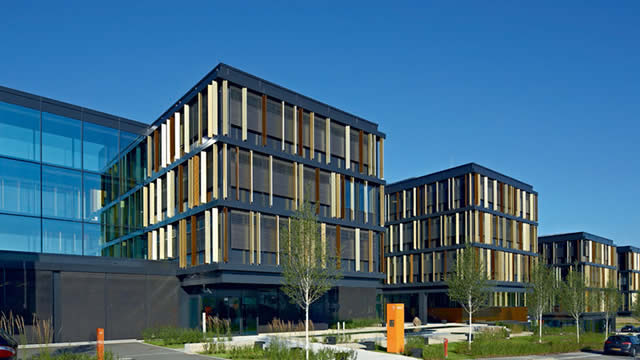
- Redevelopment and modernization cycle: Upgrading older assets toward contemporary warehouse requirements can expand utility and improve the probability of locking in favorable leases as the tenant base evolves.
TAM expansion is tied to the scale of industrial space required for distribution within constrained metro and logistics-adjacent markets, not simply broad national square footage. REXR’s model targets where new supply is structurally harder to create at attractive economics.
⚠ Risk Factors to Monitor
- Interest rate and financing environment risk: REIT performance is sensitive to debt costs and refinancing conditions, which can affect development timelines and capitalization rates across the sector.
- Leasing and absorption variability: Industrial demand can soften during economic slowdowns, and lease-up pace for development/redevelopment assets may lag underwriting assumptions.
- Tenant credit and rollover risk: Concentrated exposure to certain business segments or tenant capitalization stress can impact rent collection and renewal outcomes.
- Development execution and entitlement risk: Permitting, construction cost inflation, and schedule slippage can reduce development spreads and extend capital at risk.
- Environmental and regulatory liabilities: Industrial properties can carry environmental remediation and compliance obligations that influence cash flows and operating costs.
📊 Valuation & Market View
Industrial REIT valuation is typically anchored to cash-flow durability metrics such as FFO/AFFO and net operating income (NOI), adjusted for reinvestment needs. The market also implicitly prices assets through cap rates, and sentiment is influenced by interest rates and the credit quality of debt markets.
Key valuation drivers include:
- Stabilized occupancy and rent growth visibility (including the quality of lease structure)
- Development pipeline execution and expected yield on incremental capital
- Interest coverage and debt maturity profile affecting refinancing optionality
- NOI resilience through expense pass-through and lease protections
🔍 Investment Takeaway
REXR’s long-term thesis rests on a defensible position in industrial infill markets where tenant operations create practical switching costs, and where development/redevelopment execution in constrained geographies supports future growth. The investment case is strongest when capital allocation maintains disciplined underwriting, occupancy durability holds through cycle variability, and the platform continues converting land and entitlement advantages into stabilized income streams.
⚠ AI-generated — informational only. Validate using filings before investing.












 Growth Catalysts