RTX Corporation

RTX Corporation (RTX) Market Cap

RTX Corporation has a market capitalization of .

No quote data available.

CEO: Christopher T. Calio

Sector: Industrials

Industry: Aerospace & Defense

IPO Date: 1952-09-15

Website: https://www.rtx.com

RTX Corporation (RTX) - Company Information

Market Cap: -|Sector: Industrials

Company Profile

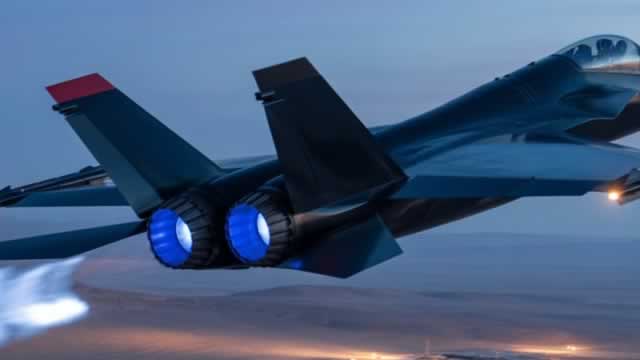
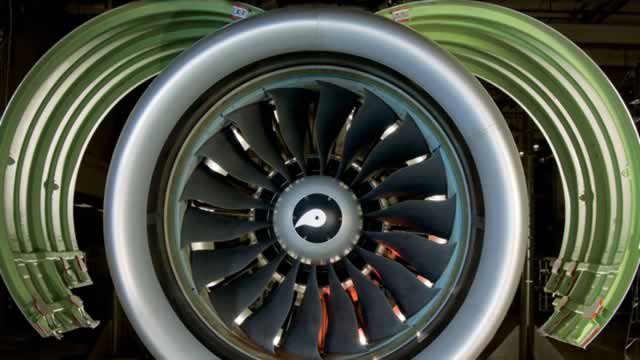
RTX Corporation, an aerospace and defense company, provides systems and services for the commercial, military, and government customers in the United States and internationally. It operates through three segments: Collins Aerospace, Pratt & Whitney, and Raytheon. The Collins Aerospace Systems segment offers aerospace and defense products, and aftermarket service solutions for civil and military aircraft manufacturers and commercial airlines, as well as regional, business, and general aviation, defense, and commercial space operations. This segment also designs, produces, and supports cabin interior, including oxygen systems, food and beverage preparation, storage and galley systems, and lavatory and wastewater management systems; battlespace, test and training range systems, crew escape systems, and simulation and training solutions; information management services; and aftermarket services that include spare parts, overhaul and repair, engineering and technical support, training and fleet management solutions, and asset and information management services. Its Pratt & Whitney segment supplies aircraft engines for commercial, military, business jet, and general aviation customers; and produces, sells, and services military and commercial auxiliary power units. The Raytheon segment provides defensive and offensive threat detection, tracking, and mitigation capabilities for U.S., foreign government, and commercial customers. The company was formerly known as Raytheon Technologies Corporation and changed its name to RTX Corporation in July 2023. RTX Corporation was incorporated in 1934 and is headquartered in Arlington, Virginia.

Analyst Sentiment

75%
Strong Buy

From 23 Active Polls

1Y Forecast: $224.33

▲ +0.0% Potential Upside

Consensus Target Metrics

Low Bound

$204

Median

$227

High Bound

$240

Average

$224

Price & Moving Averages

Loading chart...

🎯 Wall Street Analyst Intelligence Report

1-Year structural target targets, chart projections, and sentiment maps.

Average 1Y Target
$224.33
▲ +23.95% Upside
Low Target
$204.00
13% Risk
Median Target
$227.00
25% Mid
High Target
$240.00
33% Max

Consensus Trend Projection

Trailing closures vs. 12-month metrics map.

Analyst Vote Distribution

Aggregate institutional coverage sentiment weights.

Sentiment volume allocation data unavailable.

Historical valuation matrix unavailable.

📘 Full Research Report

ℹ️

AI-Generated Research: This report is for informational purposes only.

📘 RTX CORP (RTX) — Investment Overview

🧩 Business Model Overview

RTX operates as a vertically integrated aerospace and defense supplier across engines, avionics/electronics, and mission systems. The economic model typically runs through a two-layer value chain:

  • Platform and program sales (development + production): RTX wins long-cycle programs for aircraft engines, airframes/avionics subsystems, radar/communications, and defense mission equipment—where qualification, certification, and government procurement processes create durability of demand.
  • Aftermarket and services (installed-base monetisation): Once products enter service, RTX generates recurring value through maintenance, upgrades, spares, component overhauls, and training/support. This converts large installed bases into sustained cash generation even as unit production fluctuates.

Customer stickiness is reinforced by long qualification timelines, safety/mission assurance requirements, and the difficulty of swapping certified subsystems mid-life.

💰 Revenue Streams & Monetisation Model

RTX’s monetisation is dominated by two profit engines:

  • Aftermarket services and sustainment: Pricing power and reliability of demand tend to be stronger here than in pure production. Margin profiles are supported by parts availability, life-cycle management, and engineered upgrades tied to installed hardware.
  • Program production and delivery: These streams can be more cyclical due to defense budgeting and aircraft production cycles, but they often carry higher value from complex integration and platform performance requirements.

Overall margin drivers typically include: (1) mix toward higher-value aftermarket content, (2) program execution discipline and bill-of-material control, and (3) platform-level contract structure that shares risk and performance requirements between customer and supplier.

🧠 Competitive Advantages & Market Positioning

RTX’s core moat is best described as a combination of switching costs (certification/qualification and installed-base dependence) and long-duration program relationships (performance accountability over life of platform).

Why competitors struggle to take share

  • High switching costs (installed base + certification): Once engines, avionics, and mission systems are certified and integrated, replacing them requires re-qualification, safety re-validation, integration work, and schedule disruption for operators and defense forces.
  • Technical depth and integration capability: Complex subsystems benefit from long-term engineering iteration, supply chain management, and embedded know-how that compounds with each generation of hardware.
  • Customer qualification and program governance: Defense and aerospace procurement processes reward track record, performance reliability, and risk-adjusted delivery—barriers that are difficult to overcome quickly.

Competitive benchmarking

  • Lockheed Martin — primarily a defense prime focused on platforms and systems integration; RTX tends to be more concentrated in subsystems and sustainment across engines, avionics, and mission electronics.
  • Northrop Grumman — also defense prime-heavy; RTX competes more directly at the component and sustainment level (e.g., aircraft systems and electronic mission components) than as a dominant prime across all platform categories.
  • GE Aerospace (and in parts of engines, Safran) — strong competition in commercial aviation propulsion and related components; RTX’s positioning relies on integrated aerospace systems and a broader sustainment footprint, while GE/Safran compete primarily on engine-centric offerings.

🚀 Multi-Year Growth Drivers

Over a 5-10 year horizon, RTX’s growth outlook is supported by several structural demand channels that expand the total addressable opportunity and protect cash generation:

  • Defense modernization and readiness: Persistent demand for air dominance, electronic warfare, secure communications, sensors, and sustainment of existing fleets underpins long-duration procurement cycles.
  • Installed-base expansion in commercial aviation: As aircraft fleets accumulate flight hours and components age, aftermarket services, inspections, upgrades, and spares usage rise with utilization.
  • Life-cycle monetisation focus: Contracting patterns that reward performance and availability create an incentive to invest in sustainment capabilities and engineered upgrades.
  • Technology roadmap execution: Advances in propulsion efficiency, avionics architectures, and mission system capabilities drive replacement and upgrade cycles, sustaining demand beyond a single platform generation.

⚠ Risk Factors to Monitor

  • Program execution and cost overruns: Aerospace and defense programs are susceptible to schedule slippage, supply chain disruptions, and cost inflation—risks that can compress margins.
  • Budget cyclicality and procurement timing: Defense spending levels and contract award timing can shift, affecting production volumes and backlog conversion.
  • Technological disruption in propulsion and electronics: Shifts toward new architectures, electrification trajectories, or alternative defense system concepts can require capital-intensive requalification and redesign.
  • Export controls and regulatory constraints: International sales and system integration can face compliance hurdles that limit addressable markets or alter delivery timelines.
  • Supply chain concentration and labor constraints: Component availability and skilled labor availability influence delivery performance and working capital.

📊 Valuation & Market View

Markets typically value aerospace and defense suppliers using EV/EBITDA and free cash flow frameworks rather than pure revenue multiples. The key valuation drivers are generally:

  • Backlog quality and conversion: Durable demand visibility and realistic margin expectations.
  • Margin durability: Aftermarket mix, program execution discipline, and the ability to pass through costs.
  • Cash conversion: Working capital dynamics, sustainment cost control, and capital intensity over the program life.
  • Risk-adjusted growth: Growth supported by installed base and sustainment typically commands a higher confidence premium than purely unit-production-driven expansion.

🔍 Investment Takeaway

RTX’s long-term case rests on installed-base monetisation and high switching costs created by certification, safety/mission assurance, and life-cycle integration in both commercial aviation and defense. While revenue can fluctuate with production and procurement timing, the structural demand for readiness, sustainment, parts, and upgrades supports durability of cash generation—provided program execution and supply chain performance remain disciplined.


⚠ AI-generated — informational only. Validate using filings before investing.

📊 AI Financial Analysis

Powered by StockMarketInfo
Earnings Data: Q Ending 2026-03-31

"RTX reported 2026-03-31 revenue of $22.08B and net income of $2.16B (EPS $1.53). On a QoQ basis, revenue declined to $22.08B from $24.24B (-8.9%), while net income jumped from $1.62B to $2.16B (+33.0%)—a sign of improving profitability despite softer top-line momentum. Versus the same quarter last year (YoY), revenue grew from $20.31B to $22.08B (+8.7%) and net income rose from $1.54B to $2.16B (+40.6%). Net margin expanded meaningfully: ~9.8% in the latest quarter vs ~6.7% QoQ and ~7.6% YoY, indicating margin improvement across the 4-quarter window. Cash flow specifics aren’t provided here, but the company’s balance sheet shows increasing resilience: total assets edged up YoY (from ~$164.9B to ~$170.4B), equity grew (from ~$63.3B to ~$68.0B), and net debt declined to ~$27.9B from ~$37.8B (~-26%). Dividend remains modest (yield ~0.35%), and share price strength is the main shareholder-return driver (1Y price change +52%). With a consensus price target near $224.9 vs $196.4 current (~+14.5% implied upside), valuation appears elevated but supported by earnings strength and improved margins."

Revenue Growth

Positive

Latest quarter revenue fell QoQ (-8.9%) but rose YoY (+8.7%) to $22.08B, suggesting improving annual demand while near-term seasonality/trajectory remains uneven.

Profitability

Strong

Net income increased QoQ (+33.0%) and YoY (+40.6%). Net margin expanded to ~9.8% from ~6.7% QoQ (~+310 bps) and ~7.6% YoY, indicating clear margin improvement.

Cash Flow Quality

Positive

No direct cash-flow line items provided; however, dividends appear consistent at $0.68/quarter and the payout ratio is ~0.44 (latest). Net debt has declined, supporting balance-sheet cash generation.

Leverage & Balance Sheet

Good

Balance sheet strengthened over the year: total assets slightly up (~+3%), equity up (~+7%), and net debt down materially (~-26% YoY). Liabilities rose modestly, but equity growth and de-levering are positive.

Shareholder Returns

Strong

Strong total return backdrop driven by price momentum (+52.0% 1Y). Dividend yield is low (~0.35%), so capital appreciation dominates shareholder returns.

Analyst Sentiment & Valuation

Positive

Consensus target ($224.89) implies ~+14.5% upside vs current price ($196.42). Multiples are elevated but improved vs prior quarters (P/E ~31.6 latest vs ~38.0 prior).

Disclaimer:This analysis is AI-generated for informational purposes only. Accuracy is not guaranteed and this does not constitute financial advice.

Fundamentals Overview

Loading fundamentals overview...

RTX delivered a strong Q1 with adjusted sales of $22.1B (+10% organic) and adjusted EPS of $1.78 (+21% YoY), alongside a record $271B backlog and book-to-bill of 1.14. Margin performance improved materially: consolidated segment margins expanded 70 bps, with Raytheon +150 bps, Pratt +70 bps, and Collins +10 bps, each despite explicit tariff bps headwinds (up to +130 bps at Collins). The key demand driver is Raytheon munitions momentum (deliveries up over 40% YoY) reinforced by framework agreements for Tomahawk, AMRAAM, and Standard Missile family, which management views as creating long-term firm demand signals to enable supply-chain scale-up. Guidance was raised: adjusted sales to $92.5B–$93.5B, EPS to $6.70–$6.90, while free cash flow remains $8.25B–$8.75B. Management’s main risk theme is supply-chain resiliency (rocket motors, microelectronics, critical minerals/rare earth) and tariff/legal uncertainty, but they indicated current guidance is unchanged.

AI IconGrowth Catalysts

  • GTF commercial expansion: Vietjet Air selected GTF to power an additional 44 aircraft; Finnair intent to purchase up to 46 GTF-powered Embraer E2 aircraft
  • GTF Advantage progress: received aircraft certification; Hot Section Plus vintage retrofit package tied to Advantage durability benefits, with MRO introduction later in 2026
  • Raytheon munitions output ramp: deliveries up over 40% YoY in Q1; framework agreements for Tomahawk, AMRAAM, and Standard Missile family expected to drive long-term production investment
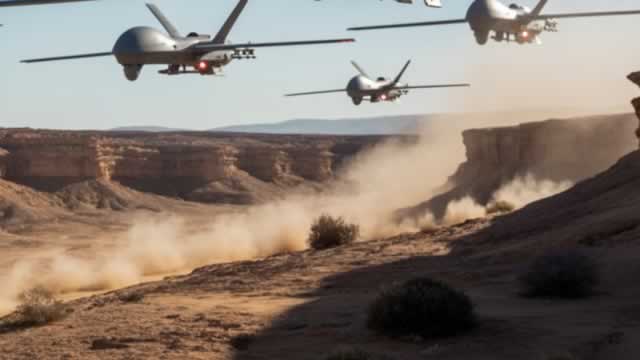
  • Counter-UAS technology: non-kinetic variant of Coyote demonstrated during U.S. Army test; reusable recall/redeploy concept for drone swarms
  • AI/autonomy milestone: Collins mission autonomy software flight test for U.S. Air Force Collaborative Combat Aircraft Program
  • Hybrid-electric propulsion: Turboprop demonstrator operated propulsion system and battery pack at full power; expected ~30% regional aircraft fuel-efficiency improvement

Business Development

  • Department of War: signed 5 landmark framework agreements for critical munitions including Tomahawk, AMRAAM, and Standard Missile family (finalization pending)
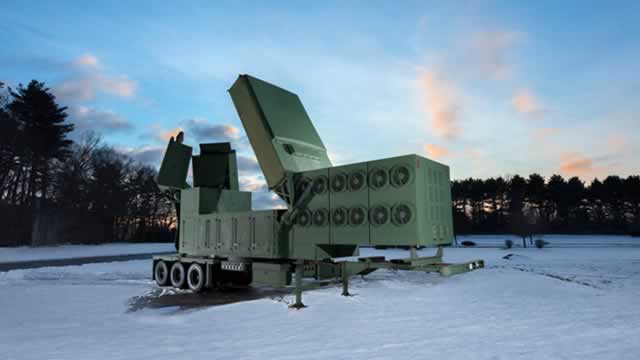
  • Raytheon awards: Netherlands Patriots equipment over $600 million; U.S. Army lower-tier air and missile defense sensors over $400 million
  • Raytheon orders: over $900 million for Standard Missile and Tomahawk (Q1 additional key awards)
  • International counter-UAS: FMS case approved for Coyote for the UAE
  • Commercial/regional aircraft: Pratt supporting ~45% of A320 deliveries to date (about 40% sold program share)
  • Collins: launched capacity expansion supporting recently awarded FAA contract for radar systems and air traffic modernization

AI IconFinancial Highlights

  • Adjusted sales: $22.1B, up 10% organically (up 9% adjusted basis)
  • Adjusted EPS: $1.78, up 21% YoY
  • Segment operating profit: up 14% YoY, reflecting 70 bps consolidated segment margin expansion
  • Margins: Collins expanded margins +10 bps YoY despite 130 bps tariff headwind; Pratt expanded margins +70 bps YoY despite 50 bps tariff headwind; Raytheon expanded margins +150 bps YoY
  • Tax: EPS benefited ~$0.08 YoY from lower effective tax rate, principally higher stock-based compensation deductions
  • Tariffs: 70 bps margin expansion more than offset tariff headwind (tariffs cited as a year-over-year headwind at consolidated level); Collins and Pratt explicitly cited bps headwinds
  • Backlog/coverage: book-to-bill 1.14; backlog record $271B, up 25% YoY; Raytheon backlog $74B with Q1 book-to-bill 0.96 and 12-month book-to-bill 1.48
  • GAAP EPS from continuing ops: $1.51 including $0.27 acquisition accounting adjustments

AI IconCapital Funding

  • Free cash flow: $1.3B in Q1 (up $500M YoY); included ~$170M powder metal related compensation
  • Debt reduction: paid down $500M of debt in the quarter; tracking to full-year deleveraging expectations
  • No buyback authorization/amount disclosed in the provided transcript segment

AI IconStrategy & Ops

  • GTF fleet management: PW1100 AOGs down ~15% vs end of last year; expects continued downward trend; MRO output +23% YoY on PW1100 and +35% growth in Q1 last year
  • Material allocation optimization: continued allocation optimization between OE and aftermarket to balance fleet health and customer needs
  • Automation: Pratt MRO Singapore robotics achieve 100% first-pass yield and reduce assembly time by 50%; low-pressure compressor assembly and core stacking automation underway
  • Connected manufacturing: on track to connect 60% of annual manufacturing hours to RTX data/analytics platform by end of 2026; Collins wheels/brakes using real-time data to improve service life and inventory for pay-by-the-landing agreements
  • Capacity investments (cited for framework agreements and end-market ramp): nearly $900M CapEx over last 3 years across Tucson, Huntsville, and Andover; Pratt $200M Columbus, GA expansion; Raytheon $115M Redstone Missile integration facility expansion (+50% munitions capacity)
  • Raytheon production execution: material growth and receipts up 13% YoY in Q1; focus on rocket motors (concentrated supply base) and microelectronics

AI IconMarket Outlook

  • Full-year adjusted sales raised to $92.5B–$93.5B (from $92B–$93B)
  • Full-year adjusted EPS raised to $6.70–$6.90 (from $6.60–$6.80), increase of $0.10 at both ends
  • Free cash flow maintained/confirmed: $8.25B–$8.75B
  • Full-year organic sales growth expected: 5%–6% at RTX level
  • Commercial OE: mid-single digits; Commercial aftermarket: high single digits; Defense: mid to high single digits (up from prior mid-single digits)

AI IconRisks & Headwinds

  • Supply chain constraint risk for munitions ramp: concentrated supply base for rocket motors; need for step-change in supply chain output and resiliency
  • Critical minerals/rare earth: near- and medium-term coverage stated as adequate; longer-term partnerships/contracts still being pursued
  • Tariff uncertainty: tariffs still a headwind; consolidated margin expansion of 70 bps occurred despite tariff headwind and explicit bps headwinds (Collins +130 bps, Pratt +50 bps)
  • Framework agreements not finalized: supply chain investment visibility improves only after conversion into final agreements

Q&A: Analyst Interest

  • Supply chain capacity and rare earth: Management said Raytheon showed 12 consecutive quarters of material growth and Q1 material receipts rose 13% YoY, with munitions deliveries up over 40%. They flagged rocket motors concentration and microelectronics risk, and argued framework agreements plus DoD “strategic capital” should attract suppliers and improve resiliency.
  • Framework agreement economics and long-term margins: Management reiterated ongoing negotiations and avoided final pricing details. They emphasized prior demand volatility made long-term supply investments difficult, while framework agreements should provide firm visibility. They also claimed the agreements enable bundling materials, economy-of-scale benefits, and production efficiencies in mature programs to support margin outcomes.
  • Tariffs and legal change implications: Management stated no change to full-year P&L outlook. They referenced a prior assumption of ~$75M YoY tailwind via mitigations. After IEEPA tariffs were overturned and replaced by Section 122/232, they noted ~$500M tariff payments since implementation and said refund income was not recorded or included in guidance pending clarity.

Sentiment: POSITIVE

Note: This summary was synthesized by AI from the RTX Q1 2026 earnings transcript. Financial data is complex; please verify all metrics against official SEC filings before making investment decisions.

Loading financial data and tables...
© 2026 Stock Market Info — RTX Corporation (RTX) Financial Profile